
Mom with stage 4 lung disease gives birth to baby who is diagnosed with rare deficiency
Published at
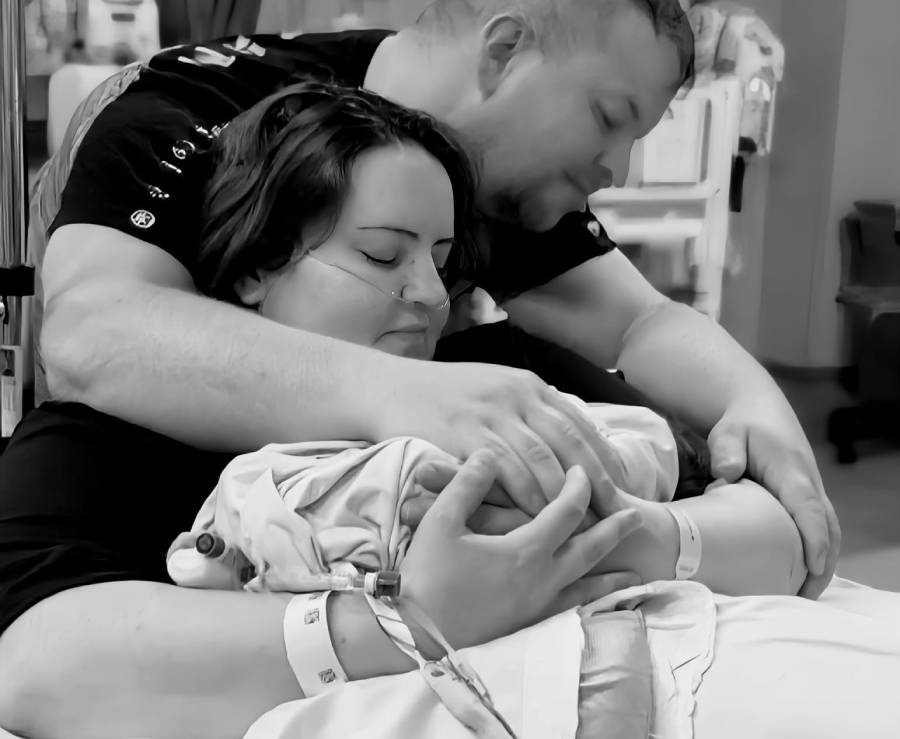
IDAHO FALLS — It was a fight for two lives: a woman who has an aggressive lung disease was trying to survive for her unborn daughter. In August, she was able to safely give birth, and she and her baby are alive.
However, her baby was born with a condition that she and her husband want to bring awareness to, called MCAD deficiency, which is a rare metabolic disorder.
RELATED | It’s a fight for two lives: a mother is trying to survive for her unborn daughter
Jasen, 35, an Army veteran, and Ambrosia Howell, 30, used to live in Idaho Falls. They relocated to Utah over the summer for specialty care at the University of Utah in Salt Lake City when they learned Ambrosia had a high-risk pregnancy.
At the time, an online fundraiser helped Jasen and Ambrosia.
“My family thanks the community a lot for all their love and their support, and the people who did donate to us. We are really truly forever grateful,” Ambrosia said.
They were told by doctors that the risk of death for their unborn daughter and the risk of death for Ambrosia were high. Their daughter’s due date was Sept. 5.
“I wanted to have my baby girl and give her a chance even despite my own health. And it all worked out, you know?” Ambrosia said.
Aurora Rosalie Ayla Howell was born at the University of Utah Hospital on Aug. 19 at 2:43 p.m. She was 6 pounds, 14.4 ounces.

Aurora is currently a little over two months old.
“I feel a lot of joy and love…We made it. It was the best possible case scenario,” Ambrosia said. “(Doctors and staff) really took great care of me.”
“I’m so proud of my wife for being strong through all of this. People like her family know about her illness, but nobody really sees how much she struggles and how much she’s had to overcome and push through. She’s been so strong her whole life,” Jasen added. “She is a fighter.”
Background
Ambrosia was diagnosed with stage 4 bronchiolitis obliterans last year in Pocatello when she was just 29 years old. It’s the most severe stage.
According to the American Lung Association, it’s a rare chronic lung disease that worsens over time. It leads to inflammation, irreversible damage, and scarring. She’s been on oxygen as an adult since 2024.
Click here for a previous story that EastIdahoNews.com wrote about Ambrosia.
Fast forward, Ambrosia and Jasen had an unplanned pregnancy, and this would be their first child.
She had met with maternal-fetal medicine doctors in Utah, and she had been told by doctors that there was a chance of her not making it through and to consider aborting the baby.
“I understand the risks. This is our first baby. I love our baby, and I think that as long as we have a great team, I think our baby deserves a chance to live,” Ambrosia said in a previous interview with EastIdahoNews.com.
Ambrosia said Jasen was worried during her pregnancy. He had nightmares.
“Because they had told us of the risk of death for the baby and the risk of death for me were really high, he was worried about that. You know, ‘Am I going to go home with a wife and a baby? Am I going to have one or the other? Am I going to have both? Am I going to have neither?’ He was really scared,” Ambrosia said.

The pregnancy
Doctors were able to closely monitor Ambrosia and her pregnancy in Utah and did multiple nonstress tests to make sure her baby girl was okay. According to the Cleveland Clinic, a nonstress test (NST) is a simple, painless prenatal screening test that measures your baby’s heart rate and how it responds to movement or contractions.
It’s typically done in high-risk pregnancies to check if the baby is healthy and receiving enough oxygen.
The plan was to have Ambrosia induced on Aug. 30, and she would have an assisted delivery with forceps.
The Cleveland Clinic says a forceps-assisted delivery is an “operative vaginal birth where a healthcare provider uses specialized metal, spoon- or tong-shaped instruments to gently cradle and guide the baby’s head through the birth canal during the second stage of labor.”
“By the time I got to be 8 months (pregnant), I was getting to the point where I was extremely struggling. I had asked my doctor if there was a way I could get induced sooner because they had told me that they wanted me to get as far as I possibly could to 39 weeks,” she said.
It was difficult with her lung disease and she was in pain.

The delivery
Ambrosia asked her doctors if she could be induced on Aug. 19. She went to do a nonstress test on Aug. 18.
“When I was in there, and they were looking at our baby, there were times when her heart rate would drop for a little bit before it would go back up. So they were concerned if she was getting enough oxygen,” she said.
She was then sent to the University of Utah OB department to make sure the baby was okay and it was decided that she needed to have Aurora. Ambrosia labored for 13 hours.
“I was very nervous. It was really hard seeing her in that much pain,” Jasen said.
Many people were in the room, including maternal-fetal medicine doctors, a pulmonologist, an anesthesiologist, and nurses.
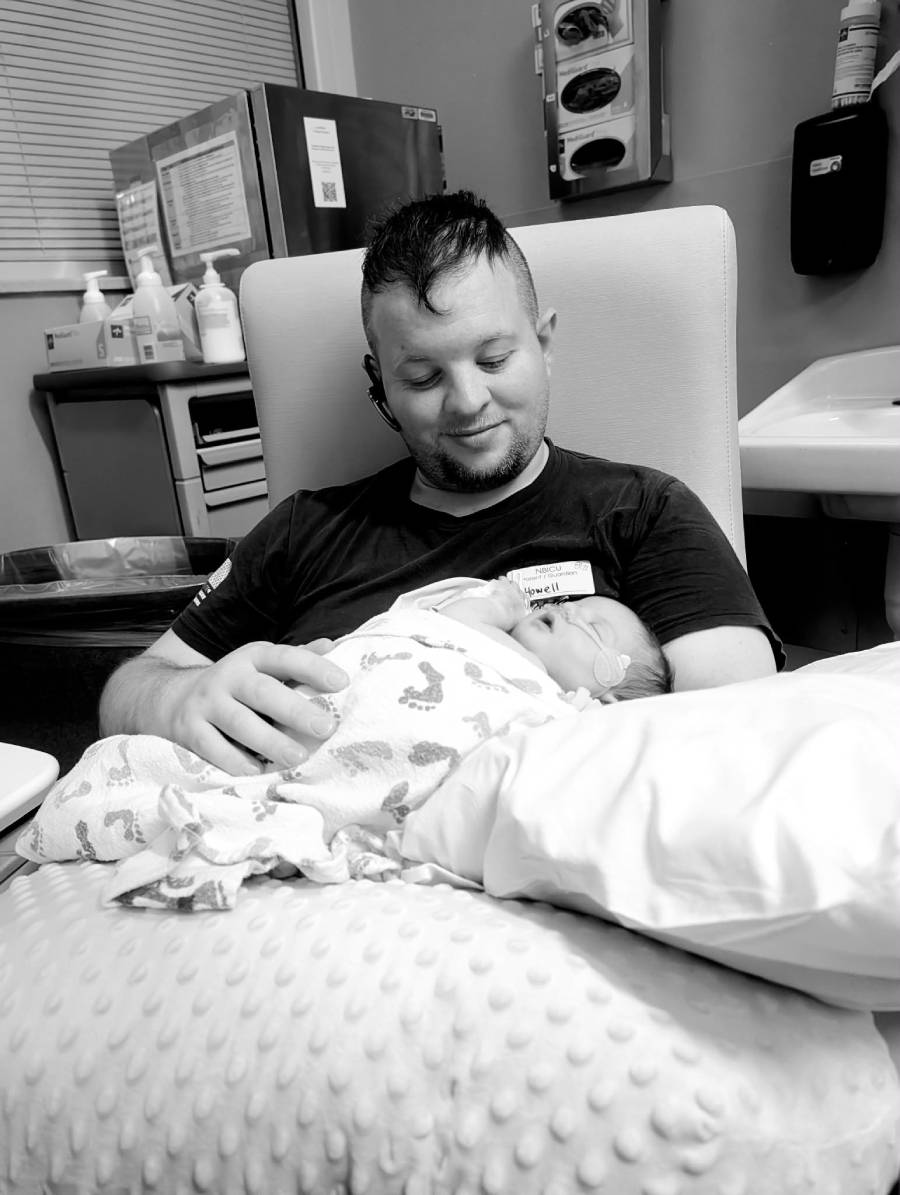
Once Aurora was born, doctors put her on her mom’s chest for a minute or two. She was rushed over to the pediatric table because she didn’t have enough oxygen. She was in the Neonatal Intensive Care Unit (NICU) for 12 days.

MCAD Deficiency Diagnosis
“They did a newborn screening,” Jasen said. “When it came back, it came back with MCADD, where the second D stands for deficiency.”
They had never heard of it before. When they were told about the deficiency, they were given paperwork.
“When I read that paperwork, I cried, and Jasen had to console me because I didn’t realize that it was that serious. I became really anxious and worried for our baby and what the future is going to look like,” Ambrosia said.
Amber Wright, a board-certified pediatric hospitalist, works at Eastern Idaho Regional Medical Center in Idaho Falls. She explained to EastIdahoNews.com that MCADD is an inherited metabolic disorder. It stands for Medium-Chain Acyl-CoA Dehydrogenase Deficiency.
“Medium-Chain Acyl-CoA Dehydrogenase is the protein that breaks down medium-chain fatty acids. Basically, the medium-chain fatty acids cannot be metabolized because of a mutation in the gene that makes the protein needed to break down the fatty acids,” Wright said. “The problem is that you cannot metabolize fat for energy. So you can get dangerously low glucose and a toxic buildup of partially digested fats.”

She said that most MCADD patients are diagnosed from a newborn screen. She explained how it works if a baby tests positive. The metabolic geneticist receives the positive test and notifies the pediatrician right away, who contacts the family. Wright said that’s when the family works directly with the metabolic geneticist and the pediatrician for treatment.
Wright said knowing about a disease from a newborn screen before symptoms develop not only saves lives, but will save babies from having life-threatening severe neurological damage from a metabolic crisis that could have been prevented.
“I cannot speak highly enough of the importance of newborn screening. If a couple has a baby with MCADD, it is very likely that at least one parent is a carrier of the gene. Those couples should absolutely speak with a genetic counselor to be aware of the chances of having another child with MCADD so they can be prepared,” she said.
It’s a lifelong condition. There’s no cure, but life expectancy is normal if it is managed well.
“The biggest thing is making sure people with MCADD do not get low glucose, so do not go without food for too long. Babies need to be fed every couple of hours. As children get older, they can go longer without food,” Wright said.
She added that metabolic geneticists typically give families a letter to carry with instructions for doctors on how to treat MCADD, along with their contact information for further guidance. Those with MCADD can end up in the hospital.
MCAD deficiency triggers sudden, life-threatening energy crashes. If Ambrosia and Jasen ever have to go to the emergency room due to Aurora not eating when she is supposed to or getting sick, she has an emergency metabolic disease protocol that was written out for her by the Metabolic Genetics Clinic at The University of Utah.
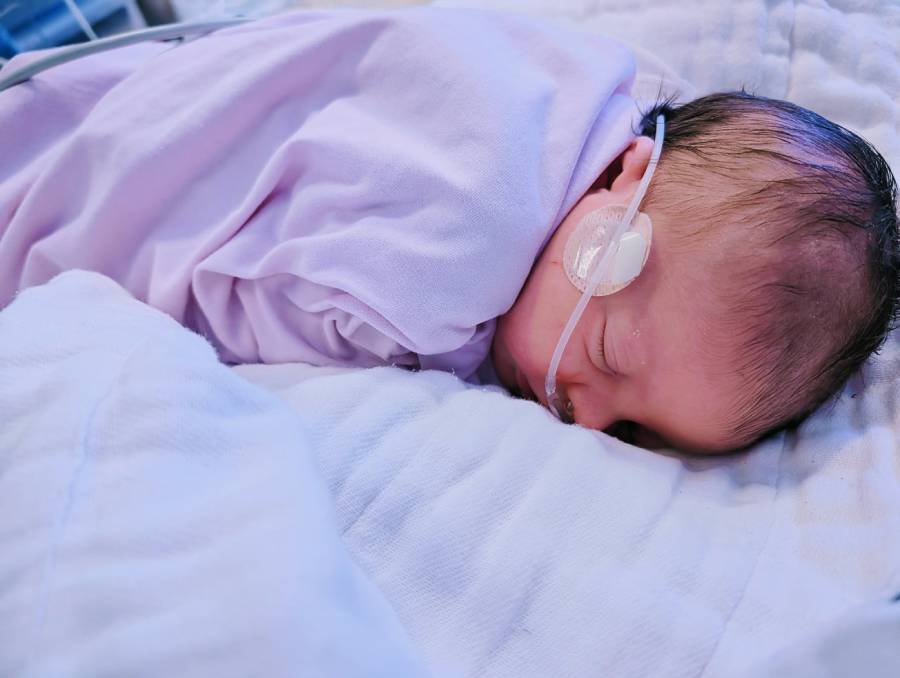
Aurora has already been to the emergency room twice.
Part of Aurora’s protocol sent to EastIdahoNews.com reads:
“The parents have been instructed to bring the child to the Emergency Room if she is unable to eat or has a high fever, vomiting, and/or diarrhea. MCAD deficiency can cause sudden cardiac arrest and sudden death during times of illness or metabolic stress if not treated appropriately. This child needs to be seen by the ER physician as soon as possible.“
The letter lists how doctors should treat it and what tests need to be run.
“It’s financially stressful but emotionally devastating as well because even though we are extremely exhausted like every new parent is, we have to push through,” Ambrosia said.
Aurora needs to eat when she needs to eat. In the tired-parent stage, Ambrosia and Jasen set alarms to make sure Aurora doesn’t miss a meal.
“If we miss that alarm clock to get up and feed her because we were taking a nap, then that will cause her levels to dip too low and crash… and then she will have a seizure and go into a coma and die,” Ambrosia said.
“She will have appointments for life at Primary Children’s Hospital to manage her MCADD,” Jasen added.

Grateful for family
Right now, Jasen is on FMLA, which is the Family and Medical Leave Act. He has been helping his wife and daughter with their conditions. He will return to work next week.
Ambrosia has gone to her pulmonologist, and her lungs are better than anticipated after having a baby. She will eventually need to get a double lung transplant down the road.
Despite everything they have been through, both Jasen and Ambrosia feel blessed to be Aurora’s parents and love her so much. They are grateful for the family they have.
“She is a happy little girl. She loves her mommy, her binky, and her daddy, and her swaddle for sure. I just love her so much, and she’s the most beautiful, precious thing. I’m so happy to be a mommy. It’s just been a real joy,” Ambrosia said.
Jasen told EastIdahoNews.com that being a dad can be stressful, but it is also amazing.
“I think of how lucky I am and how much she looks like her mom,” he said. “I am extremely joyful that it turned out this way instead of many other possibilities that were there that were not so good. Yes, it’s still stressful, and there’s a lot still to overcome, but I’m just happy to have my family here, all of us together. It means the world to me.”