



Sugar City man gets 8 years after pleading guilty to emailing himself CSAM from brother’s laptop
Published at | Updated at
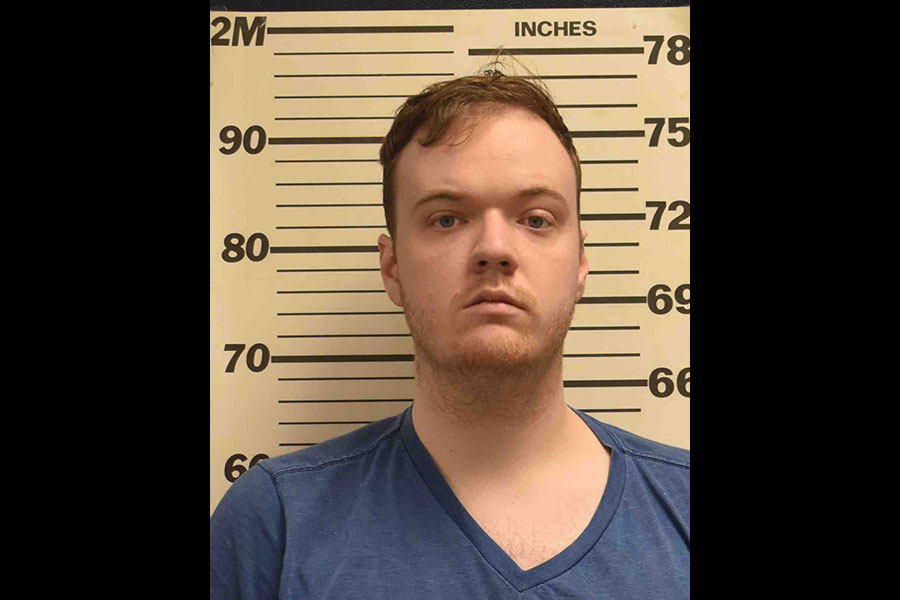
REXBURG — A Sugar City man who had emailed himself 39 images of child sexual abuse material will serve a minimum of nearly four years in prison after being sentenced on Oct. 19.
Zachary Morris was charged with 10 felony counts of possession of CSAM in late July, filed by Idaho’s Attorney General’s Office.
A cybertip submitted by Google to the National Center for Missing and Exploited Children detailed that a Google account had uploaded images of CSAM, where the material showed explicit content involving children between the ages of 1 and 10.
The CSAM was discovered on Morris’s brother’s laptop, and Morris’s brother is also facing 10 felony counts of possession of CSAM.
RELATED | Sugar City man accused of downloading violent child pornography
In a plea agreement, Morris was given two options, both of which required him to plead guilty to the first three counts. The remaining counts would be dismissed.
It also allowed both parties to argue for concurrent or consecutive sentences on each count.
The first option was for both parties to argue for a fixed prison sentence of three years, and were free to argue on the length of the indeterminate sentence.
The second option would allow the state to argue for a maximum prison sentence of five years, but the defense could seek a retained jurisdiction, which would include a rider.
District Judge Steven Boyce sentenced Morris to three and a half years fixed and five years indeterminate on each count, with each count running concurrently.
Morris will also have to register as a sex offender.
Before sentencing Morris, Boyce acknowledged the information his attorney provided and the sentencing documents weigh in favor of rehabilitation.
However, Boyce said the seriousness of the charges and their impact on the victims to this day must be considered.
“The court also has to look at deterrence of the individual and the public, and make sure that a message is sent that the perpetration of these crimes against children will be treated seriously in society,” Boyce said.
Further revictimization
Deputy Attorney General Leighton Linning, before making a recommendation, read three victim impact statements from the victims and their families identified in the CSAM that Morris had emailed to himself.
Linning explained that in cases that involve Internet Crimes Against Children, there is a child identification report that finds victims who’ve been identified in these explicit materials and allows them to provide a victim impact statement.
Of the 39 images found, 16 of them contained children who had been previously identified.
One of the victims discussed in her statement about her right to be notified each time images of her abuse are found. Since Nov. 2020, her mother has received 22,000 notifications.
“It makes me sick to think about how many people there are in the world who don’t care that they are supporting child abuse. It has always been difficult to trust people because I wonder if they have seen the images of my abuse and are a pedophile,” Linning read from the impact statement.
Linning told the court that the reason he read those impact statements is to show that the children abused in these explicit materials are real individuals.
“I think anything less than a five-year sentence would deter or minimize the seriousness of a five-year and 18 (indeterminate) as proposed by the state in consecutive (sentences),” Linning said.
Not a person that can be thrown away
Defense attorney James Archibald told the court that, looking at the psychosexual evaluation and the pre-sentence investigation, both recommend Morris get treatment in a residential program.
Regarding how Morris obtained the explicit materials, Archibald said this wasn’t his client searching online for them, but that he found them on his brother’s computer.
“(The victims) deserve to be outraged. They were molested. They were abused as children. I don’t minimize that one bit, but they keep saying these sick, depraved people who try to find us on the internet. It’s disgusting, and that is not Zach Morris,” Archibald said. “He’s not a throwaway-to-prison type of person. He is a let’s fix this type of person.”
In the sentencing documents, Archibald noted that they outlined how Morris could benefit from structured, evidence-based treatment or a dual-diagnosis intervention.
He also highlighted that this is Morris’s first felony charge.
In various letters of support from family and community members, Archibald noted how difficult this case is, as supporters describe Morris as a compassionate sibling and a good person.
“Those are from the people who know him, and that’s why this case is difficult for this court,” Archibald said. “The court should be outraged at any child porn. The public is outraged, and so should the judge. But the people who know Zachary and have dealt with him and talked to him know that he’s fixable.”
Archibald recommended probation for Morris, as he had spent the past eight months in jail and is ready to start sex offender treatment.
‘I want to be a better person’
Before being sentenced, Morris had a chance to give a statement to the court.
He told Boyce that since his arrest, he has had time to understand the impact of his actions on the victims, his family and the community.
“I was afraid too of how I’d ever be able to look my family in the eyes again, or how I’d be able to go through life and ask forgiveness of others, or even how I could ask forgiveness of myself,” Morris said.
One factor of redemption he sees for himself is that the materials found on the laptop have been discovered and brought to light.
Despite understanding the seriousness of the charges before him, he is still upset to hear how his family members and others in the community speak about his character, and to hear the women’s statements about forgiveness.
“I’m here today to own the responsibility that is mine to bear,” Morris said. “I have done wrong. I’ve hurt a lot of people. I am an addict. I want to be a better person, and I’m humbly asking for help to do so.”