


Wife of man found dead at truck stop: “I never got to tell him goodbye”
Published at | Updated at
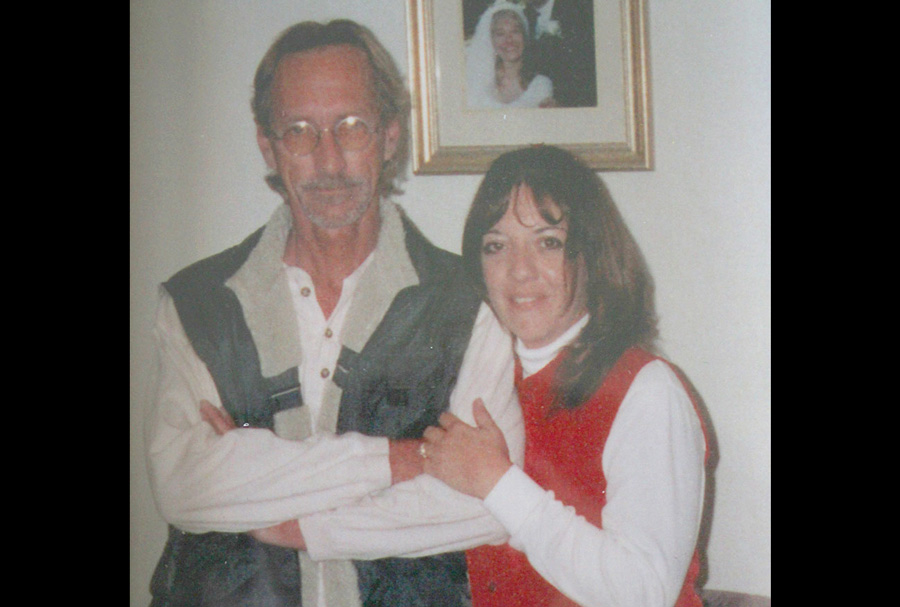
SUGAR CITY — It’s been more than a month since 63-year-old truck driver, Gary Hamlin was found dead in his vehicle in the back lot of KJ’s Travel Center on Friday, Aug. 7.
But his family still doesn’t know exactly when or how he died.
“It was pretty traumatic,” said Michelle Hamlin, Gary’s wife of 16 years. “I never got to see his body. I never got to tell him goodbye.”
Michelle said authorities have not given her any new information on Gary’s death following the initial investigation. No autopsy was performed, and Gary’s body was cremated by request of the family. Bonneville County Coroner Rick Taylor said Gary’s death certificate should be given to the family within the next couple weeks.
Taylor said this has been an particularly unusual case, which is why the certificate is still pending. Taylor wouldn’t clarify what made this case unusual and he was unsure why no autopsy had been performed.
Gary is scheduled to be buried in the Riverside National Cemetery in Riverside, Calif., with military honors.
Events leading up to the death

Michelle said the last time she saw her husband was Monday, July 6, after a family disagreement at her mother’s house.
Michelle said she had been in contact with Gary only a few times after that day via text message. He had told her where he was, but when she got there to look for him, he had gone.
She and her mother had gone looking for Gary multiple times between July 6 and 17, checking multiple locations where he had said he was, including Twin Bridges and Heise Hot Springs. With no luck, they continued searching at Kelly Island and an Idaho Falls hotel where Gary and Michelle had stayed during previous trips.
Michelle said she had been walking along rivers, through bushes and was searching everywhere for a sign of Gary.
Thinking that Gary might have taken another truck-driving job, Michelle kept her eyes open whenever she was on the road.
“I was looking at every truck passing by to see if maybe one of them happened to be him,” she said. “Every time I was anywhere, I looked at every truck.”
The last time Michelle went to look for Gary was Tuesday, July 14. By Friday, July 17, his cell phone had disconnected, because it was no longer in use. She decided to ask the police to conduct a welfare check on her husband.
Michelle said she did not file a missing person report, because Gary had willfully left and had decided not to come back to the family’s home.
“That’s not something he would normally do,” she said. “Something was going on with him that I didn’t know.”
She said if he had left and said he would be right back, a missing person report would have been more appropriate.
Once the welfare check request was made, officers in Fremont, Bonneville and Madison counties and even counties in Utah were asked to look for Gary.
A welfare check implies that if officers located him, they can make sure he is physically and mentally well, and could transport him to a medical facility if there was any serious problems.
Gary had a number of health problems including chronic obstructive pulmonary disease, herniated discs in his back and high blood pressure, Michelle said. He had at least three different medications in his car at the time of his death.
On Aug. 7, police came to Michelle’s mother’s home and told her his body had been found. Employees at KJ’s discovered Gary in his vehicle in a remote part of the truck stop parking lot. Authorities estimated the body had been in the car for three days to a week.
Death not considered a suicide, authorities say
Gary had been previously diagnosed with post-traumatic stress disorder, which was connected to his service in the Vietnam War, Michelle said.
Sgt. Jeff Edwards of the Bonneville County Sheriff’s Office said a health issue likely caused the death, rather than suicide. The Sugar City man showed no signs of injury. Michelle isn’t sure what happened.
“Gary always had a troubled soul,” Michelle said. “There’s always something that’s been with him that’s troubled him, and I think part of that could have been from the service in the war.”
She said although Gary’s PTSD was a challenge for him, he did not let it interfere with his love for serving others and his passions of truck driving, animals and bowling.
“Gary — the Gary I know — we’d be out in the truck and in big cities and poor areas, he took off his shirt and his coat and gave it to a homeless man sitting outside in the cold,” she said. “All the time, we were tossing food out of the truck for people.”

As a truck driver, Gary was always on the road with Michelle, whom he trained to also drive the truck. Their pet cat and dog also came along.
For a long period of time, Gary and Michelle were on the road so often, they weren’t even renting a permanent home.
However, even their nomadic lifestyle did not stop them from making time for each other and the small traditions they managed to keep alive.
“On the weekends, no matter where we were, we’d find somewhere we could have drinks and go dancing,” Michelle said. “If we couldn’t go somewhere, we’d get out and turn the radio on and dance in the parking lot.”
One memory Michelle has of Gary’s spontaneity is him getting out of the truck in the middle of the road to dance when traffic had come to a halt during a blizzard in Wyoming.
“It was always an adventure with him,” Michelle said.
She said her husband was a dedicated volunteer, coaching the bowling program for Special Olympics in Mesquite, Nevada, and passing out food, clothing and supplies to veterans and their families at the Veteran Stand Down benefit in Vancouver, Washington.
Michelle said that although Gary’s life ended on a somewhat negative note, she will remember him for the person he really was in his heart.
“He was loved by a lot of people and he’ll be missed,” she said. “His death will leave a void.”