



Revisit Hollywood history with these holiday classics on Netflix
Published at | Updated at
You don’t have to peruse Netflix for too long to figure out it’s a treasure trove of low-budget B-movies, little-seen independent films and a whole spectrum of documentaries. But Netflix also has a good selection of classic films. This month, we’ll take a look at holiday classics, “A Christmas Carol” from 1938 and “White Christmas”. We’ll look at how they exemplify what was going on in Hollywood at the time of their release.

The Christmas season is upon us once again, like a blanket snow covering an Idaho field. That means there are going to be all kinds of holiday-themed entertainment vying for our attention. And it’s a good chance that most of them won’t be worth your time. But if you want to find quality Christmas, you don’t need to look any further than Netflix.
Among the many holiday-themed selections, you’ll find two films that are not only classic Christmas films, but also perfectly exemplify Hollywood movies made during the time period they were released. “A Christmas Carol” and “White Christmas” are two classic holiday films that also illustrate the hows and whys of movie making history.
Released in 1938, “A Christmas Carol” is an adaptation of Charles Dickens’ story about Ebenezer Scrooge (played here by Reginald Owen), a crotchety businessman who hates Christmas. He is visited by three spirits on Christmas Eve and emerges a changed man. It’s a very well-known tale and it’s rendered well here.
”A Christmas Carol” reflects a lot about what movies were in the late 1930s. Scenes are set up much like scenes in a stage play. Characters walk into frame, do their business, deliver their lines and exit the frame. The camera doesn’t move too much, as use of camera dollies was still in its infancy.
The acting style is also more theatrical than contemporary film performances. Owen, as Scrooge, accentuates every emotional beat in a way that pushes the boundaries of believability. But it makes sense when you consider that Owen began his acting career on Broadway stages.
Perhaps the most interesting aspect of “A Christmas Carol” is how heavy the emphasis on dialogue is. This could have something to do with the fact that so much of film writing evolved out of writing for the stage. As films opened themselves up for scope, dialogue became less and less important. Fast forward to today and you’ll find that nobody who writes for blockbuster movies knows how to write believable dialogue anymore. It’s really kind of a shame.
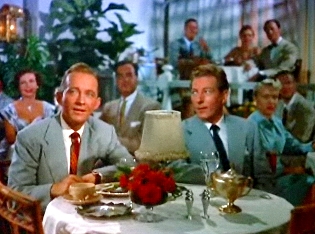
”White Christmas”, released in 1954, is one of the most beloved holiday musicals. It’s also a quantum leap forward from “A Christmas Carol” in terms of technique. This film is loosely based on the 1942 film “Holiday Inn” and tells the story of a pair of musicians (Bing Crosby and Danny Kaye) who decide to put on a show to assist the general who commanded them in World War Two. Along the way, they sing, dance and romance a pair of sisters.
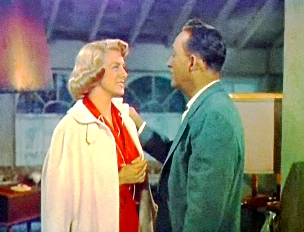
A fine example of studio filmmaking in the 1950s, “White Christmas” is everything you could ever want in a studio movie musical. It’s colorful, corny and stuffed to the gills with musical numbers. There’s romance and comedy. The romantic leads, Crosby and Rosemary Clooney, trade barbed dialogue.
One big jump between “A Christmas Carol” and “White Christmas” is the color of the films. “Carol” is a beautifully rendered black and white film, but “White Christmas” is colored with the Technicolor process. Super bright and saturated, the colors are almost surreal. Every time I watch “White Christmas”, I wonder how Bing Crosby’s eyes could be that impossibly blue.
Another big jump forward is the camera work. By this time, camera dollies and cranes were in wide use. It was easier to move the camera around, leading to sweeping shots like the final epic crane shot that pulls back from the stage over the audience.
”White Christmas” also reflects how far films have come since the 1950s. The musical sequences are shot in long takes, where the camera basically dances with the actors. That’s much different than the contemporary method of cutting together scenes out of short, quick shots. The sets look phony, but they’re actually there, as opposed to the rampant use of computer generated imagery of today.
The 1938 version of “A Christmas Carol” and “White Christmas” both stand as holiday classics that should warm your heart this Christmas. They also stand as time capsules representing the historical eras when they were made. If you’re looking for heartwarming Christmas entertainment, not to mention an entertaining film history lesson, get on Netflix and check these movies out.