



It’s the season for the fall bird migration to begin
Published at
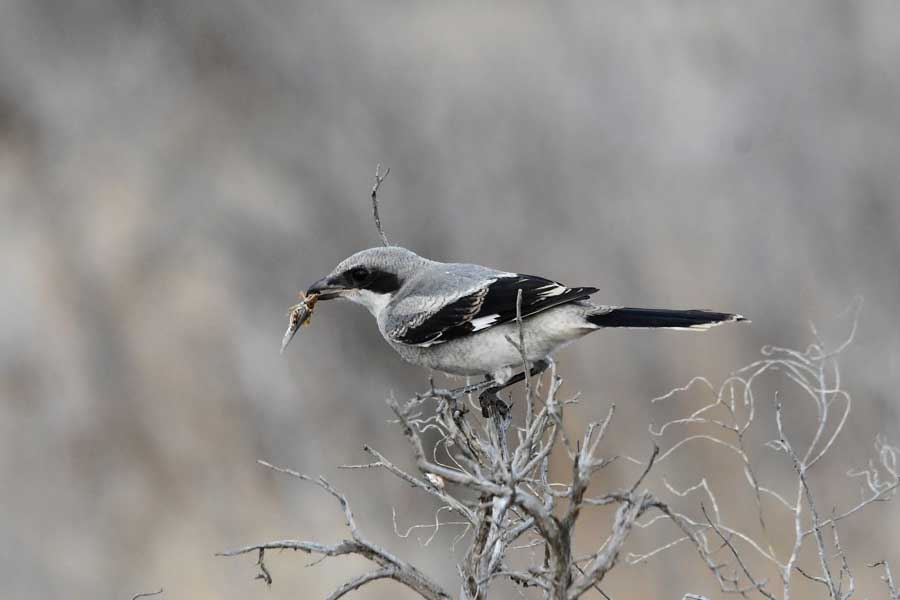
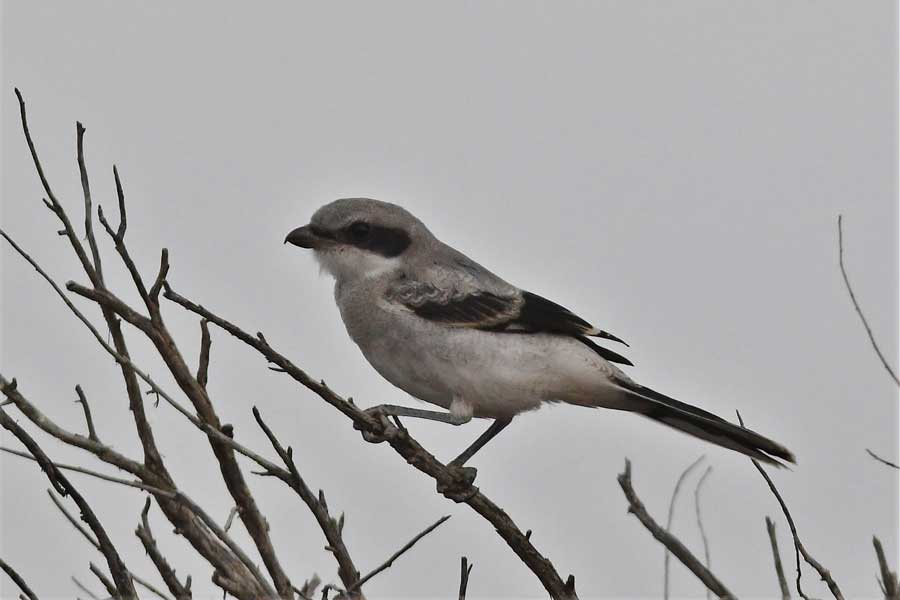
Tuesday evening, after spending the morning picking huckleberries, I drove out to the south side of Mud Lake to see if I could see some birds beginning their fall migration. The first birds I ran into were a small flock of Loggerhead shrikes, a songbird that tries to feed on other songbirds.
This small flock was not chasing other birds but was training young shrikes in catching large flying insects, grasshoppers. I first noticed the birds as I drove along the
dike, flushing the insects when an adult shrike flew past my window and captured a grasshopper in midair.
It then flew to a branch where it ate the hapless insect. It was entertaining to watch the adult birds begin to flush the grasshoppers for the young ones, but I only saw one young bird catch one. The more experienced birds rewarded the young ones by catching the insects and allowed the young ones to eat some of them.
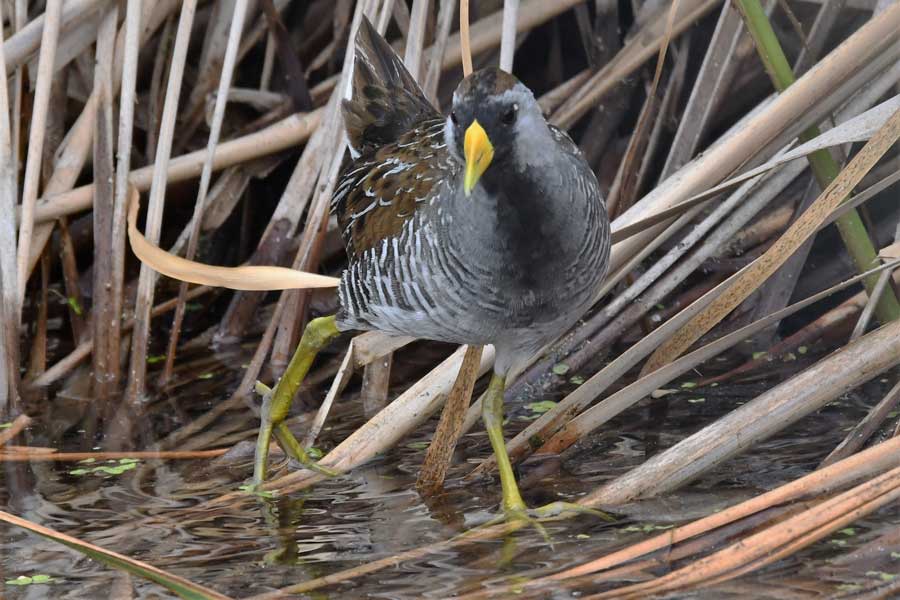
While driving along the dike past a pocket of cattails, I heard the call of a Virginia rail followed by a series of grunts. It was a welcome sound, so I opened my truck door and closed it loudly, which often causes the rail to answer the loud noise. That noise caused not only a Virginia rail to sound off, but a Sora also answered. That meant that I had both of these cousins in the same marsh area, and I was thrilled.
It had been several years since I had located both species in the same area.
I pulled my truck to a break in the cattails with some of them matted down and decided to wait for one to make a stealthy appearance. I did my best to make some grunting noises similar to that of the Virginia rail and got some answers from both of them.
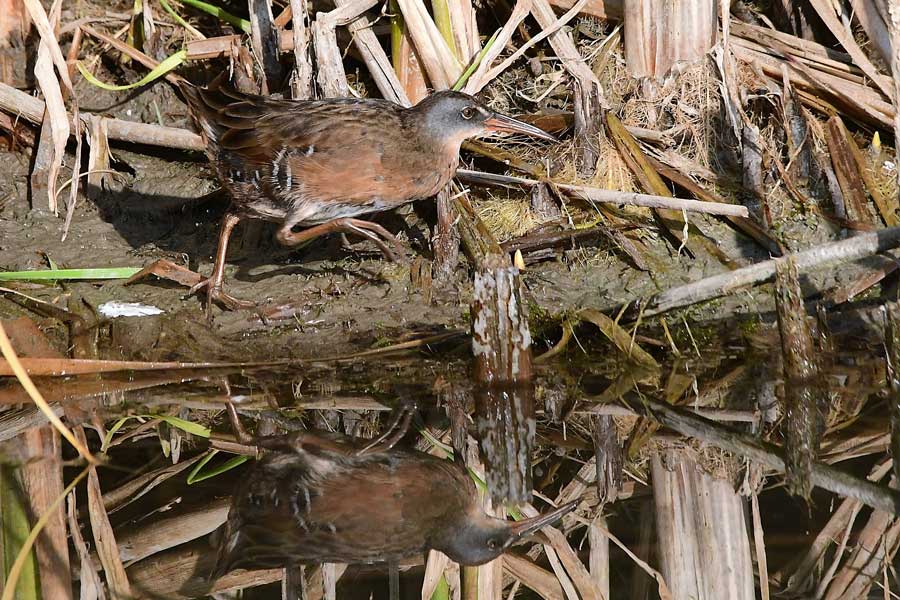
Rails are very secretive birds that hide in thick, dense vegetation and usually move very quickly across openings. They both have webbed feet and walk on matted cattails and reeds between the stalks left standing. When startled, they may swim and then dive using their wings to propel themselves under the water.
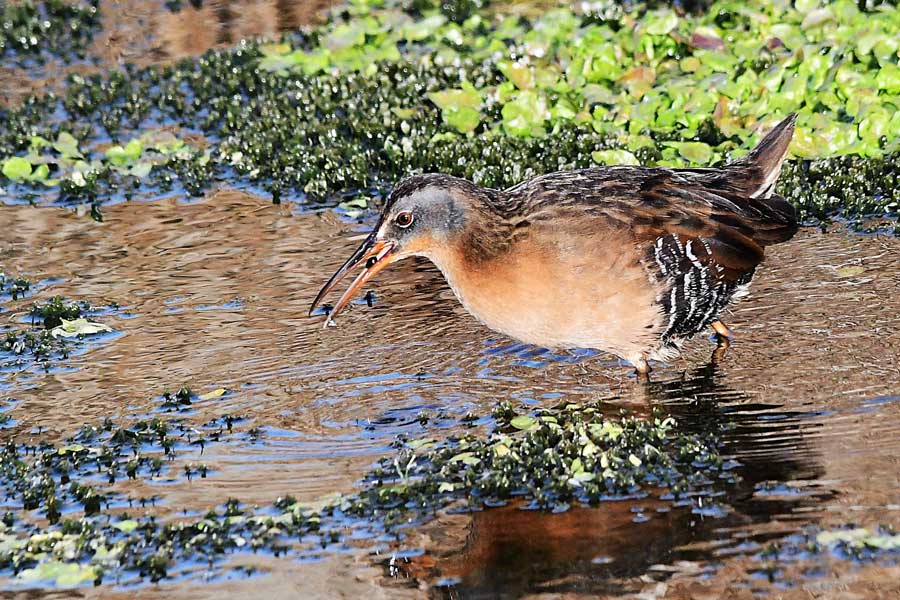
I knew that they are usually most active at dawn and dusk when they are searching for aquatic insects by probing the mud or shallow water for something to eat.
They will also eat slugs, snails, worms, aquatic plants and their seeds.
After waiting for about 30 minutes, I saw a movement in the dense cattails and watched as a Virgina rail came to the little opening. I gave a grunt and it posed for a couple of pictures. It was a beautiful sight – well worth the wait.
About 15 minutes later, I heard a nearby rattling call of a Sora, just a short distance from where I had seen the Virginia rail. This bird was much smaller than the rail, with a shorter bill and it also paused long enough for a couple of pictures.
Soras are the most numerous rails in North America, but here in the Upper Snake River Valley, I have seen more Virginia rails than I have seen Soras. I felt very
blessed and lucky to have seen both of these birds in the same place.
These birds do not gather in large numbers to migrate, but others do. It is time to fastart watching hawks, and many of the songbirds gather to migrate for the winter. On
Ririe Reservoir, thousands of Kokanee salmon have gathered near Ririe dam and within a month will be dying after trying to spawn. As they die, gulls, Ospreys and Bald eagles will be there each morning to pick up the dead and dying fish.
They will fight over those who are successful to harvest them. It will be a show worth watching.
Cooler weather will be coming and there will be a lot of things to watch as the fall migrations occur. Enjoy the great outdoors in all of its beauty.

Living the Wildlife is brought to you by Yellowstone Teton Territory. Experience 7,500 square miles of untamed wilderness in Eastern Idaho's Yellowstone Teton Territory. Where majestic peaks meet endless adventure, your perfect outdoor escape is waiting. Start planning at YellowstoneTeton.com.