




Who will be the next mayor of Idaho Falls? These three candidates are hoping to secure your vote
Published at | Updated at
EDITOR’S NOTE: EastIdahoNews.com will be publishing the responses to candidate questionnaires every day through the municipal election on Nov. 4. Read them all here.
IDAHO FALLS — Three candidates are running for mayor in Idaho Falls this year, as three-term Mayor Rebecca Casper announced she will not be running for re-election.
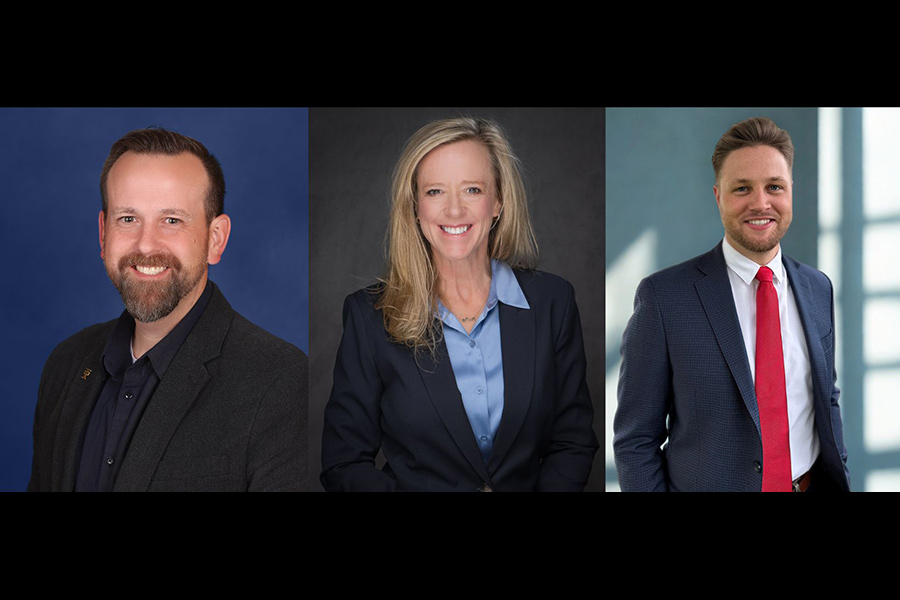
The three candidates include Jeff Alldridge, Lisa Burtenshaw and Christian Ashcraft.
To learn more about the candidate’s platform, EastIdahoNews.com sent the same eight questions to each candidate. Their responses, listed below, were required to be 250 words or less, and were only edited for minor punctuation, grammar and length.
Elections are on Tuesday, Nov. 4.
Tell us about yourself — include information about your family, career, education, volunteer work and any prior experience in public office.
Alldridge: My name is Jeff Alldridge. My wife and I chose this beautiful state as the place to put down roots and raise our four children because of Idaho’s pro-family, community-driven, and self-reliant culture. We researched several Idaho cities and purposely chose Idaho Falls. We didn’t end up here by accident—we chose this city because we love it, and we’re here to stay.
I’m a husband and father of four. I serve as Troopmaster for Trail Life USA, mentoring young men in leadership and practical skills. My wife leads children’s ministry at our church. Together, our family runs a local business, keeping us connected to neighbors and invested in the community.
Professionally, with formal education in visual communications, I lead internal and external creative teams for a publicly traded, global technology company. After 15 years with the company, I’ve worked with executives and subject-matter experts delivering projects that drive revenue and build brand equity. This experience taught me to cut through complexity, work with diverse teams, define clear goals, and deliver results—skills city leadership needs.
I never set out to run for office. But watching residents feel ignored by their own city government changed that. When people show up, share concerns, and walk away feeling dismissed, they stop participating. When participation drops, a city drifts.
That’s why I’m stepping up—because Idaho Falls is worth fighting for.
Burtenshaw: Other than the few short years I spent away at college, I have lived my whole life in Idaho Falls. My parents are Jean and Gary Meikle. My father grew up on Lomax Street in Idaho Falls and practiced law here for his entire career. I have six siblings, and all of us participated in the city’s sports programs.
I attended Dora Erickson, Falls Valley, South Bonneville Jr. High, and Bonneville High School. On my first day of high school, I met my future husband, Bryce Burtenshaw. I later attended Ricks College and BYU, where I earned a bachelor’s degree in mechanical engineering. I am deeply grateful to all my teachers and mentors, from elementary school through college, who helped me achieve this. I value my education and use that background in critical thinking and problem solving every day.
After Bryce completed dental school, we moved back to Idaho Falls and have lived in the same neighborhood for the past 22 years. We own Family Dental Health Center, and have four adult children and two grandchildren.
My community involvement began with the Edgemont Elementary PTO, where I eventually served as PTO president. I continued my volunteer work as a District 91 school board trustee from 2008 to 2018, including five years as board chairwoman. In April 2021, I was appointed by Mayor Casper to the Idaho Falls City Council and was elected to my current term the following November.
Ashcraft: I grew up on my family’s farm just north of Idaho Falls, where this city was always the “big town” for shopping, entertainment, and opportunity. Today, my wife and I are raising our two children here—our daughter Lydia, and our son Liam, who was born this year with Down syndrome and a congenital heart condition. His resilience has deepened my commitment to building a city that works for every family.
I earned a bachelor’s degree in Public Policy and Administration with a minor in Data Science from BYU–Idaho, followed by a master’s in Public Administration from BYU. My studies focused on local government, program evaluation, and data analysis. Along the way, I worked for the City of Ammon as a policy analyst, interned in city management in Orem, Utah, and served as president of the Student Representative Council, where I led efforts to connect student voices with university leadership.
Professionally, I was appointed Economic Development Administrator for Idaho Falls, and I also co-own a local food truck, giving me firsthand experience with small business challenges. While I haven’t yet held elected office, my education, work, and service have all been centered on local government.
What is your proudest accomplishment?
Alldridge: I’ve been fortunate to lead incredible projects and global teams where decisions matter, helping others grow in their careers. Through service, I’ve had the privilege of mentoring young people. Each has been rewarding in its own way.
But candidly, my proudest accomplishment isn’t a project or position—it’s watching my kids grow into young people of character who step up and serve others.
This past year, my oldest son represented our local American Legion Post 56 at Idaho Boys State, then was chosen as one of only two young men from our entire state to serve as a senator at Boys Nation in Washington, D.C. Watching him stand up, represent Idaho with conviction, and carry himself with integrity was one of the proudest moments of my life.
That experience reminded me what really matters: investing in the next generation and teaching them responsibility, service, and leadership. It’s what I’ve tried to do in my own family and in our community.
Burtenshaw: The accomplishments I value most, both personally and professionally, are those achieved through collaboration.
I am proud of my time on the school board, especially being part of the community effort to rebuild four of D91’s elementary schools: Edgemont Gardens, Dora Erickson, Longfellow, and Ethel Boyes. Idaho Falls has experienced rapid growth, but one consistent feature of that growth has been neighborhood schools. I am proud we found a way to replace these schools with new, larger, modern buildings while keeping them in the neighborhoods where they were originally built.
I am also proud of my four adult children. They are independent and resilient, and I believe their success is rooted in growing up in a community that supports youth through education, sports, and the arts. I am dedicated to making Idaho Falls a great place to live and raise children. I am inspired by those who came before me and strive to be worthy of their legacy.
Ashcraft: My proudest accomplishment has been launching and running my own food truck while still a full-time student. It was the first time I took full responsibility—navigating regulations, managing budgets, hiring staff, and even modifying the trailer myself. I balanced it alongside college and a part-time HR job, which meant long days and constant problem-solving.
The food truck wasn’t just about serving fries—it was about building something from the ground up, creating jobs, and learning how every decision impacts real people. I worked side by side with employees so I could understand their challenges firsthand and lead with both accountability and empathy.
It hasn’t made me rich, but it paid for itself, sustained local jobs, and gave me a crash course in leadership, resource management, and resilience. Those lessons—juggling priorities, adapting quickly, and motivating people—translate directly into public service.
Why are you seeking political office within your community? Briefly explain your political platform.
Alldridge: I pay close attention to city government and see too many decisions that don’t reflect what Idaho Falls residents actually want. I’m in a season of life where I can set my career aside and do the work to keep Idaho Falls a great place for families and community.
My platform is practical and achievable.
“Families First” means protecting safe, livable neighborhoods and creating real paths to homeownership—not just approving higher-rent apartments or importing big-city planning trends that don’t fit our community.
“Strategic Growth” means aligning roads, utilities, and public safety before approvals, placing density where the system can support it, and not blindsiding stable neighborhoods with ill-fitting projects.
“Common-Sense Leadership” means listening early, explaining tradeoffs in clear terms, and ensuring residents can see proposals before they’re a foregone conclusion. It also means a budget that prioritizes day-to-day basics—streets, safety, quality of life—over nice-to-have projects.
Our residents are the best consultants city government could ever have—we should listen to them first. This is one of the last great places to raise a family, and we need leadership that keeps it that way.
Burtenshaw: I am running for mayor because of growth. If we don’t manage growth, we risk losing what makes Idaho Falls special.
We must keep police and fire departments adequately staffed to maintain emergency response times. We also need to use impact fees to build two new parks, totaling 55 acres. Impact fees are one-time charges that cities or counties require developers to pay to help cover the cost of new public infrastructure and services, such as roads, parks, water, sewer, police, and fire, that are needed because of the growth their projects create.
Residents want an indoor space where they can spend time with their children and grandchildren. Now is the time to roll up our sleeves and make a community center a reality. My vision is a public-private partnership that serves everyone involved, and we already have many great examples of this in our city.
I am committed to mailing an annual postcard to every household showing where tax dollars are spent. The city’s budget is complex. It includes everyone’s electric bills through Idaho Falls Power and passenger fees at the airport, but transparency is essential.
With developers focusing on the city core, leadership must also pivot to the perimeter. Extending water and sewer wisely will prevent Idaho Falls from being surrounded by county subdivisions. The new I-15/US-20 interchange will naturally push development north, and we must be ready for it.
Finally, I believe the city must be more accessible. In my years on the school board and city council, I’ve never forgotten who I work for. As an elected official, I work for the people.
Ashcraft: I am running for mayor because Idaho Falls deserves a government that is transparent, accountable, and deeply connected to the people it serves. Growing up just north of here, this city was always the “big town” for my family. Now, raising my own family here, I want to ensure Idaho Falls continues to be a place we are proud to call home.
My vision is built on three pillars: a strong economy, a trusted government, and a small-town spirit. That means opportunity for businesses and families, leaders who listen and respond, and a city that is safe, clean, and uniquely ours.
Too often, the managerial side of the mayor’s office has been neglected. Progress should be measured with clear milestones, performance indicators, and open communication residents can actually understand. I believe in performance over politics—ending the insider era and ensuring major decisions are made with public input, not behind closed doors.
My background in public administration, economic development, and small business ownership has prepared me to lead with both vision and practical know-how. For me, this isn’t just a campaign—it’s a way to channel everything I’ve learned into real, lasting impact.
What are the greatest challenges facing people in your community? What is your plan to meet and overcome those challenges?
Alldridge: Idaho Falls leaders approve growth faster than we can handle it, expecting residents to deal with the consequences.
Traffic creates daily frustration—getting across town takes longer, intersections back up, and neighborhood streets carry loads they weren’t designed for. We fix this with a simple standard: infrastructure first. If roads, utilities, and safety services can’t support new development, we delay approval until they can.
Housing costs keep rising while young families get priced out, but that’s a complex issue requiring dedicated focus beyond just “build more apartments.”
Communication between residents and city leadership flows one way. Public input sessions happen after key decisions have already been shaped, leaving residents to comment on conclusions rather than participate in actual problem-solving. We rebuild this relationship by involving residents earlier in planning—when their voices can actually influence outcomes, not just fulfill procedural requirements. We’ll provide open, public discussion during city council meetings to address topics before the council—which is currently prohibited.
Basic city services feel neglected while attention goes to future growth plans. These challenges are solvable with leadership that sequences growth to our capacity and treats current families as the priority. Growth should strengthen what we have, not overwhelm it.
Burtenshaw: Increased traffic, housing affordability, and the risk of losing Idaho Falls’ sense of community are major challenges.
The city has 85 traffic signals and a full-time traffic analyst. Signals are coordinated on major roadways during peak times (7–8:30 a.m., 1–2 p.m., and 4:30–6:30 p.m.), so drivers should move through three to four lights at a time. But prioritization doesn’t matter if residents don’t know it’s happening.
Throughout the campaign season, one consistent request has been for more information delivered in modern, innovative ways. Idaho Falls has an app, but it often links back to the city website, which residents find frustrating. The next few years will be exciting as we incorporate new technology to make data accessible and user-friendly. For example, residents should be able to ask a question and get a real-time answer, like “When will the bridge from Fairway Estates to Lewisville Highway open?” or “When will the new signal light be built at 49th and Holmes?” Likewise, instead of just posting alerts, the city should push timely information directly to residents, such as coordinated road closure notices with Ammon and the County, or real-time snow plow updates for each neighborhood.
Ashcraft: The greatest challenge facing Idaho Falls today can be summed up in two words: growing pains. Rapid growth brings concerns about housing affordability, traffic, infrastructure strain, public safety, and preserving the small-town character that makes Idaho Falls special. Growth isn’t something we can—or should—try to stop. People want to live here because this is a great place to raise a family. The real question is how we manage it so it strengthens, rather than weakens, our community.
Businesses and residents alike have voiced frustrations with city processes, from permitting delays to confusing communication. At the same time, many worry about rising taxes and the strain of recent budget decisions. Add to that the challenge of keeping local dollars in our economy in an era of online shopping, and it’s clear we need a smarter, more accountable approach.
My plan is rooted in performance over politics: overhauling city processes so they are faster and clearer, using data to track progress, and strengthening public engagement so residents feel confident their voices are heard before major decisions are made.
How will you represent all constituents and communicate with them – even those with differing political views? How will you communicate directly with constituents?
Alldridge: Representation means two things: people can help shape decisions before they’re made, and they can clearly see why a decision was made—even if they disagree.
On disagreement, I separate people from ideas. We keep the conversation on the problem we’re solving, the tradeoffs, and who benefits and who pays. Then I explain my reasoning so you know how I got there. Being heard matters more than agreement, and tough conversations make decisions better.
Most of us don’t have time to decode city-speak or sit through three-hour meetings. I’ll share short, plain-English summaries before major proposals so residents can weigh in when it still matters, and I’ll follow up with what we heard and what changed. I’ll use the channels people actually use—social media, email, local media—and make sure meeting recordings and updates are easy to find.
Whether you voted for me or not, you’ll get straight answers, a clear rationale, and a consistent standard every time. That’s how trust is rebuilt.
Burtenshaw: At the city level, most issues are not political. The majority of votes are for routine items such as equipment, inventory, and contract services. However, when we vote on the budget, perspectives and priorities differ. My background as both an engineer and a small business owner shapes how I think, but the range of experiences on the council adds valuable insight.
Our differences make us stronger, and the ability to voice them without fear is the backbone of our democratic republic.
I am committed to putting people first, not just because it’s the right thing to do but because it’s the most effective way to govern. Being accessible to everyone in the community makes me a better decision-maker. History has shown us that working together is the best way forward.
Ashcraft: The mayor’s job is to be a fair referee, not a partisan player. My role is to make sure every voice—no matter the political view—is heard, respected, and part of the process. Even when people disagree with the outcome, they should walk away knowing the process was open, transparent, and fair.
That’s why I’ll focus on real conversations, not closed doors. More town halls, live Q&As, and face-to-face dialogue where residents can ask questions directly and get straight answers. I’ll also make city information easier to understand—using clear visuals, plain language, and modern tools—so people don’t feel shut out by confusing reports or insider jargon.
My goal is simple: whether you agree with me or not, you’ll know your voice was heard, your input mattered, and your mayor is working for the whole city, not just a select few.
What parts of the city budget could use more funding? Where are places in the budget where cuts could be made?
Alldridge: A budget reveals priorities. If we say families come first, the dollars should prove it. More importantly, every dollar we spend is your money—and I take that responsibility seriously.
I would protect the fundamentals: fixing streets, prioritizing public safety, and maintaining existing infrastructure so it doesn’t deteriorate faster than we can repair it. The FY 2025/26 capital plan includes millions set aside for roads, utilities, and backlog repairs—these are investments we can’t afford to postpone.
We must scrutinize redevelopment or amenity projects more carefully. Take Bonneville Hotel: the city backed its renovation into affordable housing, which is admirable, but the commercial space still struggles to attract tenants. That’s a cautionary tale. Public funds need stronger vetting, clearer performance metrics, and better risk sharing so failed parts don’t become hidden costs for residents.
I’d pause or phase discretionary investments—new features, large builds, added amenities—until core systems are stable. Growth should pay for itself: impact fees must be appropriate and tied exclusively to the infrastructure they enable. At the same time, we keep our workforce intact by paying competitively and minimizing turnover.
As your mayor, I’ll practice careful stewardship of your tax dollars—spending focused on current residents’ needs, not hypothetical future plans. Every dollar should answer: does this make life better for families already calling Idaho Falls home?
Burtenshaw: The Police and Fire Departments always need more funding for wages and staff. Recruiting and retaining patrol and dispatch positions is difficult, and new police officers and firefighters often struggle to find affordable housing within city limits.
As a regional hub, some government expansion is unavoidable. But the city cannot meet every regional demand. We must focus on the basics, breaking down internal barriers to deliver excellent service to residents and businesses. Then, we can realign and collaborate with external partners to achieve shared goals.
In summer 2026, the city will implement a new financial system to replace antiquated spreadsheets and mismatched software. This will provide a single, reliable data view and allow more efficient financial decision-making across departments. Mapping workflows will save time and money by eliminating redundancies, improving efficiency, and evaluating whether private contracting is cost-effective.
Ashcraft: The biggest opportunity for savings lies in overhead. Large organizations can easily become top-heavy if performance isn’t regularly evaluated. My first priority would be technological efficiencies and natural attrition—streamlining processes, modernizing tools, and letting positions phase out over time. But if the strain on taxpayers demands faster action, I won’t shy away from restructuring or eliminating positions where the value doesn’t match the cost.
One area that clearly needs more investment is human resources. With more than 800 employees, Idaho Falls has only five HR staff—far below industry standards. That means we may not be recruiting, training, or evaluating effectively, which reduces the return on every tax dollar spent on wages and benefits.
What I will not do is cut corners on public safety. Police and fire services are essential, and residents rightly value their work. My focus is on trimming inefficiencies at the top while strengthening the systems that support our workforce and community.
What do you think is the best approach to mitigate housing affordability in Idaho Falls?
Alldridge: Housing affordability isn’t just about building more units—it’s about building the right housing that helps families put down roots and build equity, not just pay rent forever. The city’s real leverage is up front: the comprehensive plan and zoning decide what gets built, where, and how. We should update those tools to encourage ownership housing—starter homes, duplexes, compact designs—in places already served by infrastructure.
As we zone, density should transition—not drop abruptly into quiet streets. Infrastructure must lead: no approvals unless roads, water, sewer, and safety services are ready or funded to expand. There must be accountability when projects receive incentives or higher density.
Neighborhood fit matters. High-density projects crammed into single-family areas don’t solve affordability—they shift costs to existing residents through congestion, parking pressure, and infrastructure strain, while benefiting out of state developers who won’t live with those consequences. The goal isn’t more doors alone—it’s more families who can afford to buy, build generational wealth, and stay in Idaho Falls. When teachers, nurses, first responders, and young families can own homes here, that’s when we’ve truly addressed affordability.
Burtenshaw: Housing affordability is a national issue, and Idaho Falls is not immune. Because the city does not operate a Public Housing Agency, we do not fund, build, or manage public housing. I am a strong advocate for property rights and the free market.
As our population and land prices rise, the city has seen a surge in apartment construction. Increased supply can help lower prices as landlords compete for tenants. As a small business owner, I believe it’s important to limit government interference. I don’t want the city to prohibit chiropractors, bike shops, restaurants, or dentists from participating in the free market.
That said, I understand residents’ concerns about apartments. Not every location is suitable. Apartments should be near major roadways with access to daily amenities.
Single-family homes remain the core of Idaho Falls neighborhoods. The city can partner with developers to strategically extend water and sewer to new neighborhoods, and work with Ammon and Bonneville County to ensure coordinated, affordable growth. In addition, I support exploring a local option tax as a way to diversify the tax base. This would allow us to reduce pressure on property taxes while still funding the infrastructure and services that make housing more livable and affordable.
Ashcraft: Housing affordability requires more than a one-dimensional solution. While adding supply is important, outside demand and migration pressures make it difficult for prices here to remain significantly lower than in other parts of the country. That’s why I believe the best approach is multifaceted.
We must continue to encourage responsible housing development that balances affordability with preserving the character of our community. Equally important is focusing on the other side of the equation: raising incomes. Idaho Falls families need not just affordable houses, but the economic strength to afford them. That means investing in workforce development, supporting local businesses, and partnering with the state to grow median incomes across our region.
We also need stronger regional collaboration. Our economy doesn’t stop at city borders—housing, jobs, and infrastructure are all interconnected with neighboring cities and the county. By improving communication, sharing data, and planning together, we can create smarter, more sustainable growth.
The City of Idaho Falls has been highly scrutinized in recent years, with many accusing the planning and zoning department of making it difficult to obtain permits. What do you think needs to be done to regulate this process and make it more efficient for local business owners?
Alldridge: The scrutiny is warranted. Too often, businesses feel like the rules shift mid-process. Permits and approvals shouldn’t feel like a maze. I don’t believe staff are the problem—they work within the rules they’re given. The issue is priorities and clarity.
My approach is simple: make the path to “yes” obvious and consistent for anyone who wants to invest in Idaho Falls—whether it’s a small remodel or a major employer. That starts with clear checklists and target timelines for each permit type so applicants know what’s required up front and when they’ll hear back. We’ll fully utilize pre-development meetings so neighbors, businesses, and staff flag issues early and solve them before time and money are wasted.
No changing the goalposts, as U-Pick Red Barn experienced. That case showed exactly how unpredictability erodes trust. No favorites or surprises—big or small, every project faces the same standards. Fees must be transparent and tied to real infrastructure needs, not buried or arbitrary. The City must trust its own employees to carry this out, equipping them with the tools and support to do their jobs well.
Get those basics right, and businesses spend their time building and serving the community—not fighting bureaucracy. That supports local jobs, local investment, and neighborhoods that feel respected.
Burtenshaw: The recent surge in building permit requests revealed single points of failure in both planning and permitting. Over the past year, the city has been working to improve these processes. Departments are now collaborating more to provide consistent answers and avoid inserting personal preferences. Project managers are assigned to guide projects through the system, creating both internal and external accountability.
A well-defined process creates consistency and predictability for developers, but it must also allow for adaptability and judgment. Good service means providing reliable information and personalized guidance to help citizens navigate the system. We have seen some improvement from the city, but there is still work to be done.
The city must continue removing cultural and physical barriers to services for residents and businesses. Planning and zoning codes are a mandated responsibility of local government. Our focus should be on providing essential services and doing them exceptionally well.
Ashcraft: The permitting process should never feel like an obstacle course. While Idaho Falls has begun adopting new software to streamline applications and align with neighboring Ammon, more work is needed to make the system efficient and user-friendly.
My approach is simple: treat permitting like customer service. Builders and business owners deserve clear expectations up front, quick responses when problems arise, and consistent communication throughout. Just as I learned running a food truck, people are far more satisfied—even with delays—when they know what to expect from the start.
We should also continue to use tools like contracting inspections when needed to keep projects moving, and continue refining the city’s comprehensive plan so developers have a clear picture of what land uses are realistic before they invest.
Ultimately, efficiency comes from clarity, responsiveness, and accountability. By setting clear standards, improving communication, and empowering staff to solve problems quickly, we can make the permitting process faster, fairer, and more predictable—helping local businesses grow while keeping the public’s trust.