




Driggs mayoral candidates look to the future
Published at
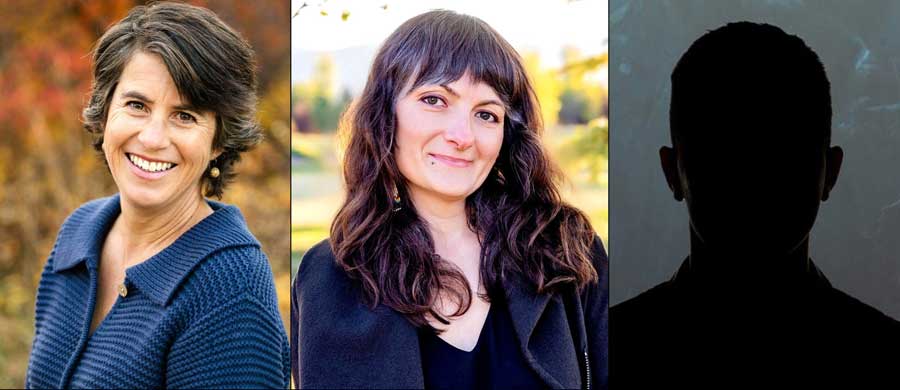
EDITOR’S NOTE: EastIdahoNews.com will publish the responses to candidate questionnaires leading up to the municipal election on Nov. 4. Read them all here.
DRIGGS — Three candidates are running for mayor of Driggs this year.
They are Incumbent Mayor August Christensen, Jennifer Bragg and Chris Steed.
To learn more about the candidate’s platform, EastIdahoNews.com sent the same eight questions to each candidate. Their responses, listed below, were required to be 250 words or less, and were only edited for minor punctuation, grammar and length.
Elections are on Tuesday, Nov. 4.
QUESTIONS:
Tell us about yourself — include information about your family, career, education, volunteer work and any prior experience in public office.
Christensen: Hi, my name is August Christensen and I am running for mayor of Driggs for a second term. I have lived in Driggs since 1998, met my husband here and we are raising our twin 14-year-old daughters here. I have a BS in Early Childhood Education with a focus in Administration. I started my own business, a preschool, in Driggs and have taught hundreds of local children in our valley while working with their families as well as mentoring and teaching teachers for over 30 years. I was a city council member for 8 years and am now in my 4th year of being the mayor. I have served on numerous boards and volunteered over the years. Currently I serve on the Eastern Idaho Water Rights Coalition board, Teton Regional Economic Coalition and the Teton Valley Early Childhood Collaborative.
Bragg: I currently serve on the Driggs City Council and am also a wife, mother of two, and small business owner. My background is in business management, bookkeeping, website design, and creating streamline systems for higher efficiency. My family and I moved to Teton Valley in 2021 to raise our children in a safe, supportive community. As a former affordable home owner in Jackson, Wyoming of 16 years, I understand firsthand the housing and growth challenges facing our valley.
Finishing my term under the current Mayor has only strengthened my belief in the need for steady, accountable leadership moving forward. My husband and I support our family and have built a life through our trades, and I believe strongly in creating opportunities for others to do the same. I am especially passionate about youth programs and expanding educational opportunities so that young people in this valley have real pathways to build stable, fulfilling lives of their own.
Steed: 1. I am married, have 2 children and a career in the Insurance Industry.
What is your proudest accomplishment?
Bragg: I would say my greatest accomplishment is my life so far, I’ve been with the love of my life for 20 years, and together we’re raising two smart and kind children. We’ve worked hard to provide them with not just a home in the physical sense, but a place filled with love, values, and stability. Everything we’ve built has come from working side by side, with no help beyond each other. Growing up with a single mother, I wasn’t handed privilege or favors. I worked for everything I have, and that’s a point of pride for me. I have stuck to my ethics and bootstrapped the whole way through. I’ve worked hard to be an honest and authentic person who tells it like it is. I pride myself on being nonpartisan and open, taking people at face value without judgement. I believe in making decisions based on facts, seeking compromise, and hearing out all sides. How can you make informed choices without first gathering all the information? To me, that is the essence of true leadership, and it’s what I feel so many people believe is missing in government today.
Steed: While in the United States Navy attached to 1 st Battalion 1 st Marines with First Marine Division, I participated in Operation Desert Storm which ultimately liberated the country of Kuwait.
Christensen: Helping people. From being a mother, wife, teacher or mayor, it always comes back to helping others. I am proud of moving a house across the valley and turning it into an early learning center which can now serve over 50 working families. When residents shared they didn’t feel safe crossing Main Street I worked with Idaho Transportation Department to install bigger more visible crosswalks, added blinky lights and flags for crossing, and even art on the edge of the road to slow vehicles in our downtown core. I am proud of modifying our streetlights to be Dark Sky compliant after our community identified this in the Comprehensive Plan. Residents along these roads noticed big differences inside their homes at night and were very appreciative. Even little things like adding seating inside and out of our City Center building makes me proud. These have activated our space, brought people together and made people feel welcome.
Why are you seeking political office within your community? Briefly explain your political platform.
Steed: Voting to me is one of the most important things that we can do. I don’t feel that some of our elected officials have a long-term vision for our city. I am using this opportunity that I wouldn’t otherwise have to bring awareness that this city is growing and is going to continue to grow. Elected officials need to be ready for that growth and start thinking 10-15 years into the future.
Christensen: My proudest accomplishment, helping people, is also what I enjoy. Our residents thank
me for what I do instead of complain to me. I want to continue to serve our community. I have three main areas I would like to continue to work towards…
- Finding ways to house our local Teton Valley workers in the Karl Johnson Foundation’s Gemstone subdivision in addition to other areas of town while working with the Housing Authority.
- Continuing to work closely with our airport and finding ways we can all give and take to create a harmonious collaboration.
- Working creatively to keep utility costs down while ensuring the Wastewater Treatment Plant project continues as planned.
Bragg: My platform is about restoring trust, stability, and accountability in Driggs. We’ve had record staff turnover, outdated personnel policies, and consultant contracts with little to show for them. That’s not leadership, that’s waste. I believe in being honest, nonpartisan, and fact-driven — I take people at face value, hear all sides, and make decisions based on what actually benefits our community.
What are the greatest challenges facing people in your community? What is your plan to meet and overcome those challenges?
Christensen: Housing. Teton Valley used to house our own workers, now more are moving further away due to rising housing costs and availability. The city of Driggs has put policy in place for developers to create more housing for local workers in Teton County, ID. In the last two years we acquired three housing units to house our employees. I want to do more of both. I continue to partner with our Housing Authority to ensure we continue moving forward with additional projects.
Bragg: One of the biggest challenges in Driggs right now is instability in city government. We’ve had record staff turnover, outdated personnel policies, and consultant contracts with no meaningful results. That instability trickles down. It slows projects, wastes taxpayer money, and erodes public trust.
Another major challenge is growth and housing. People who work here are being priced out, and if we don’t get serious about affordable housing, we risk losing the very people who make this community function, our teachers, first responders, and local workforce. At the same time, infrastructure is strained, and too often decisions feel like they serve outside interests instead of residents.
My plan is straightforward:
- First, stabilize our workforce by modernizing personnel policies and creating a city government where people actually want to work.
- Second, increase transparency so residents know what’s happening at City Hall, no more decisions behind closed doors. Third, tackle workforce housing head-on by working with the joint housing authority and leveraging city partnerships to ensure growth includes units our community can actually afford.
- And finally, make growth work for us by prioritizing infrastructure and services that support residents, not just developers. I believe leadership means listening to all sides, making fact-driven decisions, and cutting through the noise.
That’s how we keep Driggs livable for the people who call it home.
Steed: There are many challenges in our city. Everyone wants to bring up Affordable Housing. This has been talked about for over a decade. I’m just going to say it: It’s not going to happen. According to the city website there are 794 people in the labor force in Driggs. The Median Household annual income is less than $76,000. Average price of a house is almost $850,000.00. It’s simple math and it doesn’t add up. The other big issue is the Wastewater treatment plant. We have been fined time after time and now the EPA, the DOJ and the State of Idaho filed a consent decree this year requiring the city to upgrade the facility. Well, we better just figure it out.
How will you best represent the views of your constituents – even those with differing political views? How will you communicate directly with constituents?
Bragg: How will you best represent the views of your constituents – even those with differing political views? How will you communicate directly with constituents?
The best way to represent everyone, even those who don’t share my views, is to start by listening. I’m committed to being fact-driven and practical, making decisions that serve the whole community, not just one side. These positions are nonpartisan for a reason and city government should focus on solutions, not politics.
True transparency is at the core of how I’ll do that. Yes, there’s a monthly newsletter and a public comment period at city council meetings, but I’ve seen too many residents shut down without their concerns ever addressed and sometimes over something as small as a technicality. Meeting the letter of the law isn’t the same as meeting the spirit of public engagement. For example, notifying neighbors within 300 feet of new development may check the legal box, but it leaves renters which make up nearly 40% of our community, completely in the dark about changes coming to their neighborhoods. Some of those households being the most affected. That’s not transparency, that’s exclusion.
My plan is to prioritize public education, so people actually understand how City Hall works and how their voices can shape it. Pair that with clear updates through social media and open forums, and residents won’t have to dig for information or wonder what’s happening. Real transparency means the community can see what’s happening, understand it, and have a voice in it. That’s how you build trust across political lines and truly represent everyone.
Steed: I think the best thing to do is sit down with people and listen. The people that live here love this place as I do, and I believe if you get people together and ask them for their ideas for solutions, they will have valuable input. Get together, gather ideas and figure out the best solution. The position of Mayor is the face of the community and must present solutions to the board and council of the town, then they make the decisions, the mayor then has the responsibility to execute and implement the decisions. The next Mayor needs to take those ideas and encourage the political bodies to act on them.
Christensen: One of the first things that I did when I became mayor nearly four years ago was created ways to connect with constituents as well as helping to educate and be transparent. I added a way for the public to give public comment at City Council meetings outside of public hearings. This is called Community Input and is the first thing on the agenda. Community Conversations were also created which is a nearly monthly event with a different timely subject in which the public is invited to join and have a casual conversation.
Last month was at the Wastewater Treatment Plant and we discussed the updates. While I was previously on City Council, I advocated for Driggs to educate our community through a regular newsletter and social media. This started shortly before I was elected and has been ongoing since. Many constituents are appreciative of these additions. I also make myself available for in person meetings with those who like a one-on-one option. Listening to and helping the residents and businesses of Driggs is important to me. I represent the people of our community and their interests locally, regionally, at our State Capitol and nationally when needed.
What parts of the city budget could use more funding? Where are places in the budget where cuts could be made?
Steed: 6. On the budget. I don’t think that I am able to accurately comment on this one. Having written annual budgets for years for entities ranging from Restaurants to a Major Hotel Chain, I need to see the FULL budget, the upcoming projects and requests to fairly answer that.
However, I will say that a priority needs to be getting at least one Resource Officer into the schools. Not sure why this is not funded.
We have the Sherifs office patrolling the airport in case someone wants to steal a plane but not our schools where our future leaders are. Not to mention the teachers and all the other staff members.
Also, I realize this will probably get laughs, but I am sincere that I just don’t understand why if we all live in one of the most expensive places in Idaho and have all this tax revenue why when I put my Kayak in the water at Bates my car gets destroyed by potholes. I don’t understand that. I bet if we held a community event one Saturday a whole bunch of people should show up with tractors, shovels, dirt and whatever is lying around their property, and we could get that lot fixed.
Christensen: Our Wastewater Treatment Plant project is one area that could use more funding. I am working to find creative ways to offset the costs to our utility rates. It is a big project and we are held to a strict timeline by the Department of Justice. We are working with many professionals to make the best plan for Driggs financially.
Every year our budget needs to be cut to be balanced. City Council works hard to make this happen. Our small staff works hard to be efficient on our limited budget.
Bragg: The city budget should reflect community priorities, and right now we’re missing the mark. We need more funding where it directly strengthens City Hall and serves residents. Modernizing personnel policies, creating a functional HR system, and stabilizing our workforce. You can’t run a city if people don’t want to work there, and high turnover only ends up costing more in the long run. Workforce housing is another area where investment pays off, because without it we lose the
teachers, first responders, and local workers who keep Driggs running.
Where can we cut? Start with expensive consultant contracts that never deliver results. In the past four years, Driggs has spent well over $100,000 on consultants — $20,000 for an HR policy we still don’t have, $18,000 on a third-party workplace investigation, and tens of thousands more at the airport. That’s money out the door with little to show for it. We also need tighter oversight on discretionary spending, making sure funds go toward services residents actually use rather than projects that look good on paper but don’t serve the public.
And beyond cuts, we should be smarter with the money we already have. Every dollar matters, and smart management means stretching those dollars further for the people of Driggs.
Regarding the airport, what is your vision for the Driggs-Reed Memorial Airport, what role should it play in the community, and what is its impact on the local economy?
Christensen: The Driggs-Reed Memorial Airport is a city airport. It is managed by the city just like our
parks, roads, water, etc. Many local pilots refer to the airport as the best small airport in the west and do not want it to grow. I hear from the community they do not want more hangars or hangar-home developments. With the airport in town, it is important to continue to find ways that the airport can be a good neighbor. In addition, ways that it can be part of the community. Recently, we had a party on the runway after the Runway Shift project and before it opened to air traffic. Hundreds of residents came out to enjoy the experience of walking, biking and roller-skating on the runway. I would like to find more ways that pilots and residents can come together as well as give and take.
Bragg: The Driggs-Reed Memorial Airport is a city department, just like water, sewer, or public works. My vision is that it should be managed the same way, by the rules, with safety, budgetary responsibility, and community benefit as the priorities. I’m not “pro-airport” or “anti-airport.” The airport is here to stay and is now majorly FAA funded, but how it operates should serve the entire community, not just the ultra-wealthy flying in on private jets.
Over the past four years, private jet traffic has only increased, yet most residents haven’t seen the benefits. That imbalance has created frustration and mistrust. The airport can and should be an asset by supporting local businesses, tourism, and jobs, but it has to be run transparently, with its costs and impacts clear to the public.
People also need to be better educated on the facts around the airport. Over the last four years, our community has fallen victim to misinformation, often fueled by fear tactics. The city should take the lead in educating residents with clear, accurate information so people can make decisions based on facts, not rumors.
I also see opportunities for the airport to better serve residents through more youth and community programs. From aviation education and STEM initiatives to career exposure for local students. If run well, the airport could inspire the next generation while building skills and opportunities that stay in the valley. If it’s here to stay, it should at least be worth it to the community as a whole and work for us and our children.
Steed: Not sure what exactly this question is asking. The airport is primarily funded by the Federal Government. The airport is here to stay, and it probably always will be. I would, however, not be on board having it rated for commercial flights, that would require too much staffing and headaches. The city does need to have open communication with the plane and hanger owners about their needs as well.
Another apparent economic driver is the Grand Targhee Resort expansion. What impact will that development have on Driggs? How can the city capitalize – or mitigate – issues related to the presumed growth? For instance, what’s your strategy for parking in Driggs, and how might it benefit or harm the city?
Bragg: The Grand Targhee expansion is often framed as an economic opportunity, but for whom? Teton County, Wyoming or Teton County, Idaho? The impacts will surely be felt most in Driggs. More development on the mountain means more demand for housing, more congestion on our roads, and more strain on infrastructure and services that are already stretched. When growth outpaces planning, it’s local residents who shoulder the costs. Yet, there is an argument to be made for upgrading infrastructure. Mechanical components degrade over time, from lifts to restrooms, the safety and environmental/wildlife impacts should be a factor in all decision making.
I’m cautious about expansion because I’m not sure the potential benefits outweigh the risks to our community. Tourism dollars don’t make up for long-term impacts on affordability, traffic and the overall quality of life. That’s why my role is to take in all the information, listen to every perspective, and then advocate first and foremost for Driggs, because our town is where the impacts will actually land.
Parking is a good example. An increase in resort traffic will spill into Driggs, but endless pavement downtown is not the solution. We should prioritize residents and local businesses — with smarter options like shared lots, satellite parking or shuttle systems that keep downtown walkable and accessible without overwhelming it. Overall, maintaining our small town charm.
My focus is on balance: protecting residents, ensuring growth pays its fair share, and making decisions based on facts rather than promises. Driggs deserves a strategy that puts community needs first.
Steed: Aw the Targhee expansion, that will ultimately be decided by the private owners, Federal Government and the State of Wyoming. I know it is a HUGE issue with all of us who live here. For me, I am not going to sugar coat the way I view it. It’s going to happen whether we like it or not. So, we need to start preparing for it.
Do we want the out-of-town visitors to drive up the hill, ski, then go to Jackson, Rexburg or Idaho Falls to their hotels. Or do we want to capture the revenue that they bring in?
Me, I say let’s grab it. We need more lodging, more restaurants in our town. We need to figure out how to mitigate the traffic, if that means wider roads, then let’s figure it out. Question about parking. If that is determined to be a foreseen issue, then why don’t we build some parking lots in town and charge a daily rate to park and ask Targhee to put those on their bus routes. These things need to be thought about now and not wait.
If we wait, everyone will just be sitting back 6,7 or 8 years from now complaining about traffic wondering why no one thought to do anything.
Christensen: Grand Targhee Resort is an interesting situation. Even though it is just up the road, it is still in another state. Due to it being in Wyoming, Driggs and Teton County, Idaho, do not get taxes from the resort, even though we have the impacts on our infrastructure. GTR employee housing is in Driggs, we have an agreement with GTR for the shuttle bus, we have two Park and Ride lots in town servicing the shuttle users and both are doubling in size. Driggs would not be what it is today without GTR. Many of the residents and visitors alike ski, mountain bike and hike at GTR. Like many of the residents, I support GTR growing on their own land and wish to preserve our small-town culture in our valley.