



Catholics worried as 5 local priests will leave due to changes in immigration law; waitlist for visa may reach 20 years
Published at | Updated at
IDAHO FALLS — Changes in immigration law over the past couple of years have prompted Catholic religious leaders to raise concerns about the implications for thousands of parishioners in eastern Idaho, who may face interruptions in services due to the loss of foreign-born priests.
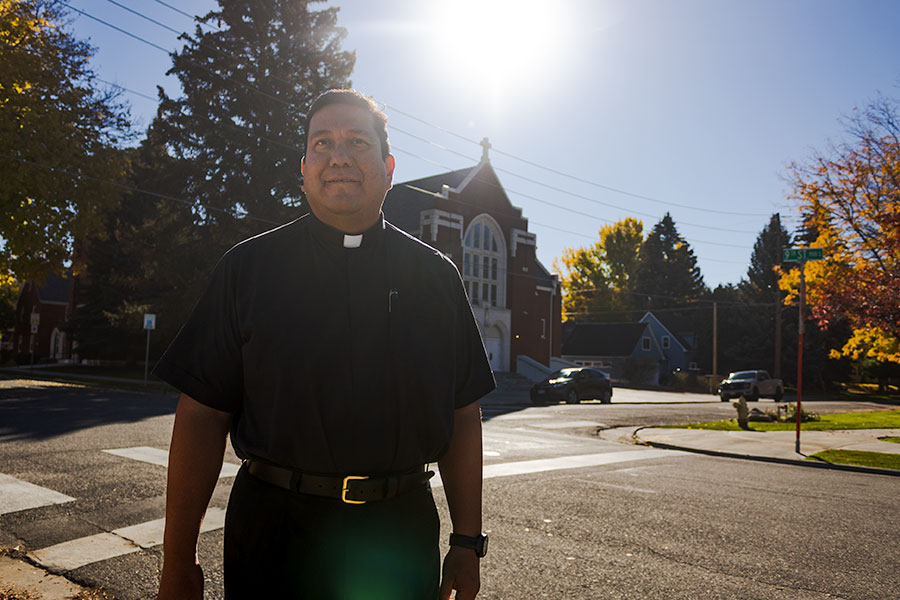
Rev. Francisco Flores, with the Pope Saint John Paul II Catholic Parish in Idaho Falls, spoke to EastIdahoNews.com about a recent newsletter he sent to local congregations, explaining that five local priests will soon leave the U.S., affecting thousands of parishioners.
Idaho, managed by a single diocese, the Diocese of Boise, is divided into regions known as deaneries that serve more than 280,000 parishioners in the Gem State. Marco Roman, director of communications for the diocese, stated in an email that over the past four years, the number of Catholics in Idaho has increased by 100,000 new parishioners.
On this side of the state, the eastern deanery comprises up to 11 priests covering the Idaho-Utah border, extending west to American Falls, north to the Salmon area, and east to the Wyoming border.
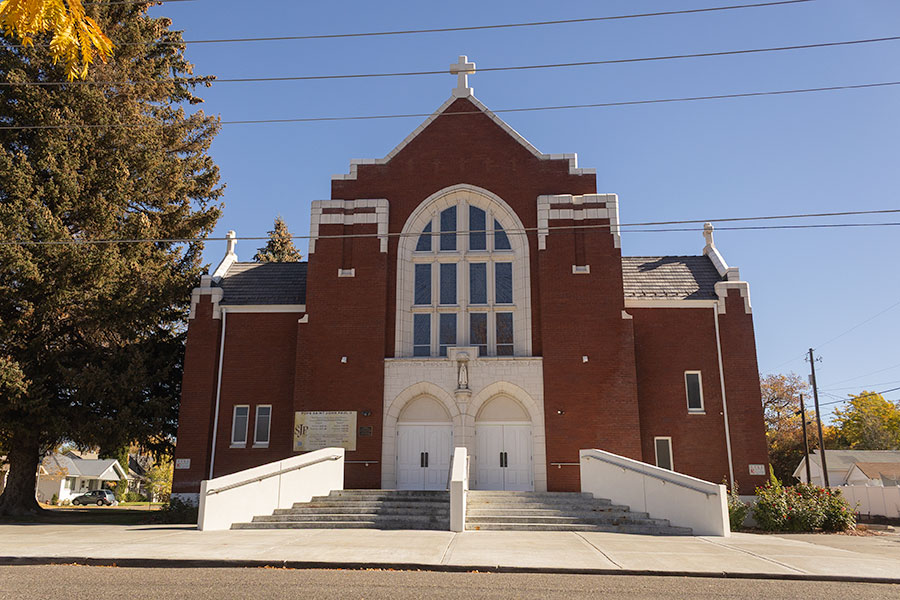
Many of these priests travel to nearby cities to administer the sacraments, manage schools and perform other duties, such as last rites for their parishioners.
“Our religion is very highly focused on what the priest does, so we cannot have the full exercise of our religion without the ministry of a priest,” Flores said.
Flores said the earliest parishioners will see this impact will be in Pocatello in March.
“The rest will be gone by June of 2026, but they’re still here (now), so there’s still time,” Flores said.
Changes to immigration law
According to the United States Conference of Catholic Bishops website, foreign-born religious workers are issued short-term R-1 visas that allow them to work in the U.S. for up to five years.
After that, visa holders return to their country of origin for up to a year before returning to the U.S. with a new visa.
To avoid needing to travel in and out of the country, the USCCB states religious workers will later apply for an EB-4 or a green card to obtain permanent residence in the U.S.
Flores said, looking at the issue as a whole, many of the priests or religious workers in the country are reaching the end of their R-1 visas and have applied for a green card but are running out of time due to the limited number of visas available.
The limiting factor is due to a change in federal law that happened in 2023 when the U.S. Department of State altered the process by which immigrants seeking to enter the United States obtain visas. It applies to those seeking an EB-4 visa, which is part of Employment-Based Immigration and is available to religious workers, special immigrant juveniles and others.
For religious workers who come to the U.S. on an R-1 visa, the EB-4 or a green card is often the next step toward obtaining permanent residency.
The USCCB states that changes made in 2016 were due to the number of unaccompanied minors seeking entry into the United States years prior. To respond, the U.S. Department of State began prorating EB-4 visas for applicants from Guatemala, Honduras and El Salvador.
However, in 2023, the State Department stopped prorating visas to Latin American countries, creating a backlog of 200,000 applicants.
Flores told EastIdahoNews.com with this new change in law, he’s seen wait times of up to 20 years before they get an EB-4.
“The ramifications are being felt by not just priests, but even a lot of other professional people who come into our country,” Flores said.
While Flores was speaking as a leader in the Catholic Church, he said this problem extends beyond Catholic congregations.
“This is an issue that will affect clergy or ministers from any denomination, any religion, who come in from a foreign country, in our corner of the world, of our state, it’s affecting Catholics more than others,” Flores said.
RELATED | Mixed-status families navigate a legal web and fear separation
Fears of leaving
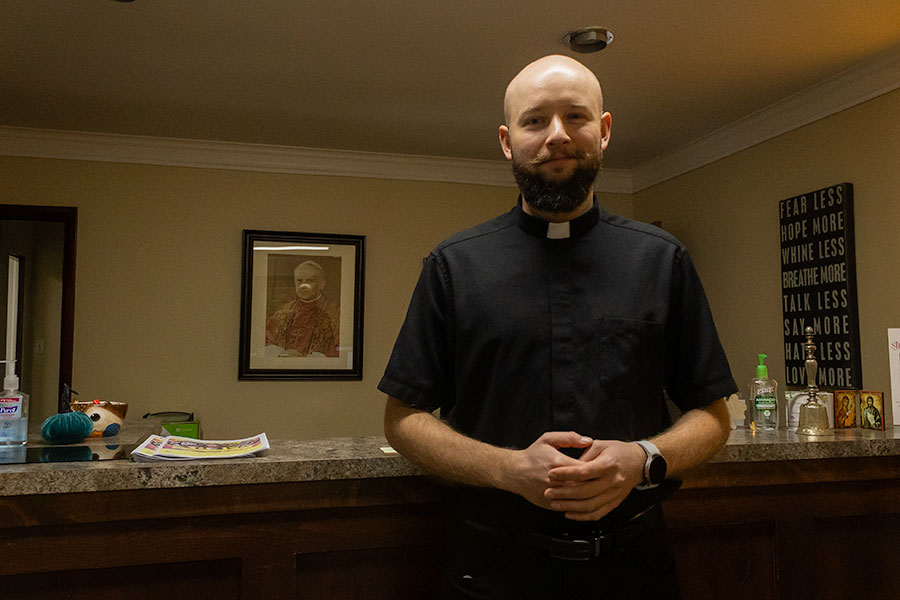
Rev. Aleksander Dembowski is one of the five priests in the deanery who will leave the country, as he was born in Poland.
After completing his seminary studies and coursework in scripture, Dembowski told his Bishop that he was considering becoming a missionary.
He said while they were considering other potential countries, his Bishop recommended the U.S., where he was sent to Michigan and later ended up in Idaho.
It was in Idaho where Dembowski was ordained and incardinated in the Diocese of Boise, meaning he’s attached to Idaho.
According to Roman, many dioceses across the nation rely on international clergy to fill gaps left by a shortage of native-born priests.
“Currently, approximately 22% of the 79 active priests in Idaho are foreign-born,” Roman said.
Dembowski said his concern is that, while the eastern side will see the biggest loss of priests, the number of parishioners each priest serves is enormous. He said the number can range up to 3,000 parishioners.
Some of his duties involve him helping out at some of the Catholic schools in the area, visiting prisoners to give mass, visiting senior homes or hospices and even performing last rites.
He said often times, when doing last rites for individuals, he is the only person in the room as family of individuals are either on their way or in other states.
“Humanly speaking, we are scared to leave those people, because there is a need for us,” Dembowski said. “We left our countries, left our families, so we have everything here.”
Religious Workforce Protection Act
In Flores’s newsletter, he discusses a potential bill introduced in Congress in April by Democratic Sen. Tim Kaine of Virginia.
Known as the Religious Workforce Protection Act, cosponsored by Sen. Jim Risch, Sen. Mike Crapo and four other senators, the bill aims to extend the R-1 visa to allow them to obtain an EB-4 visa.
The act would also no longer require those visa holders to leave the country for a year, allowing them to remain in the country while they renew their R-1 status.
Dembowski said the process for the R-1 required him to leave the country, return to Poland, and present a document he obtained in the U.S. to the U.S. embassy in Poland to renew his visa.
Flores said he hopes the act can be fast-tracked due to the effects the loss of the five priests will have on parishioners.
“I think they need our voice, because it just hasn’t gotten the attention it needs,” Flores said. “The government shutdown is not helping… I’m encouraging people to write any politician they know.”
While the church is waiting for the government to reopen, Roman said the Diocese of Boise is working on plans to keep services ongoing without any interruptions.
For Dembowski, he said, while he’s considered a missionary and he doesn’t have an established home, he’s been chosen to serve the people of eastern Idaho.
“For us, it’s not the place. They’re the people, (the) community here, so leaving them, it’s like living home,” Dembowski said. “If it happens that we have to leave the country, I am still a priest, and I still need to celebrate the sacraments.”
Dembowski said that while he waits for his visa, he will find parishes in Poland to serve and support.
“I don’t want to leave the country… It’s important to have a priest,” Dembowski said. “It doesn’t matter what my name is… they need a priest.”