



Looking back: Train wreck in Idaho Falls kills 32 cattle; boy told he’d never walk again learns to ski
Published at | Updated at
IDAHO FALLS — EastIdahoNews.com is looking back at what life was like during the week of Jan. 19 to Jan. 25 in east Idaho history.
1900-1925
ST. ANTHONY — A massive fire broke out in St. Anthony and wiped out the “business heart” of the city, the Bingham County News reported on Jan. 23, 1913.
It’s not clear exactly how much damage the blaze caused, as the headline states it was a “half-million dollar fire” while the article states it was “a loss of a quarter million dollars.”
Luckily, there were no deaths, and the paper said that was due to a heroic volunteer firefighter named James Fryer.
He reportedly crawled into the basement of one of the burning stores and made his way through the dense smoke to the second floor. He grabbed some dynamite that was inside before exiting the building.
“Had this exploded there would undoubtedly have been loss of life,” the article reads.
The C.W. & M. store was a total loss, as was the First National Bank building, the Case Furniture company, and a number of dentist, lawyer and doctor offices in the Ross-Hamer block and Gwynn-Ferney building.
1926-1950
IDAHO FALLS — An investigation was underway after a train crashed into three cattle cars and killed 32 cattle, the Idaho Falls Post Register reported on Jan. 20, 1947.
The 16-wheel drive engine pulling a long string of cars plowed into the three cars loaded with cattle as it slowly rounded a sharp curve on the northern end of the yards in Idaho Falls. It happened in the dark at 5:50 a.m.
Herman Peterson was the engineer, and E.M. Olson was the conductor of the train that crashed into the cattle.
The investigation was to determine whether the southbound freight train had proper clearance to enter the Idaho Falls yards.
In addition to the 32 cattle that were killed, the three cattle cars were smashed beyond repair and the front part of the engine was damaged in the crash. No people were injured.
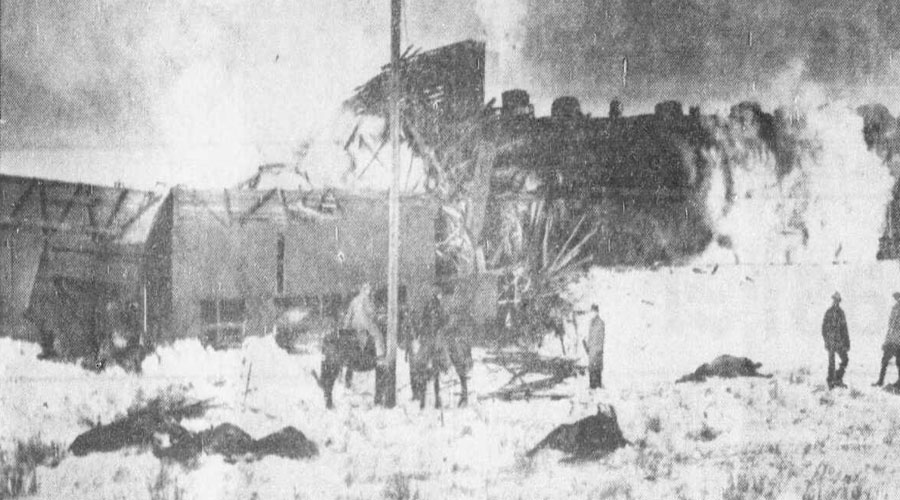
The animals were part of a herd of 140 being shipped by John Hoyt and Sons, from Denver, Colorado, to the animal products firm.
H.W. Stoker, assistant Union Pacific Division Superintendent at Pocatello, said the cause of the collision was not due to faulty equipment.
When asked if the trainmen on the southbound freight train, which crashed into the cattle cars, had violated regulations, he said, “I’m not in a position to say anything at this time.”
Stoker stated that no disciplinary action had been taken, pending completion of the investigation.
1951-1975
DRIGGS — An 11-year-old Driggs boy who had polio and was told by doctors he’d never walk again was defying all odds and learning to ski, the Idaho Falls Post Register reported on Jan. 20, 1955.
Boyd Bowles was stricken with Polio in December 1946 at the age of 2. He spent 10 months during 1947 in the Boise convalescent home with both legs and one arm paralyzed.
He eventually returned home to Driggs but spent two years on crutches with frequent trips to the LDS Hospital for therapy. Since having polio, he made 23 trips to Boise for treatment and was regularly checked by local physicians.
“When winter dropped its first white flake, the young lad had only one thing in mind — skiing — and he was determined he would be on the hill with the rest of his friends when ski school took up for the first session,” the paper reads. “He was.”
Bowles became a member of the KIFI Junior Ski School and, according to his private instructor, was “doing great.”
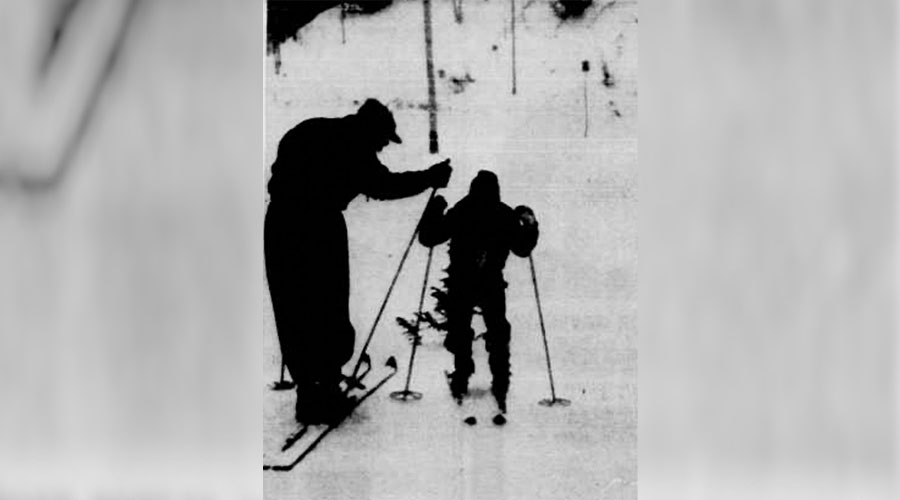
The article mentioned he didn’t have the most expensive equipment, but one of the school instructors said, “He could learn on barrel staves with that kind of determination.”
Boyd had graduated from a hip-length steel brace to one which came to his knee. His father said his son’s right leg still had no muscular control. He only had one good leg to get up and downhill and one arm was still weak.
“His parents said the youth would still be in a bed if it wasn’t for the help received from the Polio Foundation and thanked them for his progress in his uphill battle to walk again,” the paper wrote.
1976-2000
POCATELLO — A 27-year-old man was in serious condition following an industrial accident, the Idaho State Journal reported on Jan. 25, 1976.
Bruce Carter was working at the Bucyrus-Erie plant around 9:30 a.m. when a large piece of steel broke away from some machinery and struck him.
He suffered injuries to his back, chest and had a puncture wound in his leg. Carter was rushed to Bannock Memorial Hospital via ambulance.