



Balanced beds: Making balance and simplicity work
Published at
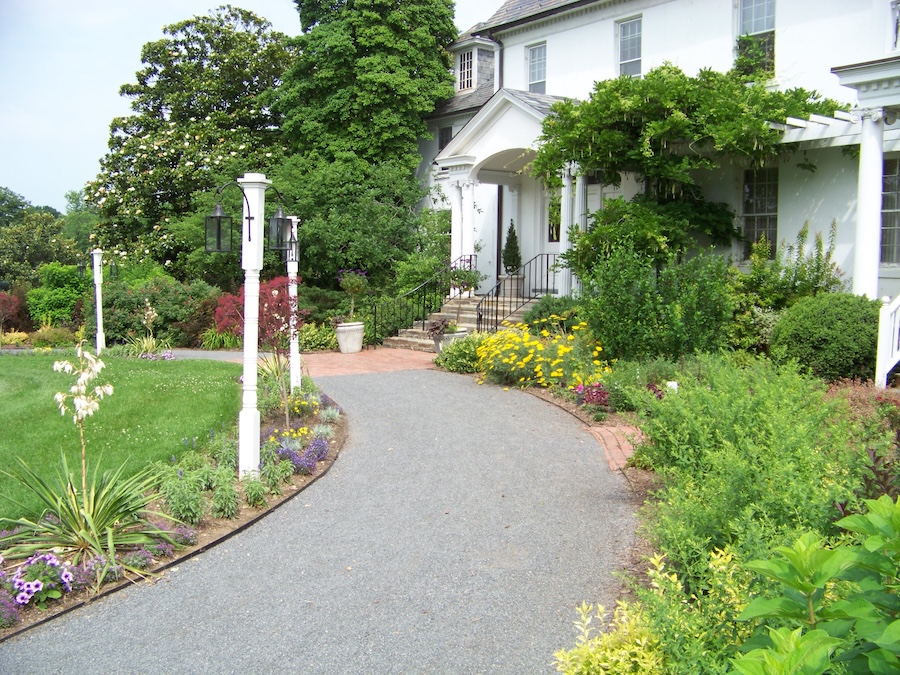
EDITOR’S NOTE: In this series on the principles of landscape design we will be focusing on correcting common design flaws while accounting for East Idaho’s climate. Each week until February we will take a detailed look at a couple of principles and how you can apply them to your property, elevating its aesthetic.
Subconsciously we look for balance in everything, balance can be seen as well as felt in a sense, color for example is seen but we also talk about it in terms of feeling such as cool colors and warm colors. In texture course is “heavy” and a small, fine textured plant would be considered “light.”
In garden and landscape design we consider quantity and placement of plants when we are looking to achieve balance.
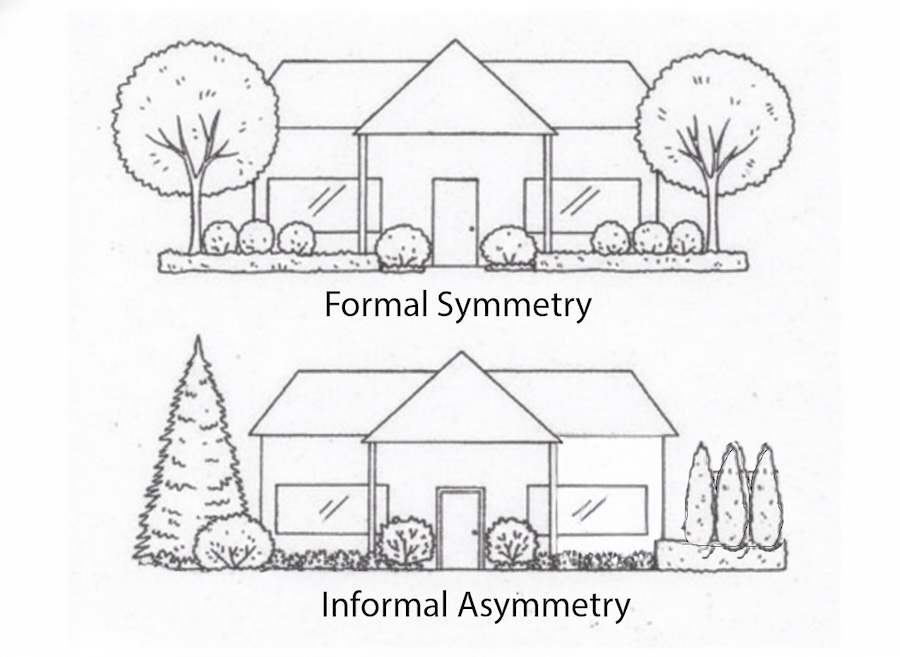
Symmetrical balance is the repetition of elements on either side of an axis like a mirror image. This is used prominently in very formal landscapes.
Formal design can relate strongly with the architecture of a house. Especially styles such as Georgian, known for balanced facades and columns; Federal, an elegant American style with refined details; Greek Revival, evoking ancient temples with prominent columns; and French Provincial, featuring steep roofs and rustic elegance, amid others. To create harmony and balance with such houses we can use both formal symmetry and plants whose architecture, or branching form, reflects that of the house.
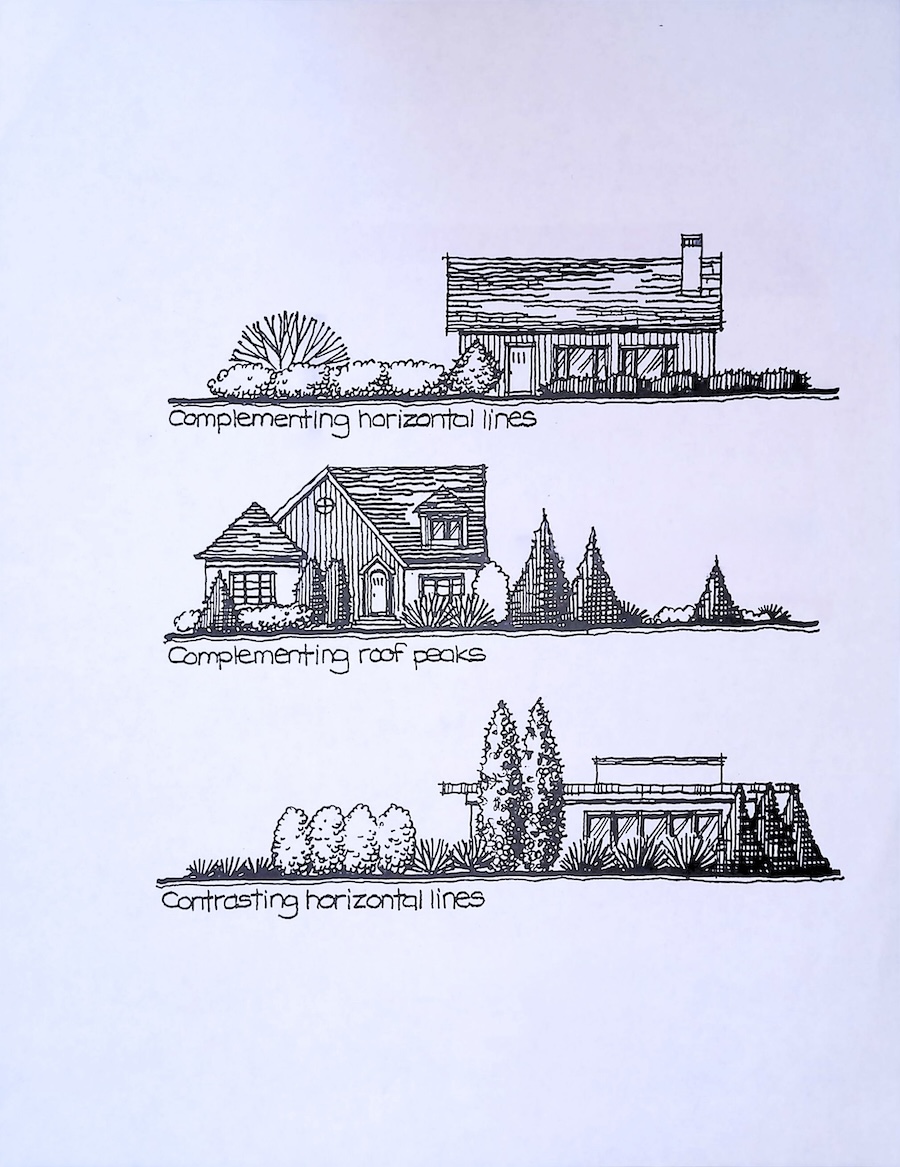
Difficulties do arise when trying for formal, symmetrical gardens in our climate. Once some winter injury hits one tree, the look suffers significantly. They can also look stiff and are harsh against a backdrop of mountains and foothills if that is your immediate surroundings. They look more at home around urban areas. The solution to these challenges is to shift to informal, Asymmetrical Balance. An informal garden still needs a strong sense of design and balance so it doesn’t feel lopsided, random or disconnected from the house.
House styles such as Victorian, Farmhouse, Ranch, and Modern lend themselves more to asymmetrical, balanced gardens. But how do you create balance without being formal? An easy example is to use a large mass of plants on one side to counter a single accent tree on the other.
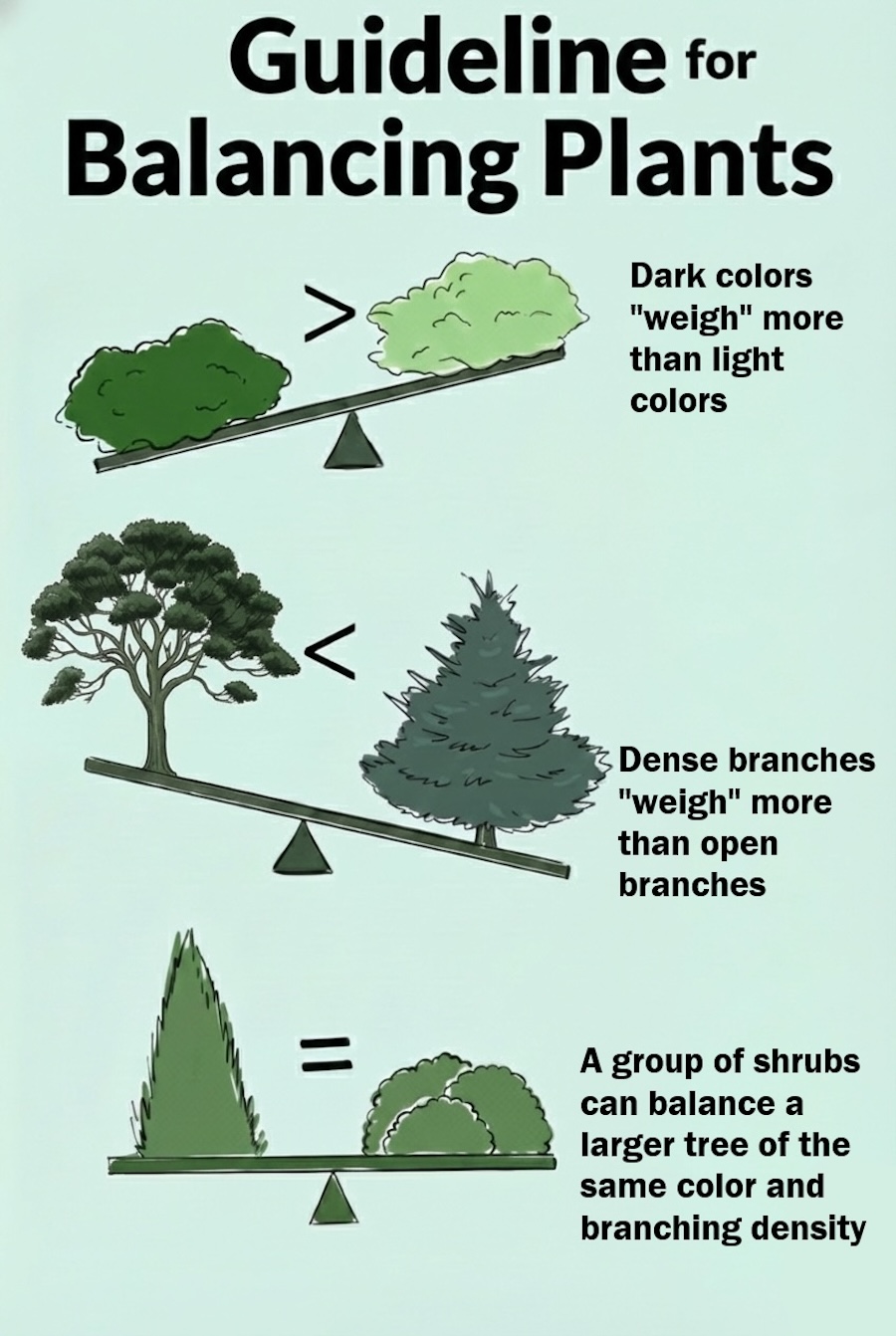
In asymmetrical balance both halves of a scene may express the same visual weight. Matching the mass of objects can create balance. This does not need to be directly opposite; one element may be closer or further away in the frame from the “axis” point, as long as the balance is achieved from the intended viewing point it will work. Take the following example.
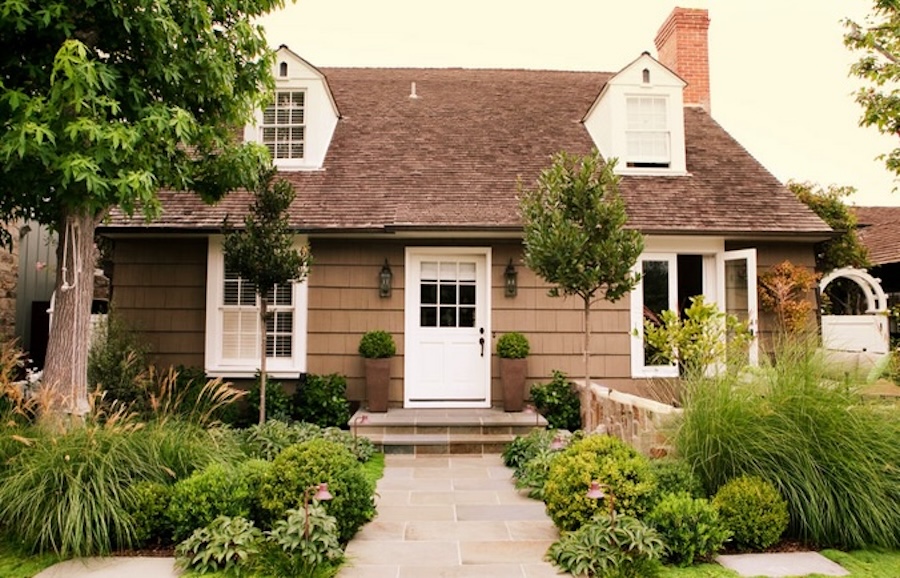
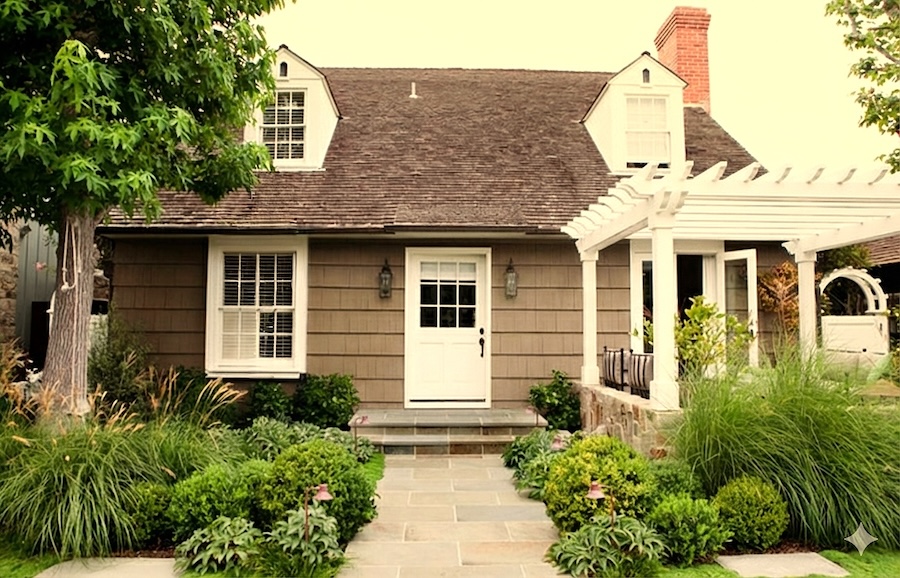
In this inherited landscape the house has strong bilateral symmetry. Two small trees were added to fit the symmetry of the house but disregarding the site specifics. The large shade tree on the left is hindering the growth of the small tree under it. Without doing major plant changes, balance can be achieved and still fit with the slightly formal look. The large shade tree can be balanced by adding a pergola or trellising to the patio on the right- the two small trees removed altogether. And for simplicity and functionality of the small porch the planters are removed.
One form of symmetry exists a fair bit in nature and doesn’t get used as often in our built environment and that is Radial; in which balance emanates from a central core like the rays of a sunflower or spokes of a wheel. It is sometimes the most dynamic type of balance, for it is reminiscent of explosive action.
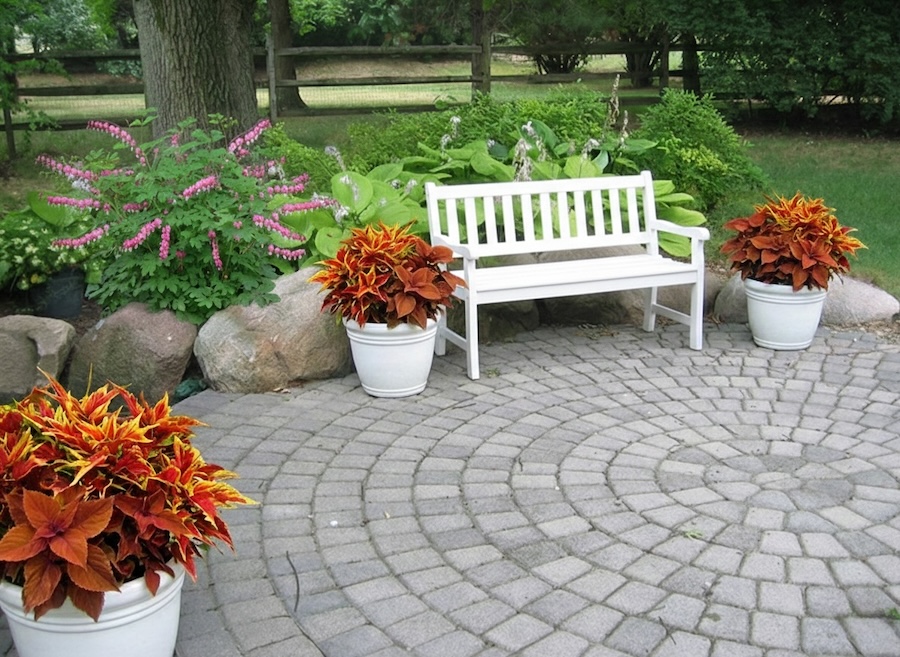
So far, I have focused on balance of landscape elements, but we also need to balance the use of design principles with each other. Another principle of design that pairs well with balance is simplicity.
I usually encourage simplicity by saying- limit the number of plant varieties and hardscape materials (e.g., only use flagstone and gravel, not flagstone, pavers, and river rock). A simple garden is not a boring garden. It shows thoughtful selection of plants rather than bare minimalism. The garden’s essence and important features stand out instead of being hidden in excessive plant material. It involves omitting unnecessary items, limiting the variety of plants, and ensuring that each element serves one or two design purposes.
That being said, I tend to see too much simplicity and a lack of variety and bounty. Whether it is from lack of plant knowledge, uncertainty of placement, or desire to keep costs down- I see “stingy” flower beds more often than “cluttered” ones. A simple step is to add more of the same plants that are already in your flower bed. By filling out the bed it also shades out weeds, many weed seeds need that bit of light to indicate they are near the surface and in a prime location to germinate.
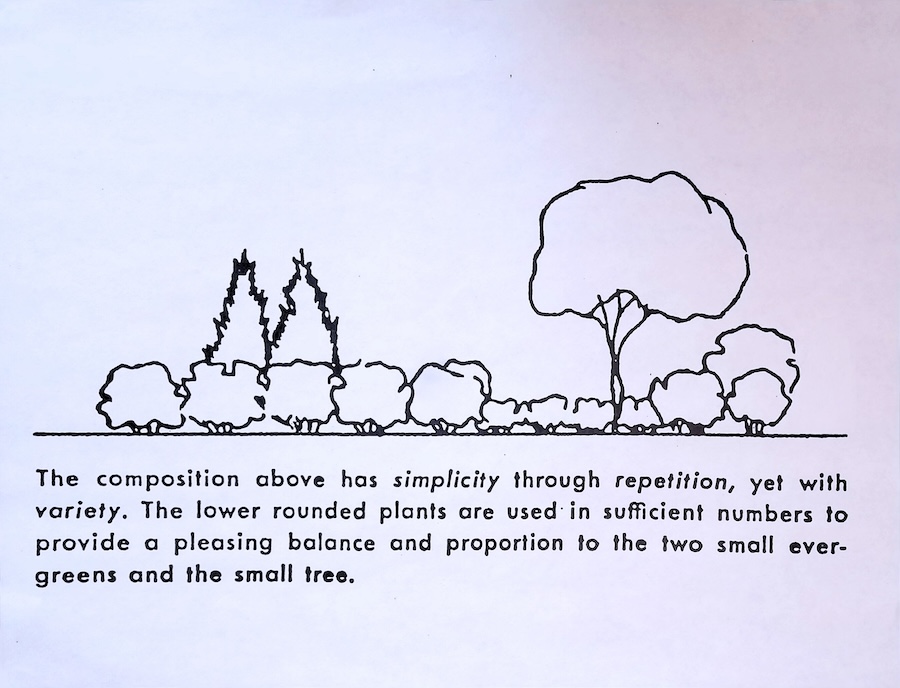
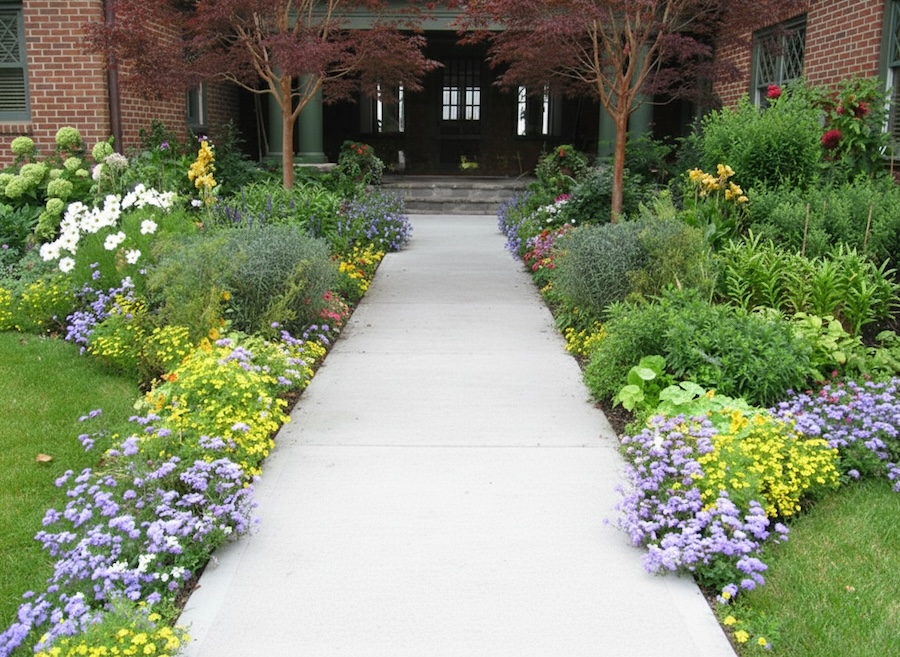
Though this composition in Image 4 uses trees and shrubs it can easily be applied to a flower bed using annuals and perennials. Using a mix of tall, medium, and low-growing plants creates depth and balance. Here in this photo is a summary of everything I’ve
talked about so far.
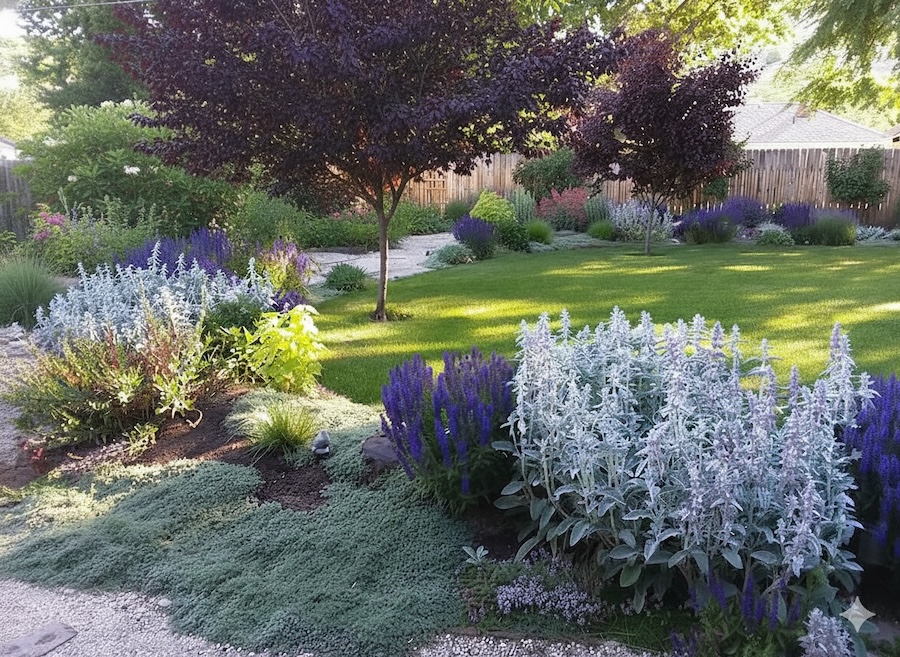
Around the lawn the flower beds are kept simple by using, about 4-5 plant species.
Each individual planting group is balanced and repeated around the lawn. The two purple leafed trees (examples include purple leaf beech, purple-leafed flowering plums, smoke tree, purple and bronze-leaved crabapples) are placed such as a bit of formalness is added.
Some additional variety is added in the back to the left which from another viewing point balances the back of the yard with a large shade tree and other planting out of view to the front of this yard. Thyme, lamb’s ear, veronica, and ornamental grasses are all good selections for our climate.
Adding spring bulbs under the thyme or in a few open spots gives you spring color. And working a few fall mums or asters in would give you fall color too. Throw a few of you favorites in the “variety” area in the back and you have something blooming in your yard the whole growing season.
Lastly this whole composition creates a garden ‘room.’ These rooms in the yard encourage exploration. Such rooms or ‘voids’ also open views and opportunities to frame views towards key garden elements or external vistas. ‘Walls,’ otherwise known as mass planting, shrubs, or fences are spaces permanently occupied with design elements that create the enclosure.
By placing elements (planting beds, hardscape, benches) within a garden room we introduce balance between voids and masses as well as between shaded and open sky, and enclosed indoor areas and exposed gardens. The use of balance and simplicity within a garden room will make your house look like it is inhabiting the site instead of clutching its plants around it awkwardly. Implementing these design principles will provide a sense of place for your property and give you a yard that will be used and feel comfortable to be in.
Note: For educational emphasis photos were edited with Gemini AI and Photoshop as indicated.