




New to state politics or need a refresher? Here’s our Idaho legislative session 101 guidebook.
Published at
Laura Guido, Idaho Capital Sun
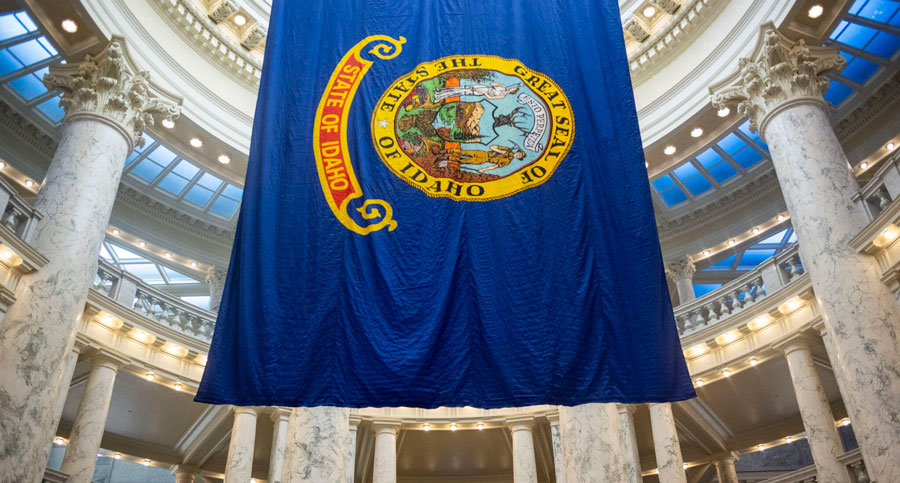
BOISE (Idaho Capitol Sun) — The political deliberations and dealmaking within the marbled halls of the Idaho Capitol may seem far removed from everyday life, but the decisions made during the frenzied three-ish-month annual legislative session have real lasting impacts on Idahoans.
Roads, schools, taxes, health care access, grocery assistance, libraries, and youth sports teams are all things that may be affected by state elected leaders.
For those with perhaps a hazy memory of watching Schoolhouse Rock’s I’m Just a Bill, it may be intimidating to jump in to follow or get involved. But as the people who reside in the Gem State, the lawmakers are there to represent you. And, as Thomas Jefferson once said, “Whenever the people are well-informed, they can be trusted with their own government.”
For those new to the process, the following is designed to be a comprehensive guide to the Idaho Legislature.
How does a bill become law?
On a basic level, the legislative process is pretty similar from state to state, and even at the federal level. However, Idaho has a unique introduction process for legislation.
To help visualize a bill becoming law, Boise State Public Radio has this informative flow chart.
What does it mean for a bill to be ‘introduced’?
Lawmakers bring draft legislation, called a “routing slip,” or RS, to committees that will vote on whether to “print” the draft bill. If it’s printed, it officially becomes a bill with a bill number.
After a bill is “printed” or “introduced” — these terms are used interchangeably — it’s eligible to come up later for a public hearing, during which people may testify in favor or against it.
If the term “RS,” is unfamiliar, you’re not alone. Idaho’s bill introduction process is unique among state legislatures, according to Jaclyn Kettler, a political science associate professor at Boise State University who researches state legislatures and teaches comparative state politics.
“We actually have this additional stage, in some ways, that provides a little bit of extra gatekeeping,” Kettler said. “Which can be positive or negative.”
She said lawmakers who want to be able to introduce more bills may find it frustrating if they can’t get a vote to print their bill, but the process also may weed out unpopular bills early on.
She said Idaho has a higher bill passage rate than many states, even among other legislatures with large majorities of one party.
“A lot of the items that are not going to have a chance of getting passed, don’t even get fully introduced as a bill,” she said.
Some states constrain legislating by putting limits on how many bills individual lawmakers may introduce, Kettler said. Idaho does not have any limits, and the number of bills prepared has trended upward since 2020, according to the 2025 final progress report from the Legislative Services Office.
In 2020, there were 830 pieces of proposed legislation prepared, and 559 bills introduced. In 2025, there were 1,036 draft bills prepared, and 708 bills introduced.
An entire list of bills introduced during the session can be found online here on the Legislature’s website. Past bills may be viewed by selecting a different year on the legislative session dropdown menu.
If a bill was introduced in a Senate committee, it will go to the Senate floor for “first reading,” which is exactly what it sounds like. If it was in a House committee, it goes to the House floor.
Bills in first reading are read by the clerks; usually it’s just the bill number and title read, unless a member requests that the text be read in full, which does happen — but rarely — as it is time-consuming. Once read and assigned a bill number, the chamber leader, either the House speaker or lieutenant governor in the Senate, sends the bill to a committee where it may come up for a hearing.
What is the role of the committees and committee chairs?
Before a bill may be debated by lawmakers on the floors of the House and Senate, it must advance out of committees, which are made up of a subset of lawmakers.
The House has 14 “standing committees,” which meet regularly each session, as well as an Appropriations Committee, which meets jointly with the Senate Finance Committee.
These standing committees include Agricultural Affairs, Business, Education, Health and Welfare, Revenue and Taxation, and Judiciary, Rules and Administration.
The Senate has nine standing committees as well as its Finance Committee.
House and Senate members meet together in the Joint Finance-Appropriations Committee, which writes budget bills for every state agency.
Typically, bills are considered in committees with a subject focus that most aligns with the content of the bill. However, legislative leaders have relatively broad discretion to decide which committee the bill goes through.
When lawmakers or members of the public are upset that a bill goes through a committee with members perceived as friendlier to the bill, they may accuse legislative leaders and bill sponsors of “committee shopping.”
During the 2024 election, Lewiston Republican Rep. Lori McCann told Idaho Education News that she thought leadership shopped around “school choice” bills that would allow state funds to go toward private K-12 tuition, after proposals failed to advance out of the House Education Committee and a school choice tax credit bill went to the House Revenue and Taxation Committee.
Not every bill introduced gets a hearing.
Idaho’s state government is somewhat unique in the amount of power committees have, said Kettler, the political science associate professor at Boise State University. Committee chairs have the authority to set meeting agendas and determine how the meetings will run.
For example, some committee chairs will not allow remote testimony by video, but most will.
During the 2023 session, two committee chairs prohibited testimony from those under the age of 18. House Judiciary and Rules Committee Chairman Rep. Bruce Skaug, R-Nampa, ended up changing the policy to allow testimony from minors under 18 if they had parental permission after a flood of concern about the policy, the Idaho Capital Sun reported.
“Idaho is definitely one of those states with a strong committee chair and a powerful role for the committee,” Kettler said. “There are some state legislatures that require all bills to get a vote in committee, for example. That creates a very different dynamic compared to states like Idaho, where the committee chair has a lot more influence over what there’s going to be activity on.”
Once a bill does come up for a public hearing, it will be posted on the committee agenda online and outside the committee room door on the bottom floor of the Idaho Capitol building.
Most committee chairs limit testimony to two to three minutes. People may also email committee members with their thoughts on bills, and Idahoans can find contact information for legislators online. After the public testimony portion of the meeting ends, members take a vote.
A committee member must make a motion on what to do with the bill before them, and that motion requires the majority vote of members to pass. There are a few options:
- Vote to send the bill to the full chamber for debate and vote, with a recommendation that it “do pass,” which moves the bill forward in the process.
- Hold the bill in committee, which is typically the death of the bill.
- Sometimes, members will ask to temporarily hold the bill for a vote on a later date if they want more time for deliberation.
- Send the bill to the full chamber for amendments. This is a special order of business during the House and Senate floor sessions, during which any member of the chamber may propose amendments to the bill, and the amendments are separately voted on by the whole body.
- In the House, this is called “General Orders”
- In the Senate this is called the 14th order.
- If amendments are proposed that are not approved by the primary bill sponsor, they are often called “hostile amendments.”
- Send the bill to the floor for a vote with “no recommendation.” Lawmakers don’t often use this option but will sometimes make a motion to do this if they are unsure if they approve of the bill but feel the issue warrants further debate by the entire chamber.
- According to the Idaho Legislature’s website, committees could also vote to send the bill to the full chamber for a vote but with a recommendation that it “do not pass.” This is seldom used.
Once the bill goes to the floor, it will be put on the “second reading calendar.” Like the first reading, it will simply be read by name and title, which then makes it eligible for the “third reading.”
Bills on the third reading calendar are ones that are most likely to come up for a floor debate and vote. However, lawmakers frequently tinker with this list, asking for ones that aren’t ready for a vote to be held and bringing others that are ready up for a vote before they get to the top of the list.
A House bill that went through a House committee and gets debated and voted on by the entire House, will, if approved, go through the same committee process in the Senate.
If someone was interested in testifying on a bill and missed the first public hearing, they could get another chance when it comes up again on the other side of the Capitol rotunda.
A bill that passes through both the House and Senate then goes to the governor for signature or veto.
How do I get involved with a bill? What’s Idaho’s public hearing process like?
If Idaho residents find there’s a topic or certain bill that affects them or involves a topic they care about, there are a few ways they can get involved with the legislative process.
If a bill of interest has been introduced and assigned to a committee, it could come up at any time for a public hearing. Although nearly every other government entity in Idaho is bound to the Open Meetings Law, the Legislature is exempt from many of its requirements. This means there is no minimum time for notice required for hearings. Idaho is one of 21 states that exempts its legislature from open meetings laws, according to a 2020 analysis by professors from Notre Dame and The University of Virginia.
All agendas can be found on the Legislature’s website legislature.idaho.gov/sessioninfo/agenda by selecting Senate Committee Agendas, House Committee Agendas, or Joint Legislative Committees. Sometimes there is very little time between when the agenda is posted and when the hearing is scheduled to begin.
“For me, as a lobbyist, that’s one of the last things I do before bed, is check the agendas,” said Randy Johnson, government relations director for the advocacy arm of the American Cancer Society, called the Cancer Action Network. “The hard part, though, is for community involvement … what I fear and what I dread are those, the night before I see it posted at 8 p.m. and the hearing is at 8 a.m.”
Johnson said the quick turnaround can be difficult to give enough notice for volunteers interested in testifying to be able to show up.
The conservative think tank Mountain States Policy Center has advocated for the Idaho Legislature to require three-day notice for public hearings. Policy Center Vice President and Director of Research Jason Mercier in a commentary column for the Idaho Capital Sun noted that some of Idaho’s neighbors have minimum notice requirements — Washington largely requires five days, Montana has a three-day notice requirement, and Wyoming has a one-day minimum notice requirement.
The speed at which a bill can go through the process sometimes may pick up toward the end of session, which is usually toward the end of March or early April.
At the end of the 2025 session, lawmakers introduced a bill to allow the sale of over-the-counter ivermectin, had two public hearings, held a House and Senate debate and votes, and sent the bill to the governor for signature all in one day. To expedite the process, lawmakers have to waive some of their own rules.
Despite some of the challenges, Idahoans regularly weigh in on legislation that they care about. This can be done by emailing their districts’ lawmakers, testifying at a hearing, or getting involved with an advocacy organization that’s working on the issue.
I’m ready to get involved, now what?
Here are some ways to make your voice heard:
To sign up to testify for a specific committee, navigate to that committee’s webpage, and click on the “testimony registration (remote and in person)” tab at the top.
- To watch a hearing, viewers may access the live stream from Idaho Public Television’s In Session website, and navigate to the room where the meeting is happening. Or viewers can clik the link at the top of committee agendas online.
- To find out the legislators who represent your district, and to find their contact information, go to the Legislative Services Office’s website and put in your home address and ZIP code. Once you’ve entered that information, the three legislators — two House members and one senator — who represent your district will appear, and you can click on their headshots to find their email address and phone number.
Johnson, from the American Cancer Society advocacy group, and Boise State political science associate professor Jaclyn Kettler recommended that people try and find advocacy groups that focus on their area of interest.
If it’s health care, maybe the ACS Cancer Action Network, or Idaho Voices for Children. Lobbyists with the Idaho Association of Commerce and Industry, or IACI, follow numerous business-related bills each session.
The Idaho Republican Party and the Idaho Democratic Party follow many bills during the session and provide some updates and information to email subscribers.
There are many other lobbying, industry or other special interest groups in Idaho who will notify members or subscribers when there’s movement on a bill of interest.
Johnson and Kettler emphasized following local news reporting to help stay engaged; sign up for the Idaho Capital Sun’s free daily newsletter online.
Lobbyists and special interest groups are frequent fliers in Idaho Capitol meeting rooms, but as lawmakers set policies that affect Idahoans’ everyday lives, Johnson said, it’s most important that they hear from those Idahoans.
“I’ve talked to a lot of these lawmakers already. They know who I am,” Johnson said. “They already know about my talking point, I’m not going to convince them, for the most part, already going into those meetings, we know a lot.”
“What we depend on to change those minds are people within their own districts. And that’s when having those storytellers, having that flood of people calling in, showing up, saying, ‘I want to testify to this,’ ‘this is so important to me and the community.”
How is the state budget set?
As a part-time Legislature, Idaho’s lawmakers convene for a roughly three-month session each year. Lawmakers’ sole constitutionally required task for the session is to approve a balanced budget, but this isn’t always a straightforward task.
The state budget does more than keep the lights on; it determines public school funding, road and bridge maintenance projects, water infrastructure, university funding, public assistance programs, state parks maintenance, wildfire suppression, and so much more.
Step 1: Pick a revenue number
To ensure the budget is “balanced,” budget-writers must determine how much revenue the state expects so that expenditures don’t exceed that number. Without the ability to peer into the future and see what happens, this revenue number amounts to an educated guess.
The state fiscal year runs July 1 to June 30, so lawmakers in January must estimate how revenue will finish out the current fiscal year and the next fiscal year.
There are a number of factors that can contribute to revenues coming in above or below projections, such as elevated or stalling sales tax revenue, depending on people’s spending habits during the year.
Income tax revenue may vary depending on worker and business earnings, and this number shifts depending on changes to the tax rate the Legislature enacts. The federal government can provide boosted or diminished funds for programs, depending on policy decisions made by Congress or the president, such as tariffs and federal tax code changes. Other economic factors can impact this number as well.
The Economic Outlook and Revenue Assessment Committee is a group of state House representatives and senators who are provided with a variety of reports and projections from economists, university scholars, industry representatives, state budget staffers and others to recommend a feasible state revenue projection.
After hearing the estimates and factors laid out by all these groups, the committee must vote on the number members believe will get the closest to reality.
In 2025, committee members and presenters came up with fiscal year 2026 revenue projections that spanned from $5.5 billion from the Idaho Tax Commission up to an estimated $6.5 billion from House Majority Leader Rep. Jason Monks, R-Meridian. The governor’s budget staff predicted around $6.4 billion, while the mean of the committee members’ estimates came to $6 billion.
“Generally in forecasting, that’s how it goes. You see more variability if the projection’s farther away because there’s more things that can happen to change that projection,” Legislative Services Office budget staffer Hayley Kaae-Domgaard told committee members at their Jan. 9, 2025, meeting.
Discussion at that meeting included a desire to have enough revenue to accomplish policy goals, such as an income tax cut, which the Legislature did. That year the state approved a $253 million income tax cut, the largest in state history.
Sen. Scott Grow, R-Eagle, who also chairs the state budget-writing committee, at the time expressed some concerns about the then-threat of tariffs, as Idaho is a strong trading partner with Canada, and the looming uncertainty of when the next recession would occur.
One member expressed annoyance at the common practice of purposely estimating a low revenue to constrain spending and keep a higher number on the bottom line. Eagle Republican and House Assistant Majority Leader Josh Tanner argued that this results in agencies having to come back the next legislative session and ask for supplementals — a mid-fiscal-year budget request to cover costs incurred that could not be covered by what the agency was appropriated for that fiscal year.
While the individual factors vary year to year, these are the types of considerations lawmakers must contend with each year to pick a revenue number.
During that 2025 session, the revenue projection was just narrowly agreed on in a 10-8 vote by the committee.
Is that the end of it now the budget-writers can start setting budgets?
Nope.
The Economic Outlook and Revenue Assessment Committee can only make a recommendation. It’s up to the members of the powerful state budget writing committee, the Joint Finance-Appropriations Committee, called JFAC, to choose a number to work from.
Historically, the budget-writers on JFAC have voted on and approved revenue projections early in the legislative session. But, because it’s politics, sometimes the politicking delays this process.
In 2025, after failing to garner majority support for 59 days into the legislative session, JFAC adopted a revenue projection on March 5. By then, lawmakers had already approved the $253 million income tax cut.
With all that deliberating, the projection must be pretty accurate, correct? Not always.
As of December, Idaho’s state budget was projected to end the fiscal year on June 30 with a $40.3 million deficit. That estimated deficit shrank from the previous month’s projection of $58.3 million more in expenditures than revenues.
In 2022, amid an influx of federal COVID-19 pandemic assistance, Idaho boasted a record budget surplus of $1.5 billion.
Step 2: Agency requests
Idaho’s government functions are run by its agencies, commissions and councils. To get a sense of what those agencies need, they submit detailed budget requests to the governor’s budget staff within the Division of Financial Management well ahead of the legislative session.
The administrator of the Division of Financial Management then works with those agencies and with the governor to create the governor’s state budget proposal.
Neither Gov. Brad Little nor any other governor can ultimately set the budget. But on the first day of the legislative session, he stands before the Legislature and unveils his priorities and his budget proposal for the next fiscal year.
The governor’s proposals and agency requests then go to budget writers on JFAC.
Each budget gets its own hearing in a format that has changed over the last couple of years. As of 2024, budget hearings are reduced to a roughly 90-minute presentation from the legislative budget staffer assigned to work on that agency’s budget, and short remarks by the head of that agency at the end. In the past, legislators heard three-hour-long presentations from the agency directors themselves as they detailed how they’d spent prior funding and their needs for the upcoming year.
Unlike other committees, the public at large never has a chance to weigh in on these hearings.
The budget hearing schedule can be found online here.
JFAC work groups craft budgets
The joint budget-writing committee was formed in the Idaho Legislature in the late 1960s, and at the time was fairly unique among other state processes, said Jaclyn Kettler, the political science associate professor at Boise State University who researches state legislatures and teaches comparative state politics.
Some states have committees in each chamber produce their own budget proposals, and then must find a way to reconcile them to approve one budget. Other states, as well as Congress, also sometimes do large omnibus budget bills that include spending for every agency and program.
For the most part, Idaho passes a budget for each agency in separate bills. However, with the changes adopted in 2024, the committee has since undergone a “maintenance” budget process and “enhancement process.”
“Maintenance budgets” include the funding for agencies that has already been approved by the Legislature, but no new spending. These budgets are passed in around 10 omnibus bills that combine agencies under general topics such as public safety, general government or economic development. The committee votes on the 10 budgets all at once early in the legislative session.
Then, new spending requests are considered line-by-line for each agency. To work on these requests and determine proposed budgets for each agency, JFAC is split into working groups for different agencies.
Which lawmaker serves on which working group is not typically publicly shared, and the groups’ work is all done behind closed doors.
Sometimes members who work on the agency disagree on how to set a budget.
When it comes time to vote, members bring prepared motions to set how much state funding the agency gets as well as the authority to spend any federal money that agency may receive.
There is typically a motion made for one budget and a “substitute motion” made if there’s a competing budget proposal. If there’s a third proposal, a lawmaker can make an “amended substitute motion.” After that, there can be no further motions on an individual budget.
The committee votes on the most recently made motion first. For instance, if there was an amended substitute motion to spend $1,000 of general funds on ice cream for the Idaho Ice Cream Commission (a fictitious agency example), that would be the first motion to get a vote. If the motion dies, the committee would move on to the substitute motion to spend $2,500 on ice cream.
If that motion also fails, the committee moves on to the original motion of $1,200 on ice cream. If all three motions fail, the work groups must get back to work and bring something different for the committee to vote on again.
Much of the focus of the state budget is on the state’s general fund, which consists of unobligated money that the state uses to pay many of its bills and to enact policies.
< p>For fiscal year 2025, the state’s total budget, using all sources, is about $13.9 billion. Federal and dedicated funds typically are earmarked for certain programs or projects. The state general fund budget was around $5.2 billion for fiscal year 2025.
JFAC members also approve ‘intent language’
Once the numbers for the budget are approved, the committee members will also vote on what’s called “intent language.” This language usually dictates how the money must be used or conditions for approval. Sometimes, it may require a report on how a certain grant was used, or clarifies that certain funds may only be used for a specified purpose.
Intent language is part of the law, and agencies may face consequences for using the funds for other purposes. The committee has the authority to order an audit of use of funds if there’s suspected misuse.
If the audit findings are serious enough, auditors may recommend referring the case to the state attorney general for criminal prosecution. Most times, the issues are resolved before legal proceedings are brought.
Approved budgets go to House and Senate floors
Once budget numbers are approved by the committee, they go to legislative staffers to be drafted into a bill. This process can take a few days, after which the budgets would show up in the House or Senate floor calendars. It’s up to leadership to decide which chamber will hear the budget first.
The bills must pass both chambers and go to the governor to be approved.
If the House or Senate votes down a bill, it goes back to JFAC budget writers, who must get back with work groups to craft a new bill that will be more likely to pass.
If a budget passes the Legislature, the governor may then veto it. If the governor vetoes an entire budget, it’s likely that JFAC would have to take it back up. The governor also has the option to do a “line item veto,” only striking one section of the bill.
Little has used this line-item veto power one time, and it was to strike out a section of his own office’s budget that would have eliminated his emergency fund.
Once the budget’s passed and signed into law — that’s it. Sine Die.
Once every agency budget has been approved by both chambers of the Legislature and signed by the governor, that’s it.
However, some budget bills may sometimes be held on reading calendars as “hostages,” keeping lawmakers in session until preferred policy bills move forward.
Once all the negotiating is complete and the policy bills that are going to move forward are approved, the hostages are released, and the chamber may vote on the bill.
At the end of the session, which includes paperwork and some procedural moves that can sometimes delay the actual adjournment. The final adjournment of the session is called “Sine Die,” Latin for “without day,” which indicates that the work is done until next year.
During the interim between sessions, there may be work groups and task forces and other interim committees, but the Legislature as a whole won’t meet again unless a special session is called.
The governor may convene a special session for a specific purpose, and as of a 2022 voter-approved state constitutional amendment, the Legislature may call itself into special session with approval from 60% of each chamber’s members.