



What kind of housing does Pocatello need? Community invited to weigh-in on results of citywide housing study
Published at | Updated at
POCATELLO – Next week, Pocatellans will get the chance to learn about the city’s housing needs, and what strategies it will look at to meet them in the coming years.
The results of a citywide housing study will be presented at an open house on Jan. 29. The presentation will begin at 6 p.m. in the City Council Chambers, and be followed by a question-and-answer session.
Long-range senior planner Jim Anglesey says there is a huge demand for a greater variety of housing options in the Gate City.
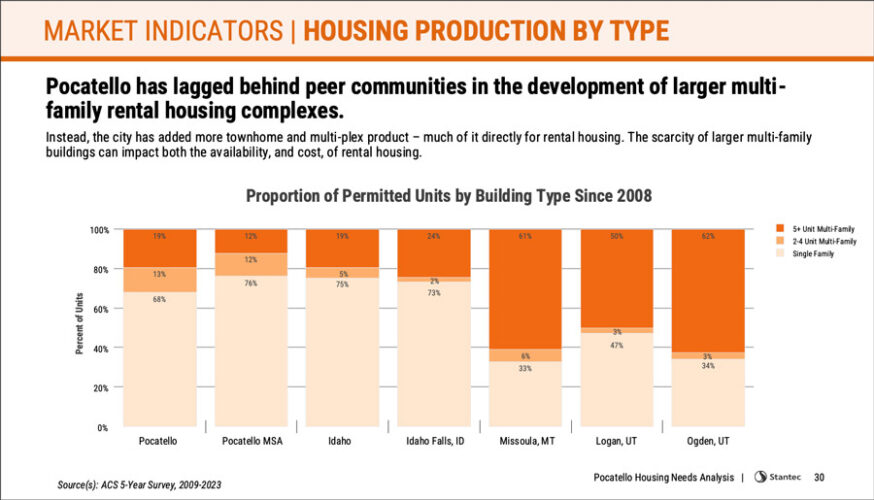
“What you really want to see is a level mix between all different housing types, (and) Pocatello … (is) off-balance. The majority of the housing is single-family. We need more production of multi-family (housing) to even that out (and) to provide that diversified housing stock,” Anglesey says.
The key takeaways of the housing study are presented on page 52. They are:
- Affordable housing for households earning less (then) 50% of AMI (Area Median Income) is desperately needed.
- Based on recent housing market behavior, there is a strong need for rental housing across different ‘market categories’, as most rental units are concentrated at the 60% AMI price point, and tend to be 2-3 bedroom units.
- House sizes – inherited from historic building cycles when households were larger – are significantly larger than what would be necessary based on today’s much smaller households and preferences among younger households to live alone rather than live with roommates.
- Demand also is outpacing construction on the higher end of the ownership and rental market, indicating demand for market-rate rentals targeting higher income households.
The study shows Pocatello has fallen behind its peer communities in developing “larger, multi-family rental housing complexes.” Sixty-eight percent of them are single-family units — a much larger percentage than the peer communities identified in the study, Missoula, Montana, Logan, Utah and Ogden, Utah.
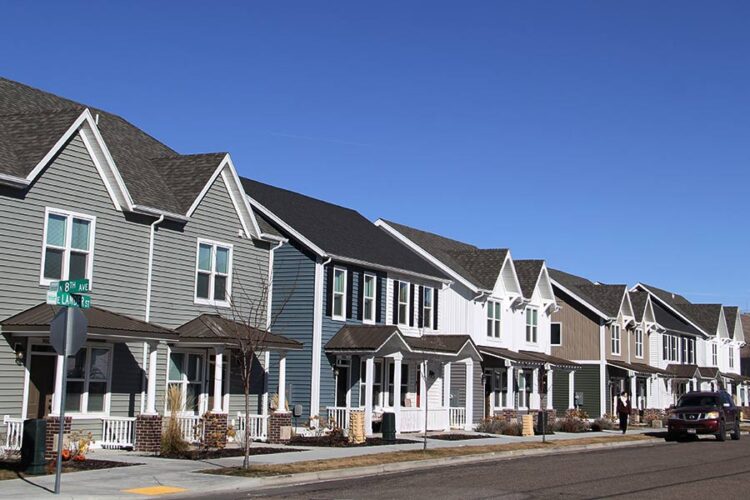
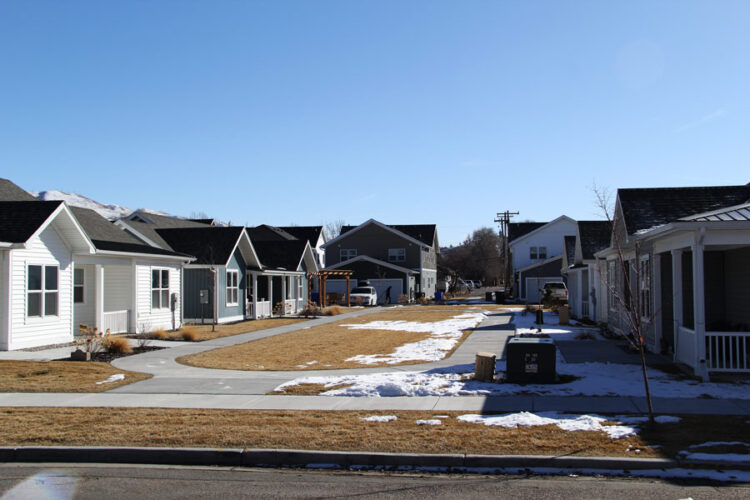
Mayor Mark Dahlquist told EastIdahoNews.com that his biggest takeaway from the study is that the city is behind on providing variety in its housing stock. He says Pocatello is in need of “missing middle housing,” meaning multi-unit housing like duplexes, fourplexes, cottage courts and townhouses.
He points to the Bonneville Commons neighborhood, developed by NeighborWorks Pocatello while he was executive director, as one example. It contains a mix of single-family detached homes, duplexes and triplexes.
While this isn’t the blueprint for every neighborhood, he says more housing variety is needed to meet demand.
“We just have to look at all options to accommodate these first-time homebuyers that are having to wait so long before they can get anything,” Dahlquist said.
While Pocatello’s median age is lower than the rest of the nation, its housing demand has come mostly from people in the 45 to 54 age bracket. This trend, according to the report, is likely a result of younger people living with roommates rather than starting their own household.
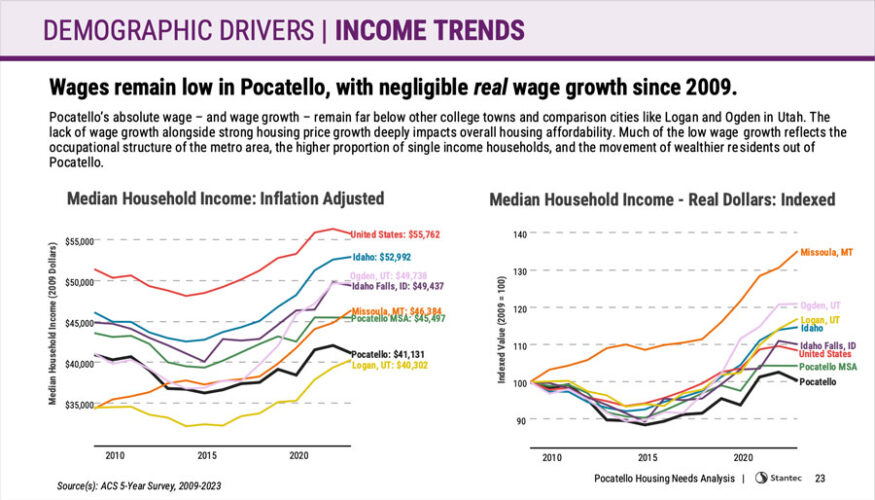
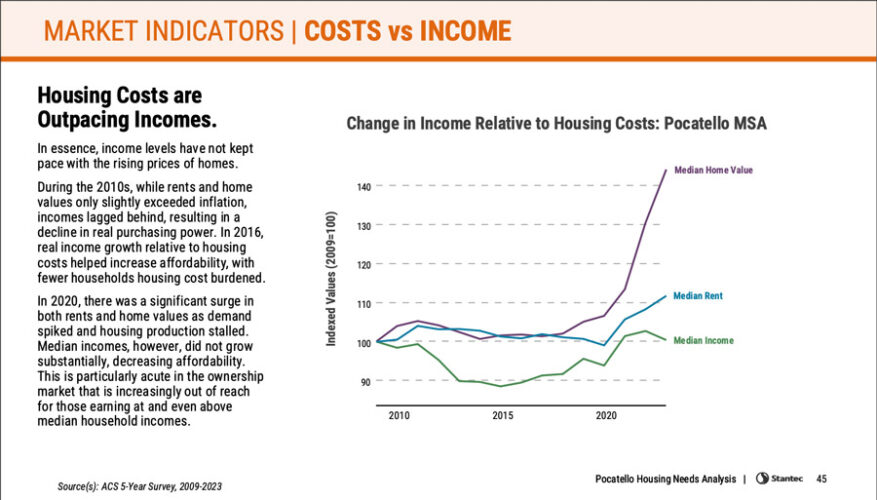
The housing study also shows that wages are low in Pocatello, and the cost of housing is outpacing the median income level, especially since the COVID-19 pandemic.
Dahlquist says the lack of housing development also harms the city’s economic development.
“If we’re trying to bring in these bigger employers or trying to get businesses to expand, of course they need housing,” Dahlquist said.
Anglesey says Pocatello is looking to meet this housing demand through infill development, providing more multi-family units, with higher living density.
One benefit of providing more housing density, according to Anglesey, is that it provides a stronger tax base for the city, which results in more revenue per acre and a lower cost of infrastructure development.
“(Single-family housing) doesn’t pay the bills when it comes to infrastructure and development,” Anglesey said.
Dahlquist expanded on this, saying, “(With) infill housing … the utilities are already in place, the roadways are there, so spending less on infrastructure I think is one big benefit of missing middle housing.”
While Pocatello doesn’t have the same data available, the city of Chubbuck has an interactive ArcGIS map showing tax collected per acre.
EastIdahoNews.com interviewed Mayor Rodney Burch about this data, and he confirmed that the areas showing the highest amount of taxes correlate to the areas that have the highest housing density.
Burch also clarified that the areas with the highest tax collected don’t necessarily provide the most tax revenue overall.
“(That) must be included in the conversation,” Burch said. “Just because they are a high value parcel per acre doesn’t mean they’re paying more taxes as a total. They’re paying more taxes relative to the footprint that they occupy.”
“(A) big box retailer does pay more property tax than an apartment, but when you look at it in how much property they consume, the per acre component is what identifies higher density (as) better tax revenue,” Burch adds.
Burch also spoke on Pocatello’s housing study in the most recent Chubbuck City Council meeting, saying that while he and Council President Roger Hernandez won’t be able to attend, two city staff members will.
He encourages Chubbuck residents to attend and learn from the data found in the study.
“(Dahlquist) and I had discussions about affordable housing, and it doesn’t recognize jurisdictional boundaries between our two communities. We want to be involved as much as we can,” Burch said.