



Idaho’s Bald eagles are busy preparing to nest
Published at

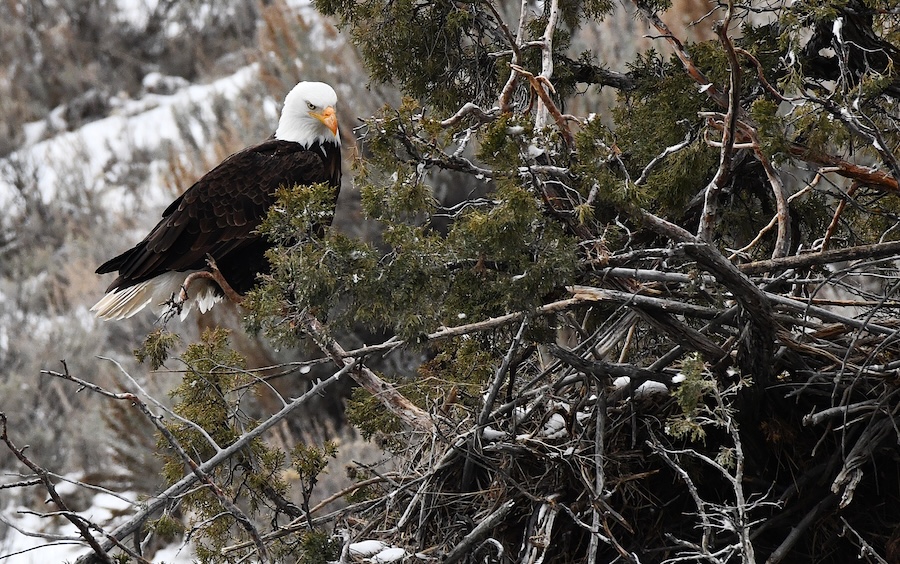
While trolling for kokanee salmon on Ririe Reservoir two weeks ago, I observed a pair of bald eagles working on their nest. Mostly, they were rearranging the sticks and bringing in new ones. Occasionally, they would scratch out the old nest lining while they were courting each other.
For about an hour, one of the birds sat in an evergreen tree on one side of the canyon while the other sat on the opposite side, and the two called back and forth to each other.
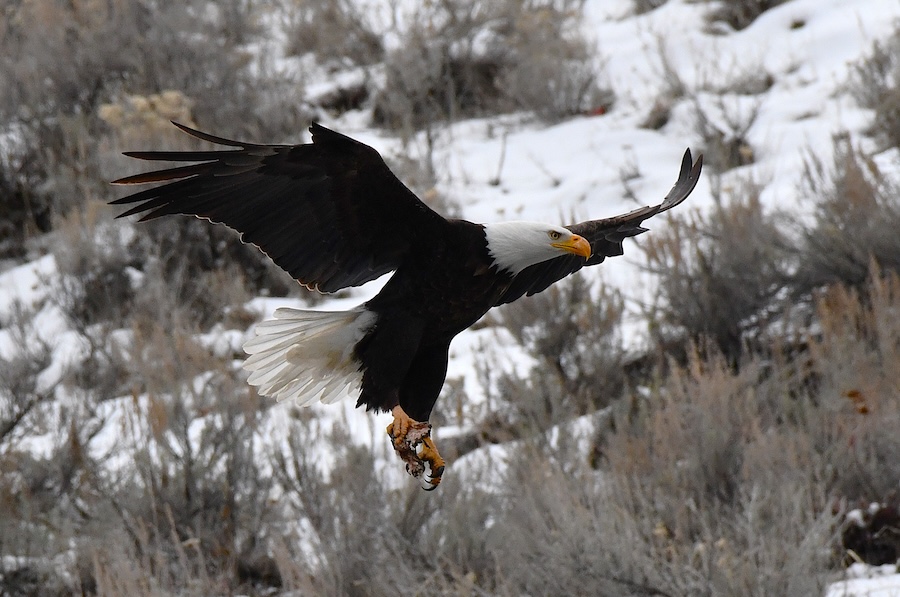
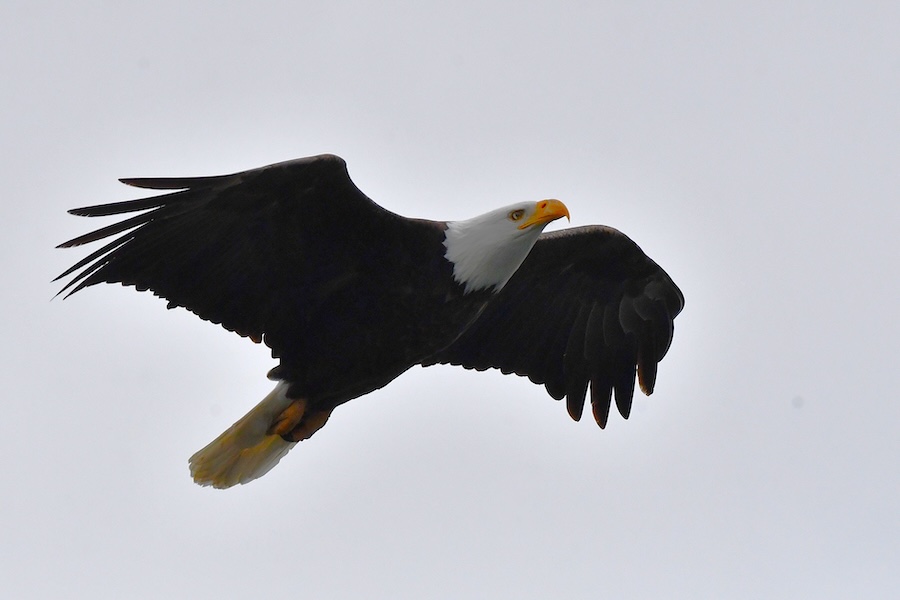
A week later, I found one of the eagles sitting on the nest. As I trolled past, it called out and was answered by its mate flying along the edge of the canyon. As the mate approached the nest, I noticed it was carrying a piece of meat held with its right foot. It was “door-dashing” a meal to the nest.
Both birds shared the meal, and then flew around together for a few minutes before one returned and sat on the nest.
Last summer, that pair raised two eaglets in the same nest. The young ones left after the kokanee attempted to spawn, but the adults remained at Ririe.
When the reservoir partially froze over, the two adults could be seen sitting on the ice near the open water. They fed on a deer carcass that had somehow perished near an open water area.
There are seven active bald eagle nests that I am aware of in the area from Rexburg to Ririe Reservoir, which I often travel. Two of them appear to have eagles already sitting on the nests. That seems a little early for me, but we will see how successful they are this summer.
Bald eagles usually begin nesting around mid-April when the female gets fertile for about two weeks, laying from one to three eggs. If they lose the nest for one reason or another, she may become fertile again around the first of June.
A couple of years ago, that happened along the Teton River when a gust of wind blew hard enough to break down the nest tree. The eagle pair quickly built a new nest in a neighboring tree and raised one chick there.
The eggs will hatch between 34 and 36 days after the female starts incubating them. She will only leave the nest occasionally, and her mate will deliver food to her while she sits there.
Eagles like to eat fish, but they are also scavengers and will get food from any dead animal they find. They are also very good at stealing from others, especially from ospreys after they catch a fish. Fishermen who fish a lot on Ririe Reservoir often see eagles chasing other raptors that have captured a fish.
It takes bald eagles between five and seven years to develop their distinctive white head and tail. The young ones hatch as a white fuzz balls but quickly develop fully brown plumage. During the next four or five years, they are often mistaken for golden eagles — but to an experienced birder, they are much different than their cousins.
These national birds of prey are a lot of fun to watch at this time of year, and I hope most of you have one or two nests nearby to watch their spring activities.
The pair that I have been watching on Ririe have many fans, with boaters screaming as they pass by in the spring and summer. But the birds just go about their business, raising their kids.
The spring migration has begun, as I have seen a few sandhill cranes, mountain bluebirds and a few wood ducks. Some of the wood ducks remained here during the mild winter, but the migrants have started coming back to join them.
A chuckle for the day
Remember: Old folks are worth a fortune, with silver in their hair, gold in their teeth, stones in their kidneys, lead in their feet and gas in their stomachs!
P.S. The preacher came to call the other day. He said at my age, I should be thinking about the hereafter. I told him, “Oh, I do all the time. No matter where I am – in the parlor, upstairs in the kitchen or down in the basement, I ask myself: What am I here after?”
Have a great week and enjoy the migrating wildlife!

Living the Wildlife is brought to you by Yellowstone Teton Territory. Experience 7,500 square miles of untamed wilderness in Eastern Idaho's Yellowstone Teton Territory. Where majestic peaks meet endless adventure, your perfect outdoor escape is waiting. Start planning at YellowstoneTeton.com.