



Looking Back: Bomber plane crash kills seven people near Soda Springs, man survives being struck by lightning
Published at
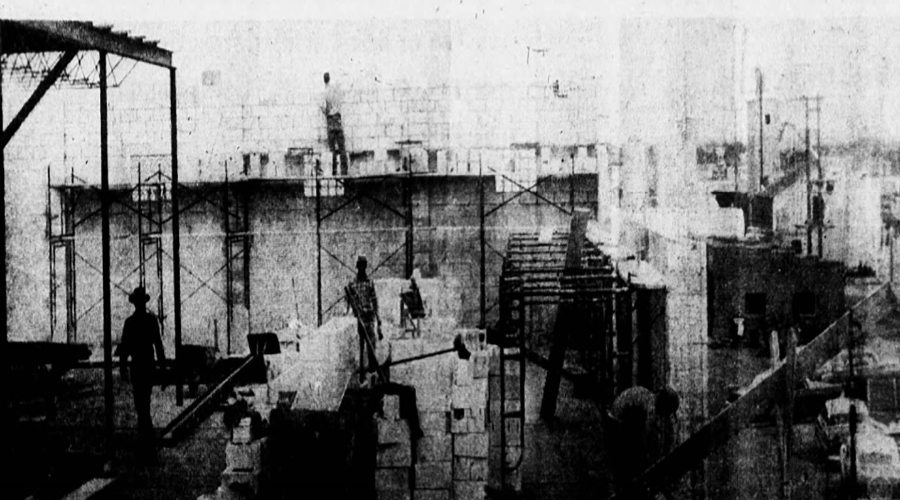
IDAHO FALLS — EastIdahoNews.com is looking back at what life was like during the week of May 4 to May 10 in east Idaho history.
1900-1925
BLACKFOOT — Three men were captured after allegedly robbing a store in Arco, The Bingham County News reported on May 4, 1911.
Louis Hendrickson, Chester Olsen and Billy Walton, reportedly broke into the commissary of Corey Bros. and “stole everything but the ground upon which the commissary stood.”
They then stole a short line car and headed down the track into the desert. Law enforcement in Blackfoot was notified about the men and deputy sheriff “Doc” Kestner began searching for them.
Kestner located a cabin in the desert about three miles from the railroad track that had the thieve’s clothes inside and about 50 pounds of tobacco.
Kestner ended up finding Walton in Blackfoot after he followed a wheel marking that had been traced along the sage brush trail he took into town. Not long after, Hendrickson and Olsen ended up being found in Pocatello.
The three were to serve 35 days each in jail for stealing a short line car. As soon as that was finished, they were to be sentenced for the burglary of the commissary.
1926-1950
SODA SPRINGS — A big four-motored army B17 bomber crashed a mile-and-a-half south of Soda Springs killing seven people, The Caribou County Sun reported on May 6, 1943.
The crash happened late at night and killed seven of the 10 on board. Of the three survivors, one was said to be in critical condition and the other two were not seriously injured.
Hundreds of people witnessed the crash. People had heard the roar of the plane’s motors as it circled Soda Springs for 55 minutes, “barely skimming the house tops.”
“Many who had gone to bed got up and joined the crowd, watching and curiously wondering what it was all about,” the article reads.
There was talk that the plane’s fuel supply was practically exhausted and that the crew on board was trying to find a place to land.
Sheriff Charles McCracken was in charge of helping the pilot bring the plane to a safe landing. An emergency landing site was chosen on a piece of plowed land along Highway 30.
“Cars were lined up along the highway, facing the emergency field, and also along (and) under the power line to prevent the bomber from trying to land there,” the paper explained.
The plane skimmed over the tops of the cars and went to make a turn when it crashed into a high voltage power line and came down. The plane broke in two just behind the wings. The front part went almost 100 yards further than where the back part came to a stop. The front part also caught on fire.
The pilot, co-pilot and bombardier survived the crash. Those in the back part of the plane were all killed. Two of those who were killed were found strapped to their seats but witnesses said the seats had been torn away from the plane.
The injured members of the crew were taken to Caribou County Hospital while those who were dead were left lying at the scene until army men arrived.
The power line struck by the bomber carried electricity to multiple places in southeast Idaho and those communities were “thrown into darkness at the instant the plane hit the wires.”
“At least two or three hundred people from Soda Springs were watching, hoping and wishing they could help,” the paper stated. “But all the help given under the conditions was not enough to save the boys and the plane which carried them to tragedy.”
1951-1975
RUPERT — A Rupert farmer was hospitalized after being struck in the head by lightning, the Idaho State Journal reported on May 4, 1952.
Kenneth Peterson said the lightning hit him and knocked him out while he was irrigating his farm. Once he came to, he said he crawled to his car and drove home.
He was taken to the hospital where authorities said he was listed in good condition.
1976-2000
POCATELLO — The new Amtrak “Pioneer” would be offering rides to Boise and Salt Lake City for less than $20 each, the Idaho State Journal reported on May 4, 1977.
Beginning June 7, 1977, Pocatellans would be able to ride to Boise for $17 and to Salt Lake for $13.
Arthur Lloyd, Amtrak western region public affairs manager, said the rail fare to Portland would be about $45 and $56 to Seattle. Pocatello to Ogden would be $11.
There would be a seating capacity of 176 people. A dinette car would offer hot and cold meals and snacks.
Lloyd said it was predicated there’d be 100 riders per day initially, but that the number would increase as people got use to the train’s schedule.
The train was set to depart Pocatello for Salt Lake at 4 a.m. and arrive around 8 a.m. It would leave at 2:25 a.m. for Boise and arrive there at 6:40 a.m.