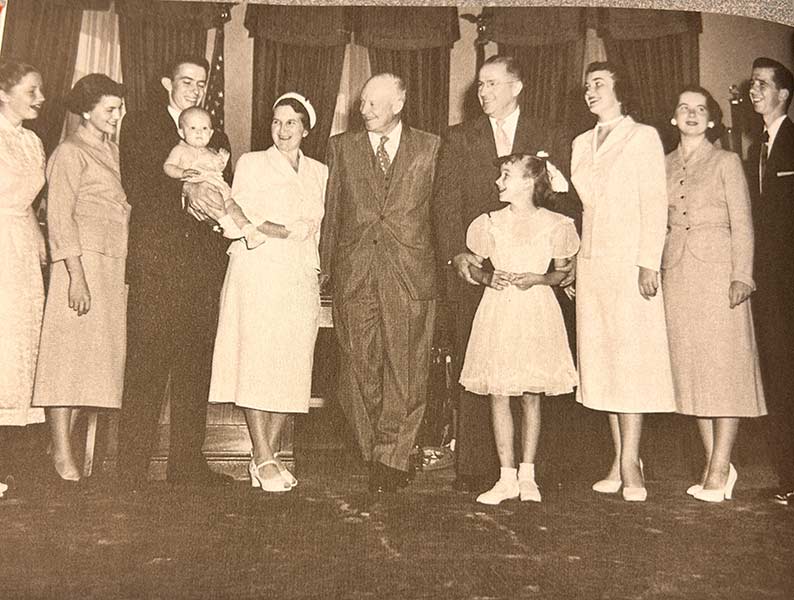
Eastern Idaho produced two U.S. agriculture chiefs, but Ezra Taft Benson was the most controversial
Published at
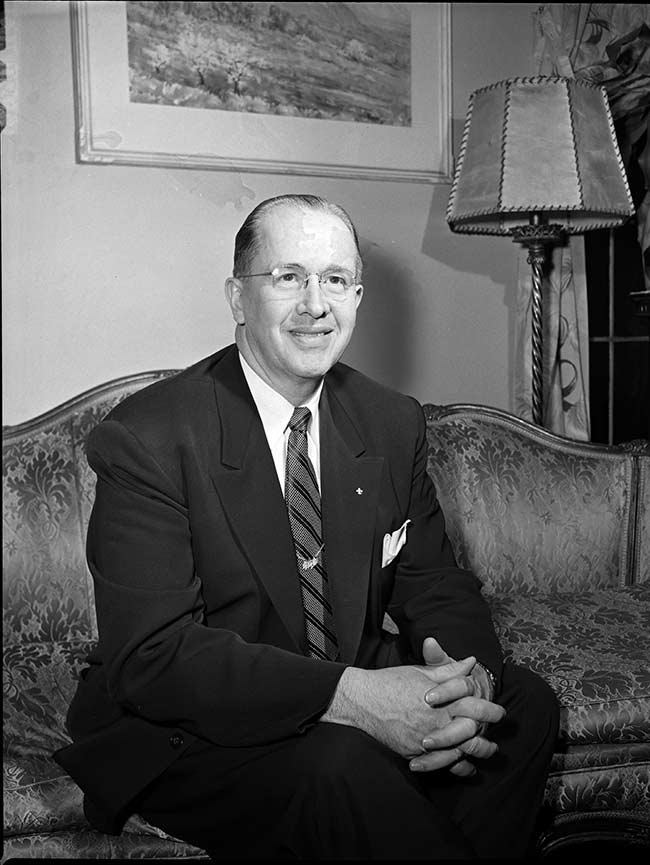
IDAHO FALLS – Ezra Taft Benson wasn’t the first eastern Idahoan to lead the U.S. Department of Agriculture — but he became one of the most influential and controversial secretaries in the agency’s history.
It was January 21, 1953 and the 53-year-old man from Whitney — a small community near Preston — had been tapped by President Dwight D. Eisenhower for the role before his inauguration. America’s 34th president, who was baptized into the Presbyterian faith 10 days after taking office, had made faith and moral conviction in government a focus of his administration.
Benson — who died in 1994 at age 94 — was a high-ranking leader within the Church of Jesus Christ of Latter-day Saints at the time, but had been deeply involved in agriculture on a national level years before. He earned a master’s degree in agriculture economics from Iowa State College in 1927 and later served as the executive secretary of the National Council of Farmer Cooperatives, according to the U.S. Department of Agriculture.
Benson’s devotion to his faith, combined with his agricultural expertise and belief in free-market principles made him an appealing pick to Eisenhower.
“I didn’t want to be Secretary of Agriculture. I can’t imagine anyone in his right mind wanting it,” Benson reportedly told Brigham Young University students about a month before Eisenhower’s inauguration.
He explained his reasons for not wanting the job.
“I know something of what it entails, I know something of the crossfires, the pressures, the problems, the difficulties,” Benson told the students.
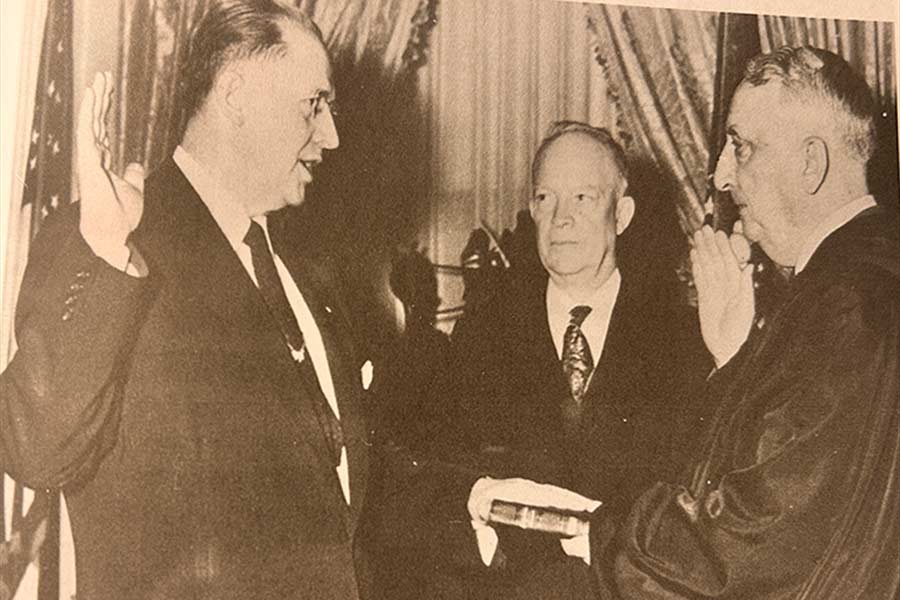
Ultimately, he was sworn-in as the nation’s 15th secretary of agriculture and served in the position for eight years. He became the first clergyman to hold a cabinet position in more than a century.
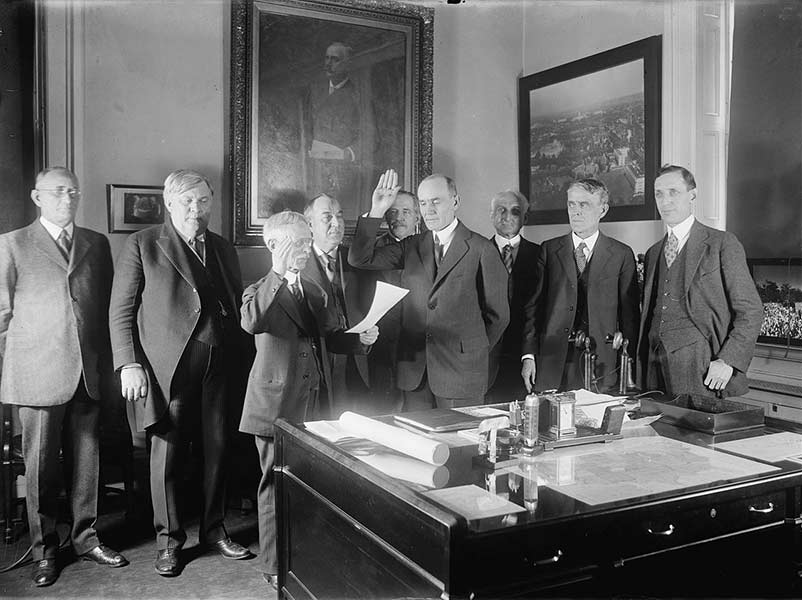
Three decades earlier, William Jardine, of Malad, was selected by President Calvin Coolidge to be the nation’s ninth secretary of agriculture. He served in the position from 1925-1929.
Although the two men belonged to the same faith — both men were Congregationalists — religion did not play a role in Coolidge’s decision. Jardine had previously served as president of Kansas State Agricultural College and wrote several handbooks in this capacity. Among them were “Care and Handling of Work Horses,” and “Care, Adjustment, and Use of Farm Machinery.”
Jardine’s success and his advocacy for cooperative marketing is what motivated Coolidge to select him.
“Although the economy was bleak during his four-year term, Secretary Jardine proved to be a competent administrator, fighting against government price fixing for surplus crops and commodities and leading the farm cooperative movement,” a recent report says.
Benson, who held similar views, went right to work, despite his reservations, and upset people in the process. His first speech as secretary of agriculture was given to the Central Livestock Association. He pleaded with the group “to shut down government beef bounties, condemn price supports,” and “return to the fundamental virtues which have made this nation great.”
Many of his proposals for flexible price supports faced steep opposition in Congress and among farmers.
“South Dakota farmers once pelted Benson with eggs when he spoke in favor of flexibility in farm programs. Another time, 21 midwestern congressmen stormed into his office demanding rigid price supports for hogs. He refused, and later noted that the price of hogs soon rose on its own,” the Los Angeles Times reported at the time of Benson’s death.
A farm bill in 1958 was one piece of legislation that Benson vehemently supported. It aimed to reverse New Deal-era policies that raised crop prices and imposed subsidies, which incentivized farmers to reduce production of certain crops.
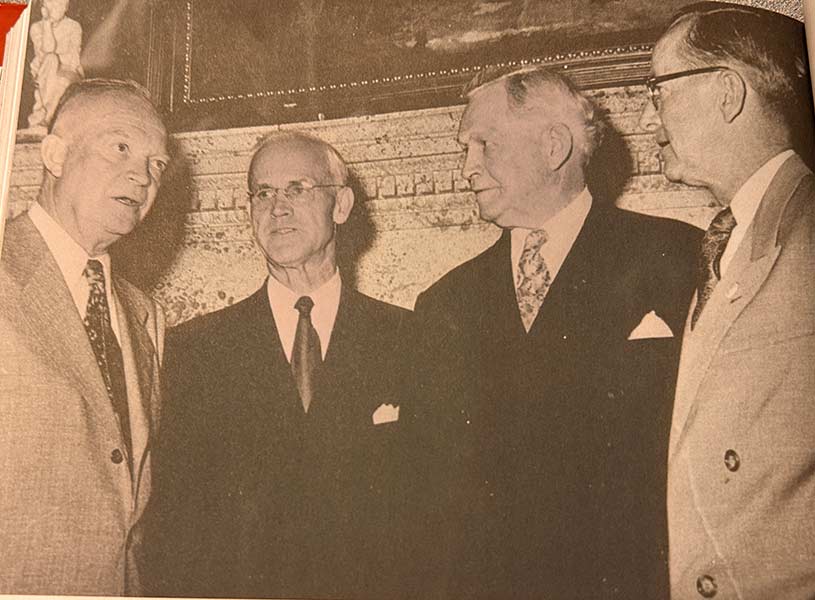
Congress eventually passed the legislation and it set the stage for expansion into global markets through international trade. It also led to technological innovations that helped maximize crop yields.
Although Benson and Eisenhower didn’t see eye-to-eye on the price supports issue, an article from BYU reports that the two men remained loyal to each other. While Benson was always cordial to political colleagues — even those who provoked him — his opinions raised eyebrows and made him the most controversial member of Eisenhower’s cabinet and the Republican Party.
In response to increased demands that he resign, Benson remained calm and composed.
“I am resigned to one thing — to do my duty as I see it, to continue my flight for a prosperous, expanding, and free agriculture,” Benson said, according to a New York Times report from 1959. “I didn’t ask for this job and I’m very busy trying to do it the best way I can.”
Eisenhower threatened lawmakers that he would quit if Benson resigned.
RELATED | Remembering the Teton Dam’s contentious backstory 50 years after its collapse
When Benson left office in 1961, he was one of two remaining cabinet members who served for the duration of Eisenhower’s presidency. He remained politically active for years to come and later served as president of the LDS Church.