



Malad residents challenge road project charges; mayor responds
Published at | Updated at

MALAD CITY — A group of Bannock Street homeowners is calling for an investigation into Malad City officials, alleging a lack of transparency, financial mismanagement and disregard for residents after learning they will be required to help pay for a road improvement project outside their homes.
Residents say they were not informed they would be responsible for a portion of the project’s cost until after construction crews had already removed sidewalks, curbs and gutters along the street. Homeowners are now being assessed $55 per linear foot through a Local Improvement District, with the cost financed through a mandatory 10-year loan carrying interest rates between 5% and 7%, according to residents.
“They waited until our street was completely destroyed to tell us we owed the city thousands of dollars,” Bannock Street homeowner Alexzandria Conger said on behalf of her family and several of her neighbors. “We have elderly neighbors, families on fixed incomes, and disabled veterans on Bannock Street who simply cannot afford a loan forced on them by their own local government.”
Conger said residents are asking city officials to halt the assessments, release project budgets and other public records, and explain why they declined to complete additional sewer line work that residents say was recommended while the street was already under construction.
Among the concerns is that city officials moved forward with the project despite what they describe as majority opposition during a recent public hearing. Conger said more than 60% of those who submitted written comments opposed the assessments.
Residents also contend the city has not responded to multiple public records requests seeking meeting minutes, project budgets and other documents related to the construction.
In addition, Conger said residents were told by the construction company’s sewer superintendent that service connections to individual homes should be repaired while the street was excavated to help avoid more costly repairs in the future. She alleges city officials declined to include that work in the project despite there still being time to complete it.
Conger said the situation is not unique to Bannock Street, alleging the city has used similar assessment methods on previous neighborhood street projects.
Residents continue pressing for answers
Mattracea Semrad, a local resident and business owner, said she has been “begging for clarity” from city officials about the Bannock Street improvement project and the local improvement district being used to charge property owners for part of the work.
Semrad, who is speaking up on behalf of her grandfather, said her parents and grandparents live on Bannock Street, along with many longtime neighbors she grew up with. She estimated her parents will be assessed about $11,000, while another nearby property owner could owe approximately $20,000.
She also disputed the city’s response to her public records requests, saying officials initially told her she could not request certain documents because she did not own property on Bannock Street.
Semrad said residents were permitted to protest the proposed local improvement district, but those wishing to speak were required to sign in. She believes some residents felt uncomfortable doing so and, as a result, did not feel their concerns were fully heard.
During one public meeting, Semrad said the owner of the properties housing the local hospital and clinic spoke against the assessment and indicated he might sell the properties if the district moved forward. She said residents later learned the hospital may reimburse the property owner for the assessment through its budget.
Semrad questioned whether that arrangement could create a conflict of interest because John Williams serves both as the hospital’s CEO and as a member of the Malad City Council. She said residents deserve a full explanation of how the hospital’s assessment will be paid and whether public funds will be used.
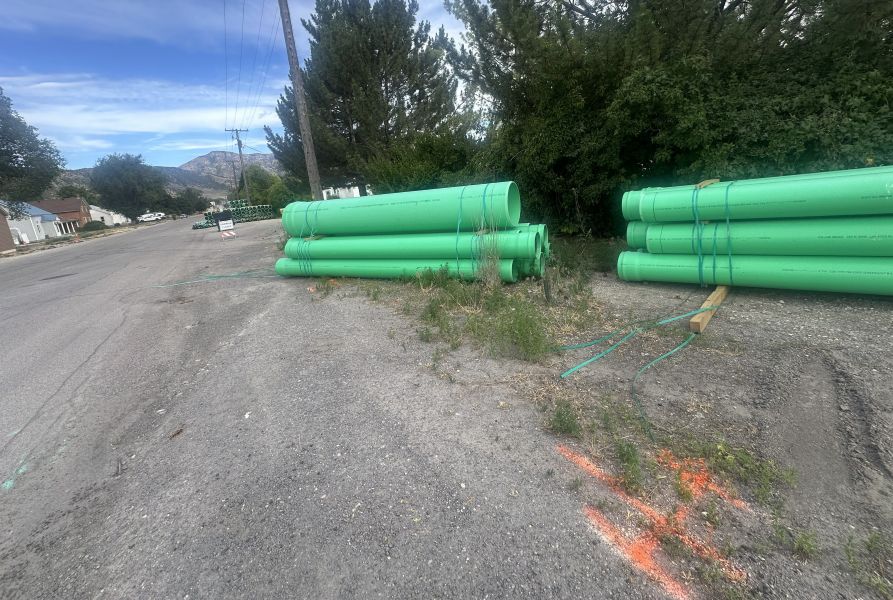
She also raised concerns about construction materials being stored in front of homes. Semrad said large pipes have remained outside her parents’ and grandparents’ residences for an extended period and that some of the materials securing them have deteriorated in the heat, prompting the families to avoid portions of their yards.
Semrad said she has repeatedly requested documentation showing how many property owners formally protested the local improvement district. During the meeting approving the district, she said Mayor Joan Hawkins reported that approximately 30% of affected property owners had protested but did not present the tally.
When Semrad later requested those records, she said the city denied the request for lacking specificity and estimated it could cost more than $2,000 because staff would need over 100 hours to locate and review the documents.
Semrad questioned why records used to approve the district would require that much time to produce.
She also said she obtained grant documents directly from funding agencies after struggling to receive information from the city. According to her review, the broader project has been awarded approximately $8.9 million in grants, while the construction bid was about $4.3 million. She said some grants require a local match, and others specifically reference funding for sidewalks, curbs and gutters.
Semrad said the city has not adequately explained how the grant money is being allocated or why property owners must still pay for sidewalks, curbs and gutters.
Semrad feels like the city council members are acting in secret and, instead of giving answers, are putting roadblocks at every step.
“If they would just come out with paperwork showing the funding and the protest tallies, it would solve 90% of this issue,” Semrad said. “We are asking them to show us the receipts.”
Mayor disputes residents’ allegations
Mayor Hawkins acknowledged that some residents have threatened legal action and said she wanted to consult with the city’s attorney before responding to EastIdahoNews.com’s questions.
In a written statement, Hawkins disputed many of the residents’ allegations, saying the city has followed Idaho law throughout the process and has worked for years to minimize the financial impact on homeowners.
Hawkins said the Bannock Street project has been in the works for several years and that the city secured multiple grants to cover most of the cost of the improvements. She said the City Council explored creating a local improvement district, or LID, to help pay for the city’s share of the project, noting that the funding method has been used on previous sidewalk, curb and gutter projects and was discussed during open City Council meetings and in city newsletters before construction began.
According to Hawkins, the council intentionally limited homeowners’ share of the cost to $55 per linear foot, or about one-third of the actual cost of the sidewalk, curb and gutter improvements. She said the city is also exploring the possibility of offering 0% financing to further reduce the financial burden on residents.
Hawkins also defended the city’s handling of the notification process, saying officials retained a Boise attorney specializing in local improvement districts to ensure all legal notice requirements were met.
She also disputed residents’ characterization of the public hearing.
The mayor said the proposed LID includes 65 properties. The city received 33 written protests and heard testimony from 11 residents during the public hearing, nine of whom had also submitted written objections. After the hearing, she said, three property owners withdrew their written protests, leaving fewer than half of the affected property owners with either written or oral objections.
Hawkins added that replacing the sidewalks, curbs and gutters was necessary to complete the larger road and drainage improvements, noting much of the existing infrastructure was in extreme disrepair.
Addressing residents’ concerns about public records, Hawkins said the city has received records requests and is responding to them in accordance with Idaho law.
“We want to get the residents any information they are seeking and want to be completely transparent on this project and all actions we take as a city,” Hawkins said. “We want to work cooperatively with our residents and appreciate their participation and involvement.”
Hawkins also rejected claims that the city should pay to replace private sewer service connections. She said city ordinance, like those in many other municipalities, makes those connections the responsibility of the property owner.
She said residents were notified that they could choose to replace their sewer service connections while they were exposed during construction if they believed the lines were nearing the end of their useful life, but doing so was optional and at the homeowner’s expense.
“It is always difficult to assess residents,” Hawkins said. “But we have gone to great lengths to minimize the amount we have had to assess and still make the necessary repairs and improvements to keep Malad a great place to live.”
The dispute remains unresolved as residents continue seeking answers about the project and city officials maintain they followed the law. EastIdahoNews.com will continue to follow the story and provide updates as more information becomes available.