




District 30 incumbent faces Democratic opponent in November
Published at | Updated at
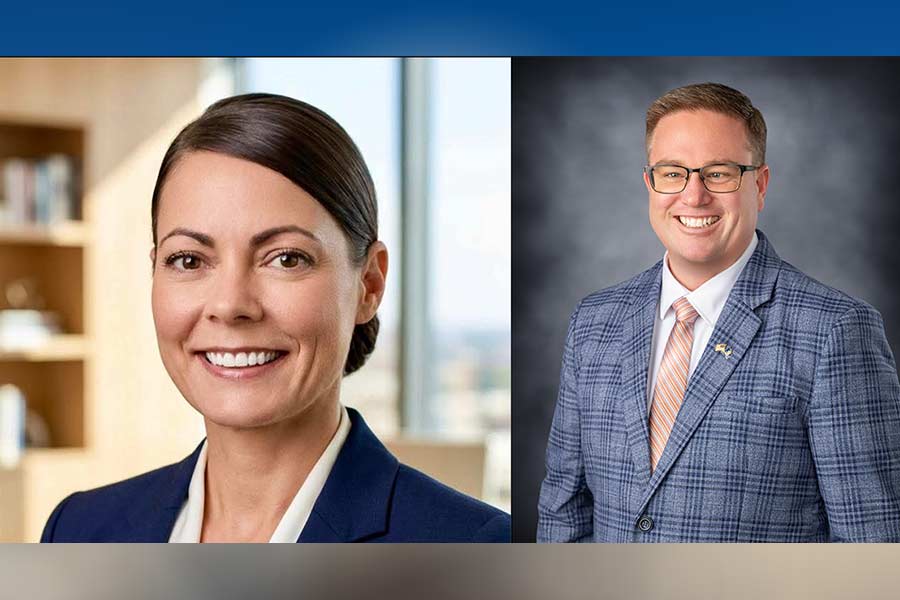
SHELLEY – Incumbent Ben Fuhriman, R-Shelley, is seeking re-election to a second term in November. The 42-year-old man represents House seat B in Idaho Legislative District 30 — a position he has occupied since 2024.
Bree Buckingham, a Democrat from Arco who currently serves as chair of the District 30 committee, is running against him.
Legislative District 30 encompasses Bingham and Butte Counties.
EastIdahoNews.com sent the same eight questions to each candidate. Their responses were required to be 250 words or less. They are included below and have not been edited.
Click here to learn more about Fuhriman’s campaign. Buckingham also has a website here.
Election day is November 3.
Tell us about yourself — include information about your family, career, education, volunteer work, and any prior experience in public office.
Fuhriman: I was born and raised in East Idaho and live in Shelley with my wife, Holli, and our four children. East Idaho is home, and I care deeply about the people and communities that make it such a wonderful place to raise a family. I’m a Certified Financial Planner (CFP®) and Accredited Financial Counselor (AFC®), and I own my financial planning firm with offices in Idaho Falls and Pocatello. I earned my bachelor’s degree from BYU-Idaho and a master’s degree in Family Financial Planning from Montana State University.
I’ve spent my career helping individuals, families, and small businesses navigate financial challenges, make difficult decisions, and prepare for their futures. That experience has significantly influenced how I approach public policy. I’ve also been involved in numerous volunteer organizations, including serving on the board of the Grand Teton Council of Scouting America, professional associations, church service, and providing financial counseling to individuals in need.
I was elected to the Idaho House of Representatives in 2024, representing District 30, which includes Bingham and Butte counties. I serve on the House Health and Welfare, Environment, Energy, and Technology, and Commerce and Human Resources Committees.
I believe public service should be about solving problems, strengthening communities, and leaving Idaho better for the next generation.
Buckingham: I am a first-generation (Basque) American, raised in the small, tight-knit town of Wauconda, Washington. I grew up managing a hunting and fishing lodge with my family, and working our small family farm. This remote upbringing instilled in me a deep sense of community, hard work, and responsibility from an early age. Following my brother into public service, we served together in the U.S. Army for over 15 years, including combat deployments to Iraq.
After retiring in 2015 due to injuries incurred in the line of duty, I am dedicated to improving rural accessibility initiatives, drawing from a firsthand understanding of the unique hurdles individuals face in remote communities.
I earned a paralegal degree and ultimately relocated to Arco, Idaho, in 2019—a community that shares the same foundational values as my hometown and my upbringing. Dedicated to local service, I served on the Arco City Council and currently serve as the Legislative District 30 Chair, working closely with Bingham and Butte counties to build resilience and success amidst our region’s historic drought.
I am a lifelong member of the Veterans of Foreign Wars (VFW), and an active member of several Veterans services groups, and have organized highway clean-up assignments throughout District 30.
My Grandparents both served in the U.S. military, and imparted upon me the duty to serve from an early age. Following in their footsteps, I took an oath to protect the Constitution of the United States of America. That oath did not come with an expiration date; thus, I will still serve.
Why are you seeking political office in your community? Briefly explain your political platform.
Buckingham: I am seeking political office in Legislative District 30 because I took an oath to the Constitution of the United States, and I fear that current Idaho leadership is guiding Idaho in an unconstitutional direction; I am running to restore accountability across five critical areas:
- Nuclear Waste Storage: I staunchly oppose the long-term storage of nuclear waste over the Snake River Aquifer. This dangerous practice violates the Fifth Amendment and breaches Idaho’s 1995 Settlement Agreement with the Department of Energy and the U.S. Navy. Idaho has a constitutional duty to protect our water and public lands.
- Cost of Living: Poor legislation has caused Idaho’s living expenses to skyrocket. Specifically, House Bill 40 (HB40) disproportionately cut taxes for the wealthy, shifting the financial burden onto underprivileged families.
- Due Process violations: The deployment of Flock Cameras subverts due process, creating a direct violation of both the Fifth and Fourteenth Amendments.
- Corporate Subsidies: Corporate data centers in our district violate the Fifth Amendment’s Takings Clause. Government should protect public use, not side with private corporate interests.
- Public Education Deficits: Our public schools are suffering after HB 93 reallocated $50 million to the Parental Choice Tax Credit. This blatantly violates Article IX, Section 1 of the Idaho State Constitution and must be repealed.
Idahoans deserve a representative who understands, respects, and upholds the Constitution. I am
not afraid to stand up and fight for you at the Idaho State Capitol.
Fuhriman: I didn’t run for office because I thought Idaho was broken. I ran because I love Idaho and believe we have a responsibility to preserve what makes it special while addressing the challenges that threaten our future. I’m a conservative who believes in limited government, fiscal responsibility, individual liberty, strong families, and free enterprise. But I also believe conservatism should be about finding practical solutions, not simply opposing everything government does.
During my first term, I’ve worked on issues including water infrastructure, healthcare affordability, government accountability, insurance reform, and helping schools meet the needs of students with significant disabilities. I’ve also learned that good legislation rarely comes from one person or one political party. It comes from listening, asking difficult questions, studying the facts, and being willing to work with people who see things
differently.
My priorities remain protecting our water resources, improving healthcare access and affordability, strengthening public education, supporting businesses and agriculture, and ensuring that government spends taxpayer money responsibly. I don’t believe Idaho needs more political extremism or unnecessary division. We need thoughtful leadership, common sense, and elected officials who remember that their responsibility is to the people they represent, not political organizations or special interests.
With rising housing, fuel, and food costs facing Idahoans, can the state government help bring relief to Idaho citizens? Is it the role of the Idaho Legislature to help deal with these issues?
Fuhriman: Absolutely. But we need to recognize that government is sometimes part of the reason
things are expensive in the first place. Government cannot simply legislate lower grocery prices, affordable housing, or cheaper fuel. However, it can eliminate unnecessary regulations, reduce barriers to development, encourage competition, and avoid policies that increase costs for businesses and consumers. Housing is a good example. Restrictive zoning, permitting delays, infrastructure limitations, and construction costs all contribute to affordability challenges. Government should examine its own contribution to those costs, including unnecessary regulations and state policies that undermine local control.
We also need to recognize that tax relief isn’t always the same as affordability. Saving a family a few hundred dollars in income taxes means relatively little if their housing, insurance, utilities, and groceries increase by thousands. As a financial advisor, I understand how these costs affect household budgets. Families don’t experience affordability as separate tax, housing, and healthcare issues. They experience it as whether they have enough money left at the end of the month.
I believe the Legislature has a responsibility to create conditions where families and businesses can prosper. Sometimes that means cutting taxes or regulations. Other times it means making strategic investments that prevent much larger costs in the future. Our goal should be making life more affordable, not simply making government smaller.
Buckingham: Providing cost-of-living relief is not just an option for the Idaho state government; it is a fundamental constitutional duty to its citizens.
The Idaho Legislature holds a pivotal role in addressing these issues. My first priority upon taking office will be to repeal HB40. This legislation disproportionately burdens everyday Idahoans by handing over $250 million in tax cuts to wealthy individuals and corporations.
These cuts were so reckless that they nearly forced Idaho into an unconstitutional deficit, triggering a budget emergency. To manage the fallout, the Governor had to enact SB1331, forcing an additional 4% holdback on critical state agencies.
HB40 stands as one of the worst fiscal decisions in our state’s history, favoring wealthy donors and corporations over working families. Repealing it will be my very first action on day one.
I am also committed to repealing House Bill 93 (HB93). By stripping critical funding from public schools, HB93 violates Article IX, Section 1 of the Idaho Constitution which states that the state must provide public education to Idaho residents. This legislation disproportionately benefits the wealthy at the expense of our children, families, and constitutionally protected public education.
Additionally, I will oppose data centers in Legislative District 30 rather than allowing these centers to take what little water resources that we have remaining in Bingham and Butte Counties after the worst drought in District 30’s history.
By safeguarding our water and lands, and by repealing HB40 and HB93, we can help Idaho’s farmers, ranchers, and families bounce back from the legislative failures of 2025-2026.
How will you best represent the views of your constituents – even those with differing political views? How do partisan politics play into your role as an elected leader?
Buckingham: My service in the U.S. Army wasn’t about party lines; it was about defending the Constitution. That oath didn’t expire when I took off the uniform. My oath to the Constitution supersedes party
lines.
Every resident—regardless of your background or political beliefs—deserves a representative who listens first, shares the facts, and puts people over party. The ‘us-versus-them’ mentality is failing our towns, counties and our country. It’s time to stop the pettiness and get back to working together.
Water, land, healthcare, education, cost of living, privacy, and taxes are all non-partisan issues that I believe we should all be talking about. I will listen to the people regardless of party.
Fuhriman: One of the most important lessons I’ve learned in public service is that people can
disagree about an issue and still have legitimate concerns, good intentions, and valuable perspectives. I’m a Republican because I believe in conservative principles. Those principles guide my decisions, but my responsibility is to represent everyone in my district, not just those who voted for me or agree with me.
I make an effort to listen to people with different political beliefs, including those who strongly disagree with my positions. Sometimes those conversations reinforce what I already believe. Other times they reveal something I hadn’t considered and cause me to rethink my approach. I believe political parties serve a valuable purpose in organizing people around shared principles. However, party loyalty should never replace independent judgment.
A good idea doesn’t become a bad idea because a Democrat suggested it, and a bad idea doesn’t become a good one because a Republican sponsored it. My constituents deserve a representative who will study the issues, ask difficult questions, explain his decisions, and have the courage to disagree with his own party. I don’t expect everyone to agree with every vote I cast. But I hope they can trust that those votes are made thoughtfully, honestly, and with the best interests of our communities in mind.
What parts of the Legislative budget could use more funding? Where are places in the budget where cuts could be made?
Fuhriman: Idaho is growing, and with that growth comes a responsibility to plan for the future. Our priorities should include water infrastructure, transportation, education, and healthcare. These aren’t simply budget expenditures. They’re investments in Idaho’s future. Recent budget cuts have had real consequences for Idahoans, including reductions to critical programs that serve some of our most vulnerable citizens. We need to be careful that in our efforts to trim the fat, we aren’t cutting into the bone.
I’m a fiscal conservative, and I believe every government program and every dollar spent deserves scrutiny. We should continually look for waste, inefficiencies, unnecessary bureaucracy, and programs that no longer serve their intended purpose. But cutting simply for the sake of cutting is just as irresponsible as allowing government to grow unchecked. Neglecting our roads, bridges, water systems, schools, and healthcare infrastructure doesn’t necessarily save money. It often just shifts a larger financial burden
onto our children and grandchildren.
We cannot expect to accommodate Idaho’s growth while refusing to invest in the infrastructure and services that growth requires. Responsible governance requires making difficult decisions, balancing competing priorities, and recognizing that both excessive spending and shortsighted cuts can have lasting consequences.
Our goal should not be bigger government or smaller government simply for the sake of either. It should be better government.
Buckingham: HB40 and HB93 stripped vital funding from our communities. Once we repeal these bills, I will put those tax dollars right back where they belong: supporting our schools, healthcare, first
responders, local towns, and Social Security.
Instead of wasting time and taxpayer dollars on frivolous, divisive culture wars, our legislators must refocus on the real issues facing Idaho families.
I am committed to addressing our state’s true priorities: securing our water resources, preserving our public lands, expanding healthcare access, and fully funding our public schools, as required by the Idaho State Constitution.
Furthermore, we must invest in our communities by providing rural law enforcement with the essential training and equipment they need, and ensuring our rural doctors and hospitals have the state backing required to keep Idahoans healthy.
In 2026, Idaho suffered a historic drought, leaving eastern Idaho’s reservoirs at an all-time low. As a result, crop yields were significantly impacted. What specific strategy or legislation would you support to protect groundwater and surface water resources, and what is your timeline for measurable improvements?”
Buckingham: My priority is protecting our water. I will block water-intensive data centers and oppose the long-term storage of nuclear waste above the Snake River Plain Aquifer.
Next, I would work to enact three consecutive water sustainability plans:
- Short-Term (1–2 Years): Stabilize supplies quickly via voluntary curtailment, demand management, and cloud seeding.
- Medium-Term (3–5 Years): Raise the water table by updating local water district rules and expanding managed aquifer recharge.
- Long-Term (5–10+ Years): Maximize systemic efficiency through large-scale overhauls like canal piping and new storage infrastructure.
Years of collaborating with local water users—including during my service on the Arco City Council—have shown me that water management is not a one-size-fits-all issue. What works for one county rarely works for another.
Moving forward, I will focus on the distinct needs of Bingham and Butte Counties, ensuring we address the unique challenges of each.
With the water concerns already facing Legislative District 30, the last thing we should do is jeopardize our future by allowing data centers in our district, and long-term nuclear waste storage over our vital aquifer.
Fuhriman: Water may be the most important long-term economic issue facing eastern Idaho. Without reliable water, we threaten agriculture, businesses, communities, and future growth. The solution cannot be simply asking one group of water users to sacrifice while others continue business as usual.
During my first term, I helped lead the effort to establish ‘750K by 2100,’ a goal of adding 750,000 acre-feet of new water storage capacity by the year 2100. I worked to pass resolutions through the Republican Party and the Idaho Legislature, including House Joint Memorial 14, which calls on Congress and federal agencies to partner with Idaho on expanded water storage. I’ve also worked to bring eastern Idaho’s water concerns to Washington, D.C., because federal cooperation and resources will be essential to achieving meaningful progress.
I support increased aquifer recharge, groundwater-to-surface-water conversions, improved monitoring, infrastructure investments, and voluntary conservation programs that fairly compensate participating farmers. Our immediate priority should be completing feasibility studies, identifying viable reservoir expansions and new storage projects, and securing federal partnerships and funding. HJM 14 calls for an updated basin study within two to three years, and that effort is moving forward thanks in part to our resolutions and first visit to Washington DC in 2025. We are going back in November of this year to continue raising awareness to our water needs in Idaho.
Drought cannot be legislated away, and building water storage takes time. But we can begin making measurable progress now toward protecting Idaho’s long-term water security.
One of the biggest issues on the November ballot is Proposition 1, a citizen-led ballot initiative that would repeal Idaho’s abortion ban. Do you support Proposition 1? Why or why not?
Fuhriman: My position on abortion has never changed. I believe abortion should be rare and permitted only under specific circumstances. My position aligns with my faith, which recognizes exceptions for rape, incest, when the mother’s life or health is in serious jeopardy, and when the fetus has severe defects that will not allow the baby to survive beyond birth. I believe our laws must recognize that a mother’s life may not be immediately threatened, but her health, future fertility, or ability to bear children could be seriously jeopardized. Physicians should not face criminal punishment for providing appropriate medical care in these difficult circumstances.
Unfortunately, Idaho’s abortion debate has become an all-or-nothing argument, with exaggerations, misinformation, and fear coming from both sides. I believe Proposition 1 exists, in large part, because the Legislature failed to address legitimate weaknesses in our current law. Rather than allowing thoughtful legislation to be heard, debated, and improved, legislative leadership prevented meaningful consideration of changes. We had opportunities to act, but lacked the courage to confront a difficult issue.
I believe in protecting unborn life, but I also believe in protecting mothers and ensuring physicians can practice medicine without fear of prosecution for exercising appropriate medical judgment. Regardless of Proposition 1’s outcome, we have a responsibility to fix the gaps in Idaho’s laws. Protecting life and providing compassionate, appropriate medical care should not be mutually exclusive goals.
Buckingham: I took an oath to the Constitution of the United States of America, and this includes the Eighth Amendment, which prevents cruel and unusual punishment, and the Fifth and Fourteenth
Amendments which demand due process.
Idaho’s current abortion ban is a direct violation of the Eighth Amendment as it calls for 2-5 years in prison for doctors who perform life-saving healthcare to women. I strongly oppose any violation of the U.S. Constitution. I also believe that the ban is a violation of the Fifth and Fourteenth Amendments for due process, as the doctors would be unable to receive due process because they would be forced to violate the Privacy Act of 1974, and their obligations to the Health Insurance Portability and Accountability Act (HIPAA) of 1996.
Under the current ban, Doctors will be forced to choose between violating their patient’s privacy (in order to receive due process by proving the procedure was medically necessary) and being sued by the patient, or refusing to violate patient privacy and risk 2-5 years in prison. Either way, they will lose something. This ‘catch-22’ ban is cruel and unusual punishment and a violation of due process.
Allowing a doctor to be prosecuted for performing their duties is an affront to the constitution, just as requiring a doctor to disclose patient information is an affront to the constitution and privacy laws.
I will continue to support and defend the Constitution of the United States of America.
Idaho House Joint Resolution 4 (HJR 4) is a constitutional amendment on the November ballot that would give the legislature exclusive authority to legalize or decriminalize marijuana, narcotics, and psychoactive substances. It would also ban citizen initiatives that would allow voters to directly have a say on the issue. Do you support the passage of HJR 4? Why or why not?
Buckingham: While I do not condone the use or legalization of dangerous drugs, I recognize that House Joint Resolution 4 (HJR4) is intended as a preemptive measure to block recreational marijuana in Idaho, which has been legalized in most neighboring states, the mechanism chosen is a direct affront to our constitution.
By shifting foundational power away from the citizens and into the hands of the government, HJR4 violates our core American values and basic freedoms.
This is about more than legalizing marijuana or dangerous drugs; allowing the legislature sole authority over our speech establishes a dangerous precedent; once we surrender these First Amendment protections, reclaiming them may prove impossible.
I will fight tirelessly to keep political power exactly where it belongs: with the people of Idaho, not the politicians. Our constituents deserve a voice, and I will fiercely defend their right to hold their legislators accountable.
Fuhriman: I oppose the recreational legalization of marijuana and other harmful drugs. However,
HJR 4 raises a much broader question than whether marijuana should be legal. Before I’m a legislator, I’m a citizen of Idaho. I value our constitutional rights and am uncomfortable with a Legislature restricting the people’s constitutional authority in response to the political and emotional pressures of the moment.
Idaho voters overwhelmingly approved the initiative process in 1912. It provides an important check on legislative power, even when we disagree with how citizens might use it. Qualifying an initiative is already extremely difficult. In fact, the 2026 marijuana initiatives failed to qualify for the ballot despite significant efforts to gather signatures.
Furthermore, the Legislature retains the authority to amend or repeal laws passed through citizen initiatives. That process can include legislative hearings, public testimony, and debate. Passing an initiative doesn’t eliminate the Legislature’s responsibility to carefully consider the resulting law. Today’s Legislature will not necessarily be the Legislature we have five, ten, or twenty years from now. We should be extremely cautious about permanently restricting the people’s authority on any specific issue based on today’s political concerns.
I take changes to our Constitution very seriously. There is a meaningful difference between opposing marijuana legalization and removing a constitutional power on the issue that belongs to the people. Our Constitution should protect the rights of future generations, not simply reflect the political pressures of the present.