




Bannock County coroner candidates answer questions ahead of election
Published at
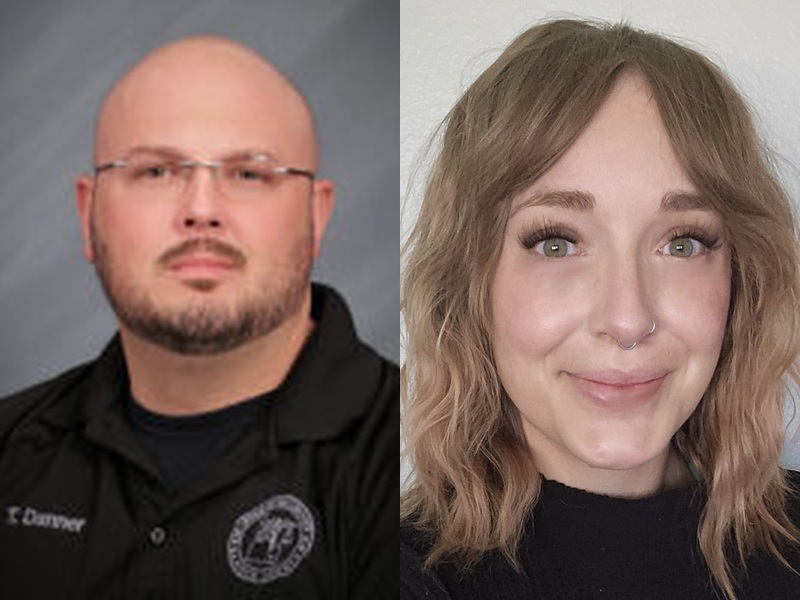
POCATELLO — Two candidates are vying for Bannock County coroner: incumbent Republican Torey Danner and challenger Independent Wilson Simmons.
EastIdahoNews.com sent both candidates the same questionnaire. Danner’s and Simmons’ responses are listed below without substantive edits.
The general election will be held Nov. 3. Polls are open from 8 a.m. to 8 p.m.
For more candidate questionnaires and information about the Nov. 3 midterm election, check out East Idaho Elects. To learn where to vote or what’s on your ballot, visit VoteIdaho.gov
1. Tell us about yourself — include information about your family, career, education, volunteer work, and any prior experience in public office.
Danner: I have dedicated 22 years to public service, including my tenure as Bannock County Coroner since 2021. Prior to this leadership role, I served as an incident commander and team leader for the Bannock County Sheriff’s Office Search and Rescue Division.
I am proud to be the first Bannock County Coroner to achieve national certification from the American Board of Medicolegal Death Investigators (ABMDI), thereby establishing a new benchmark for professional excellence within the office.
My leadership extends statewide, having served as education chair, vice president, and president of the Idaho State Association of County Coroners (ISACC), where I currently serve as the legislative representative.
I was instrumental in developing the Idaho Next-of-Kin Database, which established a voluntary statewide system that enables coroners and law enforcement to notify families in hours rather than days—a solution derived from my direct experience. In 2025, I was honored with the Mills Adler Award for outstanding leadership in county government.
I am deeply committed to my community and dedicated to advocating for individuals in crisis. I co-founded the “Please Just Stay” suicide awareness initiative and serve on both the HIDTA Drug Task Force and the Eastern Idaho Public Health and Safety Team, a multi-agency collaborative focused on monitoring overdose trends and reducing regional fatalities.
Additionally, I served on the Region 6 Behavioral Health Board until its dissolution. Outside of my professional responsibilities, I enjoy golfing and spending time with my family and friends.
Simmons: I’m a lifelong Pocatello resident and a graduate of Idaho State University, where I earned my Master of Science in Anthropology with an emphasis in forensic anthropology.
My education included hands-on training in human skeletal analysis, forensic identification, archaeological excavation, and scientific research. I volunteered with ISU’s forensic anthropology laboratory, assisting with investigations involving human remains, including clandestine burials and cold cases.
I also completed an archaeological field school in County Clare, Ireland, and an internship with ISU’s Center for Archaeology, Materials and Applied Spectroscopy.
Professionally, I’ve spent more than a decade working in dentistry, where I’ve gained valuable experience in healthcare, patient communication, and working with people during stressful or difficult circumstances. I’ve also pursued additional education in medicolegal death investigation.
I’m married, an avid reader, a crocheter, and a dog owner. I grew up in a family that valued education, music, and athletics, particularly volleyball.
I’ve never held public office. I’m running because I believe my scientific education, investigative training, and healthcare experience offer valuable qualifications for the position of county coroner.
2. Why are you seeking political office in your community? Briefly explain your political platform.
Danner: The coroner’s office requires a balance of precise forensic science and genuine human empathy. I am running for re-election to maintain the standards we have established and to keep our office’s positive momentum moving forward.
These are my objectives for this office:
Infrastructure Development: We currently rely on temporary mobile morgue facilities to manage capacity constraints; my priority is to establish a permanent, county-owned facility to ensure self-sufficiency, provide a secure environment for medicolegal death investigations, and transition away from outsourcing core public responsibilities to private entities.
Operational Excellence: I am leading our office through the rigorous process required to secure full accreditation from the International Association of Coroners and Medical Examiners.
Legislative Reform: As coroner, I am actively working with legislators to standardize certified training protocols and investigative requirements statewide to enhance the quality of service provided to our communities. I am dedicated to using my experience to better serve our county.
Simmons: I’m running for Bannock County Coroner because I believe death investigations should be guided by scientific evidence, professional standards, and compassion for the families affected.
My background in forensic anthropology has given me an appreciation for the importance of accurate identification, thorough investigation, and conclusions supported by evidence. I want to bring that perspective to the coroner’s office while continuing to learn from experienced medicolegal death investigators and other professionals.
One of my long-term priorities is exploring the possibility of establishing regional forensic pathology services in southeastern Idaho. Currently, our region relies heavily on facilities in Ada County for autopsies. Developing local capacity could reduce transportation costs, improve turnaround times, and better serve families throughout Eastern Idaho.
I also support greater professional training and, eventually, a statewide transition toward a medical examiner system that places forensic medical decisions in the hands of appropriately trained physicians.
Above all, I want an office that operates transparently, uses taxpayer resources responsibly, and maintains productive working relationships with law enforcement, healthcare providers, funeral homes, and neighboring counties.
The coroner’s responsibility is to the deceased, their families, and the public, not to a political party or personal agenda.
3. What are the greatest challenges facing people dealing with the death of a loved one? What is your approach to dealing with a grieving family?
Danner: The greatest challenge a family faces during a loss is coping with severe emotional shock while navigating the medicolegal death investigation process. While dealing with such an unexpected tragedy, families are tasked with coordinating funeral arrangements, executing final wishes, and managing necessary documentation during an exceptionally challenging time.
My approach to assisting a grieving family is rooted in deep compassion, diligence, honesty, and transparency. I firmly believe the coroner’s role extends beyond merely investigating the cause and manner of death; it is about serving the living and providing meaningful answers when they are needed most.
Under my leadership, our office has partnered closely with community resources to ensure families have immediate access to support systems on scene. We guide the next of kin through every step of our investigation using clear, direct communication. Furthermore, through initiatives such as the Idaho Next-of-Kin database, we hope to significantly reduce the time required to notify families.
I am focused on making things easier and more efficient while advocating for these families to ensure their loved ones are treated with dignity, giving them the space they need to grieve and find closure.
Simmons: Losing someone is difficult under any circumstances, but an unexpected or unexplained death can be particularly traumatic. Families may be dealing with shock, grief, uncertainty, financial concerns, and the practical responsibilities that follow a death, all at the same time.
When a death requires investigation, families may also face delays in receiving answers or making funeral arrangements. Not knowing what happened to someone you love can make an already painful experience even more difficult.
My approach would be to treat every family with patience, dignity, and compassion. I believe communication is especially important. Families deserve to understand the investigative process, what to expect, and why certain procedures or delays may be necessary.
That doesn’t mean investigators can always provide immediate answers. Sometimes determining the cause or manner of death requires additional testing or consultation with specialists. I would rather provide an accurate answer after a thorough investigation than offer premature conclusions simply to resolve uncertainty.
I also believe families should be treated with respect regardless of their circumstances, background, beliefs, or relationship with the deceased.
Ultimately, the coroner’s responsibility is to conduct an objective investigation while recognizing that every case involves a person whose death affects others.
4. Do you believe the office of county coroner should be a partisan position? What role do partisan politics play in the operation of the coroner’s office?
Danner: Although the coroner position is technically partisan, politics should not play any role in how the office functions. Death investigations are not political.
Our duty is to serve everyone regardless of political views, focusing on medicolegal death investigations alongside law enforcement by relying on forensic science, medical facts, and Idaho law. When families suffer a loss, they deserve someone who is honest, capable, and compassionate.
During my time as coroner, I have worked to make the office more professional to better serve Bannock County families. I prioritize building strong working relationships over political differences. I view this role strictly as a matter of public safety and service, not a political platform.
Simmons: No. I don’t believe the office of county coroner should be partisan. Determining the cause and manner of someone’s death is a scientific and medicolegal responsibility, not a political one. The evidence doesn’t change based on someone’s political affiliation, and neither should the standards used to investigate their death.
The coroner serves everyone in the county, regardless of political beliefs, religion, socioeconomic status, or background. Every individual deserves the same level of professionalism, objectivity, and respect.
I’m running as an independent because I believe this office should operate without partisan influence. My personal political or religious beliefs have no place in determining how an investigation is conducted or what conclusions are reached.
Ideally, I would like to see Idaho move away from partisan elections for coroners altogether. The qualifications and professional abilities of the person holding this office should matter far more than the political party associated with their name.
Public trust is essential in death investigation, and that trust depends on the public knowing that decisions are made according to evidence, established procedures, and the law.
5. What is the status of the budget in the coroner’s office? Is more funding required? What resources are needed to run the office adequately? Are there areas where cuts could be made?
Danner: Our budget remains stable due to our commitment to operational self-sufficiency and fiscal responsibility. Upon assuming office, I prioritized modernizing our services while proactively reducing costs to safeguard taxpayer interests. To ensure sustained operational efficacy, it is recommended that capital funding be secured for a permanent, county-owned morgue and operational facility.
A county-owned facility would promote self-sufficiency, offer a secure environment for medicolegal death investigations, and facilitate a transition away from outsourcing core public responsibilities to private entities. Therefore, adopting county-owned infrastructure represents the most fiscally responsible approach.
We maintain our operating budget by replacing costly outsourced logistics with internal solutions, resulting in cost efficiencies. The transition to paperless workflows and digital field technologies has enhanced our efficiency while maintaining stable overhead costs. We remain committed to enhancing efficiency through innovation and self-reliance, ensuring that our efforts toward fiscal optimization do not compromise public safety standards.
Simmons: According to Bannock County’s FY2027 approved budget, the coroner’s office has approximately $494,000 allocated for personnel and operating expenses, along with $950,000 for a capital building project.
I believe the office’s funding priorities should be adequate staffing, professional training, necessary equipment, and access to forensic services. These are essential to conducting accurate and thorough death investigations.
Before recommending additional funding or budget cuts, I would want to examine actual expenditures and assess whether existing resources are being used efficiently. The budget includes $110,000 for professional services, which is one area I would want to evaluate to better understand the costs involved.
One of my long-term goals is to explore regional forensic pathology services in southeastern Idaho. Our reliance on facilities in Ada County creates transportation expenses and logistical challenges. Regional services could potentially improve efficiency and reduce some recurring costs, although establishing such a facility would require significant investment and careful financial planning.
I don’t believe arbitrary cuts are responsible, particularly when they could compromise investigative quality. I would prioritize essential services, examine opportunities for collaboration with neighboring counties, and ensure that requests for additional funding are supported by demonstrable needs.
6. What specific changes can be made in this office to increase public transparency and access to public information? How will you communicate directly with your constituents and the media?
Danner: Public accountability and transparency remain fundamental to the management of this office. To ensure the community stays informed, we publish comprehensive reports detailing our data and operations, which provide constituents with direct insight into the utilization of public safety resources.
My approach to media communication involves providing accurate, prompt, and verified information about public incidents while maintaining a strict commitment to the privacy of families. I maintain an accessible relationship with local news organizations to ensure the community receives timely safety updates.
Simmons: Transparency is essential to maintaining public trust, particularly in an office responsible for investigating deaths and making determinations that can have significant consequences for families.
The Bannock County Coroner’s Office already provides some public information, including annual reports and general information about its responsibilities. I would like to build on those efforts by making information about office procedures, investigative responsibilities, and available services easier for the public to access and understand.
I would support publishing consistent annual statistics on caseloads, causes and manners of death, and office expenditures, while ensuring that confidential information and the privacy of families are protected. I also believe the public should have clear information about how to request records, what information can legally be released, and why certain investigative details must remain confidential.
Communication with the media should be professional, timely, and consistent with legal requirements. I believe public officials should be willing to answer questions, explain their decisions when appropriate, and acknowledge when information cannot yet be released.
I would also make myself accessible to constituents who have questions or concerns about the office. Transparency doesn’t mean disclosing every detail of an investigation. It means being accountable for how the office operates and providing information whenever legally and ethically possible.
7. Can you give a concrete example of a policy or budget decision you would support to improve a service within your first year in office?
Danner: During my first year in office, I transitioned to a fully digital case management system, replacing physical paper records to enhance security, operational efficiency, and data tracking capabilities.
Simmons: One practical improvement I would support during my first year is establishing a standardized communication procedure for families whose loved ones are involved in a coroner’s investigation.
Unexpected deaths can leave families with many questions about what happens next, how long an investigation might take, when their loved one can be released to a funeral home, and whom they should contact for information.
I would like the office to provide families with clear, written information explaining the investigative process, anticipated next steps, contact information, and the reasons certain procedures may take additional time.
I would also work toward establishing consistent expectations for communication and follow-up throughout an investigation, while recognizing that some cases require more time and resources than others.
This is a relatively inexpensive improvement that could make a meaningful difference for grieving families. It would also help ensure that families receive consistent information regardless of which investigator handles their case.
While larger goals, such as developing regional forensic pathology services, require extensive planning and cooperation, improving communication with families is something I believe the office could begin addressing much sooner.
8. What experience do you bring that prepares you to manage county funds, and how will you ensure fiscal responsibility?
Danner: With years of direct budget oversight from my time at the sheriff’s office and my current role as your county coroner since 2021, I have the proven experience needed to effectively manage our county funds. I believe that genuine fiscal responsibility entails protecting your hard-earned tax dollars while providing professional and modern services.
I maintain fiscal responsibility by prioritizing innovation, efficiency, and self-sufficiency:
- Ending Outsourcing: I permanently eliminated the expensive practice of outsourcing body transportation, thereby saving taxpayer funds by managing logistics in-house.
- Going Paperless: We successfully transitioned the office to digital tools and mobile tablets, which has increased field efficiency and data security while reducing administrative costs.
Simmons: I haven’t previously managed a county government budget, and I think it’s important to be straightforward about that. However, I believe fiscal responsibility begins with understanding the purpose of each expenditure, evaluating its necessity, and being accountable for how public money is spent.
My scientific education emphasized research, critical analysis, documentation, and making decisions based on evidence rather than assumptions. Those principles are equally valuable when evaluating how resources are allocated.
I’ve also taken the initiative to review the county’s publicly available budget documents to better understand the coroner’s office’s current financial priorities.
If elected, I would work closely with the county commissioners, financial staff, and experienced personnel to understand the office’s budget, statutory obligations, and financial procedures. I would review expenditures carefully, prioritize essential investigative services and professional training, and look for opportunities to reduce unnecessary costs without compromising the quality of investigations.
I also believe collaboration with neighboring counties and other agencies can create opportunities to share resources and reduce expenses.
Taxpayers deserve to know that their money is being used responsibly.
My approach would be to make informed, transparent financial decisions and recognize that the lowest-cost option isn’t always the most effective or responsible one, particularly when the accuracy of a death investigation is at stake.