




Rigby Democrat challenging four-term incumbent in race for District 31 House seat B
Published at
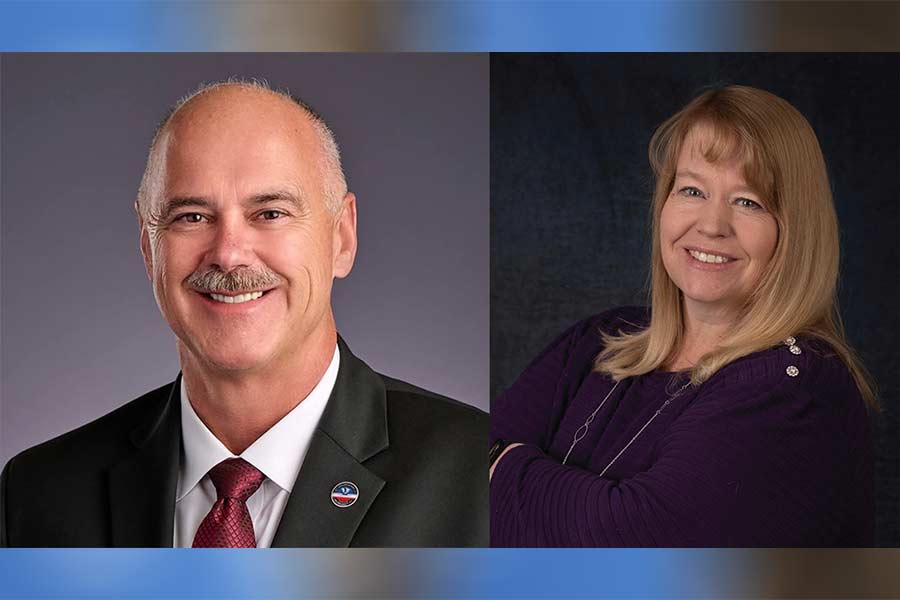
RIGBY — Four-term legislator Rod Furniss, R-Rigby, is seeking re-election to Idaho House seat B in Legislative District 31. Rigby Democrat and first-grade teacher Wendy Norman is also vying for the seat.
District 31 encompasses Lemhi, Clark, Fremont and Jefferson counties.
EastIdahoNews.com sent the same eight questions to each candidate. Their responses were required to be 250 words or fewer. They are included below in their entirety with no edits.
Details about Furniss’s campaign are available here. EastIdahoNews.com could not find a website for Norman, but we interviewed her in 2022.
Election day is November 3.
Tell us about yourself — include information about your family, career, education, volunteer work and any prior experience in public office.
Furniss: I am a 6th generation Idahoan, as my family homesteaded in the Menan area in the late 1800s. I worked on the ranch and farm until I was 17. The ranch was expanded to Leadore (Oxbow Ranch) and as a young boy I drove a 4020 tractor many times there from Menan. I have been married for 45 years and have 5 children and 12 grandchildren. I hope my posterity will live in Idaho, work in Idaho, and be educated in Idaho. I attended high school in Rigby and played football, basketball, and track. I played football at Ricks College. I graduated from Brigham Young University-Idaho and Idaho State University in Finance and have advanced degrees in insurance and financial planning. I worked in banking and have been involved with life and health insurance since 1986. I have been the local and state president of the National Association of Insurance and Financial Advisors and the president of our local education foundation. I grew to love teachers as we helped with financial needs of children and saw the dedication they have. I have served as a State Representative for 8 years and carried over 70 bills and am a local precinct committee member. Committees: Economic Outlook and Revenue Assessment, Joint Finance and Appropriations, Business, Energy (Vice Chair), Revenue and Taxation, Your Health Idaho, Petroleum Tank and Hispanic Affairs. I have served in many positions in Church, mission to Argentina, Bishop, High Councilor, Sunday School Teacher, etc. I enjoy recreating in Island Park and Spencer.
Norman: I am a wife, a mom of 5, and a grandma of 5. I have been teaching in southeast Idaho for more than 30 years I volunteer with my church and in my community. I spend a lot of time helping students in my own school and classroom. I have never served in public office. I have volunteered with Mormon Women for Ethical Government, and with the Jefferson County Education Association. I earned an associates degree in journalism at Ricks College, a B.S. degree from Utah State University in English, and a masters degree in Curriculum Leadership at Idaho State University.
Why are you seeking political office in your community? Briefly explain your political platform.
Norman: My dad told a story about a young man who got a horse, but then decided it was costing too much to feed. He figured he could cut costs by training his horse to eat less. Gradually, he cut the feed more and more and was proud of how much he saved. Alas, just as he got his horse fully trained to eat nothing, the horse died.
Our state legislature has been acting like the guy in that story. They are cutting everything in the state, just for the sake of cutting taxes, but they are acting like a one-trick pony, where all they can do is cut taxes. Well, sooner or later, they are going to kill off the horse.
Cutting revenue does not meet the needs of the people in this state. It doesn’t keep our infrastructure in working order. It doesn’t address healthcare needs. It doesn’t ensure our students are educated for the future world. It doesn’t defend our public lands.
Thirty years of full Republican control of our state is destroying what Idaho once was, and what it should still be.
I want my Idaho back. The one where neighbors are neighbors and communities are communities. We can only get that when we end the extreme 1 party system our state has become. There is good on the left, and on the right. I want to bring balance back to Idaho.
Furniss: I have a great love for Idaho’s amazing quality of life and a strong desire to serve its people. My education and business experience have prepared me to be a strong advocate for a balanced budget (on JFAC we review over 100 agency budgets), exceptional education opportunities, and a robust productive economy with a goal toward affordability. Legislative District 31 has always been my home. I cherish the pioneer heritage of this area and the “salt-of-the-earth people” that make it unique. I want my family for the next generations to work in Idaho, be educated in Idaho, and play in Idaho. In the Idaho House of Representatives, my faith guides my every decision. I am pro-life because I believe that life is God-given. Abortion is the scourge of the earth and should never be considered except for rape, incest or the health of the mother. Even with these exceptions, abortion should be the last choice considered after much discussion and contemplation. I’m a pro-traditional marriage and believe marriage is the sacred union of one man and one woman. I am pro-second amendment and my guns have always been and will continue to be my right to bear. The Idaho Constitution protects my right to keep my guns regardless of allegations by anyone else.
With rising housing, fuel and food costs facing Idahoans, can the state government help bring relief to Idaho citizens? Is it the role of the Idaho Legislature to help deal with these issues?
Furniss: Idahoans are feeling the costs of housing, fuel and food costs along with the entire nation. Idaho has passed bills in this past session to unburden builders with unnecessary regulations. Idaho is growing at a fast past with a growing demand for housing and commercial buildings. This demand is driving prices
higher even with reduced regulation. As the market rightsizes, you will see prices stabilize and builders and developers will see opportunities in the lower priced homes. Idaho has low taxes in fuel, and more money has been allocated from sales tax to help with local road improvements. Last year no money was allocated to local counties for roads. We need to bring this back. Food costs have risen due to fuel costs. Many have called for a repeal of the grocery tax, but legislators have worked hard to make sure the grocery tax credit that each Idahoan gets keeps up with inflation. A family of four can purchase over $10,000 of groceries tax free in Idaho. Remember not everything you purchase at the store is grocery. Many of the issues above have a federal element but if the Idaho legislature can help by reducing regulation or reducing tax in certain areas it will.
Norman: The Idaho state government can and should play a role in helping residents facing rising housing, fuel, and food costs.
Housing
- Provide incentives for affordable housing development.
- Make housing developments possible with smaller lots to retain farmland.
- Invest in infrastructure that opens more land for residential development.
- Review property tax policies that affect homeowners and renters. How about backyard structures?
Fuel Costs
- Maintain and improve transportation infrastructure.
- Review state taxes and fees related to transportation and fuel.
- Encourage energy development and transportation alternatives where appropriate.
Food Costs
- Support Idaho agriculture and food production.
- Review regulations that may add costs to producers, processors, and retailers.
- Consider targeted tax relief that leaves more money in consumers’ pockets.
- Make immigration legal and affordable for essential jobs Americans won’t take. It doesn’t need to take 20 years of waiting in line.
Reasonable people disagree on how much government should intervene, but it is clearly within the Legislature’s role to address economic challenges through legislation, taxation, budgeting, and oversight. I support targeted public investments or assistance programs.
In short, the Idaho Legislature cannot single-handedly control housing, fuel, or food prices, but it does have important tools to help ease the burden on Idaho families through tax policy, budgeting decisions, and laws affecting housing, transportation, and economic development.
How will you best represent the views of your constituents — even those with differing political views? How do partisan politics play into your role as an elected leader?
Norman: I am running as a Democrat, but in our state the Republican party is divided. We have far right factions and we have what have traditional been called Republicans – what the far right and Idaho Freedom Foundation have dubbed Rino’s – Republicans In Name Only. I can agree with much of what the Rino’s do. I long considered myself a moderate. But then the far right took charge. I chose to be a Democrat to try to offset and balance out our state government. My beliefs and standards mesh well with most on the right, and my empathy and focus on growth opportunities for Idahoans means I don’t quite fit with the current Republican party.
Regardless of beliefs, however, I believe in the value of all human beings. I do believe we all need to be respectful of each other. As a long-time first grade teacher, I am constantly managing disagreements. I did that when I taught middle school, and I did it when I taught high school. I’ve also worked with many parents with differing perspectives. When we keep our focus on what is best for our state and our nation, we can overcome many of our challenges.
Furniss: Once elected, I need to represent the views of those that elected me but I also need to listen to all that have concerns on both sides of the aisle. I need to respect the opinions of all while listening to my own values coupled with my education and business experience. I am a Republican but I have voted against my own party several times. One example was the vote to do away with boards not chosen by the Governor in Harriman State Park. I feel independence is important on every vote I take.
What parts of the Legislative budget could use more funding? Where are places in the budget where cuts could be made?
Furniss: I have the privilege of serving on the Joint Finance and Appropriations Committee and we look at over 100 budgets each year to determine viability and credibility of each request in the budgets. We also look at trends as the state is growing at a rapid pace to make sure we are funding those budgets adequately. Several places we underfunded last session were salaries for state employees and teachers. While we fund water projects at $30 million a year we should be investing more in water projects across the state. Higher education is also underfunded especially in Eastern Idaho. We are seeing higher enrollments for critical skills and the funding per student is lower in Eastern Idaho than other areas. I think you will see more cuts in Medicaid as we find fraud and abuse and follow regulations in the Big Beautiful Bill passed by congress last year.
Norman: Education and healthcare are my number one priorities. Budget cuts are always possible, but I believe in responsible budgeting. We can be frugal AND responsible.
In 2026, Idaho suffered a historic drought, leaving eastern Idaho’s reservoirs at an all-time low. As a result, crop yields were significantly impacted. What specific strategy or legislation would you support to protect groundwater and surface water resources, and what is your timeline for measurable improvements?
Norman: So much depends on how much snowfall we get this year. If we do not get adequate precipitation, we are in big trouble. Here are some ideas we could do:
1. Expand the aquifer recharge
- Increase investments in projects that divert excess spring runoff and high-flow river water into recharge basins.
- Prioritize recharge in the Eastern Snake Plain Aquifer region, which supplies much of eastern Idaho’s agriculture.
2. Modernize Agricultural Water Infrastructure
- Provide grants or low-interest loans for irrigation system upgrades.
- Encourage conversion from less efficient delivery systems to advanced sprinkler, drip, and precision irrigation technologies where feasible.
3. Strengthen Groundwater Management
- Require improved measurement and reporting of large groundwater withdrawals.
- Support basin-specific groundwater sustainability plans developed with farmers, irrigation districts, and local water users.
4. Increase Water Storage and Drought Resilience
- Evaluate additional storage projects, reservoir improvements, and conveyance upgrades
- Invest in watershed restoration projects that improve water retention and reduce drought impacts.
Ultimately, protecting Idaho’s water resources requires balancing agriculture, communities, and environmental needs. Rather than relying on a single solution, I would support a combination of aquifer recharge, conservation, infrastructure modernization, and science-based groundwater management, with publicly reported benchmarks every year so citizens can see whether the policy is producing results.
Furniss: Idaho is suffering from historic drought conditions and our reservoirs are at an all-time low. We have been blessed this year with timely rainfall which has saved many farms from disaster. Again, we are allocating $30 million a year to water projects and this needs to be increased. We also need to look at increasing our reservoir capacity and look for new reservoirs like rebuilding the Teton Dam. If we had that reservoir this year we would not have a shortage of water. It also would provide enough water to recharge the aquifer with the many sites we have developed. Water is the new oil or gold for the future and Idaho is sitting on more water than we can use but we must use it wisely and manage it for the future.
One of the biggest issues on the November ballot is Proposition 1, a citizen-led ballot initiative that would repeal Idaho’s abortion ban. Do you support Proposition 1? Why or why not?
Furniss: Proposition 1 would repeal the Idaho Abortion laws on the books and make Idaho one of the most liberal states to perform abortions up to the 8th month and also allow children that get pregnant to get an abortion without notifying their parents. I am a no vote on Prop 1. Idaho already has exceptions for the life of the mother, rape, and incest. Yes the legislature could do a better job of clarifying the law and defining the liability of the physician. Honestly we have been working with doctors to do that but have been unable to come to an agreement on what the law should say. I look forward to working toward a solution that can be codified.
Norman: Our current state law is horrendous. I will not support elective abortions because of my personal beliefs, but our state law is terribly harmful for the life and health of women and demands repair, should the proposition fail.
My biggest concern with this law is for those who have health complications. When I ran for Congress and I told a woman I was not pro-choice, she told me her experience with a fetus developing that would be incompatible with life. She asked if I would at least support abortion for women in her situation. Idaho’s law doesn’t.
I personally understand the impact of healthcare restrictions that could have killed me and my babies. My first pregnancy nearly ended at 16 weeks gestation. I was told at first I was having a spontaneous abortion and I was devastated. Instead, it was a partial placental abruption. I remember asking a nurse if my baby would be okay. She said the risk wasn’t to my baby, but to me. No baby can survive at 16 weeks if their mom dies.
Thankfully, we managed to get to a survivable gestation with just 3 weeks in the NICU. My last pregnancy I had to deal with another deadly mom complication — preeclampsia. Again, my 8 week preemie survived.
Women choosing elective abortions are mostly able to access abortions. We need to honor mothers by trusting them when their life and health are at risk.
If we really want to end elective abortions, we need to fix our system. Universal healthcare, paid maternity leave, affordable childcare, etc. That’s how you end elective abortions.
Idaho House Joint Resolution 4 (HJR 4) is a constitutional amendment on the November ballot that would give the Legislature exclusive authority to legalize or decriminalize marijuana, narcotics and psychoactive substances. It would also ban citizen initiatives that would allow voters to directly have a say on the issue. Do you support the passage of HJR 4? Why or why not?
Norman: I do not support drug legalization, although I am receptive to medical marijuana. However, why should we give up our individual rights to a legislature that chooses to ignore many of their constituents?
For example, last year right at the end of the legislative session, our governor heard from hundreds of Idahoans where the majority opposed the anti-union legislation. That bill passed, and our governor signed it. Father doesn’t know best. That’s not good government. Representative government is where they listen to our views and answer to us, not dictate to us.
We can’t afford to hand over any of our individual rights to a legislature that will not represent us.
Furniss: I am a yes vote on HJR 4. HJR 4 would keep marijuana and other drugs out of Idaho for a very long time and perhaps forever. Idaho is a Republic and constituents vote representatives to vote their voices and wishes. Initiatives for drugs are currently funded by out of state influences that may not represent the views of the State. By passing HJR 4 Idaho views will be adhered to and not out of State influences. Passing HJR 4 would allow vetting of drugs in Idaho like a normal bill with introductions, hearings, committee and floor debates. Along with a governor veto or signing. This is a much better path for the topic of drugs than the initiative process and out of state money influencing Idahoans with lies and innuendo. Initiatives can still be done on all other topics.