




Rigby Democrat challenging four-term Republican incumbent in District 31 Senate race
Published at | Updated at
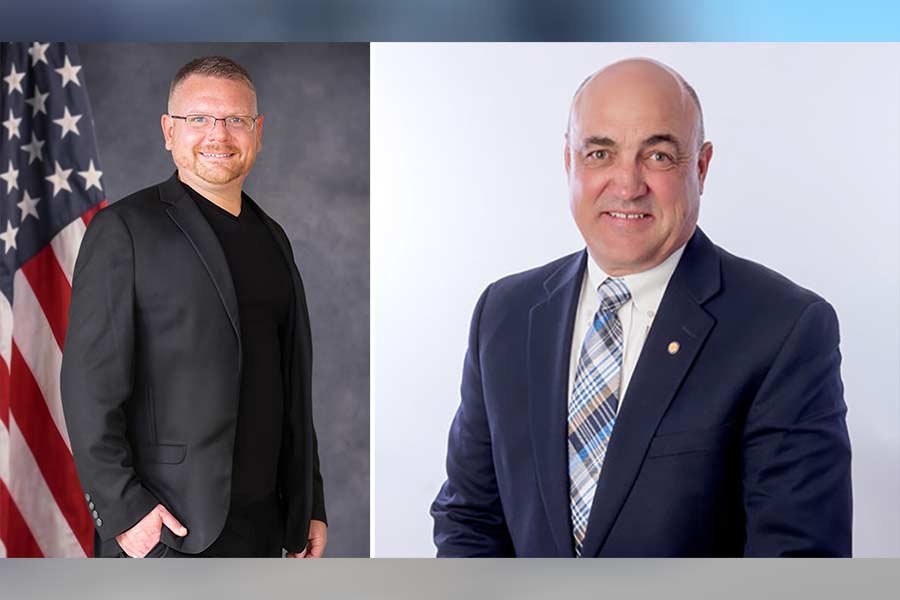
RIGBY – Sen. Van Burtenshaw, R-Terreton, is seeking a fifth term to the District 31 Senate seat. Democrat and Rigby realtor Kevin Gerrard is returning as his challenger.
District 31 encompasses Clark, Fremont, Jefferson and Lemhi counties.
Burtenshaw has held public office for the last 12 years. He was first elected in 2014 to what was then District 35. Following redistricting in 2022, voters retained him in office.
EastIdahoNews.com sent the same eight questions to each candidate. Their responses were required to be 250 words or less. Gerrard is the only one who responded, and his unedited answers are posted below.
Learn more about Burtenshaw’s campaign on his website. Gerrard’s website can be found here.
Election day is Nov. 3.
Tell us about yourself — include information about your family, career, education, volunteer work, and any prior experience in public office.
Gerrard: East Idaho has been home to me for most of my life. I moved here as a teenager, grew up in Ririe, and graduated from Ririe High School in 2005. Today, I live in Rigby with my husband, Justin, and our two dogs, RJ and Kyzer.
My first job was at Heise Hot Springs while I was in high school. Today, I work as a REALTOR® with Berkshire Hathaway HomeServices Silverhawk Realty East Idaho. I’ve also had the opportunity to serve on the Snake River Regional MLS Board of Directors, as Vice President of the Ririe Coalition for Community Development, and with the Ririe Chamber of Commerce. I’ve also been involved with the local Political Involvement Committee.
I’ve never held elected public office. I’ve spent most of my life in East Idaho, and it’s where Justin and I have chosen to build our life. I care about the future of our communities and the people who call them home.
Why are you seeking political office in your community? Briefly explain your political platform.
Gerrard: I decided to run because I believe it’s time for some change in the Idaho Legislature.
I think our Legislature would benefit from more turnover and some different perspectives.
I’m not saying everything needs to change or that everything the state has done is wrong. But when I look at what people are dealing with right now, I don’t believe everything we’re doing is working.
Housing and affordability are two of my biggest concerns. It’s tough out there for a lot of us. Between housing costs, property taxes, groceries, and everyday expenses, it feels like it’s getting harder just to keep up.
I also care about our public schools, first responders, water resources, and making sure local communities have a say in decisions that affect them.
I know there aren’t easy answers to every issue. But I believe we need to be willing to question what’s working, what isn’t, and whether there’s a better way to approach things.
That’s why I decided to run.
With rising housing, fuel, and food costs facing Idahoans, can the state government help bring relief to Idaho citizens? Is it the role of the Idaho Legislature to help deal with these issues?
Gerrard: Yes, I believe the Idaho Legislature has a responsibility to help address the rising
cost of living. It’s tough right now for a lot of people. Housing costs, property taxes, groceries, and everyday expenses keep adding up, and it’s becoming harder for people to get ahead. The state can’t control the price of everything, but there are things we can do.
I’d like to see Idaho increase the homeowner’s exemption and take a closer look at how much our communities rely on property taxes to fund essential services. When the state doesn’t adequately fund things like public schools, local taxpayers often end up carrying more of that burden.
Housing is another major concern of mine. We need more options people can actually afford, whether they’re buying their first home, looking to downsize, or renting. But we also need to be thoughtful about growth. Building more homes doesn’t solve everything if our roads, schools, water systems, and other infrastructure can’t keep up.
I don’t believe the Legislature can fix every affordability issue, but that doesn’t mean we should sit back and do nothing. We need to look at what’s within our control and be willing to make changes where they’re needed.
How will you best represent the views of your constituents – even those with differing political views? How do partisan politics play into your role as an elected leader?
Gerrard: If elected, my responsibility would be to represent everyone in District 31, whether
they voted for me or not. At the same time, I recognize that decisions made in the Legislature affect people throughout Idaho, and those impacts deserve consideration too.
I’m a Democrat, and I’m not going to pretend otherwise. But I also understand that a lot of people in our district have different political beliefs than I do, and that’s okay.
I don’t expect everyone to agree with me on every issue, just as I won’t agree with everyone else. What matters to me is being willing to listen, have an honest conversation, and understand where someone is coming from.
I also don’t believe every issue needs to turn into a Republican versus Democrat debate. There are things we can agree on, even when we disagree about other issues.
And if I believe my own party is wrong on an issue, I’m comfortable saying so. My decisions should reflect what I believe is right for District 31, not simply what my party expects.
I’m not going to promise that I’ll always vote the way someone wants me to. But I can promise to listen, explain where I stand, and be honest about why I’ve made a decision.
What parts of the Legislative budget could use more funding? Where are places in the budget where cuts could be made?
Gerrard: I believe Idaho needs to take a closer look at where we’re spending money and whether we’re adequately funding the services our communities depend on.
Public education is one of my biggest priorities. I’d like to see more state support for our schools so local districts aren’t continually relying on property taxpayers through bonds and levies.
I’d also like to see more support for first responders, especially in rural communities where staffing, equipment, and emergency response can be challenging. Water management and infrastructure are other areas where I believe continued investment is important.
As for cuts, one area I would revisit is Idaho’s private school tax credit program. I respect that parents make different educational choices for their children, but I don’t agree with using state funds to subsidize private education when our public schools have needs that aren’t being adequately addressed. I’d rather see those resources supporting public education.
I’d also support reviewing administrative costs, duplication between agencies, and programs that aren’t delivering the results they were intended to provide. But we need to be careful. Cutting something from the state budget doesn’t necessarily save taxpayers money if those costs simply get passed down to local communities.
I believe we need to understand where the money is going and what the consequences would be before making budget decisions.
In 2026, Idaho suffered a historic drought, leaving eastern Idaho’s reservoirs at an all-time low. As a result, crop yields were significantly impacted. What specific strategy or legislation would you support to protect groundwater and surface water resources, and what is your timeline for measurable improvements?
Gerrard: Water is one of the most important issues facing East Idaho, and this year’s drought
has reminded us just how much our communities depend on it.
Agriculture is a huge part of our region. When farmers don’t have the water they need, it affects more than just their crops. The impacts reach local businesses, jobs, and our communities.
I support continuing and expanding aquifer recharge efforts, improving water measurement, and investing in irrigation infrastructure that helps us make better use of the water we have.
Idaho already has water management agreements and recharge programs in place. I believe we need to continue building on those efforts and encourage cooperation between groundwater users, surface water users, agricultural producers, and state water managers. Everyone depends on this resource, and finding solutions means working together.
During my first legislative session, I’d like to review our existing recharge goals, funding, and water agreements to see where additional support or improvements are needed.
Within two years, I’d want to see measurable progress through recharge volumes, groundwater monitoring, and completed water infrastructure projects.
We can’t control the weather, and we aren’t going to replenish the aquifer overnight. But we can be more consistent about how we manage our water and make sure we’re doing everything we reasonably can to protect it for the future.
One of the biggest issues on the November ballot is Proposition 1, a citizen-led ballot initiative that would repeal Idaho’s abortion ban. Do you support Proposition 1? Why or why not?
Gerrard: Yes, I support Proposition 1.
I believe decisions about reproductive healthcare are deeply personal and should be made between individuals and their medical providers, not politicians.
For me, this comes down to two things: personal privacy and access to healthcare. People should be able to make decisions about their own medical care based on their circumstances, their health, and the advice of their doctors. That includes access to reproductive healthcare, contraception, fertility treatments, and appropriate medical care during pregnancy.
I understand that people have strong and deeply held beliefs about abortion, and I respect that. But I also believe we can respect those differences without having the government make these personal medical decisions for everyone.
Proposition 1 would protect reproductive healthcare decisions, including abortion before fetal viability and in medical emergencies afterward.
My support comes from a belief that medical decisions belong with patients and their healthcare providers, and that Idahoans deserve both privacy and access to appropriate medical care.
Idaho House Joint Resolution 4 (HJR 4) is a constitutional amendment on the November ballot that would give the legislature exclusive authority to legalize or decriminalize marijuana, narcotics, and psychoactive substances. It would also ban citizen initiatives that would allow voters to directly have a say on the issue. Do you support the passage of HJR 4? Why or why not?
Gerrard: No, I do not support HJR 4.
I believe Idahoans should have the right to bring issues forward through the citizen initiative process. It’s an important part of our state’s democratic system and gives people a voice when they believe their elected representatives aren’t addressing an issue.
What I find somewhat ironic about HJR 4 is that we’re being asked to vote on a ballot measure that would take away the ability of voters to bring forward certain ballot measures in the future.
Whether someone supports or opposes marijuana legalization isn’t really the point for me. This is about protecting the ability of Idaho citizens to participate directly in the legislative process.
The Legislature should absolutely have a role in debating and developing drug policy, including considerations around public health and safety. But I don’t believe that authority should come at the expense of the people’s ability to propose changes through citizen initiatives.
I believe Idahoans should have a voice in the laws that govern them, and I don’t support taking that voice away.