



Why leaves change color — and when to worry about leaf loss
Published at
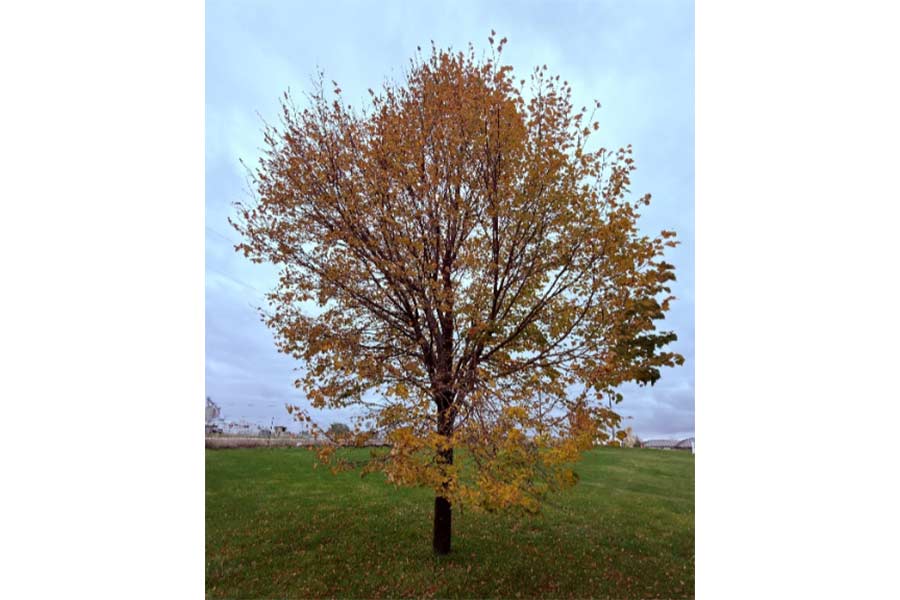
As fall progresses, the green leaves of deciduous trees begin changing to shades of yellow, orange and red. Have you ever wondered why this progression of color occurs and what causes trees to lose their leaves? Well, you’ve found the right article! Deciduous trees naturally drop their leaves to prepare for winter. However, this process is not simply caused by cold temperatures creeping in. Several environmental factors, including shorter days, cooler temperatures, precipitation and growing conditions, can influence when trees begin losing their leaves.
Why do trees lose their leaves?
The two most common types of trees are deciduous and evergreen. These terms describe how trees retain or lose their leaves. Deciduous trees naturally shed their leaves each fall, while evergreen trees retain leaves, including needles in conifers, throughout the year, gradually replacing older ones.
Leaves are the primary site of photosynthesis and a major site of transpiration. In other words, they produce most of the food a tree needs for growth while also losing water to the surrounding air. This makes leaves an important part of a tree’s survival. However, maintaining leaves throughout winter can be a challenge. Frozen soils can limit water availability, and broad leaves can collect snow and ice, adding weight to branches and increasing the risk of damage or branch breakage. Deciduous trees have naturally adapted to these challenges by shedding their leaves before winter arrives.
Trees have also developed ways to recognize when fall is approaching. They respond to environmental signals, including shorter days, known as the photoperiod, and changes in daily temperatures. As days become shorter and temperatures begin to cool, trees start preparing for winter. The timing of this process varies depending on tree species, location, and growing conditions.
The science behind fall colors
The process of preparing for winter begins with leaf senescence, or the natural aging of leaves. During senescence, trees break down certain compounds and recycle nutrients that can be used to produce new growth the following spring.
Chlorophyll, the pigment responsible for the green color of leaves, begins to break down during this process. Some of its components, including nitrogen, are saved and moved to other parts of the tree for future growth. As the green color fades, other pigments already present in the leaves, called carotenoids, become easier to see. These pigments are responsible for many of the yellow and orange colors we see in fall. Some trees also produce pigments called anthocyanins, which contribute to red and purple coloration.
How do leaves fall?
As leaves age, trees begin forming a separation (abscission) layer where the leaf stalk (petiole) attaches to the branch. This layer progressively weakens the connection between the leaf and the branch. Eventually, the leaf’s weight, wind or other environmental factors cause it to fall.
When falling leaves signal trouble
While losing leaves in the fall is a natural process, what happens when trees begin losing their leaves during spring or summer? Premature leaf loss can be caused by several factors, including drought, insects, disease, and herbicide injury.
Drought and excessive heat can cause leaves to wilt, develop brown edges, or drop early. Insects that feed on foliage may leave behind holes, chewed edges, or other visible damage. Diseases can also cause leaves to develop spots, discoloration, or dead areas before eventually falling.
Herbicide injury is another possible cause of premature leaf loss. Depending on the herbicide, affected leaves may become twisted, cupped, yellow or brown. These symptoms can sometimes resemble other environmental stresses, making it difficult to identify the cause based on leaf appearance alone.
When examining a tree that is losing leaves early, look for patterns of damage, changes in watering, recent herbicide or fertilizer applications, and signs of insect activity before deciding how to respond.
The next time you see leaves changing colors and falling from trees, remember that this process is an important part of preparing for winter. Understanding how and why trees lose their leaves can also help us recognize when something may be wrong and identify potential problems before they become more serious.
If you find this article interesting, reach out to your local UI Extension office and ask about the upcoming Master Gardener course!