



Back to Square 1: Proponents of Prop 1 mull their options after loss
Published at
Rachel Sun, Lewiston Tribune
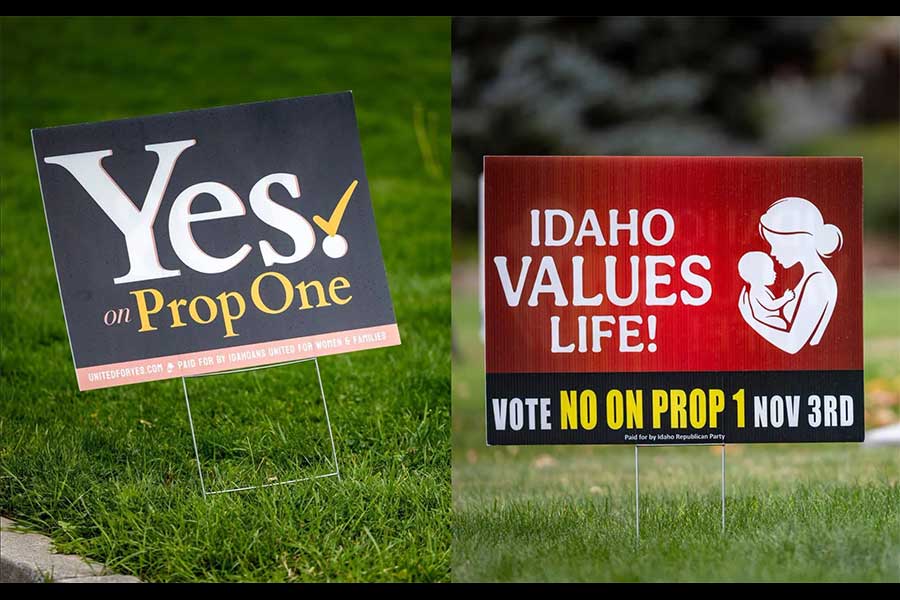
LEWISTON (Lewiston Tribune) — The volunteers and organizers behind Idaho’s failed Proposition 1 say they’re disappointed by the results, but plan to continue efforts to expand abortion access in the state.
Idaho’s abortion laws, which will remain unchanged, make performing almost all abortions a felony. They allow abortion to prevent the death of the mother, and in the case of rape or incest documented by law enforcement.
Proposition 1 would have added language specifically allowing for abortion to protect a mother’s health, as well as abortion until the point of fetal viability.
Melanie Folwell is the executive director of Idahoans United for Women and Families, the organization behind Proposition 1. She said the results were “gutting,” but that the organization made significant progress campaigning in the deep-red state.
“We always knew it would be close,” Folwell said. “This is a state where nearly 70% of the population voted for Donald Trump in 2024. Through that lens, we had a pretty remarkable overperformance.”
On the opposition side, Blaine Conzatti, president of Idaho Family Policy Center (IFPC), was one of the organizers of the Too Extreme for Idaho PAC alongside Christian Welp of the Roman Catholic Diocese of Boise and Tom Luna, a former GOP state chair and prominent member of the Church of Latter-day Saints.
Conzatti said Too Extreme had a goal of winning with a 10-15% lead, which it achieved. The initiative lost 55.94% to 44.06%.
“We’ve been seeing the shape of that vote over the course of the last six months where Idaho voters are very pro-life, and they just needed to hear the reasons why Proposition 1 threatens babies in the womb and threatens mothers,” he said.
Some silver linings for Prop 1 activists
Around 1,250 volunteers around the state collected more than 110,000 signatures for Proposition 1 to be added to the ballot, which the organization said was the most ever collected for a qualified ballot initiative in state history.
That included 70 volunteers from Latah County and 16 in Nez Perce. Jessica Bearman, an organizer with the PAC Bans off Moscow, said she helped recruit volunteers. Those volunteers included college students, adults with families, and senior women.
“We still think that people want protections for maternal health, (and) for situations involving a fatal fetal diagnosis,” Bearman said.
Bearman said although the proposition failed, she felt organizers had made headway in shifting public opinion, especially among conservative voters who believe in small government.
“People who found that their belief in small government and individual choice and autonomy was in conflict, perhaps, with some of the things that they’d grown up believing about abortion,” she said.
Fights over accuracy in messaging
Both proponents and opposition to the ballot initiative said their opponents lied in messaging used in campaigns.
Conzatti referenced one heavily cited journal article in the JAMA network that was frequently referenced by the pro-Proposition 1 campaign, which he said he believes is inaccurate. The article reported that 35% of OB-GYNs left the state in the two years following its abortion ban taking effect.
IFPC has claimed the report conflicts with state data on the number of actively licensed physicians. A judge is now personally reviewing those records after IFPC sued Boise State, claiming the institution withheld records it requested.
On the “pro” side, Folwell said she believed that disinformation from opponents affected the initiative outcome.
In its official arguments, Too Extreme for Idaho made several bold and contested claims about the initiative. Among them, that Proposition 1 redefined the point of fetal viability, and that it superseded the state’s existing medical parental consent law.
Conzatti stood by those claims, citing IFPC’s deep well of legal expertise and experience drafting previous legislation.
Still, the Idaho Medical Association (IMA), which took a neutral stance on the initiative, interpreted “the point of fetal viability” in the initiative as the commonly cited 20-24 weeks in an informational voter guide sent to members.
The IMA also stated in the same letter that Prop 1 neither expressly repealed nor preserved parental consent, but could require legislative clarification or judicial interpretation.
“It would be too categorical to say either that Proposition 1 unquestionably eliminates parental consent or that it unquestionably leaves the existing requirement untouched,” the IMA newsletter said.
Next steps
For anti-abortion activists, Conzatti said there is still a desire to make small changes to abortion laws to eliminate legal loopholes.
“We have a few really small tweaks that we wanna make to the laws to harmonize different statutes that were adopted by the legislature over the course of 30 years,” Conzatti said.
He said he hoped the results of the election sent a “strong message” to pro-abortion rights activists.
“Idaho voters don’t want this,” he said. “They shouldn’t try this again.”
Abortion rights activists said moving forward, they’re encouraging supporters to put pressure on lawmakers — especially those who have previously stated a desire to add a health exception to the state law.
Idaho is one of five states without a health exception to its abortion law, according to the Kaiser Family Foundation, a nonprofit focused on national health issues.
Folwell said pro-abortion rights organizers may also look at a broader strategy in the coming months.
“I think there is probably space here to start to think about what a federal fight looks like,” she said.