



What’s good for cattle can be good for trout, too. This Idaho ranch is proving it
Published at
EDITOR’S NOTE: “From the Field” is a weekly feature bringing you the latest agriculture news in eastern Idaho.
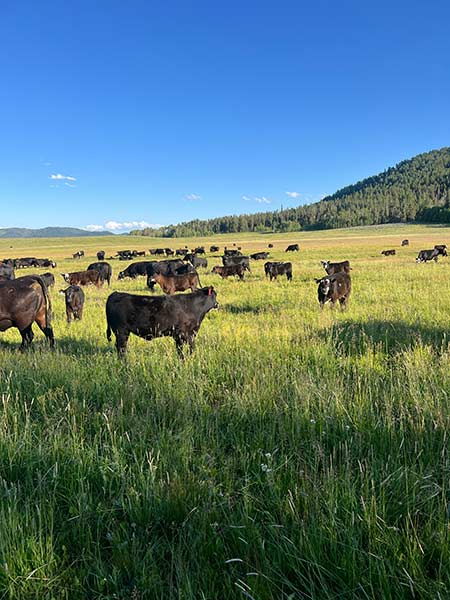
SODA SPRINGS — Kackley Ranch, a historic 920-acre ranch about 40 miles north of Soda Springs, is the focus of a permanent preservation project aimed at enhancing the Blackfoot River watershed.
The Blackfoot River stretches about 108 miles across southeastern Idaho, beginning in the Caribou Range near Soda Springs where Diamond Creek and Lanes Creek meet. It flows northwest through Blackfoot Reservoir before eventually emptying into the Snake River west of Blackfoot. The upper Blackfoot River watershed encompasses about 345 square miles, according to a 2018 report from the U.S. Geological Survey.
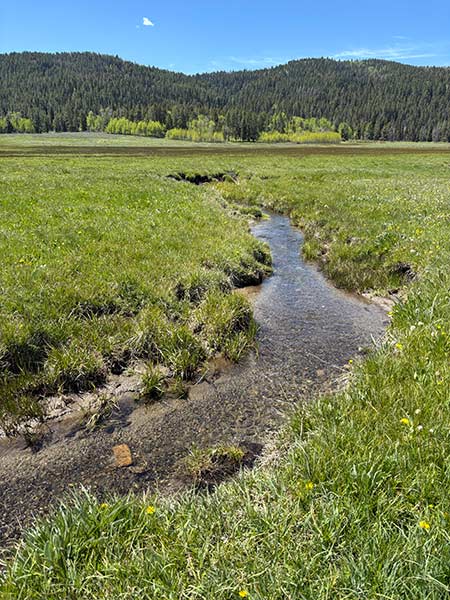
The Upper Blackfoot Confluence, a coalition of mining companies, conservation groups and local agricultural producers, came together to fund the watershed project. The $313,000 effort focuses on improving Chippy Creek — an eight-and-a-half-mile-long stream that runs through Kackley Ranch — and surrounding riparian habitat.
Chippy Creek is one of several tributaries that feed the Blackfoot River, making the improvements to the stream part of a larger effort to protect the watershed.
“Chippy Creek flows into Lanes Creek, which flows into the Blackfoot River,” Carly Flandro, a spokeswoman for Sagebrush Steppe Land Trust — a Pocatello nonprofit that manages the ranch — tells EastIdahoNews.com. “We want to help the wildlife habitat thrive while also helping it to be a working cattle ranch, which is an important part of Idaho’s agricultural heritage and legacy.”
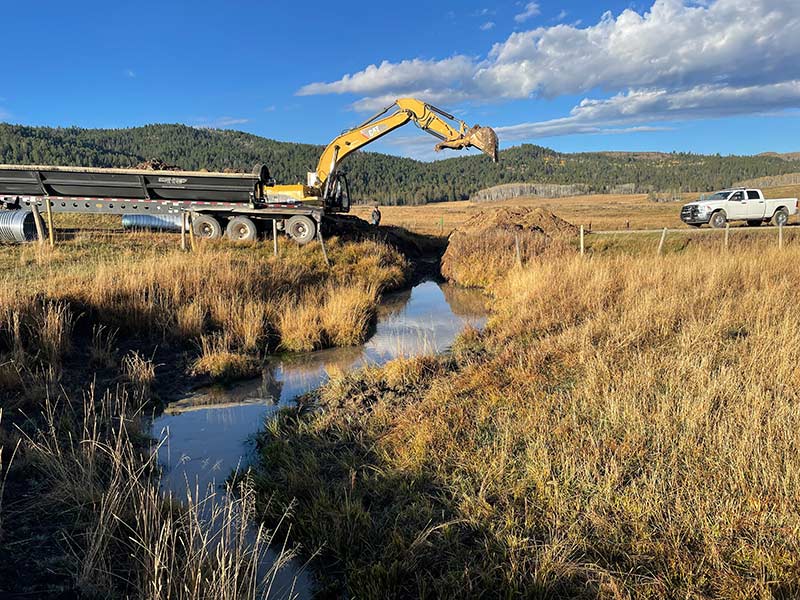
Flandro says Kackley Ranch is an important location for preservation for multiple reasons. One reason is because it provides habitat and migration corridors for elk, mule deer, moose, black bears, numerous birds, and other species.
The upper Blackfoot River watershed is also one of the last strongholds for Yellowstone cutthroat trout in the West. Trout migrate from the Blackfoot Reservoir to all the tributaries, including Chippy Creek, where they spawn and lay eggs.
It’s home to numerous mining operations as well. Four companies — Nutrien, Simplot, Ruveon and Itafos — own phosphate mines in the area.
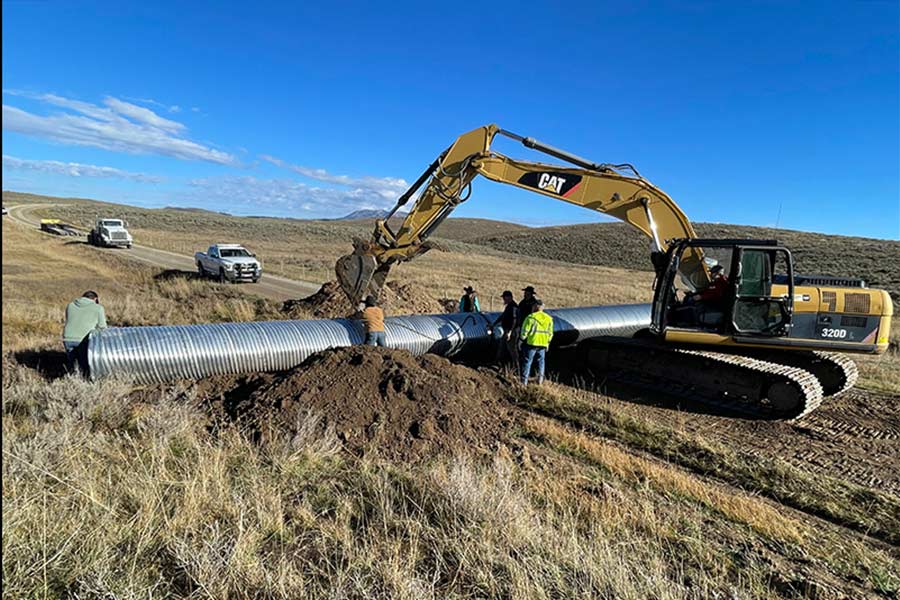
The watershed enhancement project got underway this summer and is expected to unfold in phases over the next two to three years. Two recently completed projects include the installation of wildlife-friendly fencing and a new culvert.
The fence line extends six miles and is designed to be lowered when the property isn’t being used for cattle grazing. Flandro says this will have a positive impact on the wildlife population.
“It’s also going to be helpful for ranchers. Fences are more likely to be damaged during the winter, but if you lay it down, it will be protected,” Flandro says. “It’s a win-win for cattle grazers and the wildlife, so we’re really excited about that.”
The new culvert is larger than the previous one, which was situated above Chippy Creek. Flandro says the small size of the old culvert, combined with its elevated placement, made it difficult for fish to pass through. The new culvert addresses that problem.
“We got a bigger culvert, we dropped it down lower, and that will greatly improve fish’s ability to pass through the creek,” says Flandro.
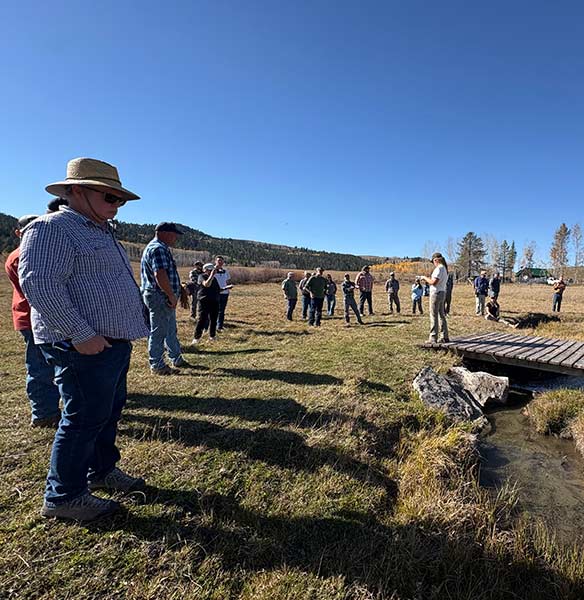
Two additional projects are planned for 2027. One will involve installing water troughs throughout the property and the other, building fences along Chippy Creek. The goal is to help reduce cattle foot traffic along the creek bed and allow riparian areas to recover.
Hannah Murphy, a project manager for Trout Unlimited — who is co-leading the watershed improvement project — says these improvements are “a huge benefit” to the fish population.
“Getting cattle off the creek itself (during the winter) promotes revegetation and growth along the banks. It also reduces sediment, which has a detrimental impact on fish,” Murphy says.
During phase two of the project, Murphy says they plan to build a beaver-dam analog — a structure that imitates a beaver dam — along Chippy Creek. They hope this will enhance the watershed by slowing water flow, raising groundwater levels, creating storage and reducing erosion, as well as supporting vegetation growth.
Preserving a family legacy through collaboration
Alvin and Yvonne Kackley owned Kackley Ranch for more than two decades before donating it to Sagebrush Steppe Land Trust in 2024.
It had been in the family for generations when Alvin and his brother, Ellis, decided to protect it from future development. They granted a conservation easement and fee ownership to the Idaho Foundation of Parks and Lands in 2006.
The IDPL transferred ownership of the property to SSLT in 2024 to “better preserve the property in perpetuity.”
“The new fee-title property … will be used as a cattle ranch and an educational property to demonstrate the compatibility of working lands and wildlife habitat,” the Idaho Enterprise reported in 2024.
Since the formation of the Upper Blackfoot Confluence in 2012, Murphy says she’s encouraged to see stakeholders working together to develop mutually beneficial solutions and appreciates the efficiency that comes from bringing diverse expertise to the table.
“There are times when we have to figure out a problem that we’re not seeing eye to eye on, but over the years, we’ve been able to develop a stronger working relationship,” says Murphy. “There are more project opportunities in the future, and I feel fortunate to be a part of it.”
AG AT-A-GLANCE
U of I researchers awarded $579,000 for specialty crop studies
The following is an excerpt of a news release from the University of Idaho.
MOSCOW — Research to improve potato storage, manage crop diseases and expand huckleberry production will receive $579,000 in federal grants awarded to University of Idaho College of Agricultural and Life Sciences researchers through the Idaho State Department of Agriculture.
The funding comes through the Specialty Crop Block Grant Program, which the U.S. Department of Agriculture’s Agricultural Marketing Service administers to help specialty crop growers compete in domestic and international markets.
Specialty crops include fruits, vegetables, tree nuts, dried fruits, nursery plants and flowers. State departments of agriculture apply directly for funding and then award grants to universities, nonprofits, commodity groups and other organizations.
USDA approved $86.6 million for the program for fiscal year 2026.
ISDA awarded grants totaling about $1.9 million for 19 projects submitted by Idaho organizations. U of I is finalizing agreements to accept its share of the funding.
Read the full story here.
Wheat growers set sights on farm bill, disaster aid and rising costs
The following is a news release from the National Association of Wheat Growers.
WASHINGTON, D.C. — The National Association of Wheat Growers brought together leaders from across the country last week in Albuquerque, New Mexico, for its annual fall meeting, jointly hosted with U.S. Wheat Associates.
The meeting featured committee discussions, opportunities for collaboration, and leadership and professional development programming for growers interested in becoming more engaged in agricultural policy and advocacy. A key outcome of the meeting was establishing NAWG’s policy priorities, which will guide the organization in the lame duck session of Congress and beyond.
As lawmakers return to Washington, NAWG will be laser-focused on finishing the farm bill, securing additional economic and disaster assistance for wheat growers, and urging Congress to develop long-term solutions that address ongoing challenges facing the farm economy like inflation and input prices.
If you have a From the Field story idea, send it to rett@eastidahonews.com. Remember to use ‘From the Field’ in the subject line.
IN CASE YOU MISSED IT…