



Idaho needs more than snow to refill its reservoirs — it needs a long, cold winter
Published at | Updated at
IDAHO FALLS – Idaho needs a winter that freezes, not just a winter that snows. With reservoirs at historic lows, experts say prolonged cold could help preserve mountain snowpack and give the state’s water supply a much-needed lifeline.
After last season’s warmest winter on record, water managers are hoping for a dramatic change: prolonged cold that keeps mountain snowpack intact and gives Idaho a chance to rebuild its depleted reservoirs.
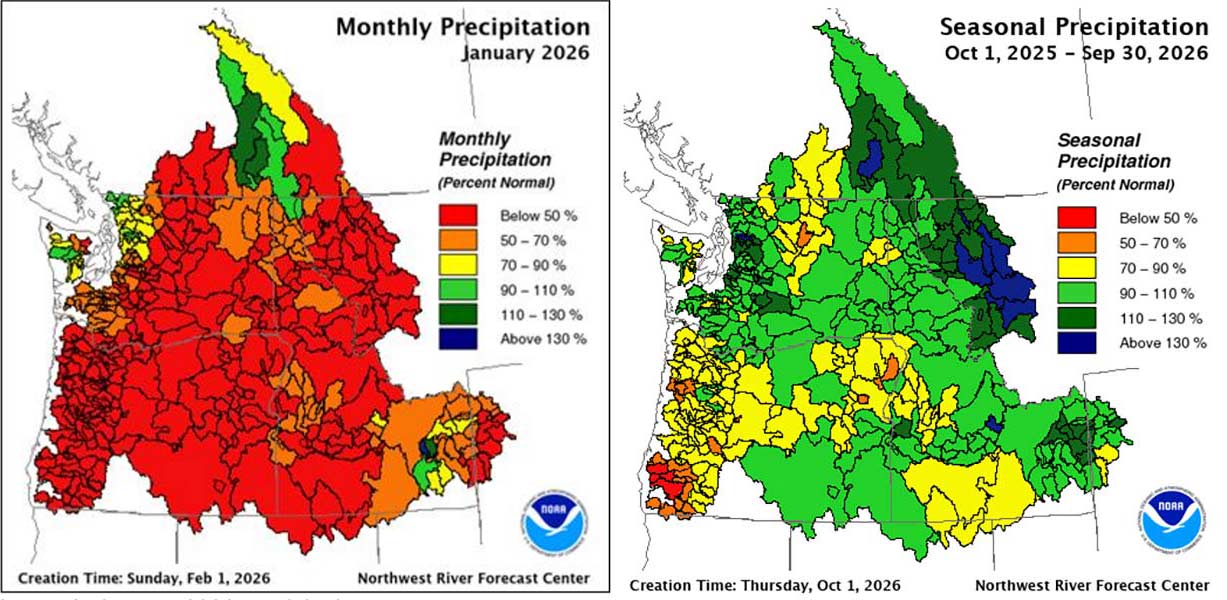
During last week’s Idaho Fall Water Summit in Boise, Troy Lindquist, chief hydrologist with the National Weather Service, said precipitation across the region was 90% to 110% of normal in 2025. Warm temperatures during the winter changed how much of that moisture was stored in the mountains as snow. Instead of accumulating and gradually melting during the spring and summer, more precipitation fell as rain or melted earlier, reducing the snowpack available to replenish reservoirs and rivers during the irrigation season.
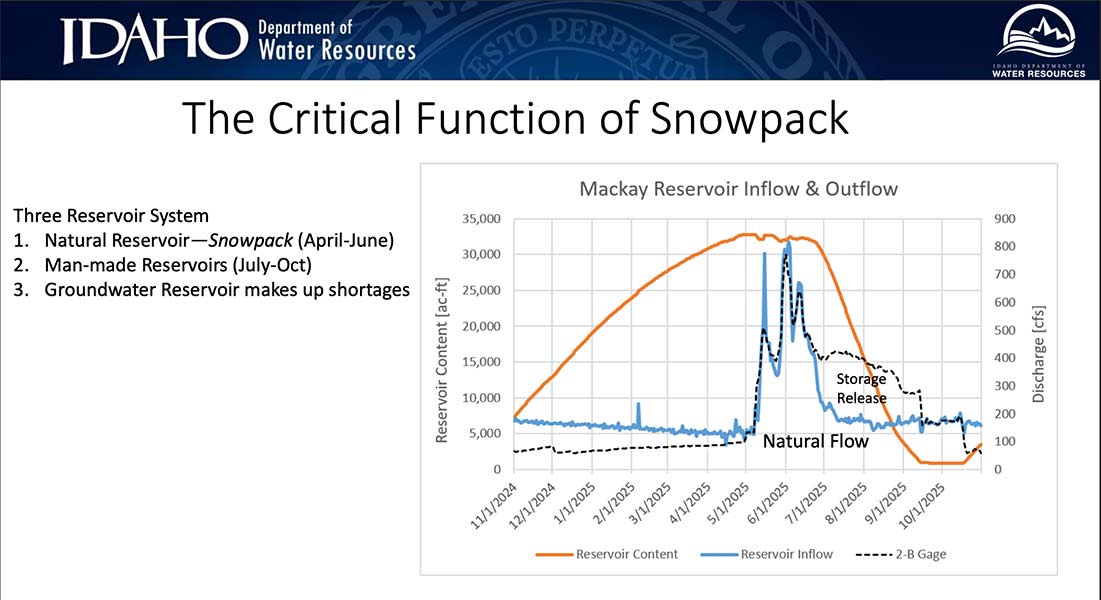
Rob Van Kirk, science and technology director for the Henrys Fork Foundation in Ashton, tells EastIdahoNews.com many of the trees and plants were still growing during the winter as a result of the warm temperatures and were using water from the December rain.
Cold temperatures cause many plants to become dormant, dramatically reducing their water use and allowing more moisture to accumulate as snow and ice. Van Kirk says the longer those cold conditions persist, the better it is for Idaho’s water supply.
“Cold weather keeps the snowpack in better condition because … it takes more energy to melt and lasts longer into the spring,” he says.
RELATED | Record heat and dwindling reservoirs leave Idaho bracing for another tough water year
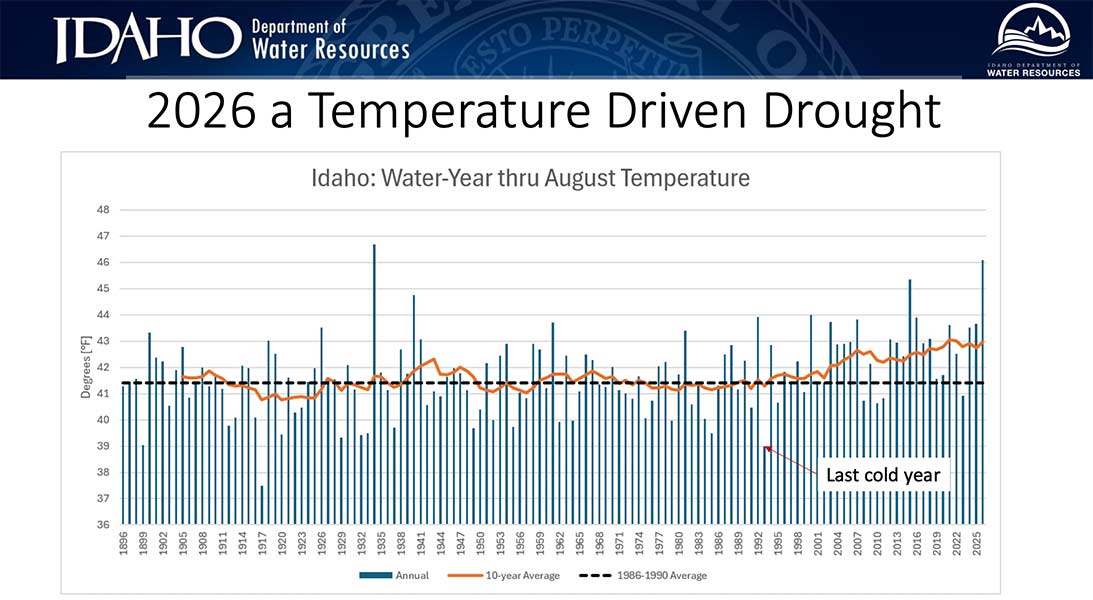
David Hoekema, a hydrologist with the Idaho Department of Water Resources, noted that Idaho has had a warming trend since 1990. The last year with below-normal temperatures was 1992. Reservoirs were low that year as well — though not as low as they are now. Record snowfall, combined with cool conditions in spring and summer, led to low irrigation demand, helping replenish the reservoir system.
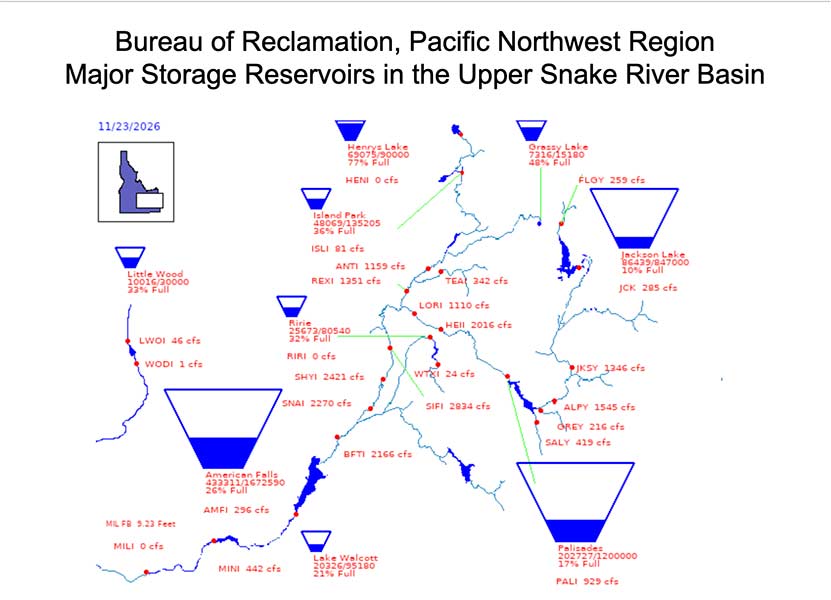
Last year at this time, Idaho’s reservoirs were 75% to 80% full. Now, they’re at historic lows.
During the summit, Brian Stevens with the U.S. Bureau of Reclamation said reservoirs in the Upper Snake River Basin were just 19% full — 44% of normal. As of Monday, snowpack across the basin was at 72% of normal, according to Van Kirk.
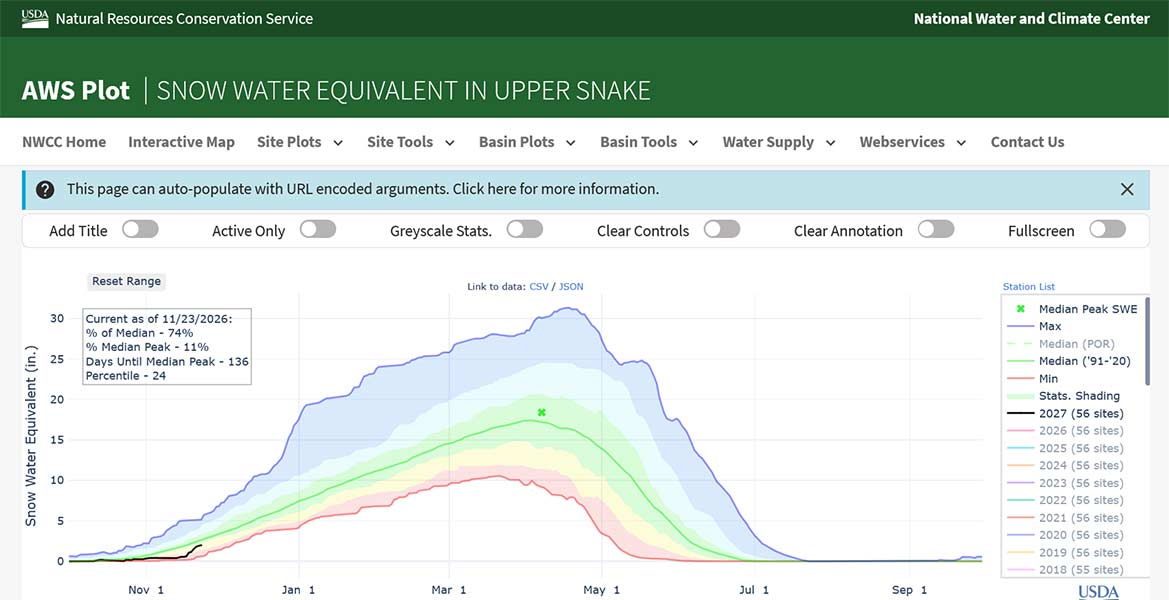
To refill the reservoirs next year, Stevens said the basin needs a snowpack of 110% to 120% of normal.
RELATED | Idaho’s reservoirs hit historic low as winter outlook raises more water worries
The outlook for the coming winter offers little reassurance. In September, the NWS released its three-month outlook for December, January and February. It showed a potential for higher-than-normal temperatures during that time and an equal chance of rain and snowfall being above or below normal.
RELATED | Normal precipitation, historic drought: What’s happening to Idaho’s water?
Adding to the uncertainty is a developing El Niño, a climate pattern marked by unusually warm ocean temperatures in the central and eastern tropical Pacific, according to the National Oceanic and Atmospheric Administration. Erin Whorton, a hydrologist and water supply specialist with the Natural Resources Conservation Service, said it could be the strongest El Niño since 1950.
As of Monday, Van Kirk says the weather outlook hasn’t changed.
“We’ve had a bunch of precipitation this fall and winter, but it didn’t fall as snow, so we’re already behind,” says Van Kirk. “Even with the snow we had last week, we’re still way below average in snowpack. There’s certainly time to catch up, but the forecast doesn’t indicate that it’s going to be cold and wet.”
RELATED | Another tough year ahead? Idaho farmers urged to prepare for water shortages in 2027
Based on weather data over the last 40 years, Van Kirk says the chances of having above-average snow this winter are really slim. And even if there is a lot of snow, he says it won’t be enough to fill the reservoirs.
“If we ended up where we were last year, which was about 80% full, we’d be doing well,” he says. “Given where we are right now and where we started, I think that’s attainable.”
If Idaho’s reservoirs fail to refill, irrigators could face reduced water allocations next summer, potentially leading to additional cutbacks. The shortage also adds urgency to ongoing negotiations over how surface and groundwater users share the state’s limited supply. Surface water users divert water from the Snake River into an irrigation canal to water crops. Groundwater users irrigate crops by pumping water from a well connected to the Eastern Snake Plain Aquifer.
‘One of the most consequential water years to date’
The 2024 Stipulated Mitigation Agreement gives surface and groundwater users an allotment based on Idaho’s prior appropriation doctrine. Under Idaho law, surface water users have senior water rights, and groundwater users must have a plan to recharge the Eastern Snake Plain Aquifer during periods of shortage. There are no opportunities for recharge amid the shortage.
RELATED | Butte County water dispute ends as groundwater users join state mitigation plan
It’s a four-year plan to compensate for drought years, and the renegotiation process is already underway. Lt. Gov. Scott Bedke, a surface water user from Oakley, is mediating the discussion. In an email to EastIdahoNews.com, he says, “Idaho is dealing with one of the most consequential water years to date … and farmers are feeling the effects firsthand.”
“As conversations move forward, our focus should be on a plan that provides certainty for water users,” Bedke says. “We need to be honest about the water we have and make the right decisions about how to conserve it and make the investments in infrastructure that will help keep Idaho’s water flowing for years to come.”
This weather-related story is brought to you by Pony Express Car Wash, Idaho's premier express car wash destination, renowned for its commitment to exceptional service and quality. Voted the No. 1 car wash company in Idaho for five consecutive years, we pride ourselves on delivering an unparalleled experience for every vehicle and customer. Our state-of-the-art facility utilizes name-brand soaps and cutting-edge equipment to ensure your car receives the ultimate clean. Established in eastern Idaho in 2019, Pony Express is proud to be a locally owned and operated company that caters to the unique car washing needs of our Idaho Friends and neighbors. We invite you to experience the difference at Pony Express, where your satisfaction is our ultimate goal.