



ISU to launch three-year research program examining resistant bacteria
Published at
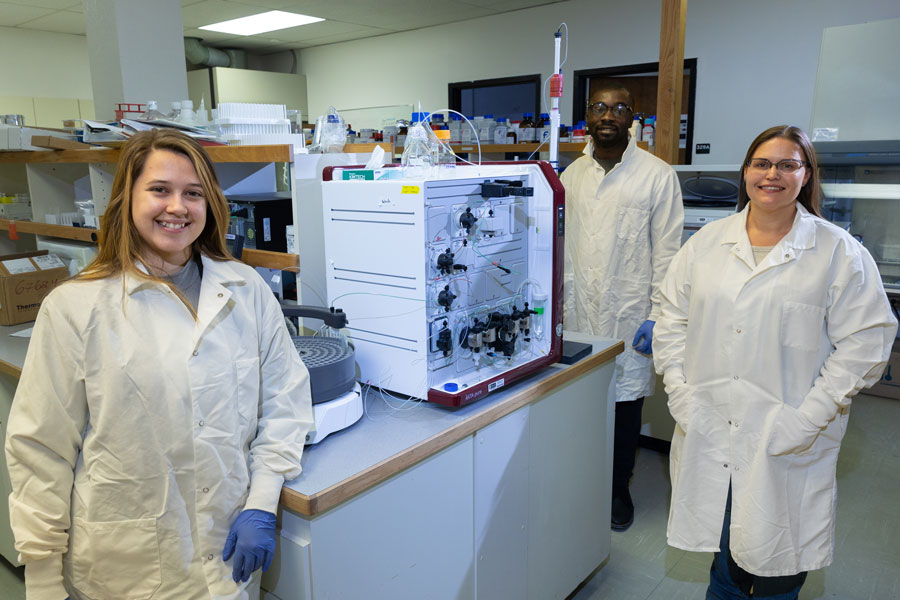
POCATELLO — Idaho State University biologists have begun a research initiative aimed at combatting antibiotic-resistant bacteria.
The project will be funded by a grant of more than $400,000 awarded to Julia Martin, an associate professor in the Department of Biological Sciences, by the National Institute of Health, according to a release from the university. Martin and her students will spend the next three years examining how changes in the supply of micronutrients affect the physiology of the bacteria Streptococcus pneumoniae.
“When a person or host organism has a bacterial infection, like strep, there is a war going on over micronutrients between the bacteria and the host,” Martin says in the release. “The host can withhold micronutrients and starve the bacteria, or it can poison them by bombarding them with an excess of micronutrients. Bacteria have also evolved their defenses to either acquire more micronutrients from their host when needed or get rid of the excess when they have too much, all to keep things balanced for optimum bacterial growth.”
“Effective treatments for infections such as strep have become limited because of new multi-antibiotic strains emerging,” microbiology master’s student Reuben Opoku said in the release. “In order to develop new treatments that stop the infection, we must better understand the molecular and cellular processes involved.”
As part of their research, Martin and her students will “feed” cultures of Streptococcus pneumoniae differing amounts of manganese, zinc and calcium. Physiological changes to the bacteria will be monitored and cataloged.
“This research will help us understand how bacteria manage their micronutrient needs and to identify the internal mechanisms the bacteria use when they are starved for micronutrients and when they have too much,” Martin said. “We will also be able to see how those same mechanisms may influence how a bacterial infection develops.”
Research like this is in an “infancy” stage, according to Martin. Programs like this will assist fellow scientists and researchers build toward “effective antimicrobial treatments.”