



Groundwork for great gardens: Making sense of soil test reports
Published at | Updated at

Before planting in the spring, a soil test will give you a snapshot of what your garden needs – taking the guesswork out of fertilizer rates. With the growing season approaching, now is the perfect time to see what nutrients your soil already provides and what you will need to add to ensure you do not have stunted plant growth this season. Now we will break down common values on a soil test to see how this information can benefit your garden production this year.
What a soil test tells you
pH (1 to 14)
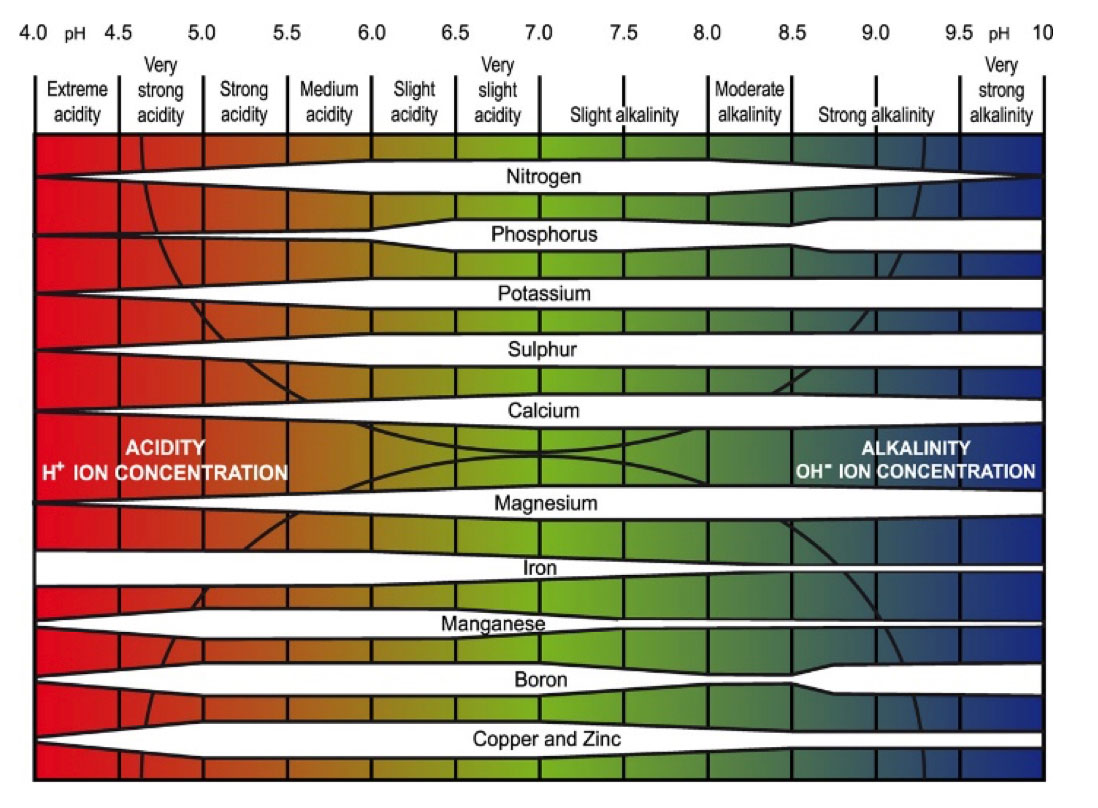
pH is reported on a scale of 1 to 14. Lower numbers indicate a more acidic soil, while higher numbers mean more basic (alkaline) conditions. Most nutrients are readily available to plants when the pH is between 6.0-7.0 which is slightly acidic and close to neutral (pH 7). In Idaho, soil often has pH above 7, which can limit the availability of certain micronutrients like iron, zinc, and manganese even though these nutrients are present in the soil. In these situations, adding supplemental chelated forms of these nutrients can help make them more plant available.
Nutrients
There are 14 essential plant nutrients, and a soil test can measure how much of each is available in your soil. These nutrients are classified by the relative quantity of nutrients plants require for normal growth. These nutrients are often reported as low, medium, or high in ppm (parts per million).
- Primary Nutrients (N-P-K): Nitrogen, Phosphorus, Potassium are the three macronutrients required in the largest quantities and are listed prominently on fertilizer packaging (like 10-10-10). There may be different forms of the same element in each fertilizer for example Nitrogen may be in the same formulation as nitrate (NO3)-, and ammonium (NH4)+.
- Secondary & Micronutrients There are 11 secondary and micronutrients such as calcium, magnesium, iron, etc.… these are also reported on a complete soil analysis and may increase the overall price of the soil testing. Although secondary nutrients and micronutrients are required in smaller quantities it does not mean they are less important to plants.
Soil Health Indicators
- CEC (Cation Exchange Capacity) provides a measure of how well the soil will hold and exchange nutrient ions. Knowing the capacity for your soil to hold nutrients is a good indicator for soil fertility and productivity. The CEC will tell you how many of the positively charged essential plant nutrients like potassium, calcium and magnesium can be stored and exchanged in your soil and thus made available to your plants during the growing season.
- Organic Matter (OM%) states the proportion of plant or animal tissue in the various stages of decomposition in your soil. As the soil microbes decompose organic matter, nutrients are made available to plants. Organic matter contributes to soil fertility, microbial activity and moisture and nutrient retention because it also has CEC.
- Base Saturation (%) indicates what percentage of your soil’s CEC sites are occupied by basic cations specifically calcium, magnesium, potassium, and sodium. Base saturation helps evaluate soil fertility and the pH balance. A balanced base saturation ensures that these nutrients are present in sufficient quantities for optimal plant health.
Other Possible Tests
There are several other tests that can measure soil texture, bulk density, heavy metals, and even pesticide residues to name a few. The tests most pertinent to your area will be offered by local testing laboratories. Most soil testing labs offer multiple tests with a combination of different values reported, reaching out and describing what you are growing can help them determine which test will be best for you.
Test Cost and Frequency
The cost of these tests varies in price from about $40 to $100+, depending on how many components are analyzed. It is not necessary to complete a test each year but if starting a new garden bed or if crop production has been declining over the past few years a soil test could pay off in higher crop production this season.
Interpreting the numbers
Most labs will flag each value as low, medium, and high or give a ppm range then make a recommendation for how much that nutrient should be applied to ensure optimal plant growth. Usually, values will not change drastically from year to year unless intensive tilling and production is being done in the same area. Assessing your soil every 3 years should be adequate unless you are starting a new garden bed or begin to see declining yields.
How to Collect a Sample
Clear any debris off of the soil surface and take 10-15 cores evenly across the garden bed at about 6-12 inches deep. Combine and thoroughly mix the soil in a clean bucket to create a representative sample. Place 1-3 cups of the blended soil into a labeled soil test bag (available from most labs) or a clean quart-sized plastic bag. Contact your local soil testing laboratory for their submission instructions. Soil test laboratories may also have specific protocols for soil analysis.
Conclusion
A simple soil test provides the roadmap your garden needs – revealing pH, nutrient levels and soil health indicators so you can apply the appropriate soil amendments rather than guess based on plant symptoms in the growing season. By knowing what is in your soil, you will apply the right fertilizer when needed for strong and productive plants. This spring send a sample to a local soil testing laboratory, review your results, and give your garden the targeted boost it deserves- year after year. If you need help finding a soil testing laboratory reach out to your local University of Idaho Extension office.