



Pelicans and yellow-headed blackbird ready to migrate south
Published at
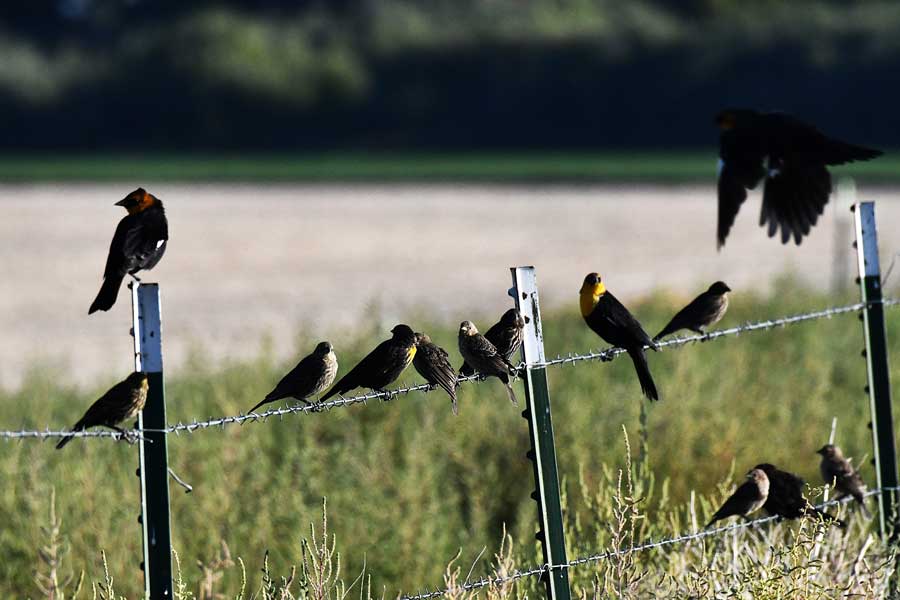
As I was driving along the canal taking water from Mud Lake last Saturday, hundreds of Yellow-headed blackbirds flew up from harvesting seeds from a weed patch
to land in some willows and along a fence.
Most of them looked like they were this year’s hatchlings as they had not molted their youth feathers and replaced them with adult ones. Some of them were still begging for food from the adults.
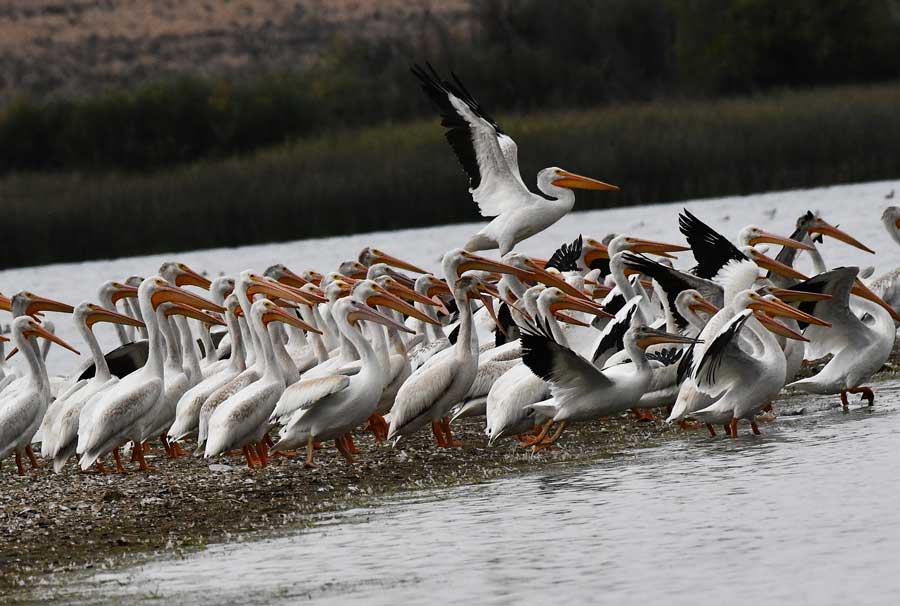
When I got near Mud Lake, I watched nine American white pelicans circling over the water high in the air. They dropped into a flock of about 30 others sunning on a gravel bar running out from the south shore.
I noticed that the water level in Mud Lake had been dropping but still had left some water pools along the dike that had some stranded fish in them.
One of the pools had six snowy egrets and one great egret along with several great-blue herons and a pair of Sandhill cranes that flushed before I could stop.
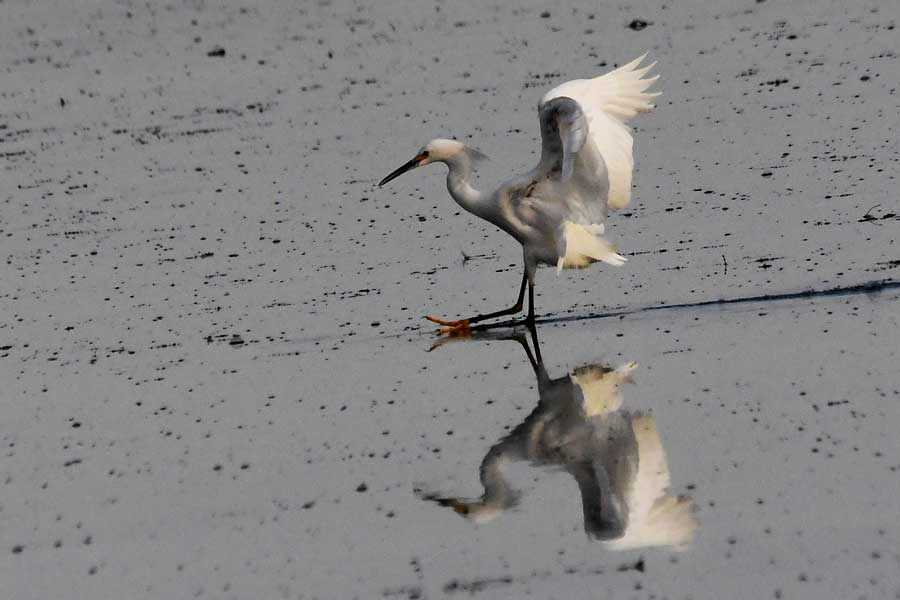
I waited as I hoped that something would return – a single snowy returned and I got a picture of it.
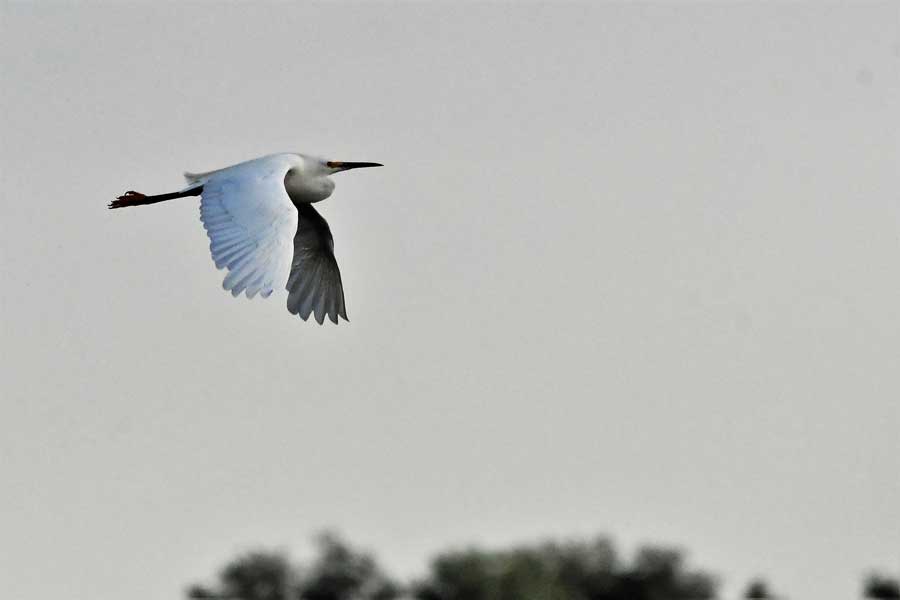
The great egret did a flyover but did not land.
As I continued along the dike, I noticed several ducks that appeared to have recently hatched a second or third nest of ducklings that need to grow quickly.
Eastern kingbirds and swallows also appear to be gathering in flocks to head south.
On Wednesday evening, I decided to go back out to Mud Lake to try to get some pictures of the egrets.
I found all of the pools had dried up and the lake had continued to recede, but the numbers of Yellow-headed blackbirds appeared to have doubled.
When I got to the gravel bar running out into the lake, I found a flock of over 100 pelicans.
I decided to walk out along the willows as far as I could toward the flocks of ducks, geese, and pelicans.
When I got out to the water, I was still 50 yards from the edge of the reeds. The ducks and geese either swam or flew away, but the pelicans moved out to the end of the gravel bar.
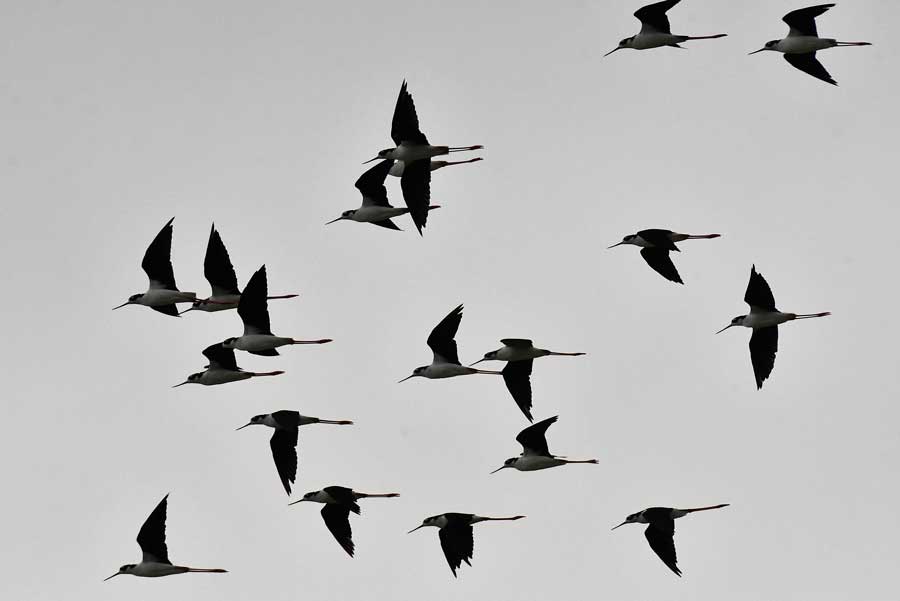
It was not long before a flock of Black-necked stilts came over me as I was hiding
in the reeds.
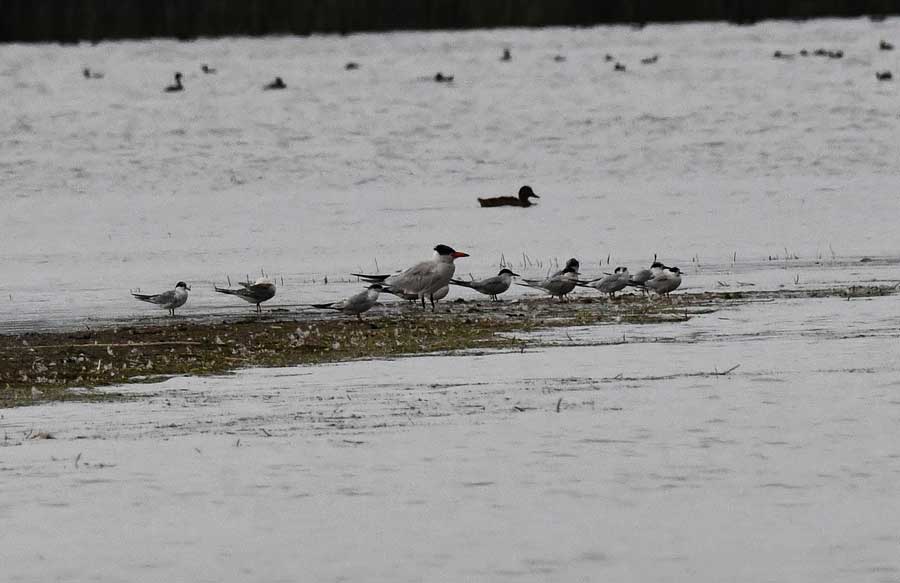
After another 30 minutes a small flock of Forester’s terns landed on the gravel bar and they were soon joined by a Caspian tern.
With the recent rains and the lower temperatures, the birds and animals should really get serious about putting on weight for their migrations.
The elk will soon start bugling and Harriman State Park will be a good place to listen to them in the early mornings.
The Swainson’s hawks will start their gathering to head for Costa Rica and most of the Red-tailed hawks will return from their nesting in the mountains around us during the summer.
One of my favorite fall activities is to visit local hayfields during September as the farmers harvest their last crop of alfalfa.
I love to watch all the hawks along with the great-blue herons as they harvest the voles and mice during the harvest. I also like to visit the back lands of Camas National Wildlife Refuge to watch the elk bugle and chase the cows.
I am starting to get back into rock hunting and enjoying picking up the beautiful rocks uncovered by the recent rains.
Autumn is a great time to enjoy the great outdoors; be safe while you do it!!

Living the Wildlife is brought to you by Yellowstone Teton Territory. Experience 7,500 square miles of untamed wilderness in Eastern Idaho's Yellowstone Teton Territory. Where majestic peaks meet endless adventure, your perfect outdoor escape is waiting. Start planning at YellowstoneTeton.com.