



Inside the hunt: Undercover investigation with Idaho’s Internet Crimes Against Children unit
Published at
IDAHO FALLS — It’s 6:30 in the morning and a group of police officers is about to knock on a door in Bonneville County to talk with a guy about some really disturbing stuff.
Moments later, he’s walked out in handcuffs.
A few days later, a similar scene plays out in Pocatello.
Then in Idaho Falls, Rexburg, Jefferson County, and many other counties and cities across the state.
The men and women in uniform are part of the Idaho Internet Crimes Against Children, or ICAC, Unit.
For the past four months, EastIdahoNews.com has gone undercover with the team as they work to get those involved in the disgusting behavior off the streets. The state attorney general has let our cameras inside ICAC headquarters and given EastIdahoNews.com an exclusive look at how the unit operates.
The ICAC Unit
There are 61 ICAC units across the country. They get thousands of tips every day about people viewing, sharing or producing CSAM – child sex abuse material, which is commonly called child pornography.
“Our job is to locate those that might be disseminating, uploading and downloading child pornography or enticing children,” says Nick Edwards, the chief investigator for the attorney general and the ICAC unit commander. “I get this question a lot: ‘Are people watching what I’m doing online?’ Absolutely. The internet provider that you’re using is absolutely watching what you’re doing.”
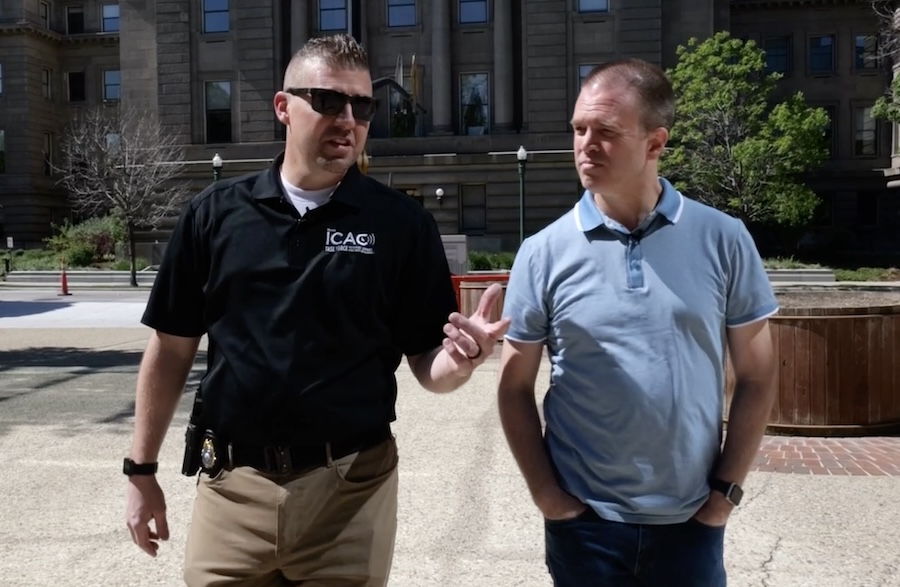
Federal law requires electronic service providers to report when users download, upload or distribute CSAM. Those reports go to the National Center for Missing and Exploited Children, where they’re reviewed and then passed on to the states where investigators believe the perpetrators are.
In Idaho, those cybertips are forwarded to the Attorney General’s Office, where Lindsay Harris and Misty Hobbs review them.
“There’s chat, there’s video, there’s photo, sometimes there’s all in one,” says Harris.
Many of the tips involve teenagers sexting their friends. Others involve sextortion, and then there are videos and photos where it’s hard to tell if there’s a child involved.
“To determine if it has prosecutorial merit, we really have to look and see whether the average person would look at this child and know that’s a child,” says Hobbs.
Harris and Hobbs review nearly 100 cybertips every week, and the numbers aren’t slowing down.
Over the past five years, the number of incoming tips to ICAC has gone from around 1,500 in 2020 to over 4,100 expected this year, according to Edwards.

“We had a backlog of almost 2,000 cybertips at one point. Now when we get cybertips, we triage them in four hours on average,” says Edwards. “We get them from the National Center (of Missing and Exploited Children) and they’ve been looked at by someone on my team within four hours.”
To tackle the problem, Attorney General Raúl Labrador relies on an ICAC affiliate program. Eleven law enforcement agencies throughout the state, including the Idaho Falls Police Department, Pocatello Police Department and Bonneville County Sheriff’s Office, have officers and deputies working ICAC cases full-time. They’re paid by the attorney general, but work in police departments and sheriff’s offices where they live.
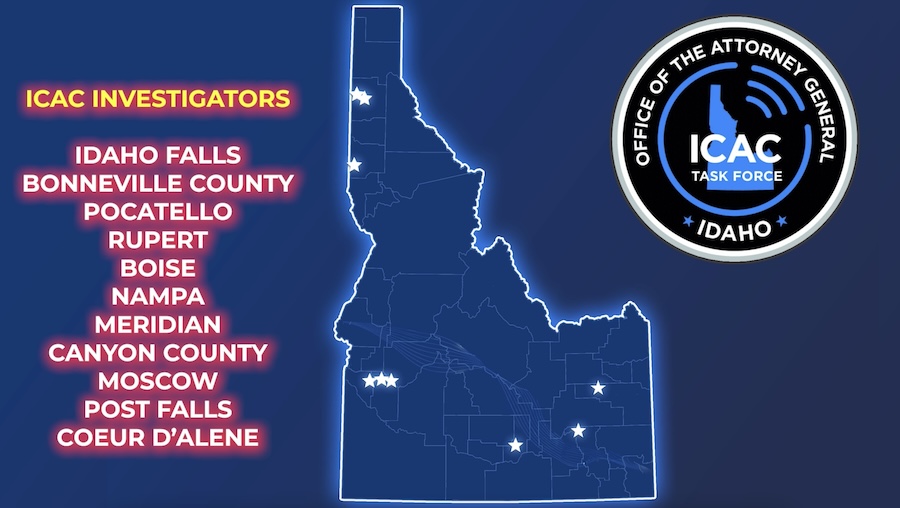
“Last year, we arrested more people and prosecuted more people than in the previous three years combined,” Labrador tells EastIdahoNews.com. “We hope it doesn’t keep going because that means we have more criminals and more children being harmed, but unfortunately, this is the kind of crime that continues to happen, and I think our team is well prepared to deal with those people harming children.”
Tracking tools
The ICAC team has access to cutting-edge tools that help track down perpetrators. A lot of it is done inside a high-tech lab where Chris Harden and other computer forensic examiners use heavy-duty computers to analyze hard drives, phones, computers and other devices seized from suspected child predators.
“They’re mighty machines. Can you imagine that people have gaming computers that are pretty powerful? Well, we need powerful computers that read powerful computers,” Harden explains. “One case we had over in eastern Idaho a couple weeks ago, there were 55 devices.”
Another helpful tool is a black Labrador retriever named Badger.
“He is trained to detect anything that contains a special chemical called TPPO (triphenylphosphine oxide) that is sprayed on all electronic storage devices,” says Lauren Lane, Badger’s partner and an ICAC investigator. “As a dog, he obviously has an amazing sniffer, so he’s able to smell this compound that the human nose can’t detect.”
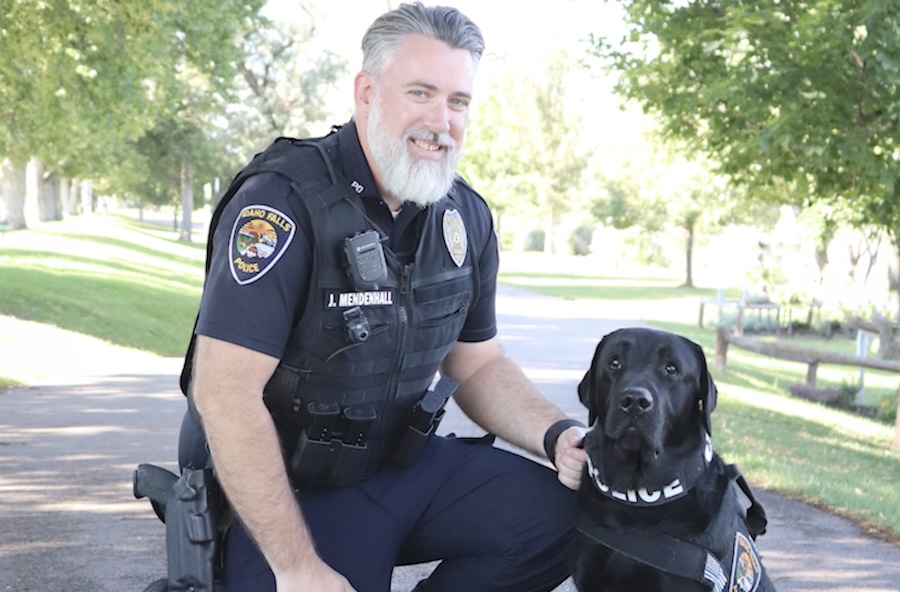
Badger mainly works in the Treasure Valley. In eastern Idaho, Idaho Falls Police Detective Jared Mendenhall’s K9 partner Ardis does the same thing.
Sting operations
Once there is enough evidence and probable cause for a search warrant, the ICAC unit plans sting operations. The night before each one, everything is planned out carefully in briefings involving all participants.
During an operation in May, we met with the ICAC team at 6:30 a.m. on a Tuesday in Bonneville County before the suspect was about to leave for work.
An officer launched a drone that hovered over the man’s house. A few miles away at the Bonneville sheriff’s Ammon Field Office, we watched a live video feed as deputies waited near the home.
Once the suspect, 59-year-old Ricky Craig, left and got into his truck, he was pulled over, taken into custody and brought to the field office for questioning.
As he was being interviewed, other members of the ICAC unit searched his home and seized several electronic devices. What they found, according to court documents, was disturbing.
There were over 20,000 images of humans engaged in sex acts with animals. On one computer, there were 7,386 photos of child sex abuse material and on another device, nearly 5,000 pictures, court documents say.
Officers learned Craig was on the sex offender registry years ago, but he petitioned and was able to get off. Now, he’s charged with 15 felony counts of possessing child sexually exploitative material.

A few weeks later, on another sting operation in Pocatello, ICAC officers were looking for a man who goes by “fun0278” on the social media app Kik.
Investigators said “fun0278” was actually 55-year-old Rusty Harris. After police woke him up, he was taken in for questioning while other officers searched his trailer.
On his devices, they found photos of girls under 14 being raped and sexually assaulted, according to court documents. There were also chats where Harris allegedly offered money for child sex abuse material featuring young kids, and perhaps the most alarming, a conversation in which he claimed to have paid $250 to have sex with three girls. He allegedly wrote that the parents of the children “helped the girls participate in sexual acts.”
Harris is charged with 10 counts of possessing child sexually exploitative material. During his interview, he denied having any physical contact with children and said those conversations were “only fantasies.”

What isn’t a fantasy is how common all this is. The very next day, we were in Idaho Falls for not one, but two separate cases at the same apartment complex.
Officers seized a large computer and 18 other devices from the apartment Nathan Selig, 43, shares with a family member.
On those devices are videos showing hundreds of children, from babies to 16-year-olds, being sexually assaulted by men and women, according to court documents. He allegedly had a folder labeled “PedoDreams” on his computer.

Selig was arrested in pajama pants and charged with six counts of possessing child sexually exploitative material.
In a nearby building, another man in pajama pants was arrested, 38-year-old Matthew Dudley. He was accused of uploading a CSAM photo to Bing, then asking the search engine to find him similar images.
He tells officers he searched for real and AI child pornography so he “wouldn’t go after real children” and that viewing the material helped him “not want to sexually abuse children.”
Dudley is charged with 10 counts of felony willfully possessing child sexually exploitative material.
Prosecuting the crimes
Madison Allen, the lead deputy attorney general in the Special Prosecutions Criminal Law Division, tells EastIdahoNews.com that effective this year, in the eyes of the law, there’s no difference between AI CSAM and other types.
“We actually were able to just pass an AI bill with the Legislature last summer. We’re able to prosecute the possession of CGI (computer-generated images) as well as the normal child sexual abuse material that we see of real children,” Allen says.
What about the kids who are in all of these horrific videos and photos? Allen has been able to track a few down and they’ve testified in court, but finding them can be very hard.
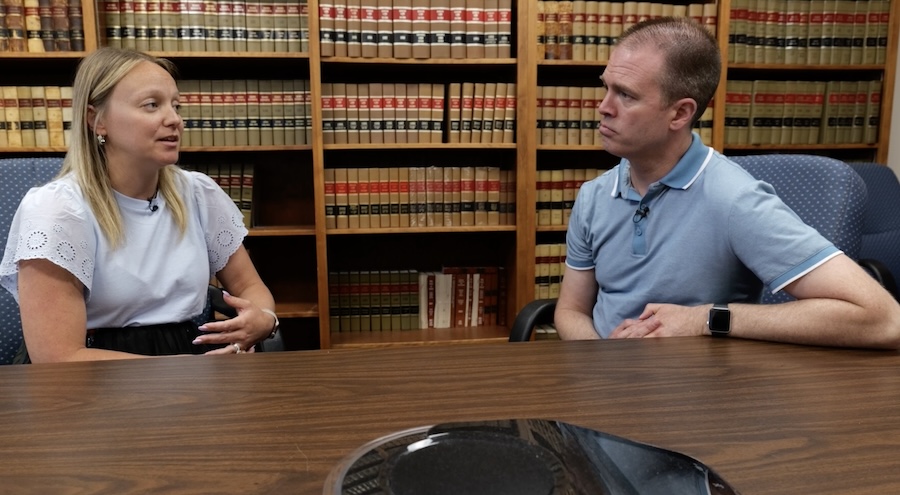
“Our victims are all over the place. When we have possession of CSAM cases, where it’s strictly possession, most of the time, those victims are unidentified, which is very, very sad,” Allen says.
In situations where victims can be found, Alesha Boals is there to help. She’s the attorney general’s victim witness coordinator, and she also helps family members of suspects and others who might be affected.
“It entails whatever they need. It could mean they just want their victims’ rights – just to know what’s happening, know about court and how to get through it. With other victims, it can be much more involved,” says Boals.
Mental health is important for the victims, but also for everyone who works with ICAC.
They’re all required to attend individual therapy twice a year and group counseling two times as well. There are regular seminars and workshops focusing on self-care and every year, ICAC officers must pass certain tests and meet specific standards.

Helping children
The ICAC team sees the worst of the worst and it’s heartbreaking when they show up to arrest someone when children are present.
“I have been on scene when we’ve rescued live kids, and I’ve watched the heartbreak and I’ve watched the trauma,” Edwards says. “But there are massive rewards that come with that. When you take a child from a home who is being victimized or abused, and rescue a kid, nothing compares to that.”
At one point or another, every person EastIdahoNews.com spoke with in the ICAC unit over the summer said the same thing: Parents must be involved with their kids and their phones.
“What kids are doing on their phones – that’s really where it starts,” says Attorney General Education Specialist Meredith Heer. “Understanding that when you’re giving that kid a phone, you’re giving them access to everything.”
As they’ve reviewed the incoming tips, Harris and Hobbs say they’ve learned that this type of activity could involve any child – from straight A students, star athletes and more.
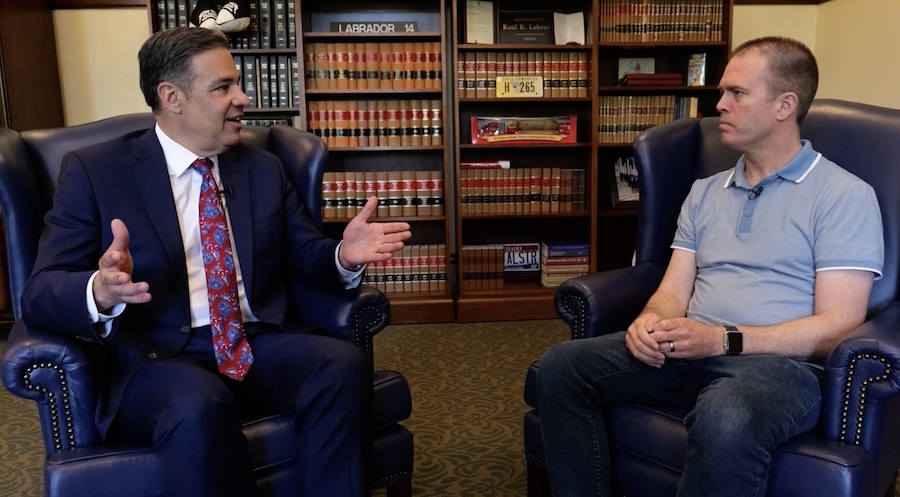
“If I were a parent starting over all again, I would first of all not give my kids phones, but I know that’s not the reality of the world right now,” Labrador says. “But I would limit their access, and I would be very conscious about what they’re downloading and what apps they’re using.”
As of this week, the ICAC unit has arrested nearly 50 men for child sex crimes in Idaho this year.
Child predators are in every community, and they’re hiding behind their phones, computers and tablets.
But the ICAC unit to determined to hunt them down and bring justice to the most innocent among us.
“For people engaging in this, I would say that they’re going to be caught and I look forward to the day when it’s my privilege to prosecute them,” says Allen.
For resources and more information about the ICAC program, visit the Attorney General’s website here and follow their Facebook page here.
Watch our entire investigation in the video player above.