




Part 1: Here are three of the seven candidates running for Mayor of Pocatello
Published at | Updated at
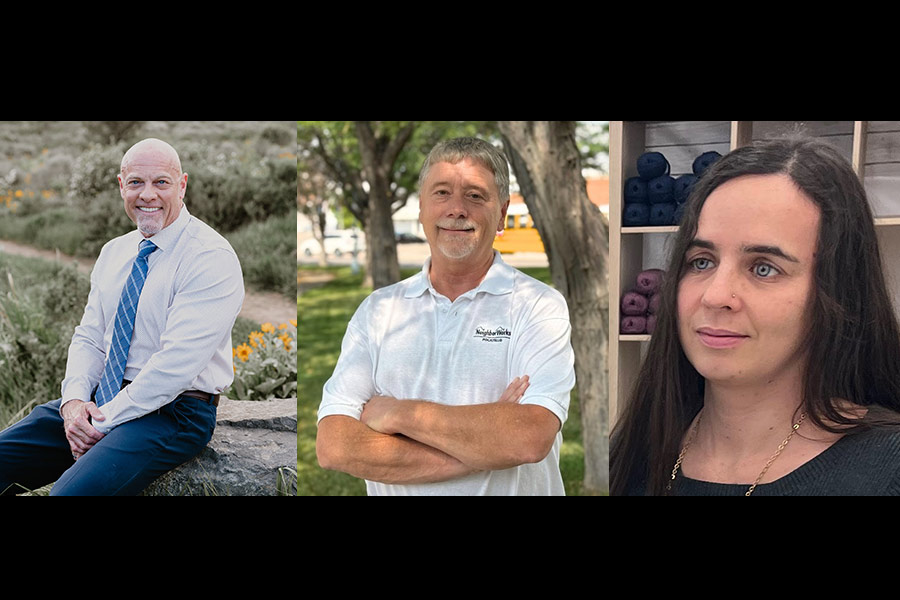
EDITOR’S NOTE: EastIdahoNews.com will be publishing the responses to candidate questionnaires every day through the municipal election on Nov. 4. Read them all here.
POCATELLO — Seven candidates are running for mayor of Pocatello this year.
The seven candidates are incumbent Mayor Brian Blad, Steve Brown, Greg Cates, Mark Dahlquist, Nate Kessel, Alana Leonhardy and Carta Sierra “Idaho Law/Idaho Lorax.”
To learn more about the candidate’s platform, EastIdahoNews.com sent the same eight questions to each candidate. Their responses, listed below, were required to be 250 words or less, and were only edited for minor punctuation, grammar and length.
Because there are so many candidates running for this position, EastIdahoNews.com has decided to split their election questionnaire responses into two stories, with three candidates in the first article and four in the second. This story will include the answers to our questions from Greg Cates, Mark Dahlquist and Alana Leonhardy.
See the answers from the other four candidates on Tuesday morning.
Part 2: Here are four of the seven candidates running for Mayor of Pocatello
Elections are on Tuesday, Nov. 4.
QUESTIONS:
Tell us about yourself — include information about your family, career, education, volunteer work and any prior experience in public office.
Cates: I’ve lived in Pocatello for over 20 years. I’m married and I have five children.
I bring a unique combination of financial expertise, public safety experience and community engagement that no other candidate offers.
As a certified Financial Counselor at a local credit union and member of the Bankruptcy Team, I help families navigate financial challenges, understand budgets and build sustainable plans. That insight will be invaluable as we create a more resilient and prosperous Pocatello.
Before entering the financial sector, I served 16 years as a Pocatello Police Officer. I was part of the Crisis Intervention Team, working with individuals in mental health and addiction crises, learning to de-escalate situations with safety and compassion. As a Field Training Officer, I prepared new recruits to serve with integrity and sound judgment. I also served as Community Resource Officer, where I rebuilt the Neighborhood Watch Program, streamlined crime reporting and improved transparency between law enforcement and residents.
Additionally, I owned and operated a successful private investigation firm for 18 years. I became an expert in surveillance and law enforcement background investigations. I have conducted thousands of surveillance operations throughout the United States and Canada. I was also contracted by over 30 police departments, fire departments and government agencies, including the Department of Justice, to conduct background investigations for new recruits.
These are more than bullet points on a resume; they are real experiences that shaped who I am today. I’ve served Pocatello in many roles, and I’m ready to lead.
Dahlquist: I’m a Pocatello kid at heart. I’m one of six children, and some of my favorite memories are piling into the family station wagon, singing “Pocatello here we come, right back where we started from!” on our way back from town as we approached the hill on the Interstate toward Clark Street and that first look at our valley. Those rides home taught me what roots feel like.
I graduated from Highland High and earned a B.B.A. in Management & Organization from Idaho State University. I worked my way through school – learning grit bussing tables and closing shifts – then spent 18 years with Farmers Insurance, moving from underwriting to leading a 50-person customer service department. That experience – budget discipline, accountability, and caring for people – still guides me.
Service is my compass. I’m a Leadership Pocatello alumnus and a longtime member of the Chamber’s Beautification Committee, where I’ve helped coordinate the Citywide Spring Cleanup for three decades. I’ve served as a Board of Directors member for the Portneuf Greenway, Portneuf Valley Partners (charter member and honorary director), and as past president of the Homeless & Housing Coalition of Southeast Idaho.
Today I lead neighborhood revitalization at NeighborWorks Pocatello – turning empty lots into homes, helping families put down roots, and partnering across our city. I haven’t held elected office; my public service has been hands-on. I’m running to bring that neighborly, transparent stewardship to City Hall.
Leonhardy: I grew up in Moscow, Idaho. I attended and finished a degree in psychology at University of Idaho. While there I volunteered doing brush clearing, hospice work, worked as a secretary for a chapter of the National Federation of the Blind, taking meeting minutes and communicating with others within the organization and without. After Graduation, I went to San Diego for a few years. I started working remotely for Idaho State University part-time proofreading. I moved to Pocatello in 2023 to continue doing it in person. At the same time, I invested in quite a bit of my free time in self education, working with the Small Business Administration to get my yarn shop open.
What is your proudest accomplishment?
Leonhardy: Learning to read. I liked it so much I learned twice. The first was braille, second English print. I was about five and remember thinking it was great. I could now read with no lights staying up without mom knowing. The world literally came to my fingertips. As I got older the ability to read, and of course new technology brought so much chance for self education. When I was younger I did choose that education in fantasy and sci-fi novels, but as I got older it progressed to communication skills. You can’t really have a relationship if you can’t communicate this goes for personal and business. Something simple like writing a date wrong for delivery can ruin a business. I know most of us have notched this accomplishment, but I really feel its the best.
Cates: My proudest accomplishment is the way my children have grown into remarkable individuals. Watching them become people who are full of life, curiosity and endless potential has been the most rewarding part of my journey. Each of them carries their own unique strengths and talents, and together they reflect the values of kindness, resilience and integrity that I hoped to instill.
Raising children is never a perfect process, and there were challenges along the way, but seeing who they are today reminds me that the love, guidance and sacrifices were all worthwhile.
More than achievements or milestones, it is their character, the way they treat others, the courage with which they pursue their dreams and the joy they bring into the world that makes me most proud.
Knowing that I played a part in helping them grow into the people they are today is the greatest accomplishment of my life.
Dahlquist: My proudest accomplishment isn’t a title or an award – it’s the moment a family turns a key in a front door they never thought they’d own. At NeighborWorks Pocatello, we’ve taken vacant lots and tired houses and turned them into homes. I’m proud of the partnerships we built to make that happen: neighbors, local lenders, the city, and volunteers all rowing in the same direction.
One evening, after months of rehab on a long-abandoned house, a young couple carried their toddler across the threshold. The little guy ran straight to the back window and pointed at the yard like it was a ballpark. That’s when it hit me: we weren’t just fixing walls; we were building roots.
I’m also proud of sustaining decades of citywide cleanups – thousands of volunteers, tons of debris hauled, and a simple, stubborn message that Pocatello takes care of its own. Through budget ups and downs, we’ve kept these efforts steady, transparent, and focused on results.
If you ask what I’m proudest of, it’s this: helping our community prove, over and over again, that when we work together, we can turn blight into opportunity and hope into a house key.
Why are you seeking political office within your community? Briefly explain your political platform.
Dahlquist: I’m running because of my love and passion for Pocatello. I’m not satisfied with the current direction the city is headed. I’m running because Pocatello needs more impactful leadership at the top that listens to its citizens and takes projects to the finish line. I am an experienced executive and a community activist. I’ve served the community in multiple capacities over the past three decades. I’ve done this because I care about service over self.
Service has been my compass: Multiple years of rolling up my sleeves to help – whether this be organizing the annual Citywide Spring Cleanup, being a charter member of the Portneuf Valley Partners, serving on the Chamber of Commerce Board of Directors, the Portneuf Greenway Foundation or President of the Homeless & Housing Coalition of Southeast Idaho. Neighbors have trusted me with that stewardship, honoring me with Distinguished Citizen of the Year, Volunteer of the Year, Outstanding Non-Profit Leader Award and more.
Today, too many families are priced out, our first responders are stretched thin, and big decisions feel too far from the people who live here. I’m running to keep Pocatello a place where working families and young professionals can plant roots, feel safe, and be heard.
My platform is straightforward:
1- Adding housing supply by permitting, building, and preserving.
2- Making Pocatello Shine & Compete.
3- Creating an Open-Book City Hall focused on fiscal responsibility & local control.
Leonhardy: I’m running for Mayor because the city government has steadily been separating itself from serving the community losing all of my trust. I learned that in 2022 half the council resigned sending Pocatello down a bad path. The city began removing options for public comment, and has not been able to maintain a Chief Financial Officer, while giving themselves pay raises. Looking at the primary candidates I got the feeling most of them were disingenuous. Seeming more interested in protecting and re-branding the institution than serving the community. I do not feel I can trust them or vote for them. I didn’t want to run, but I started a small business here and love this community. It is a place of opportunity, and I want the chance of opportunity preserved.
Cates: We all want the same things: lower taxes, safe neighborhoods, a strong economy and a government that works for us. Together, we can make it happen.
Wasteful spending drains resources and drives taxes higher. It’s time for smarter, more efficient government. As your mayor, I will lead a full review of the budget, cut waste and redundancies, and focus tax dollars where they matter most, our roads, public safety, and economic growth. Less waste means more money in your pockets and better services for all.
Public safety must be our top priority. Every family deserves to feel safe at home, on the street and across our community. That begins with better training, equipment, and support for our police and first responders.
But safety is also about trust. I will strengthen ties between law enforcement and the community, while investing in proactive crime prevention. Safety should be a shared responsibility, and a shared reality.
Finally, we must grow our economy and create real opportunity. A thriving city depends on strong local businesses, good jobs, and an environment that supports innovation. As mayor, I will cut red tape, reduce unnecessary regulations and champion small businesses. I’ll attract new industries and invest in the future so growth benefits everyone, not just a few.
This election is about leadership that listens and delivers results. Together, we can build a city that is fiscally responsible, safe for families, and full of opportunity. A city that works for everyone.
What are the greatest challenges facing people in your community? What is your plan to meet and overcome those challenges?
Cates: For too long, Pocatello has been stuck with the same leadership and the same problems. When a mayor stays in office for 16 years, failed policies pile up and progress stalls. That’s exactly what’s happened here.
First, we’ll tackle stagnation and wasteful spending. By reviewing every department’s budget, eliminating redundancies, and focusing resources on what truly matters; roads, sidewalks, public safety and essential services, we can deliver more for less and ease the burden on taxpayers.
Good jobs are the foundation of a thriving community. I will attract new industries, support local entrepreneurs and invest in workforce development so that Pocatello residents can find meaningful, well-paying careers right here at home.
Affordable housing must be a priority. I’ll attract jobs that pay a livable wage and work with developers, nonprofits and community partners to expand housing options, ensuring families, seniors and young professionals can afford to live and grow in our city.
We will also make Pocatello a city where life is exciting. By revitalizing our downtown and investing in parks, recreation, events and cultural attractions, we can create a vibrant, welcoming community with something for everyone.
Finally, our infrastructure. Our roads, sidewalks, and public spaces will reflect a city on the move, not one left behind.
Together, we can build a Pocatello that works. A city with safe streets, affordable homes, good jobs and opportunities for fun, development and prosperity. It’s time for leadership that delivers results.
Dahlquist: We face three intertwined challenges: affordability, stability, and trust.
First, housing and the cost of living. Too many neighbors – teachers, nurses, young families, seniors – are getting priced out. My plan is to accelerate housing at every level: fast-track permits for infill and rehab, support accessory dwelling units where they fit, and expand partnerships that turn vacant lots and tired houses into safe, efficient homes. We’ll pair that with down-payment help, weatherization, and owner-occupied rehab so people can afford to stay.
Second, public safety and community well-being. We see the strain of mental health and addiction on our streets and in our neighborhoods. I’ll champion a crisis co-response model that pairs officers with clinicians, strengthen nuisance and abandoned-property enforcement focused on the worst actors, and keep investing in lighting, sidewalks, and parks – simple things that make blocks feel safe again.
Third, economic stability and trust in City Hall. Families need good jobs and predictable bills; businesses need clear rules and quick answers. I will streamline licensing and inspections, stand up a small-business “one-front-door,” and recruit employers by preparing shovel-ready sites and modern infrastructure. We’ll practice fiscal stewardship – multi-year budgeting, transparent dashboards, and quarterly town halls – so people can see where every dollar goes.
I’ve spent decades organizing cleanups, building homes, and fixing what’s in front of us. I’ll bring that same hands-on approach – listening on the porch, solving at the workbench, and measuring progress in cleaner blocks, safer streets, and more housekeys in more hands.
Leonhardy: Trust. Among most of the people I know there a great deal of disappointment with the institution’s decision making. People want their money spent well. In my time here the list of city decisions that have failed the community is baffling. First on my mind, is the expensive re-brand and logo change. Why? Downtown there was talk at the city for reinstating parking meters. My business is there, no one asked me or those I know in my area. The lovely scooters they supported, to trip over for a few months then never return. North Gate deals, the Center Street tunnel, the waterline failures, sidewalk scandals… I don’t believe it is malign intention but the system is beginning to feel broken. I will change that.
How will you best represent the views of your constituents – even those with differing political views? How will you communicate directly with constituents?
Leonhardy: Most people when it comes down to it, want to be able to work, take care of themselves, their family, and the place that they call home. I would make that common ground my focus. Making myself available is key to that communication. Currently there are many ways to contact the council and mayor but most of them are one sided and defensive from the city’s position. Words are increasingly becoming a gotcha game, I understand that but real discussion needs to come back. At a council meeting, or an email you get a blanket statement about taking it under consideration while most discussion happens at a working meeting behind doors. I want to talk and listen to constituents preferably in person. A volunteer with the Mayor program would be great. Come work with me raking grass in a park. I know time demand is real. I have to continue working my store as well so it may be time for Mayor live streams after hours.
Cates: I believe the best way to communicate directly with constituents is by sitting down and having real conversations with people. I want to hear what’s on your mind, what’s working in our city and what isn’t. No fancy speeches, no political spin, just open and honest dialogue about the issues that matter to you.
This is the way I’ve been running my campaign for the last nine months, by meeting with people in their homes and at local businesses and by reaching out through social media to find out what matters most to them. I’ve spent late nights answering questions and being engaged with our community because what you have to say is important to me.
I plan to spend time in our neighborhoods, at local gatherings and wherever people are talking about their community. I want to listen first, understand your perspective and work together to find solutions that make sense for all of us.
Transparency and honesty will guide everything I do. I’ll make sure you know what’s happening, why decisions are being made, and how you can be involved. There’s no substitute for showing up, being present and including residents in the process of shaping our city.
This isn’t about politics as usual. It’s about building trust, being approachable and making Pocatello a place where everyone feels heard and valued.
Dahlquist: I learned early – as a kid knocking doors or recruiting folks to take part in neighborhoodwide cleanup projects and later helping families buy their first home – that people will tell you what they need if you show up, listen, and follow through. As mayor, I’ll represent everyone by starting with respect, not party labels. We’ll disagree sometimes; we won’t be disagreeable.
We’ll stay connected by expanding the public comment period at council meetings and moving it to the front of the agenda. I have also considered rotating front porch town halls” in every neighborhood, and even a mobile mayor’s desk at libraries, schools, and the senior center. I’ll convene a cross-section advisory group – small business owners, union members, parents, students, veterans, and tribal partners – to pressure-test policy before it lands on an agenda.
Communication should be two-way and transparent. We’ll publish plain-language summaries after every council meeting, launch a simple dashboard for budgets, permits, and projects, and send a short weekly email/text update.
Most of all, I’ll keep doing what’s worked my whole life in Pocatello: meet folks where they are – on porches, sidelines, and shop floors – and earn trust by turning conversations into results.
What parts of the city budget could use more funding? Where are places in the budget where cuts could be made?
Dahlquist: When I look at the budget, I see places where a modest, well-targeted boost would pay off for years.
First, neighborhood basics: streets, alleys, parks and greenway trail maintenance, lighting, and code enforcement. Filling potholes on time, fixing trip hazards, and tackling the worst nuisance properties make blocks safer and property values steadier. I’d add funding for a rapid “fix-it” crew and smarter pavement maintenance so we spend a dollar on prevention instead of five on repairs.
Second, public safety with a human touch. We should fund a clinician–officer co-response team and expand detox and crisis stabilization partnerships. That keeps officers focused on crime, gets people the right help faster, and reduces repeat calls.
Third, housing and revitalization. Work with nonprofit housing organizationizations and private banking/credit union partners to fund home rehab projects for owner-occupant, more down payment assistance for first-time buyers, and turn vacant lots and tired homes into tax-paying, energy-efficient housing. Pair this with small grants for neighborhood cleanups, sidewalk repair, and park upkeep – the everyday things that build pride.
Fourth, customer service and transparency. Invest in permit/inspection technology, a one-front-door for small businesses, and a simple public dashboard that shows where dollars go and how projects are doing.
I’ll fund these priorities by aggressively pursuing grants and match dollars, sun-setting low-impact programs, and using performance audits and multi-year planning to shift money toward what works. That’s stewardship – practical, measurable, and neighbor-first.
Leonhardy: Big slashing cuts and lower spending Here Now! Vote for Meee! Its widely popular and quite honestly unrealistic. I know you don’t want to hear that, but we can look back in 2021 when half the council went looking and I think it was council women Ortega was accused of creating a hit lists. The institution will fight back. The mayor can’t micromanage 500 employees. Going in, blind cutting would land in disaster, I won’t promise that or a hiring freeze. We lose sanitation workers I will keep the trash flowing. Spending is complicated with some good and needed so I can’t promise a stop. The current administration has done very well getting grants. There are very few reasons to ever suspend spending those because they are not taxed from the city directly, and if a fire truck breaks down I’ll fix it.
I do feel we are spending too much. Fire, police, water, waste water management, sanitation and streets makes up about $100 million of our $163 million budget in FY 2025. Very similar compared to our neighbors, but our incomes are lower resulting in heavier tax burden. I do promise to equate that burden in my term. First I will cut the Mayor salary to median. To many raises and perks in the budgets lately. The next will be a mandate to the heads to lower 3-6% year over year for the 4 year term. If they can’t do it I will. It is a very doable goal.
Cates: I believe that taxpayers have carried this city on their backs for too long. Families and homeowners are already stretched thin and asking them to pay more is unacceptable. If we need to increase funding, it must come from diversifying revenue streams and attracting new businesses that share the tax burden, not from raising property taxes on residents.
Public safety and essential public services are non-negotiable. These must remain fully funded because they are the foundation of a safe and livable city. But beyond those priorities, we must take a serious look at wasteful spending. Too much money has gone to projects that provide little value, like the costly rebranding effort draining hundreds of thousands of dollars. That kind of spending needs to end.
Instead, we should streamline city operations, use technology and automation where appropriate and cut inefficiencies that waste taxpayer dollars. Every dollar in our budget should be spent responsibly, with accountability and transparency at every step.
My focus will be on eliminating waste, making government more efficient and growing our economic base. The result will be real relief for taxpayers and a stronger, more sustainable Pocatello.
What parts of Pocatello are in the best position for future development? What kind of development would you want to see come to those areas and what would you do to encourage or facilitate it?
Cates: I believe the strongest opportunities for Pocatello’s future development are at the Airport, in Northgate and south of town. Each of these areas offers unique potential to grow our economy and better serve residents.
The airport is a prime location to create an air cargo logistics hub. With strategic partnerships and successful negotiations with the Tribe, we could build a thriving center for warehousing, transportation and shipping. Companies like DHL, Amazon, FedEx, and UPS could operate here, bringing jobs, diversifying our economy and strengthening Pocatello’s role in regional and national trade.
In Northgate, I envision a technology park designed to attract new industries, innovative companies and skilled workers. This kind of development would create high-paying jobs, expand our economic base and give young professionals a reason to build their future here in Pocatello.
Finally, south of town deserves more convenient shopping and grocery options. Right now, residents in that area lack access to basic services. Expanding retail there would meet community needs, reduce travel times and improve quality of life.
Together, these projects can position Pocatello as a hub for commerce, innovation and everyday livability.
Dahlquist: Pocatello’s future is already taking shape in three places: our core corridors, our university district, and our job-ready edges.
First, the core – Historic Downtown to the South 5th area and along Yellowstone. These blocks are ripe for mixed-use infill: upstairs housing, ground-floor shops, small offices, and corner groceries. I’ll push pre-approved “missing-middle” building plans, a quick-turn permit lane for rehabs, façade micro-grants, and safer streets – lighting, crosswalks, trees – so private investment pencils and neighbors feel proud walking there.
Second, around ISU and the Portneuf River corridor. Let’s add student- and workforce-friendly apartments near campus, renovate older rentals, and recruit research spin-outs and medical services along 5th and Center. I’ll align zoning to allow gentle density, work with partners to expand down-payment/rehab tools, and keep improving river access and trails so talent wants to stay.
Third, our job hubs by the interstate, rail, and airport. Light industrial, logistics, and clean tech belong near I-15/I-86 with shovel-ready sites – water, sewer, power, and fiber in the ground. I’ll fast-track site reviews, bundle grants and tax-increment tools for infrastructure, and market a one-front-door to employers.
Across all areas, we’ll target brownfield cleanup, add an ADU path for homeowners, and hold quarterly “Table of 20” sessions – builders, lenders, neighbors – to remove roadblocks in real time. That’s how we turn plans into paychecks and new house keys.
Leonhardy: All of Pocatello. We have a lot of opportunity everywhere with empty industrial buildings, retail, and pretty good tourism. One of the things I most love about living Pocatello is going outside. I know your asking for best, but I don’t want the mayor’s office in charge of picking winners and losers in business. The traditional incentive is compensating utilities, building roads/turnbays, or tax based. The bad thing is that boosts total government spending. Homes get taxed more or current business driving goods up like groceries. I would want to see businesses come here, base here, and make a home here. Too many “partnerships” just have companies come here, take and leave. I won’t be the mayor to give a large company a tax incentive to put down a small business. Local entrepreneur incentives should also be encouraged. There are several revolving business loan opportunities that could be worked with. We should encourage our younger generation with a fair looking at the real-estate in Pocatello and entrepreneur competitions. I don’t like the idea of always thinking we need someone else to come here and give us work. We can create that together.
The death of 17-year-old Victor Perez created a great deal of shock and emotion in Pocatello. Would you have handled the city’s response to this incident any differently? Based on this incident, do changes need to be made at the Pocatello Police Department?
Leonhardy: I feel the killing of Victor Perez was awful. From my understanding not as an expert, it could have been handled better. There is a line in bold on the budget, “We are the highest-trained agency in the state of Idaho.” referring to officers. It seems the city should have done better here. I do believe some changes need made.
Cates: As a retired Pocatello Police Officer and the father of a child with autism, the tragedy of April 5th struck me on a deeply personal level. The Attorney General’s decision not to pursue charges in the death of Victor Perez leaves many heartbroken and searching for answers.
I’ve lived both sides of the fence; calming my own child through violent outbursts and standing in uniform, weapon drawn, hoping a teenager with an axe would drop it before I had to pull the trigger. That day, training and experience saved a life. On April 5th, inexperience and a broken mental health system cost Victor his.
But just as troubling as the tragedy itself was how our city leadership responded. Our mayor showed us that he is not capable of handling a crisis. The fact that he hid from the public for five days before even acknowledging the shooting should concern all of us. A true leader doesn’t retreat in crisis, he stands at the front, speaks honestly and makes the tough calls. I would have addressed the public immediately, acknowledging the tragedy and committing to keep citizens informed every step of the way.
As your Mayor, I will lead differently. I will raise HIRING standards, overhaul TRAINING with crisis intervention and de-escalation, strengthen RETENTION to keep experience on patrol, restructure scheduling and put command staff back on the streets.
Legal doesn’t always mean right. To honor Victor’s memory, we must raise our standards, rebuild trust and protect both citizens and officers.
Dahlquist:Victor Perez’s death broke our community’s heart. The Attorney General has since declined to file criminal charges against the officers – an outcome that does not lessen the grief or the duty to learn and do better.
I would have moved faster and more openly. That means a family liaison within hours, regular public briefings with a clear timeline, and quicker release of body-cam and 911 materials with context from independent experts – while protecting due process.
Policy changes are necessary. First, codify “time, distance, and cover” and require disengagement when a barrier exists, unless a life is imminently at risk. Second, mandate advanced training in autism, developmental disabilities, and crisis communication, measured with scenario-based evaluations – not just checkboxes. Third, stand up a clinician–officer co-response team so calls with behavioral health factors get the right tools from the start. Finally, publish after-action reports within 60 days, with recommendations, deadlines, and public tracking.
We honor Victor by making changes that prevent the next tragedy – grounded in transparency, accountability, and the neighborly truth that every life in Pocatello deserves patience, dignity, and a safe path home.