




Part 1: Meet three of the seven candidates running for Seat 2 on the Idaho Falls City Council
Published at | Updated at
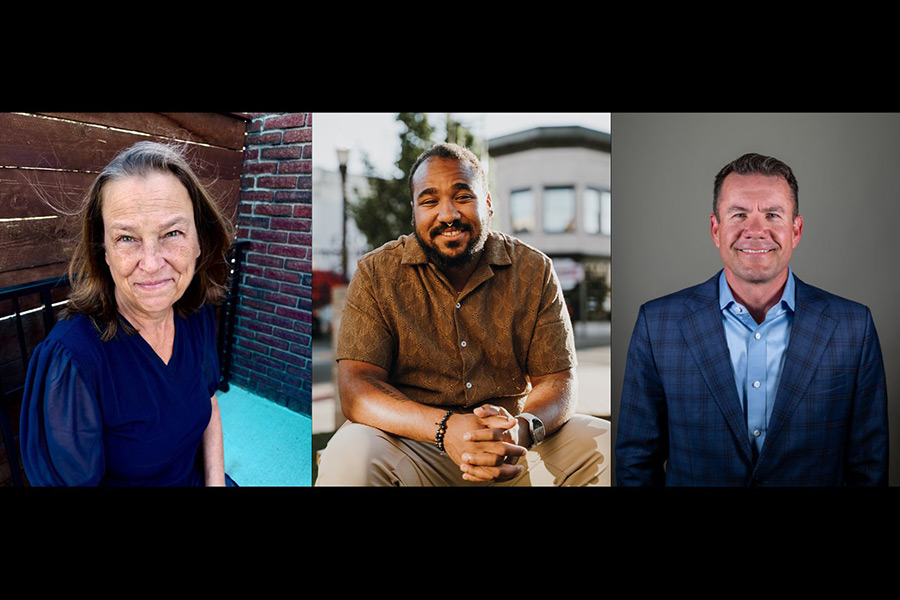
IDAHO FALLS — Seven total candidates are running for Seat 2 on the Idaho Falls City Council this November.
The six candidates include Teresa Dominick, Brandon Lee, Mosy Moran, Jordan Bardsley, Stephanie Taylor-Thompson, Christopher Joseph Brunt, and Brad Whipple.
To learn more about the candidate’s platform, EastIdahoNews.com sent the same eight questions to each candidate. Their responses, listed below, were required to be 250 words or less, and were only edited for minor punctuation, grammar and length.
Because there are so many candidates running tor this position, EastIdahoNews.com has decided to split their election questionnaire responses into two stories, with three candidates in the first article, and four in the second.
This story will include the answers to our questions from Teresa Dominick, Brandon Lee, and Mosy Moran.
See the answers from the other four candidates on Friday morning.
Elections are on Tuesday, Nov. 4.
Tell us about yourself — include information about your family, career, education, volunteer work and any prior experience in public office.
Dominick: I am a degreed professional with 30+ years experience in the environmental and waste management fields. Currently working at Idaho Environmental Coalition in Environmental Programs (15 years). I previously managed a large landfill for Waste Management Inc. (including staffing, multi-million-dollar budget, fleet maintenance, and contract/union negotiations). I also worked at West Valley Demonstration Project as a technical professional. I am a project manager and a problem solver who will take the time to understand the issues, considering all input, and then prioritizing what is best for Idaho Falls citizens and business owners.
I have a great love for Idaho Falls and a desire to recapture and enhance the traditional small-town atmosphere and feel.
I am not a politician.
Moran: My name is Mosy Moran, and Idaho Falls has been my home and heartbeat. I’m a father raising my kids here, a small business owner running The Heart Idaho Falls, and an active community communicator. Through my venue, I’ve built a space where local musicians, families, and organizations gather, not just to be entertained, but to feel connected and supported.
Beyond business, I’ve worked in mental health, childcare, and nonprofits. Those experiences gave me a firsthand look at the struggles families face every day. From supporting people in crisis to helping kids find stability and growth, I’ve seen how important strong community systems are. Those lessons shaped my perspective: thriving communities are built when local government works hand in hand with the people it serves.
I’ve also volunteered through cultural events like Juneteenth, local festivals, and youth workshops. While I haven’t held public office, I’ve spent years bridging people, businesses, and government conversations. I’ve learned how vital communication is, how fragile trust can be, and how powerful accountability becomes when leaders follow through.
Idaho Falls is growing, and that growth can either erode our identity or strengthen it. My goal is to keep the character of Idaho Falls intact while preparing us for the future, protecting families, investing locally, and making sure residents feel their voices guide the direction of our city. Leadership to me means showing up, listening, and making responsible decisions that reflect the real lives of our neighbors.
Lee: I was born and raised in Idaho Falls and I am a proud alum of Teresa Bunker Elementary and Idaho Falls High School! I studied accounting at BYU and started my career in Washington, D.C. with KPMG, where I earned my CPA. I then went to the Darden School of Business for my MBA and began my career in commercial real estate development, partnering with city councils in municipalities similar to Idaho Falls across the country.
But my foundation has always been service. I still remember being a nine-year-old at a Salvation Army dinner where my dad, Royce Lee, was serving as board president. A man next to me shared how much he admired and appreciated my dad. That moment stuck with me — it showed the lasting impact one person can make when they give their time to others.
That example shaped my life. No matter where my career has taken me, I’ve always made it a priority to be engaged in my community. In Idaho Falls, I’ve been a Parks and Recreation Commissioner, a Precinct Committee Officer for the BCRCC, and president — now board member — of IFFC, one of the largest youth soccer organizations in Idaho. I’ve worked on local initiatives like restoring Funland and creating the Frontier Fields plan, ensuring athletes at Idaho Falls High School have fields to call their home.
For nearly 20 years, I’ve coached youth sports, sometimes four teams in a season. Today, I’m honored to coach the IFHS Girls Varsity soccer team.
What is your proudest accomplishment?
Moran: My proudest accomplishment is creating The Heart Idaho Falls, a space that started as a dream and has grown into a hub for music, art, and community connection. We’ve hosted everything from local bands to candidate forums, youth workshops, and cultural celebrations. For me, it’s not just about the events, it’s about the impact. It’s about seeing a teenager light up after their first show, or watching a nonprofit raise money to continue serving families in need.
One of the hardest moments of my life came when I lost the bigger building we’re in now, and it happened on the same day as my mom’s memorial. It felt like too much at once. But instead of giving up, I leaned into the community, and they showed up for me the same way I had tried to show up for them. Together, we brought The Heart back stronger than before.
That moment taught me resilience, accountability, and the power of collaboration. It showed me that when you give people a reason to believe in something, they’ll stand with you to make it real. It also reminded me that leadership isn’t about holding power, it’s about building trust. The Heart is more than a venue. It’s proof that community pride, responsibility, and hope can turn even the toughest setbacks into something worth celebrating. That experience is why I believe affordable housing and public safety deserve the same persistence and creativity.
Lee: The most obvious answer for me is my family. While business and extracurricular ventures are certainly fulfilling, there is nothing more meaningful to me than my relationships with my wife and kids. I recently went on a trip to Honduras with my oldest son, who had spent two years living there serving as a missionary for his church. As a parent, I have not experienced a more rewarding time than when I was able to see firsthand how much he loved the people he served and, in return, how much they also loved him. While my son would likely have gotten there without my influence, I felt immense gratitude (and relief) that some of what we had hoped he had learned from being part of our family had indeed rubbed off. Being a husband and a dad is what I am most proud of.
Outside of my family, what first comes to mind is winning the District Championship and taking the IFHS Girls Soccer Team to the State Tournament, ending a near 20-year drought. Coaching kids, seeing them learn life lessons and accomplish hard things through sport, is something I will never grow tired of.
Dominick: My family.
Why are you seeking political office within your community? Briefly explain your political platform.
Lee: I love our city and our larger overall community. I love being from Idaho. Throughout my career in commercial real estate development, I worked with city councils across the country. I saw firsthand the difference between communities with leadership that plan strategically for growth and those that simply let it happen. If I am elected, I will focus on three key priorities for Idaho Falls:
- Purposeful, Strategic Growth Growth is happening, and it must be managed with intention. I will work to ensure our city grows in a way that is strategic, coordinated, and aligned with a shared community vision. Idaho Falls is not an island — collaboration with other community leaders is essential so that growth strengthens, rather than strains, our region.
- Fiscal Responsibility
- Preserving Our Quality of Life
Every tax dollar matters. I believe we must be careful stewards of our city’s budget, watching over the pennies as closely as the dollars. Strategic budgeting and responsible financial management will allow us to meet the needs of today while preparing for the challenges of tomorrow.
The genie is out of the bottle — people across the country are discovering that Idaho Falls is an incredible place to live. While growth cannot be stopped, it can be guided to protect what makes our community special. My priority will be to ensure that the amenities, services, and values we enjoy today are maintained so that growth enhances our quality of life instead of diminishing it.
Moran: I’m running for city council because too many people feel disconnected from the decisions shaping their lives. My platform focuses on three priorities: affordable housing, small business sustainability, and public safety through smart infrastructure like better public transportation.
Idaho Falls is growing whether we like it or not, but we get to decide how it grows. I want us to keep the spirit of Idaho Falls by making sure growth benefits the people who already call this home. That means investing locally and making wise, responsible use of taxpayer resources. One idea I’ve been developing is a verified local business registry. If developers use a certain percentage of those businesses when building new projects, they could earn city incentives like reduced fees or utility credits.
From my background in mental health and nonprofits, I know transportation is more than convenience. It creates access to jobs and education, reduces isolation, and lowers risks tied to crime and trafficking. And with housing costs rising, investing in affordable housing must be central, not optional. Families who work here should be able to live here without being priced out.
Growth is inevitable, but if we’re intentional, we can strengthen families, empower businesses, and protect the character of Idaho Falls. I’m running to make sure the community has a voice in that process and that the city works for everyone, not just a few. Leadership means listening first and building responsibly.
Dominick: Recent and rapid changes to our entire city have greatly affected our outlook for the future of Idaho Falls. It concerns us so much, we decided we could no longer sit on the sidelines and watch as the city we love is fundamentally changed forever. We decided to take action and run for City Council in an attempt to recapture and enhance the traditional small-town atmosphere and feel Idaho Falls has always held for us.
Smart Growth
- Recapture and enhance traditional small-town atmosphere and feel.
- City development should be in-line with residents wishes, focusing on single-family residences, particularly affordable starter homes, while providing a range of housing options.
- Ensuring adequate infrastructure needs are met prior to development activities being conducted.
- Avoiding overdevelopment.
Residents First
- Residents, especially families, and business owners have always been the backbone of our community and are not receiving adequate consideration or priority in City Hall decisions. Supporting their needs should be given the highest priority in all city decisions and activities.
Common Sense Leadership
- There should be more to city governance than revenue generation and promoting growth.
- We will create direct open lines of communication between the citizens and Idaho Falls City Hall.
- As members of City Council, our decisions will be made focusing on what is best for the current citizens and businesses of Idaho Falls.
What are the greatest challenges facing people in your community? What is your plan to meet and overcome those challenges?
Dominick:
- Explosive city growth and development (see ImagineIF) is not in-line with the citizens or business owners needs and wishes.
Rework ImagineIF to bring it in-line with residents wishes and reduce the push to maximize population density.
City zoning and development codes must be adjusted, especially allowable uses within zones. Apply code conditional use requirements to help ensure responsible growth.
Focus on affordable, family-friendly development like single-family homes/townhomes with easy park access.
- Infrastructure improvements are not keeping up with the current rate of development.
Ensure infrastructure is in place prior to development activities.
- Over the past three years, many crime categories in Idaho Falls have increased, especially sex offenses, which are up 20% over that period (9% this year alone).
Continue the push towards community-based policing (the beat system) and develop more interaction between the IFPD and the citizens to enhance trust and public safety.
Support the recently developed Special Victims Unit (SVU).
Support and increase awareness of the interactive public safety incident map.
- Residents, especially families, and business owners are not given adequate consideration or priority in City Hall decisions.
Prioritize Idaho falls citizens and business owner needs FIRST.
Clearly list and describe the priorities for each department, as laid out by the mayor and city council, on the city website.
- In the past, there has been a lack of voter turnout for these local elections (5,518 ballots cast in 2023). Voting in local elections is critical.
Promote public engagement and civic responsibility in all areas, especially voter turnout.
Lee: As I have been out meeting people on the campaign trail, I think the number one issue that people want to talk about is traffic. We are not accustomed to having to wait for more than one cycle at a red traffic light! And I agree, I like it when traffic flows a bit better, and I can get where I need to go in a reasonable amount of time. Heavy traffic brings out my worst self (just ask my wife!). I think there are a couple of things we must realize as residents of Idaho Falls: 1) There are 300,000 people who live within an hour of our city. 300,000! The 68,000 who live inside the city aren’t the ones who truly cause the congestion we are experiencing. We are the hub the overall larger community. We don’t live on an island. So what’s to be done? We truly have to collaborate with those who make up our overall surrounding community (the county, Ammon, Iona, Ucon, etc.) and find a way for all of us to get on the same page in establishing appropriate infrastructure. I believe that those who are currently on the BMPO (Bonneville Metropolitan Planning Organization) are finally making strides toward that end. It will take true leadership to ensure that our infrastructure can meet the demands of our growing community, and finding the best solutions to this challenge is something I’d like to be a part of.
Moran: Idaho Falls faces three pressing challenges: affordable housing, small business sustainability, and communication breakdown between the city and the people. Families are struggling to find housing that fits their budget. Small businesses face barriers when trying to grow. And too often, city plans are rolled out without full community input.
My experience working in mental health, childcare, and nonprofits has shown me how deeply these challenges impact families. Housing insecurity doesn’t just affect roofs over heads, it ripples into stability, mental health, and safety. That’s why affordable housing isn’t an afterthought in my platform, it’s central.
My plan is to fight for housing policies that encourage mixed-income developments, streamline zoning so homes get built faster, and make public transportation part of our growth strategy. Reliable transit connects families to jobs and schools, but it also reduces risks tied to crime and trafficking.
I also believe the city should create a Small Business Advocate role within the development department to walk entrepreneurs through the process, and we should launch a verified local business registry with developer incentives to keep investment circulating inside our community.
Idaho Falls is growing no matter what. The choice is whether growth strengthens families, creates stability, and reflects our values, or leaves people behind. My focus is making sure we grow in a way that protects what matters most and honors both the families here today and those who will call Idaho Falls home tomorrow.
How will you best represent the views of your constituents – even those with differing political views? How will you communicate directly with constituents?
Moran: Representation means listening first, even when I disagree. My approach is to keep conversations accessible and respectful, whether that’s through social media updates, open town halls, or just talking face-to-face in local businesses. I already do short, straight-to-the-point videos explaining issues in plain language, and I’ll continue that in office.
From my work in mental health and nonprofits, I know that when people feel ignored, harm follows. That’s why I believe representation isn’t about pushing my personal opinions. The responsibility of a city council member is to represent the community’s needs and priorities, not their own agenda.
I believe disagreement isn’t division. It’s a chance to understand each other better and find solutions rooted in shared values: family, safety, opportunity, and community pride. For example, when housing is discussed, some see it as an economic issue and others as a family issue, but in truth, it is both. The same goes for public safety and transportation. These issues cut across party lines because they touch the lives of every Idaho Falls resident.
My promise is to represent people with honesty, openness, and consistency. Even when we don’t see eye to eye, my neighbors will know their voices were heard, and my votes will reflect the best interests of the community as a whole. Leadership means balancing different views without losing sight of our shared values and vision for a stronger Idaho Falls.
Lee: This is an easy one to answer. What I love about a city council position is that it is a nonpartisan position! Red or blue, elephant or donkey, shouldn’t really matter — what matters are the views of our friends and neighbors. As we cast our votes for City Council positions, they should be for the people we feel will best represent us and our ideas for what will continue to make our city a great place to live.
I have always had an “Open Door” policy in my business dealings, and this would continue if I were elected. My team and those with whom I partner know that I genuinely listen to concerns as challenges arise, and I expect their participation in offering ideas as to how to solve them. I am a very solution-oriented person. I expect challenges and hurdles. I’m not afraid of them.
But if I’m close-minded or think I am the only person who always has the best answer, then I would be short-changing my friends and neighbors of Idaho Falls. Our community has a great diversity of thought. It has been fun to be on committees and commissions where the ideas are different, but the end goal of creating a better community is constant.
Dominick: We believe all the citizens and business owners of Idaho Falls want what is best for the city and that good ideas can be received from any source. The candid, honest, and open input of everyone counts, especially when it comes to our city, the place we all share as our home.
Fortunately, city council is a non-partisan position so we look forward to being able to focus on city specific issues and working towards doing what is best for our city as a whole.
We are thinkers and practical problem-solvers who will take the time to understand issues, receive all input, evaluate available data, then make thoughtful and informed decisions that are best for ALL the citizens and business owners of Idaho Falls.
Current opportunities for communication between the citizens of Idaho Falls and City leadership are limited to non-existent. In order to open lines of communication and build trust, we propose:
1. Initiation of Quarterly city open forums. All City leaders (Mayor, Council members, Department heads) will be in attendance to provide status updates and discuss current issues and initiatives as well as directly answer questions posed by citizens and business owners.
2. Develop a City of Idaho Falls Hotline (phone, web, social media) to receive and respond to any questions or concerns in a timely manner. The response history would be saved and available to the public.
What parts of the city budget could use more funding? Where are places in the budget where cuts could be made?
Lee: I think if you asked each department head at the city if they would have good uses for additional funding, they would undoubtedly have ideas, suggestions, and meaningful ways to improve their respective departments. Good leaders are constantly looking for ways to improve, and I admire and respect that.
I think being a thoughtful steward over our taxpayers’ dollars is a critical responsibility of the city council members. If I were elected, I would ask lots of questions to make sure I had a clear understanding of where our tax dollars are being spent. I am known to ask a lot of “Why?” questions, and I don’t accept the answer “Because we’ve always done it that way.” From my standpoint, there needs to be a better answer than that, and if not, then we shouldn’t be spending the money.
One area I would want to focus on is to look at the various line items and see if there are other funding mechanisms to help pay for that respective line item. How do other communities fund certain things? I think my experience in finance and accounting would help me to ask the right questions to ensure that our tax dollars are being spent in an appropriate fashion.
I believe the city’s new ERP system, which will be coming online in the next year, will be helpful in painting a more complete picture of the city’s budget and help the council identify ways to appropriately meet the needs of our city.
Dominick: We have met with all the city department heads and one of the topics we discussed with all of them was their budget. All departments stressed that their budget is tight. Without a more detailed review of each department’s specific money allocation and needs, the only areas that we see being cut is the 2026 salary increase for the mayor (25% increase from 2025) and the salary increase for the City Council members (19.5% increase from 2025).
Moran: The budget should prioritize infrastructure that strengthens safety, stability, and growth. Affordable housing and public transportation need more support, not less. These aren’t just economic issues, they’re public safety issues. A stronger transit system reduces isolation, connects families to opportunity, and helps prevent vulnerabilities that traffickers and criminals exploit. Affordable housing provides stability that keeps families together and neighborhoods strong.
At the same time, I believe we can make smart cuts by reviewing outdated or redundant programs and contracts. Responsible stewardship is about making sure every dollar is working as hard as the families who earned it. That means avoiding waste, asking tough questions, and keeping government accountable.
Accountability is key. Residents should be able to see exactly where their tax dollars go and trust that spending reflects their needs, not just long-standing habits. Transparency in the budget builds trust, and trust builds stronger communities.
As Idaho Falls grows, every dollar spent should help us keep the spirit of this community intact. That means supporting local investment, small businesses, and the quality of life that makes people want to stay here. It also means making sure new development doesn’t only benefit a few at the top but strengthens the whole community. Growth is inevitable, but if we budget responsibly, we can protect families, encourage investment, and build a city that reflects the best of our values and traditions while preparing for the future.
What do you think is the best approach to mitigate housing affordability in Idaho Falls?
Lee: As a father who would like to have his kids eventually move back home to Idaho Falls, I recognize this is a real issue and one I think about and discuss often. I largely believe that this is an issue that is handled most efficiently through the capitalist free-market economy system that our country is based upon.
I think when city governments try to start playing roles in free-market systems, they end up picking winners and losers, which is not a role I believe the city government should have or take on. That said, there are programs in place, which I strongly support, at the state level that offer state and federal funding. These programs evaluate and address the greatest needs for affordable housing across the state. I support these programs and would support the city doing its part to ensure that the applications submitted for that type of funding would be competitive against applications submitted in other cities.
As our community grows, the issue of affordability will become increasingly important. What I would not be interested in is creating incentives that would simply reduce the cost of development to developers but not actually help those who need it. If the city chose to participate in creating ways to incentivize the development of housing that is more affordable (outside of the state programs), it would need to be done in a way that ensured that the desired outcomes and goals are achieved.
Moran: We can’t keep pushing families out of Idaho Falls because housing costs rise faster than wages. The city must encourage mixed-income developments, streamline zoning and permitting for new housing, and explore partnerships with local builders to create starter homes that are actually affordable. Investing in transportation also helps. If people can reliably travel across the city, more neighborhoods open up as viable options.
The goal is simple: people who work here should be able to live here. And with my experience in childcare and nonprofits, I know housing isn’t just about buildings, it’s about stability for families, seniors, and young people trying to start out. Housing affects everything from school performance to job security to overall community safety.
Keeping housing affordable means balancing growth with responsibility. Developers need pathways to build efficiently, but the city must also ensure that growth protects our neighborhoods and preserves the character of Idaho Falls. Incentives for local builders and smart zoning reforms can make a real difference.
If we keep growth rooted in local investment and careful planning, we can expand opportunity while protecting the spirit and values that make Idaho Falls strong. Families will be able to stay, children will have a chance to grow up here, and future generations will inherit a city that feels like home. Housing is one of the clearest ways we can measure whether growth is benefiting everyone or just a few.
Dominick: We believe the best approach is multi-pronged, evaluating where we stand with housing now, what is approved and not built yet, and what are the true housing needs for the citizens of Idaho Falls. Some thoughts and ideas on our current growth and development path:
- ImaginIF and the full-on push for multi-unit rentals (which are not affordable) hurts young families by locking up their revenue paying rent instead of saving for a down payment or building equity. It also limits family growth potential as one/two bedroom, apartments are standardized. ImagineIF must be reworked to promote growth in areas other than apartment buildings.
- Move from a renter model to an ownership model as home ownership provides more opportunity for families to prosper, builds generational wealth, and promotes pride in ownership. All of which is better for our community and works towards maintaining the small-town feel.
- Strategic develop of mixed use, focusing on existing vacant/partially filled existing buildings and provide expedited permit review, reduced regulation, and city support for refurbishment/reconstruction projects especially in the Historic downtown area.
- Look at tax breaks and expedited reviews for market priced starter homes, not high-end builds.
- Work on job creation by freeing up private sector jobs and promoting business development, especially with existing businesses. This will increase affordability through wage growth.
- Evaluate down payment assistance/subsidization, with downstream cost recovery from future sales of the property to provide easier entry into starter homes.
- Facilitate tiny home/bungalow, park centered, community developments to supplement starter home inventory.
The City of Idaho Falls has been highly scrutinized over the last few years, with many accusing the city planning and zoning department of making it difficult to obtain permits and construct new buildings within city limits. What do you think needs to be done to regulate this process and make it more efficient for local business owners?
Moran: I’ve felt the frustrations of our permitting system firsthand as a business owner. The process is often confusing, inconsistent, and time-consuming. To fix this, we need clear timelines, transparent requirements, and better communication between the planning department and applicants. Technology can help streamline applications and updates, but culture matters too. Departments should see themselves as partners to residents and businesses, not gatekeepers.
Two practical ideas I’d push for:
- A Small Business Advocate position inside the development department to guide business owners through the process so they don’t lose everything trying to navigate a convoluted system.
- A local business registry tied to city incentives. If developers source a set percentage of materials, contractors, or services from registered Idaho Falls businesses, they’d qualify for reduced fees or other benefits.
Idaho Falls is growing no matter what. The question is whether that growth benefits everyone or just a few. Growth should mean stability for families, opportunity for entrepreneurs, and clarity for developers, not endless delays or confusion.
By supporting local businesses, making permitting transparent, and creating clear accountability, we can build responsibly. Growth shouldn’t come at the cost of our values. It should strengthen families, support small businesses, and preserve the character of Idaho Falls for the next generation. When we make the system clear and fair, we don’t just build more buildings, we build more trust, opportunity, and community pride.
Dominick: We view this as two separate issues:
The first being ability to permit and build within the city limits in general. Clearly this has been opened up. Of the ~6000 total multi-unit housings (3-20+ units each) in Idaho Falls – over 40% were built from 2021-2024 which explains the rampant construction of apartment buildings throughout the city.
The ratio of single family/town home builds to multi-unit builds is way out of whack compared to historical norms for Idaho Falls. The overdevelopment of multi-unit, largely subsidized structures and associated warehousing of people, not only robs them of their dignity, it is tearing apart the fabric of our community to the point it will soon be unrecognizable. This warehousing and population density increase will lead to a whole host of problems down the road.
The second issue pertains to local business owners remodeling or constructing within the city limits. Existing residents and business owners should be given priority. Relaxation of regulation and proactive assistance in compliance by the city would go a long way to help improve the experience of existing residents and business owners.
Lee: First, I will say that hasn’t been my experience in dealing with the city, as I have found their process to be reasonable in comparison with other municipalities I’ve worked with. Is it perfect? No. Is there room for improvement? Just like anything, yes, there is.
To that end, I believe that if the city departments could operate more as a cohesive team, versus siloed entities, then much of the confusion experienced could be eliminated. If we can adopt an attitude of partnership between the city’s staff and the development community, then the confusion and miscommunications will be minimized. I know if Lisa Burtenshaw were elected mayor, this would happen.
Secondarily, many cities have a step-by-step “road map” that developers and their engineers need to follow to obtain the necessary permits. I know our city has this, but it could be made more transparent and clearer to those seeking help from the city to obtain permits. Again, coming back to the attitude of partnership. If I were a small business owner in need of a permit and I felt like I had a partner at the city — even if the steps to obtain the needed permit didn’t change — my frustration and attitude toward the city largely would.