Your first step to saving seeds: A beginner’s guide
Published at | Updated at
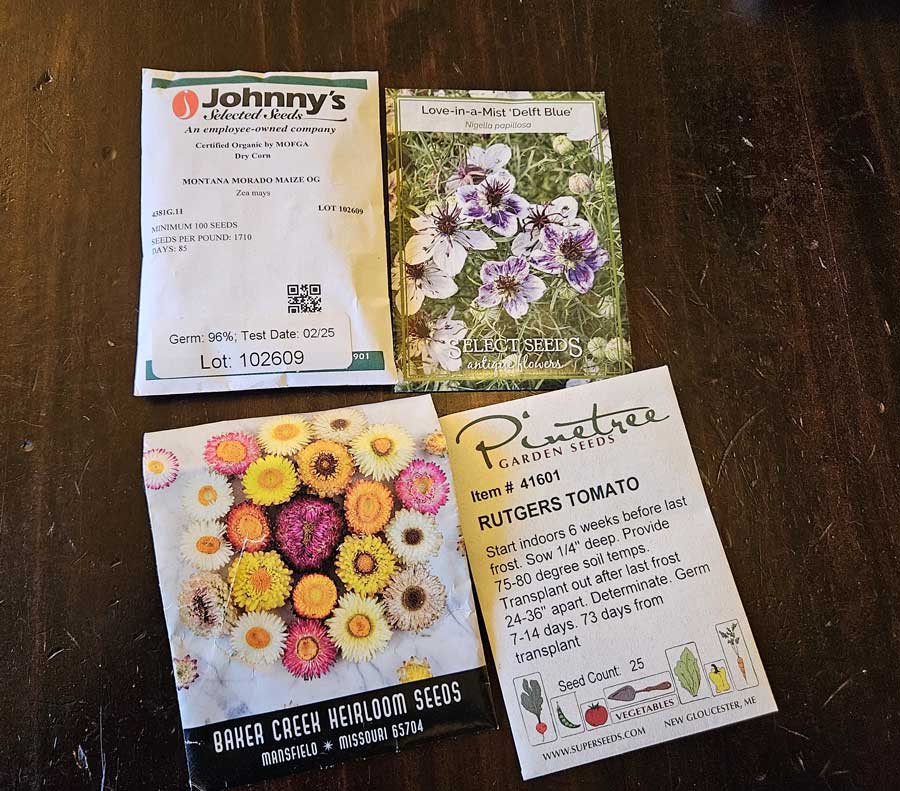
Seed saving can be as easy or elaborate as you want to make it. By saving your own seed you can cut costs, preserve that special variety you love. You can also maintain the seed quality and adaptation to your growing conditions, because plants will genetically impart information to their seeds to help prepare the next generation for the growing environment around them. Your first step is not looking at the plant that is currently in your yard, but the seed packet it came from. I’ll address live plants later.
The Secret in the Seed Packet
For gardeners interested in collecting seeds from their harvest, understanding seed types is essential. Seed packets often indicate if the plants are Open-Pollinated (OP), Heirloom, or Hybrid (F1) seeds. Each of these categories will impact your ability to save seeds for future planting.
Open-Pollinated (OP) Seeds: Open-pollinated seeds grow into plants similar to the parent, allowing for consistent crops. These seeds are typically pollinated naturally and are easier for beginners. Self-pollinating varieties like tomatoes and beans are especially easy to save without worrying about cross-pollination changing the characteristics of the future plant you are saving.
Heirloom Seeds: Heirloom seeds are simply a category of OP seeds that have beenpreserved across generations by gardeners. A new OP variety may become tomorrow’s Heirloom. They offer a way to connect with agricultural history and genetic diversity, akin to a cherished family recipe.
Hybrid (F1) Seeds: F1 seeds are the first generation from a controlled cross of distinct parent plants, designed for optimal traits like higher yields and disease resistance.
However, seeds from F1 hybrids do not produce true-to-type plants and are not suitable for saving.
As for live plants, or seed packets with minimal details, you can look up the variety in seed catalogs and websites to gather information. If you want to save annual flowers you may be disappointed. Many commercial varieties of annual flowers are vegetatively propagated because they can be sterile or produce poor quality or quantity of seeds.
That is why they have the energy to flower all summer non-stop.
Think, petunias, coleus and calibrachoa. There are plenty of annuals grown from seed though, as well as heirloom flowers readily available in the industry.
Control the Crossing
For gardeners and seed savers focused on maintaining genetic purity, you must realize that controlling cross-pollination is essential because when distinct varieties interbreed, the resulting progeny may exhibit undesirable flavors and characteristics.
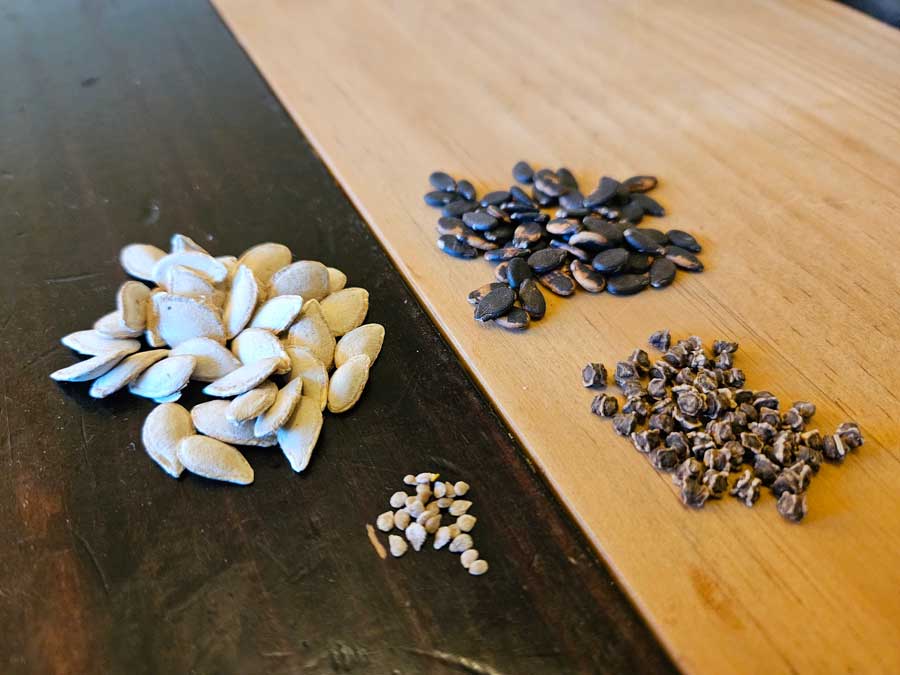
This concern is particularly strong for crops that are readily cross-pollinated by wind or insects, such as corn and cucurbits (squashes, melons, and pumpkins). These unintended out-crosses mean the collected seed will not produce plants with the same characteristics as the parent.
For example, sweet corn of the supersweet (sh2) type crosses with a variety of another type (especially field corn), will result in ears full of tougher and starchy kernels than what you are expecting. For corn this happens in the current year because we eat the seed, so we care about this year’s seed characteristics.
Undesirable cross pollination of squash on the other hand will not be noticed until the seed is planted, and that second generation plant begins producing fruit.
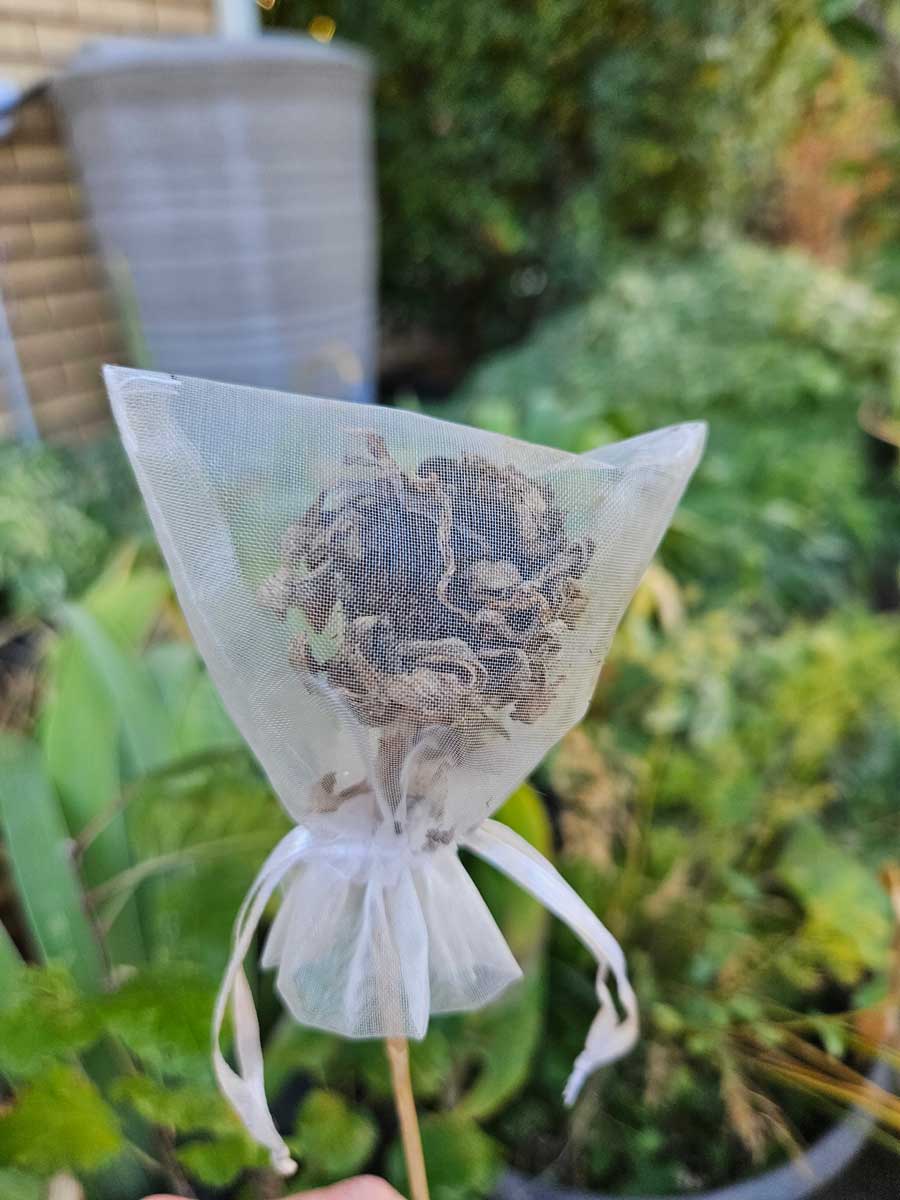
The adventurous seed saver can buy mesh or cloth pollination bags to cover self-pollinating flowers that tend to out-cross. The resulting seeds from this head will be the same color and type as the parent.
Seed Saving Basics — Dos and Don’ts”
- Do choose open-pollinated (non-hybrid) varieties. These breed true.
- Do harvest mature, healthy seed. Let fruits or pods dry fully before collecting.
- Do clean seed before storage. Remove chaff and debris to prevent mold or pests.
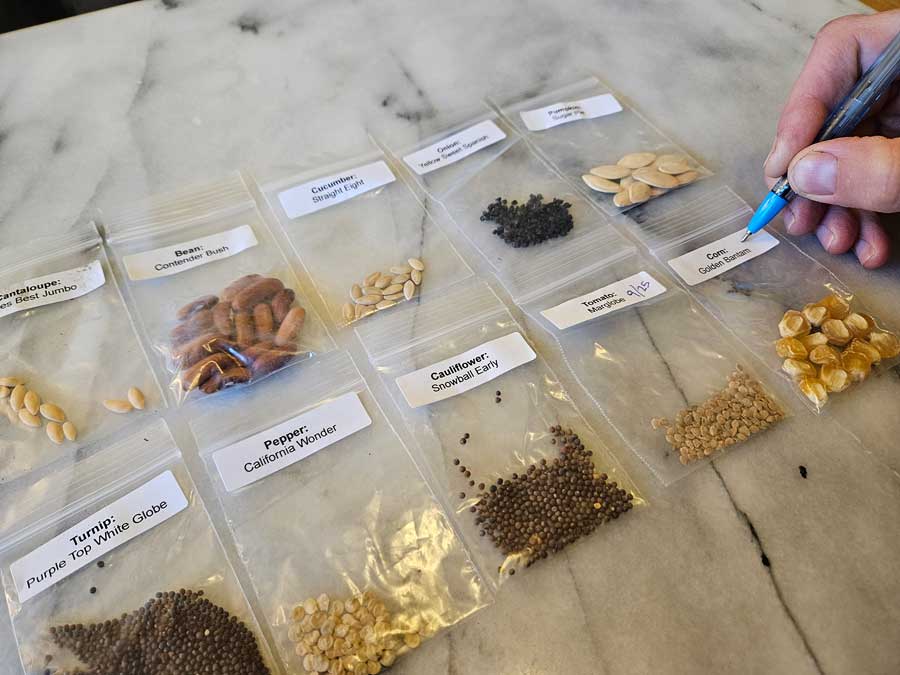
- Do label clearly. Include: crop, variety, and year.
- Do store cool and dry. Use the “Rule of 90”: temperature + humidity ≤ 90.
- Do use airtight containers. Add rice or silica gel to absorb moisture.
- Do isolate plants. Keep 50–100 ft between varieties of cross-pollinating crops.
- Do hand-pollinate vine crops if purity is important. Ie. Pumpkins and squash, melons, etc.
- Biennials produce seeds after winter in the plants second year. Foxgloves are a prime example for ornamentals, and beets, carrots, and onions are examples for vegetables.
- Don’t save seed from F1 hybrids unless you’re ready for variable results.
- Don’t store seed damp or in open containers.
- Don’t mix varieties of the same species nearby (they can cross).
- Don’t forget to rotate seed stock — most seed loses vigor over time.
- Don’t skip drying: moisture = mold.
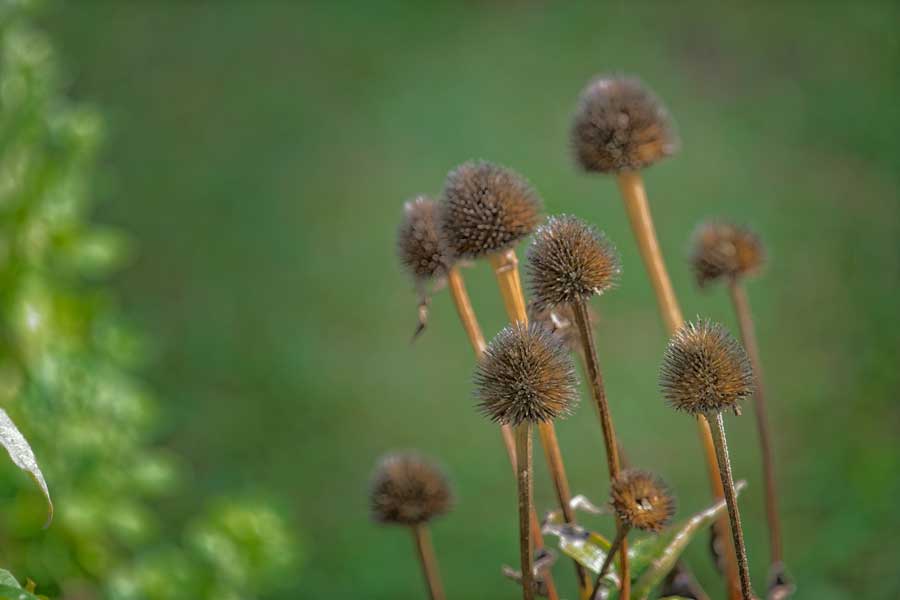 Coneflower heads ready for seed harvest. | James Peacock via Unsplash.
Seed Life Expectancy
Crop Type and typical Viability for Best Germination
- Onions, leeks, corn 1 year
- Beans, peas, carrots 2–3 years
- Lettuce, tomatoes, peppers, squash 4–5 years
- Properly frozen seed Up to 10 years (some species)
“Save a seed, save a story.”
Homegrown seed keeps your garden’s heritage alive. I still remember saving marigold seeds with my mother every fall. They were the very tall ‘Cracker Jack’ variety that for a time was impossible to get at the local nurseries because they weren’t in vogue anymore on a national level.
You can do the same with your favorite varieties.
If you are hungry for more details on seed saving, watch this video from, now retired, Dr. Love, University of Idaho Extension Specialist.
https://www.youtube.com/watch?v=sjNjXISnvAA
Then follow up with some of these great resources: The University of Minnesota has a good beginner guide on seed saving. And for advanced information, The Seed Alliance has detailed guides on particular crops.
The book The Complete Guide to Saving Seeds by Robert Gough is also a comprehensive resource with crop-by-crop explanations.