Preserving your harvest: The essentials for long-term storage
Published at | Updated at
Successfully storing garden produce for the long term requires an understanding that harvested vegetables and fruits are still “alive,” continuing to respire and break down their cellular contents.
The primary goal of any successful storage method is to slow the rate of respiration and, consequently, the degeneration of the fruits or vegetables. To achieve peak flavor and nutrition, it’s essential to harvest at the proper stage of maturity.
General rules for post-harvest care include avoiding bruising or damage, keeping fresh produce out of direct sunlight, and placing it in the proper storage conditions as quickly as possible. Additionally, it’s important to remember that fruits release ethylene gas, which speeds up the ripening of vegetables, so storing them separately is critical.
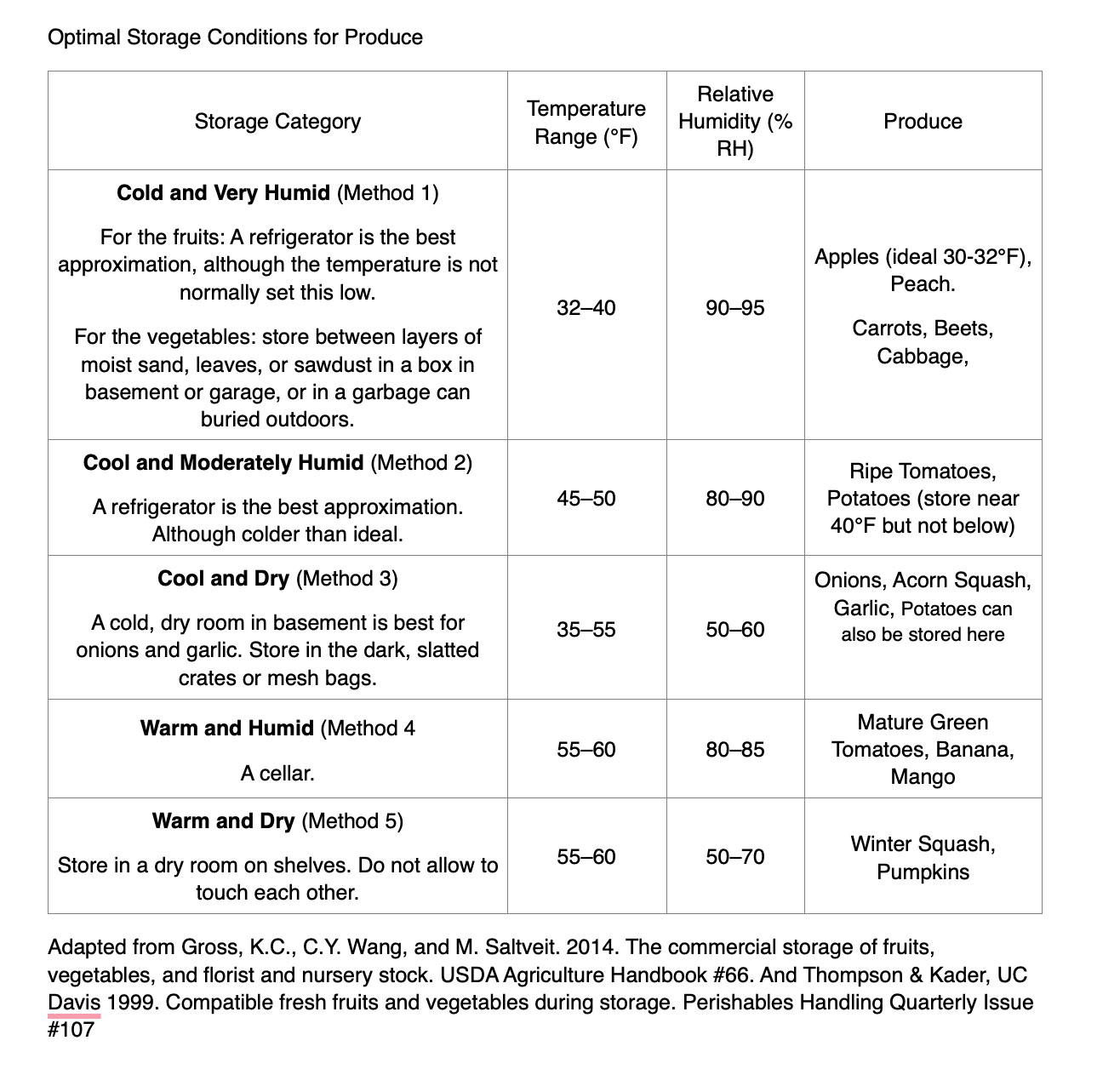
Many crops store best in cold, moist environments, often replicated by the colder parts of a refrigerator or specialized cellar storage. For example, carrots keep well for four to six months when stored in conditions ranging from 32-40°F with 90-95% relative humidity.
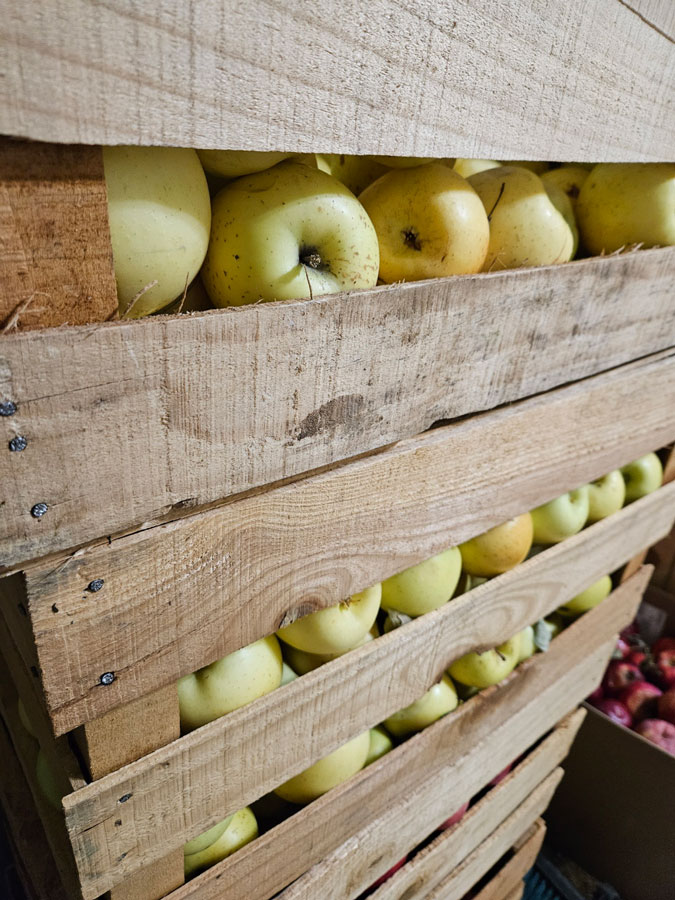
They can be stored outdoors under mulch through the winter or indoors in bins with moist sand or sawdust. Similarly, apples require highly controlled cold, humid conditions, ideally 30-32°F and 90% humidity. Apples should be stored in perfect condition, often placed in perforated plastic bags in the refrigerator to maintain high humidity while allowing for ventilation.
Root vegetables like potatoes also require specific conditions and must be handled carefully to avoid flavor contamination. Potatoes should be harvested after the vines have died down and must be cured first at 60-75°F and 80-90% relative humidity for about two weeks to heal any wounds. Once cured, potatoes should be stored in the dark at 40°F.
It is crucial not to store potatoes and apples together, as potatoes can make apples taste musty. Long-term storage for potatoes is generally achieved in cool, moist conditions (45-50°F, 80-90% relative humidity), though storing them too cold (below 40°F) can cause them to taste sweet.
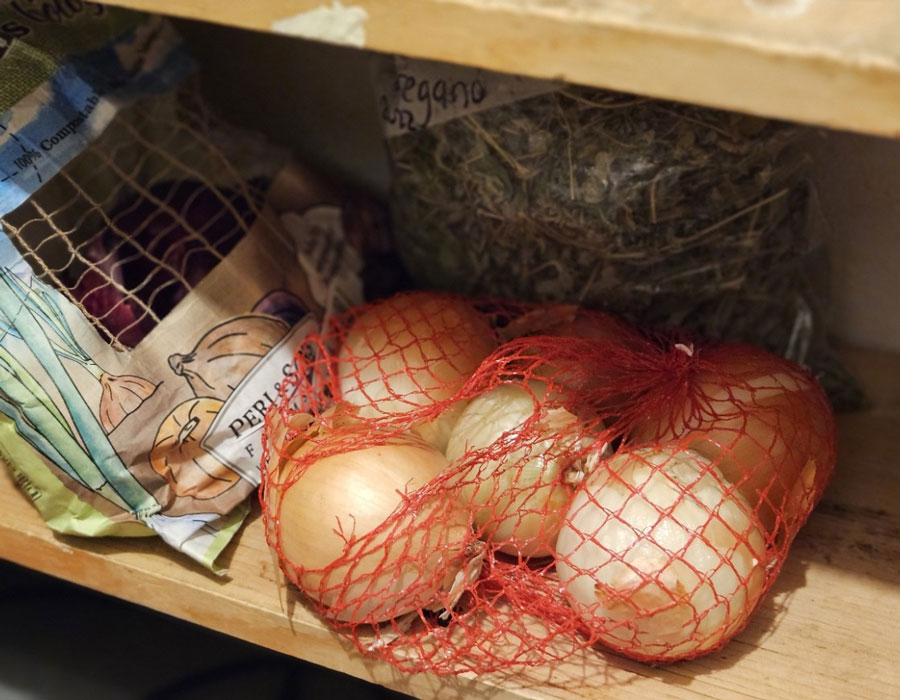
Other garden staples such as onions and winter squash require dry conditions for successful long-term storage. Onions intended for storage should be cured in a well-ventilated area out of direct sunlight for three to seven days at 60-80°F and 40-50% relative humidity until the necks are dry.
Once cured, onions can be stored long-term for one to eight months in cool, dry conditions (35-55°F, 50-60% relative humidity), ideally in the upper 30s.
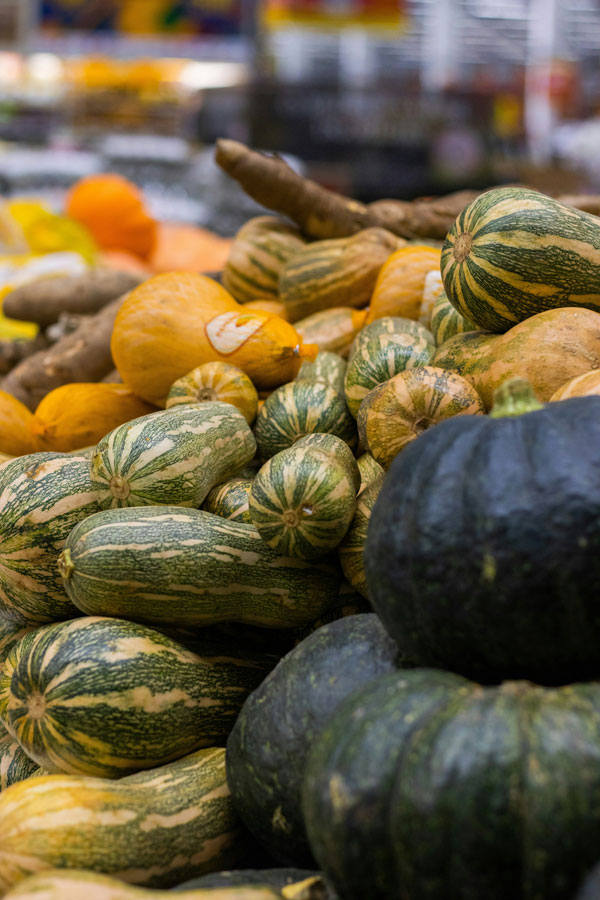
Winter squash and pumpkins are harvested after the skin appears dull and waxy. It’s important to retain at least a 1-inch stem to protect against decay; if the stem becomes corky in appearance, it is a good indicator of ripeness.
These squash require a warm curing process (75-85°F for squash; 80-85°F for pumpkins) for 10 days before moving to warm, dry storage (55-60°F, 60-70% relative humidity), where they can keep for two to six months. Acorn squash is an exception, as curing will toughen it, and it generally keeps for only one to two months.
Tomatoes are particularly sensitive to chilling injury and require different storage approaches based on their ripeness. Fully ripe tomatoes only keep for 4 to 10 days and are best stored in cool, moist conditions (45-50°F, 80-90% relative humidity). However, mature green or slightly pink tomatoes, often picked before a hard frost, should be stored in a warm, moist location (55-60°F, 80-85% relative humidity).
Mature green tomatoes will keep for one to six weeks, depending on their maturity, and can be moved to a warmer environment (68-72°F) as needed to complete the ripening process. It is important never to store tomatoes below 50°F.
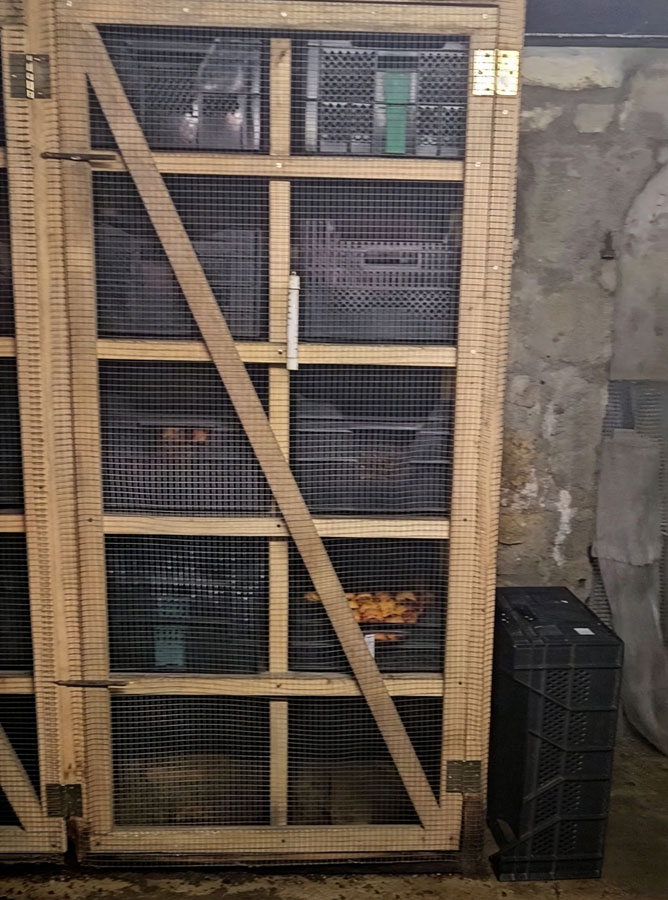
Finding the exact ideal storage temperature and humidity levels in a standard home can be challenging, but household locations such as a refrigerator, basement, or garage can often be improvised to meet these specialized needs. Using packaging like perforated or folded plastic bags helps maintain high humidity, while mesh bags or cardboard boxes help maintain lower, drier conditions. By matching the produce’s needs to the environment and utilizing these techniques, home gardeners can significantly extend the enjoyment of their harvest well into the fall and winter seasons.
If you have something currently stored in the wrong conditions, you can still move it to a better environment or process it into a stable form.