



Idaho isn’t sure mental health cuts will save money long-term, Medicaid director says
Published at | Updated at
Kyle Pfannenstiel, Idaho Capital Sun
REXBURG (Idaho Capital Sun) — Idaho health officials aren’t sure that a Medicaid contractor’s cuts to critical mental health services will end up saving the state money in the long run.
But because Idaho Gov. Brad Little ordered budget cuts across state government to try to avoid a projected budget shortfall — which is now estimated at $40.3 million this fiscal year, even after his cuts — the mental health cuts were needed to avoid other damaging holdbacks, Idaho’s top Medicaid official recently said in a federal lawsuit filing.
If the Department of Health and Welfare were required by a court to pause cuts to specialized mobile teams that treat people with severe mental illness, Idaho Medicaid Deputy Director Sasha O’Connell wrote the agency “will be forced” to look at other cuts.
RELATED | Idaho sheriffs worry Medicaid mental health cuts pose ‘significant public-safety concern’
That would include “more cuts for state run psychiatric hospitals; cuts to payment rates for private behavioral health hospitals, which would risk those private hospital(s) pulling out of participation in the Medicaid program; eliminating youth and adult mental health crisis centers and mobile crisis units; and cuts to other optional services,” she wrote in a declaration in response to a lawsuit by patients in federal court.
Even with the state’s cuts to the mental health services for people with severe illness — which state officials argue still exists somewhat — “these changes may not be avoidable,” O’Connell wrote.
The state’s explanations come weeks after the cuts by contractor Magellan Healthcare to services for people with severe mental illness took effect. Mental health providers and sheriffs warn they will risk public safety.
Idaho Sen. Julie VanOrden, a Republican from Pingree who chairs the Senate Health and Welfare Committee, said there’s preliminary talks to restore funding to cut programs, possibly by tapping into funds from settlements of lawsuits against tobacco and opioid manufacturers.
She hopes that pans out, because other funding options are slim.
“Will the Legislature be willing to look at maybe using some of our ‘rainy day’ funds? Possibly, but it’s going to be very slim, if we even go in and do that at all,” she told the Idaho Capital Sun in an interview.
RELATED | Idaho mental health clinics sue state over Medicaid contractor’s cuts
Idaho faces another lawsuit over Medicaid mental health cut
A Republican legislator grilled Medicaid official on lacking data for the cuts
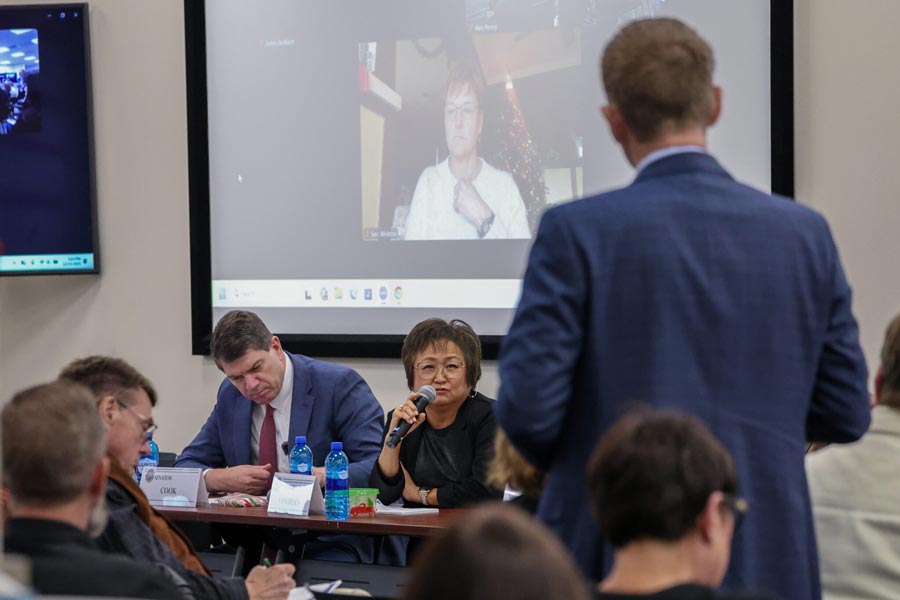
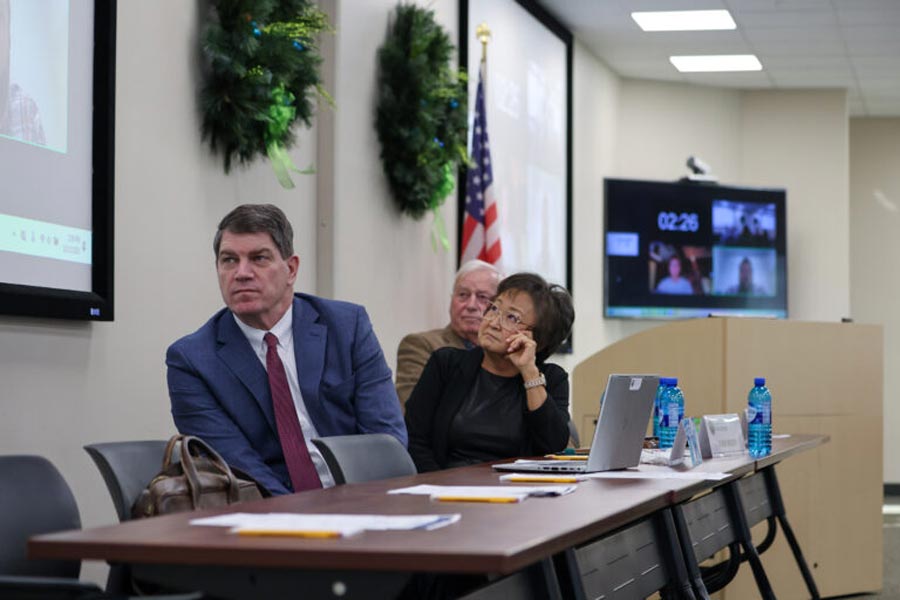
Weeks before the Idaho Legislature will reconvene for the 2026 legislative session, a panel of lawmakers stopped in Rexburg to meet with Medicaid providers for their feedback on the state’s transition to private companies running Medicaid benefits, which is called managed care.
But before the Legislature’s Medicaid Review Panel heard from providers, Idaho Sen. Kevin Cook, an Idaho Falls Republican, pressed for more details on the Medicaid mental health cuts.
The agency doesn’t have data to show the cuts will save costs long term, O’Connell, the state’s Medicaid director, told him. The programs themselves save money in other states, she said.
“The department has seen some evidence in other states that suggest that both of those services lead to decreased costs in the long run for the state,” O’Connell told him. “But given the timeline that we have to pursue budget reductions and the limited choices that we have in the law today, those were the ones that were chosen.”
“I’m assuming you have data that explains that we cut this, and we will save money,” Cook said.
“No,” O’Connell replied.
The agency needs data, Cook replied.
“If we don’t have data that proves that our cuts are saving us money, that it possibly costs us more down the road, how on earth can we say I’ve got data to show that an (managed care organization) can come in and give us a good bid and take over all of our programs?” Cook said.
When providers spoke later in the meeting about the cuts, Sen. VanOrden, the panel’s co-chair, cut them off. She said the meeting was about the state’s shift to managed care, not the cuts.
Ric Boyce, who directs Mental Health Specialists in Pocatello and Blackfoot, was less than a minute into talking before he brought up the cuts — saying they have “already highlighted the vulnerabilities” of managed care.
After VanOrden told him the panel wasn’t discussing cuts at the meeting, Boyce kept trying.
“I don’t think we can talk about how I’d ever implement this without having some understanding of what’s just happened,” he said.
RELATED | Hundreds rally in Idaho Falls demanding better mental health services
Providers, sheriffs worry the public faces safety risk from Idaho mental health cuts
The day before Thanksgiving, staff in Boyce’s office called patients to tell them the services — the Assertive Community Treatment, or ACT, program for people with severe mental illness, and peer support specialists that aid people throughout treatment — would no longer be available, he told the Idaho Capital Sun in an interview.
“We were scrambling to try and get hold of these guys to reassure them that we were not cutting them off,” Boyce said. “We were still going to do everything we could on our end to try to see them. But all of a sudden we had a whole bunch of people in crisis.”
State officials and Magellan say the services in the program are still available individually even though the cuts don’t let providers bill for them together in one “bundled” service. But already, Boyce said he’s had staff quit or cut hours.
“The community is being told that the components of the programs are still there. But at the same time, they’re no longer the evidence-based programs at all,” he said.
The day the cuts went into effect, Idaho Sheriffs’ Association President Samuel Hulse warned the governor and state lawmakers that the cuts — caused by “self-inflicted” budget woes — would risk public safety.
Hulse, who is Bonneville County’s sheriff, told the Sun it’s clear that the Legislature “cut deep enough that they now have a problem.”
Sheriffs run the jails, which he said “are the default mental institutions of the nation.”
“Some individuals, a small percentage, need to be kept incarcerated because we can’t stabilize them. But that’s a very small percentage of people. The rest, with effective services, can be kept stabilized. The sheriffs know this because we live it every day,” he said. “… When you don’t have the other services provided in the community, we know they default into the justice system.”

Idaho Medicaid has few options for cuts, official says
About 200 people in Idaho are on the Assertive Community Treatment, or ACT, program, Magellan Healthcare’s Idaho Executive Director David Welsh wrote in a declaration in response to a federal lawsuit by patients.
Before the governor’s executive order for budget cuts in response to the projected budget shortfall, Magellan “had already received communications from the state’s private behavioral health hospitals indicating that they would pull out of the network or significantly reduce the amount of Medicaid members they serve absent a rate increase, effectively refusing Medicaid participants if Magellan decreased their reimbursement rates,” Welsh said.
Then after the governor’s executive order, he wrote that the Department of Health and Welfare “requested that Magellan identify services that could be reduced to achieve a 4% net reduction.”
His declaration didn’t address why specific services were targeted for cuts. The company also cut mental health provider pay rates by 4-15% that vary by service, after the Department of Health and Welfare cut pay rates for providers and managed care organizations by 4%.
But the state Medicaid director, O’Connell, wrote that if the agency doesn’t proceed with its plans for cuts, it “must consider eliminating more optional Medicaid covered services.” And it has few options of programs to cut under current law, she wrote in the legal filing.
Heading into the next legislative session, VanOrden is worried about the state’s budget situation.
“I’m nervous about it this year, but I’m even more nervous about it next year,” she said, when the budget deficit is projected to grow to more than a half billion dollars.