Local legislator who led trip to D.C. says Idaho’s water supply is priority for our congressional delegates
Published at
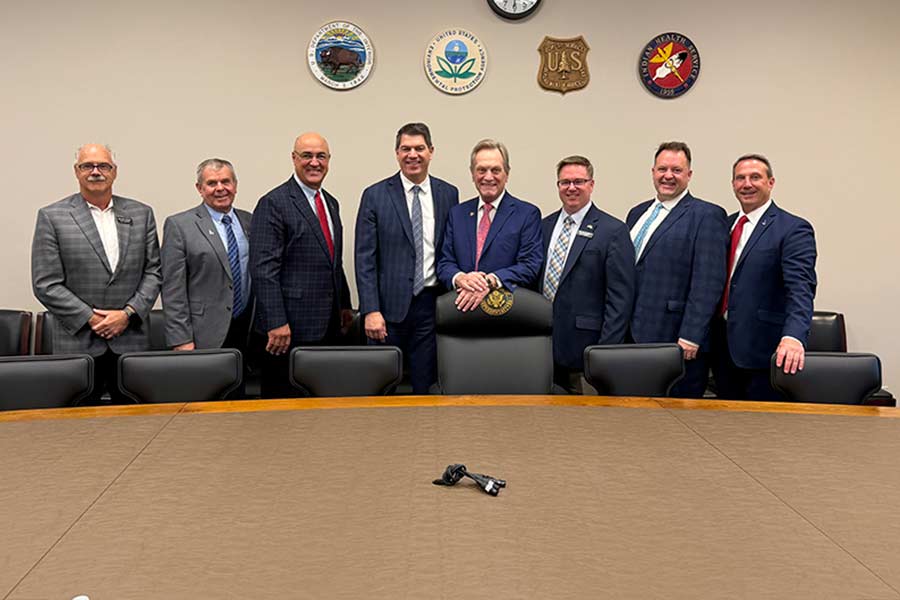
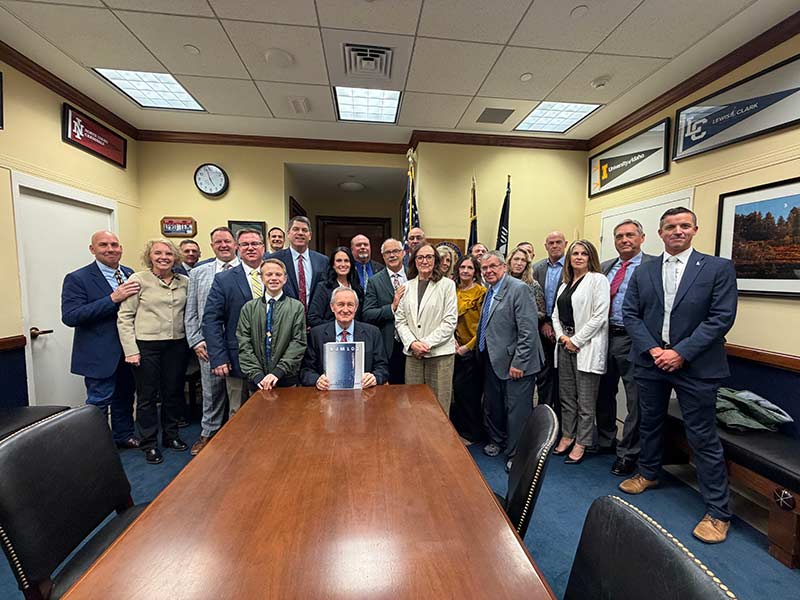
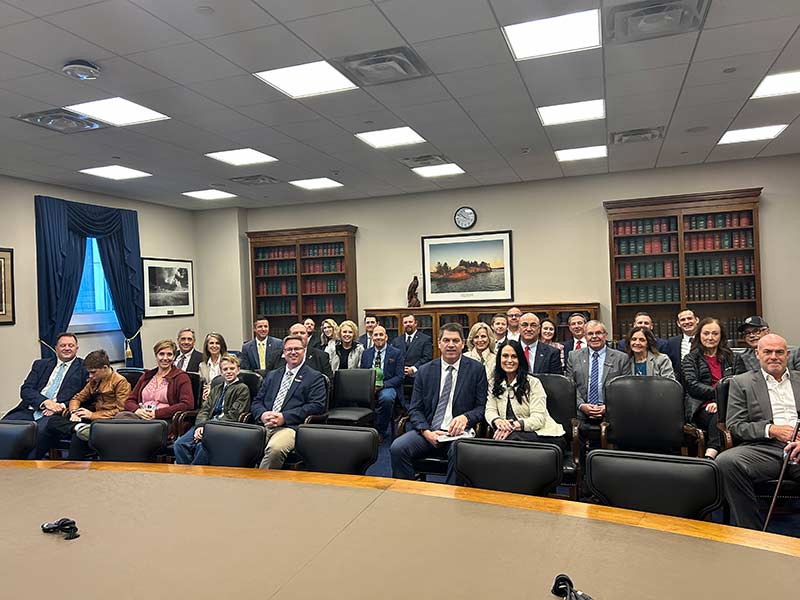
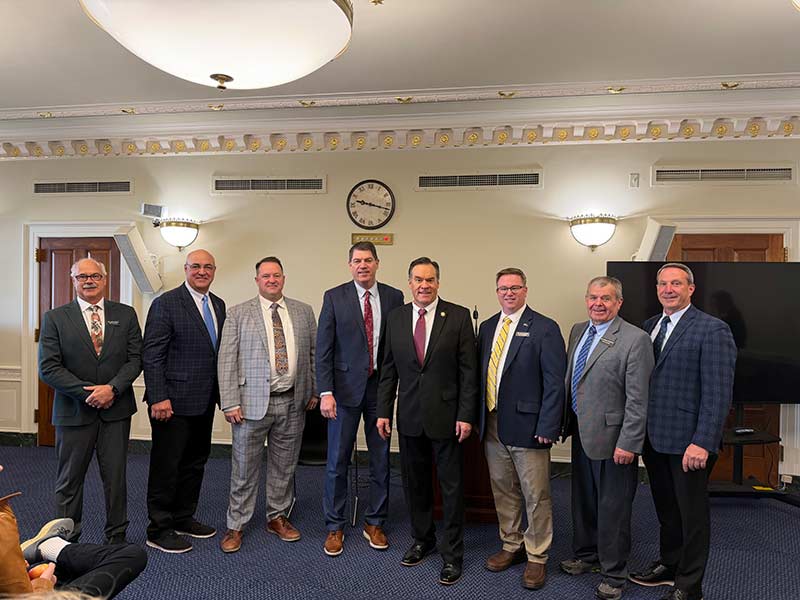
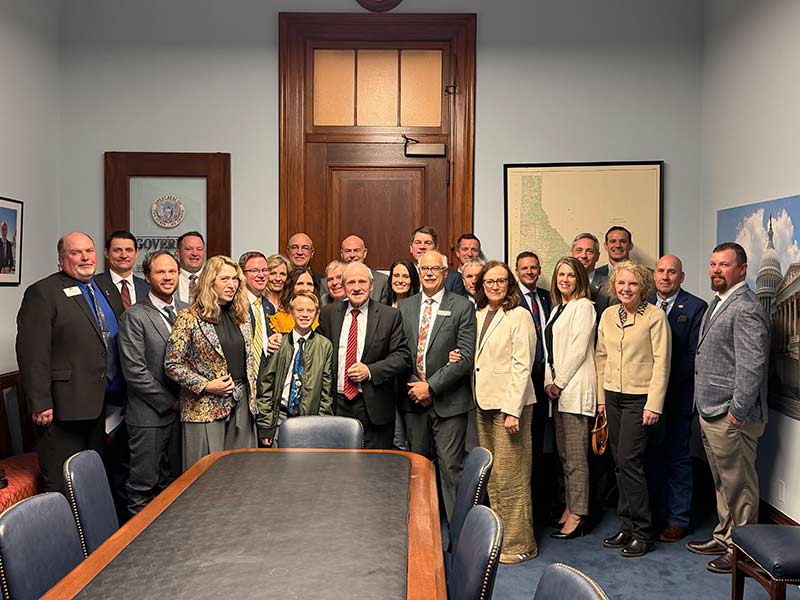
IDAHO FALLS – State Sen. Kevin Cook recently led a trip to Washington, D.C., to meet with Idaho’s congressional delegates about water storage projects.
Cook, who represents District 32 in the Idaho Falls area, was one of seven legislators on the trip last month, along with dozens of groundwater and surface water users across the state.
Since June, Cook has been gathering signatures for a petition showing support for water storage projects. During the 2025 Legislative Session, he and Rep. Rod Furniss, R-Rigby, sponsored a non-binding resolution that was adopted in both chambers. Senate Joint Memorial 101 calls on federal and state agencies to study and develop new water storage projects.
The resolution lists six different potential water storage sites that “could be built safely and economically and … provide significant long-term benefits to the State of Idaho.”
RELATED | Local legislator asking you to sign petition in support of water storage projects in Idaho
Cook accompanied legislators on a trip to the nation’s capital earlier this year to bring it to their attention and get some momentum going. Although they expressed support for his resolution, Cook says they doubted voters would approve of it and told him to “make some more noise” before they did anything about it.
The November trip to Washington was a follow-up to the previous visit. Through his petition, he acquired tens of thousands of signatures and brought a slough of people with him to show Idaho’s Congressmen the results.
Cook tells EastIdahoNews.com the trip “went great” and was a positive experience.
“I don’t know if I could’ve asked for or expected better results,” Cook says. “We thought we’d be lucky to get 10 or 15 minutes with them. They gave us between 30 and 45 minutes. They were very engaged and asked questions.”
Water storage projects have become a key focus of Cook’s platform over the last year. He says water is one of three issues that are critical to Idaho’s future. (He says the other two are artificial intelligence and nuclear power.)
RELATED | Local legislator proposing bill that creates framework for education about future of AI
Despite the productive conversation with federal delegates, Cook says he isn’t expecting quick results and there’s still a lot of work to do before Congress gets involved in funding a water storage project.
“On some of this stuff, they said, ‘Don’t be afraid to break this up into little pieces,'” Cook says. “People east of the Mississippi don’t understand our need for water. They’ve got all the water they can stand and then some. They suggested we try to form a Western States Coalition to (educate people) about it. We thought that was a great idea.”
He’s hoping to see a major water storage project get underway in the next decade. Beyond that, he’s looking into the distant future for many of these proposals to come to fruition.
Cook’s goal is to have 750,000 acre-feet of water storage by 2100.
Josh Foster, the business manager for Vista Valley Ag, which farms more than 5,000 acres in Bonneville County, was among those who accompanied Cook to D.C. He’s also a director for the Burgess Canal and Irrigation Company in Rigby and a member of the Idaho Farm Bureau Federation’s water committee.
Foster says Cook’s longterm goal is a lofty one, but he agrees that more water is needed and it needs to be managed better.
“Where we haven’t been building dams for 50 years, there’s got to be a lot of federal changes in order for that to happen,” Foster says. “I’m hopeful that it can happen with state and federal partnership.”
Storing water in eastern Idaho
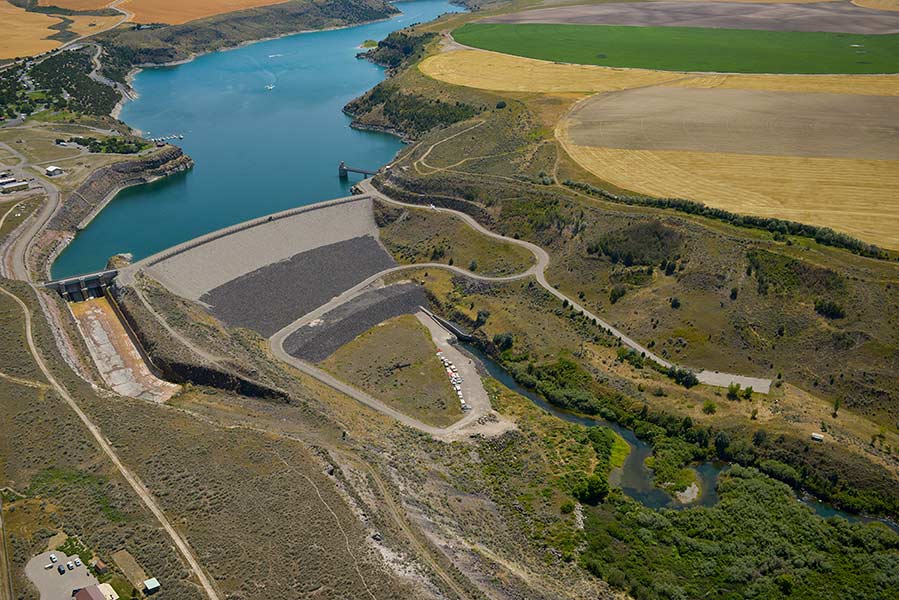
One of the proposals for a potential water storage project in Cook’s resolution is to rebuild the Teton Dam.
“It’s kind of a lightning rod. You bring up the Teton Dam, and people want to talk,” Cook says.
The U.S. Bureau of Reclamation originally built the dam in 1976. It collapsed as the reservoir was being filled for the first time, leading to the historic Teton Dam Flood disaster.
After the disaster, the topic of rebuilding the dam was discussed. It’s unclear why it never happened.
Today, Cook says many people are supportive of its reconstruction. Cook brought letters of support to D.C. from county commissioners and mayors throughout the Snake River Plain who support rebuilding the Teton Dam. Cook says Rexburg Mayor Jerry Merrill and Sugar City Mayor Steve Adams, whose hometowns were in the direct path of the dam, are pushing for it.
“I’ve talked to several engineers that have their fingerprints all over dams in Idaho, and every one of them say we can rebuild it safely,” says Cook. “But we need to do a study. We have 50 years of new technology that can tell us whether or not we should build it.”
Foster says rebuilding the Teton Dam is the most exciting of all the proposals and would have the most impact.
“It passed so much federal regulation to get certified,” says Foster. “We’re closer (to getting a water storage project) with the Teton Dam than anywhere else because we don’t have to start at the ground level with the federal government.”
Foster also notes it would store about 350,000 acre-feet of water — the most capacity of any other project.
“That gets us halfway to our goal right there,” he says.

Cook made a similar point during a presentation with water stakeholders in August. He cited data that shows rebuilding the Teton Dam is also the most cost-effective option, compared to other projects.
Another possible project is expanding the Ririe Dam. The dam, which is managed by the Bureau of Reclamation, sits along Willow Creek about 15 miles northeast of Idaho Falls and about four miles southeast of Ririe. It was built to mitigate flood waters into Idaho Falls.
Throughout its history, Cook says it’s never been used for irrigation and he wants that to change.
“Every fall, we basically empty it instead of holding back water for irrigation,” says Cook. “We’ve asked (our congressional delegates) to support (using it for that purpose).”
This idea was the focus of a board meeting for the Ririe Reservoir on Thursday morning. Foster attended and said they were in phase two of a study to mitigate additional winter water storage for irrigation purposes.
Foster lives in Ririe near the dam, and he’s intrigued with the idea.
“We’re groundwater pumpers on the Ririe bench. We’ve never even touched that water, other than to go boating,” Foster says. “New water rights would have to be created (because it’s never been used for irrigation).”
While Cook is excited about these local projects, he says he’s focused on the entire state and any water storage project is a win for Idaho.
“We’re looking at the whole state of Idaho,” Cook says. “We’re excited about where we’re going.”
Supporting Idaho’s water future
Since the D.C. trip, Cook says the U.S. Bureau of Reclamation has approved a recommendation from the Idaho Water Resource Board to do a study on surface water storage throughout the Snake River Plain.
Over the next two years, Cook says the bureau will study the entire Snake River Plain from the Milner Dam near Burley all the way to Ashton. It will be the largest study the bureau has ever conducted in Idaho and will help identify viable locations for potential water storage projects.
Once the study is complete, it will report its findings to the IWRB to prioritize future projects.
Cook is planning to introduce legislation in the upcoming session to help advance water conservation on the state and federal level. He appreciates the time, support and feedback from Idaho’s congressional delegates.
“Every person on the trip and every politician that we met with has Idaho water as their top priority,” Foster says. “What they uniformly said was, ‘We are in. Direct us on how to help you in D.C. while you guys are back in Idaho.’ That was exciting for all of us to hear.”