



Fact or Folklore: Is Jensen Grove Lake on top of a dump?
Published at
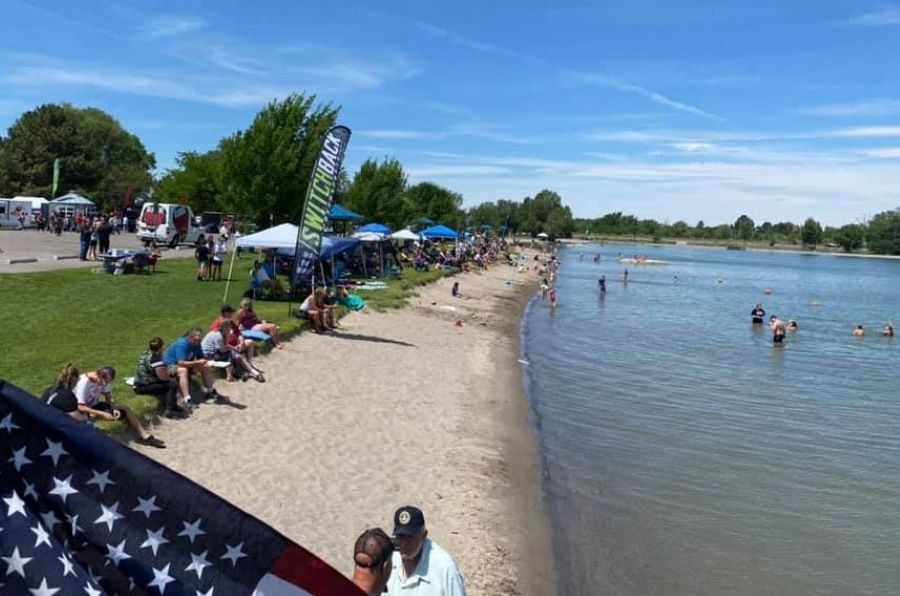
EDITOR’S NOTE: This story is the second of a three-part Fact or Folklore series on Blackfoot in celebration of the town’s 125th birthday. Read our previous story about whether Eastern Idaho State Fairgrounds was really home to POWs here.
BLACKFOOT — It’s one of those hometown rumors that’s never gone away: Was Jensen Grove built on a dump?
Ask almost any longtime Blackfoot resident about Jensen Grove, and you’re likely to get strong reactions one way or the other, or the occasional deer-in-the-headlights look.
The truth, according to city and county officials, sits somewhere between rumor and reality.
“This rumor has been going around for decades,” said Grahm Anderson, Blackfoot’s city administrator and chief financial officer. “Like most rumors, there are bits of truth to it and parts that have been embellished.”
City and county officials stress that Jensen Grove Lake was not created by filling in a garbage dump, and it does not sit on top of a former landfill.
“The lake itself is not on top of a dump,” Anderson said. “Much of that area, where the lake is and where Walmart currently is, was originally a swampy marsh area owned by the Bureau of Land Management.”
The lake was formed by excavating a former Snake River channel, tied to historic changes in the river’s flow through the area.
RELATED | Did the Eastern Idaho State Fairgrounds once house POWs?
Where the rumor comes from
The gray area — and the source of the decades-long rumor — is that Jensen Grove is located next to land that was used as a landfill in the 1940s and 1950s.
“Like most small towns, things weren’t documented very well back then,” Anderson said. “And what was documented, we’ve tried to piece together and make sense of through the years.”
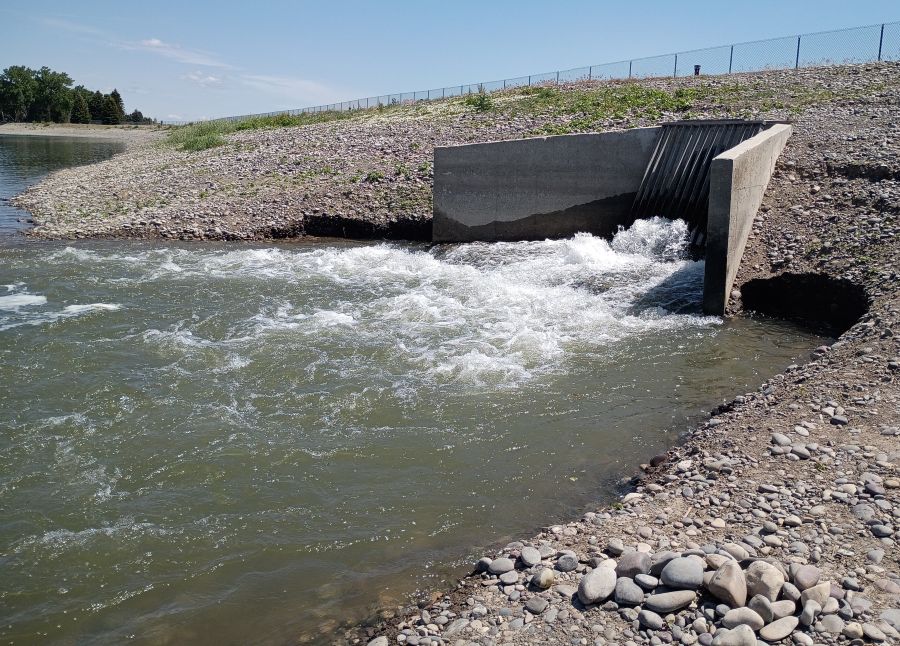
Officials say Jensen Grove Lake was created by altering an old Snake River channel, not by filling in land. Federal and regional water-resources studies indicate that some surrounding floodplain land, rather than the lake itself, was used for landfill before the park and nearby golf course were developed.
Historically, the Snake River did not follow the single, fixed path people see today. It ran across the floodplain, creating bends, side channels, oxbows and low, marshy areas as it shifted over time. One of those former channels ran through what is now the Jensen Grove area.
When flood control, irrigation, and development expanded in the mid-20th century, engineers straightened and redirected the main Snake River channel to better control flooding and support agriculture and infrastructure. Once the river was confined to a new course, some of the old channels were left behind.
The abandoned river channel was excavated and reshaped. Instead of allowing it to naturally fill in or remain marshland, crews deepened and stabilized the former channel, essentially turning it into Jensen Grove Lake.
Excavation crews removed sediment and helped define shorelines, while surrounding land was graded as the area was developed into a park.
A different era of landfills
Bingham County Commissioner Whitney Manwaring emphasized that mid-20th-century landfills in east Idaho were a lot different than what they are today.
Manwaring believes that items that would never be allowed today — including chemicals, weed sprays, large containers and railroad ties — were commonly disposed of in informal landfills, including Blackfoot’s.
“I’m not sure if the landfill was part of the city or the county at the time,” Manwaring said. “Back then, you don’t know what was dumped or burned. Today, there’s a much closer watch and DEQ (Department of Environmental Quality) regulations.”
Because of that history, business developers building in or near former landfill areas took precautions. In some cases, construction included geotechnical fabric liners and base materials designed to block soil vapors and landfill gases, such as methane, from migrating upward into buildings and protect foundations.
Anderson said construction crews working in areas around what is now Jensen Grove Drive, a busy business corridor, have uncovered reminders of Blackfoot’s past over the years.
“Excavation workers dug up big concrete hunks the size of a Volkswagen, old appliances, and interesting artifacts or garbage that reflected a bit of the community’s history,” he said.
To the local gem it is today
The name “Jensen Grove” and the idea of the area as a public space began to take shape in the 1960s and 1970s as Blackfoot expanded and the city focused more on recreation and open space.
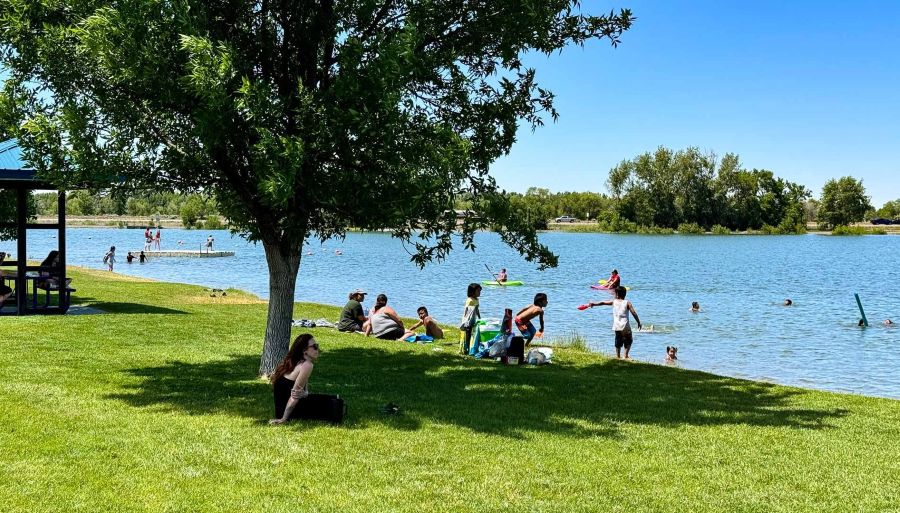
The lake became a popular recreational area in the late ’70s to early ’80s, when swimming access, picnic areas and park features were added.
Local officials say there is no evidence the former landfill areas have affected Jensen Grove’s water quality.
Problems people encounter from time to time — such as swimmer’s itch, algae growth, or murky water — are common in small, freshwater lakes and are tied to natural conditions and water management factors, not landfills.
Today, Jensen Grove stands as a reinvention rather than a cover-up. It is a former river channel turned into one of the region’s most popular gathering places for swimming, water skiing, fishing and summer fun.
In Part 3 of our Fact or Folklore series, we’ll explore one of Blackfoot’s most infamous rumors: Is State Hospital South really haunted?