



After state cut a critical Medicaid mental health service, two eastern Idaho patients died
Published at | Updated at
Kyle Pfannenstiel, Idaho Capital Sun
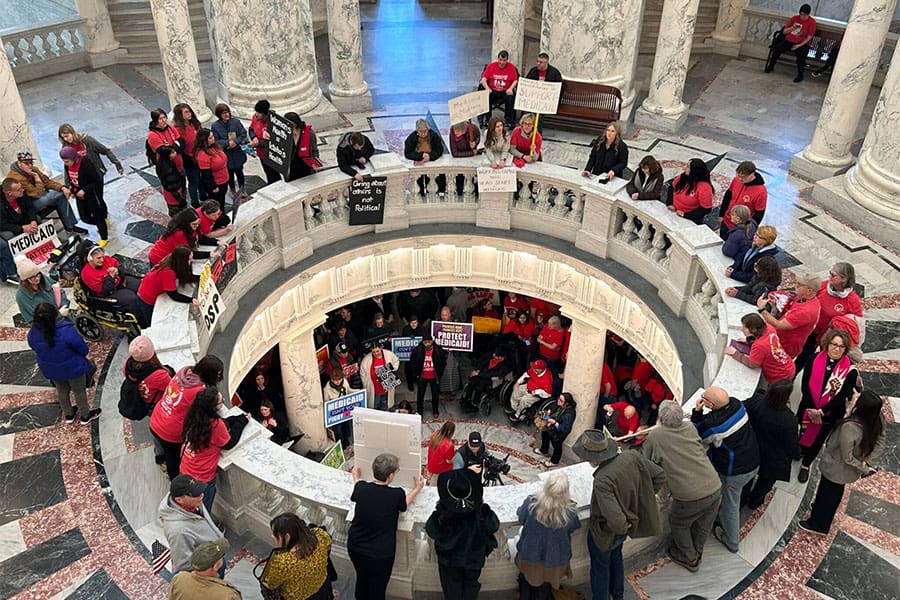
BOISE (Idaho Capital Sun) — Two months after an Idaho Medicaid contractor cut critical mental health services, officials say the fallout that mental health providers warned about is becoming real.
Two patients died, and crisis centers and jails are strained after patients lost access to a program that brings mobile, specialized mental health care directly to people with severe illness, mental health providers say.
Across eastern Idaho, crisis centers are seeing demand spike after the cuts, which also ended peer support services that help people navigate mental health treatment.
Since the cuts, visits to eastern Idaho crisis centers rose 34% in December and 43% in January, compared to the same months a year earlier, said DeVere Hunt, the CEO of Badger, Inc., which runs crisis centers in the region.
“These are individuals that no longer probably have community services that were able to sustain them,” he said in an interview.
But some of the consequences of the cuts might be masked, providers say, because many mental health clinics are still providing some mobile treatment out of their own pockets.
“We’re getting reports from every county and every region in the state that hospitalizations are up, utilization of the crisis units is up, the jails are struggling to maintain, and that we’re getting increases in people being arrested and detained,” said Laura Scuri, who co-owns Access Behavioral Health Services in Boise and runs the region’s local team on the program that was cut, which is called Assertive Community Treatment, or ACT.
Republican lawmaker works to restore cut Medicaid mental health program
Idaho Medicaid contractor Magellan cut the service in December, after Idaho Gov. Brad Little ordered state agencies to cut spending to avoid a budget shortfall. The Idaho Sheriffs’ Association quickly warned that cutting the program would risk public safety, and providers said the cuts would drive up other costs even more.
But as the Idaho Legislature explores cutting state spending more to make room for tax cuts, a Republican state lawmaker from east Idaho plans to propose reinstating the program — and thinking more carefully about future cuts.
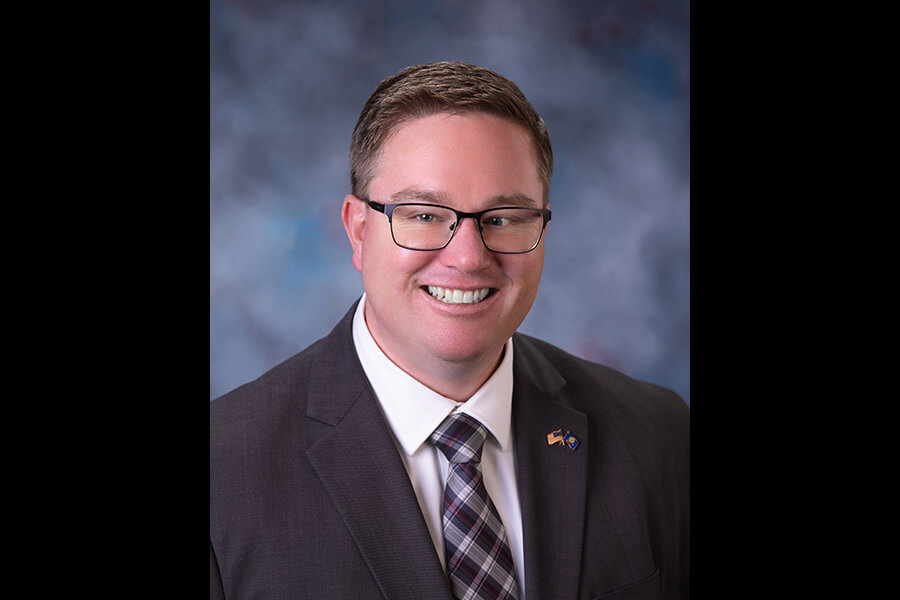
“I wish that we would step back and look at this as not so much cuts to balance a budget, but priorities of what to fund,” Rep. Ben Fuhriman, a Shelley Republican, said in an interview. “And we have a lot of things that we’re spending money on right now in our state that are good, noble. But then there’s a lot of things that we spend money in our state that I believe are directly under the purview of the purpose of government — protecting our citizens, public safety. Those are, in my opinion, one of the sole purposes government exists.”
The governor’s budget chief, Lori Wolff, said preventive services are often the first to go when the state faces a budget crunch — because they are one of few options the state has.
>
“There is not a single cut in Medicaid that would have been easy,” she said in an interview last week. “There’s no program, no service, that if removed, would not have an impact on an actual human being. These are people, and that’s what makes this so difficult.”
Idaho Department of Health and Welfare Director Juliet Charron said Magellan worked hard to connect every ACT patient with a care coordinator. State officials deny the entire ACT program was cut, saying individual services are still available.
“Many, if not most all, of those participants are receiving services,” Charron said in an interview last week.
In December, Idaho Medicaid Deputy Director Sasha O’Connell told lawmakers that state health officials aren’t even sure the Medicaid cuts will end up saving the state money in the long run, the Idaho Capital Sun previously reported.
The first death was preventable, mental health provider says in court filing
Providers say both patient deaths were in different parts of eastern Idaho.
The first death, in December, was preventable, Ric Boyce, the owner of Chubbuck-based clinic Mental Health Specialists, wrote in a court filing in a federal lawsuit filed by patients.
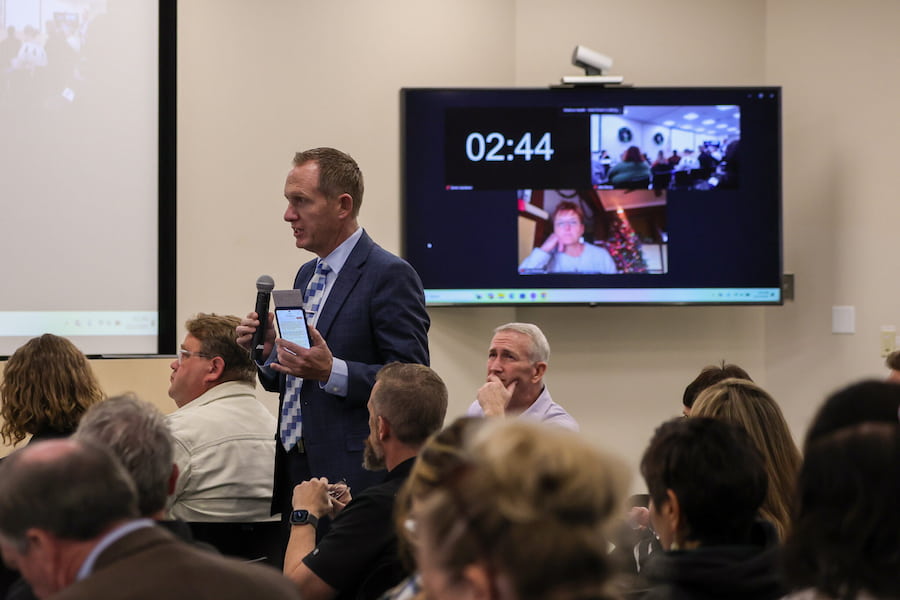
The former ACT patient, in his 40s, didn’t have previously known underlying medical conditions, Boyce wrote. But the patient died of complications following a minor surgical procedure — after declining follow-up medical care or sticking to a treatment plan, Boyce wrote.
If the ACT program was still in place, Boyce wrote his staff would “have identified the increased risk associated with the post-surgical complications” and involve “appropriate medical staff as needed.”
Instead, one of his clinicians visited the patient’s house and saw their funeral, Boyce wrote in the court declaration.
Then that same clinician went to visit the home of another former patient on the ACT program to find them “experiencing an acute psychiatric emergency, requiring immediate transport to a hospital for evaluation and stabilization.”
In an interview last week, Boyce said if the ACT program had still been in place, the patient who died would’ve been under close watch.
“We would have had nurses checking on the individual, and would have been catching developing post-operative or post-procedural infections. And our counselors are very good at encouraging people with psychosis to engage with medical care,” he said.
He said his clinic and many others are still providing some mobile responses — without being paid by the state. He said that has “skewed the numbers” of the consequences of cuts to the program.
“We can’t continue doing this very long without the return of funding. None of us can,” Boyce said.
The second patient death was reported to state officials in January. Details on the death were not immediately available.
‘We’ve cut through muscle, and now we are down to bone,’ says top Idaho health official on Medicaid cuts
Fuhriman, the East Idaho lawmaker, said work to bring back the program has been a team effort with several other lawmakers. Bringing back the program through the rest of this fiscal year would cost $1.3 million, and it’d cost roughly $4 million for every year after that, he said.
The fallout of the cuts is people dying, he said. “And I don’t mean to use that as like a hyperbole or even a radical statement. But it’s just — it’s the reality,” Fuhriman said.
He believes that now is the “perfect time” for the state to tap into the state’s budget stabilization funds, or rainy day funds.
Last week, the Legislature’s budget committee approved 1-2% cuts across state government agencies that are on top of the governor’s 3% cuts. The committee, formally called the Joint Finance-Appropriations Committee, or JFAC, exempted Medicaid and the Department of Health and Welfare.
But Medicaid is still slated to see more cuts. The governor proposed $45 million in cuts to the public assistance program next fiscal year. About half would come from cutting doctor pay rates, and the other half would come from a list of options the governor laid out — such as cutting services for disabilities or removing Medicaid dental coverage.
Charron said that list is all “hard decisions.”
“We’ve cut through muscle, and we are down to bone,” she said. “And these are the things that are left on the table.”
As JFAC refused public testimony on budget cuts, Democrats heard what Medicaid cuts mean to Idahoans
In gearing up for budget cuts, JFAC has refused to accept public testimony — which is when members of the public can tell lawmakers how decisions will affect them. JFAC doesn’t normally hold public hearings like germane committees, but Democrats on the committee requested them. After being denied, Democratic state lawmakers held their own town hall last week.
And for four hours, Democrats heard heart-wrenching stories from some of the more than a hundred people who showed up to the Capitol.
Colleen Kelsey talked about the realities of being a parent to children with disabilities.
“We are on all the time. We sleep with one ear open every night. Anticipate any possible difficulty for community outings and try to ignore the people who stare or scowl because we have a child who is out of control,” Kelsey said. “Forget long trips in the summer, or dating, or going out with friends to a movie — sometimes for years.”
Medicaid covers respite care and training programs that she said “are quite literally the lifelines for parents.”
Sara Cox said she hates that the cut talks reduce her older brother with down syndrome “to a number in the budget.”
Their parents, who are in their 70s, are her brother’s primary caregivers, she said. The proposed cuts are “literally keeping me and my family awake at night.”
“There’s no room for cuts or trims at all,” she said. “Everything is a lifeline.”
In eastern Idaho, regional health officials are also worried
Right now, the cuts might save money, said Hunt, who works with eastern Idaho crisis centers.
“But they’re costing the state more money in the short- and long-term,” he said.
Eastern Idaho behavioral health officials are also worried.
In a letter to Republican state lawmakers and the governor on Jan. 19, the region’s behavioral health board urged leaders “to reconsider these reductions.” And it agreed with the Idaho Sheriff’s Association warning that the cuts pose “a significant risk to public safety.”
“Community-based behavioral health services prevent crises, reduce emergency department utilization, and limit law enforcement and jail involvement,” wrote the board’s chair, Darin Burrell. “Weakening these systems will not result in meaningful long-term savings and will instead shift greater costs and operational burdens to counties, hospitals, and public safety agencies.”
Idaho Capital Sun is part of States Newsroom, a nonprofit news network supported by grants and a coalition of donors as a 501c(3) public charity. Idaho Capital Sun maintains editorial independence. Contact Editor Christina Lords for questions: info@idahocapitalsun.com.