



Concerned by proposed budget cuts, stakeholders for Idaho’s digital learning platform are speaking out
Published at
IDAHO FALLS — As Idaho’s legislature tackles this year’s budget cuts to manage a $40 million deficit, online education seems to be a relief point the state is looking at to save a few dollars.
On Feb. 6, Idaho’s Joint Financial Appropriations Committee approved an addition to the 3% budget cut that Gov. Brad Little had accepted last year, raising it to 4%. This means most state agencies and departments will have to reduce their budgets to meet the state requirements, the Idaho Capital Sun reported, and plan for a 5% cut in 2027, which JFAC also approved.
While the Idaho Department of Education hasn’t seen a budget cut so far this legislative session, that doesn’t mean education in general escaped the storm.
When Gov. Brad Little unveiled his proposed budget for fiscal year 2027 on Day 1 of this year’s session, Idaho Digital Learning Alliance, or IDLA, was on the list with a suggested 39% budget cut — a significant jump compared to other state agencies and departments.
IDLA Superintendent Jeff Simmons told IdahoEdNews.org he learned about the potential cut just a week before the governor’s budget was unveiled. The proposal specifically identifies online education as a possible area for funding cuts, with $23 million taken from online charter schools and $10 million from IDLA.
Part of the reasoning for these proposed cuts, Simmons says, is that lawmakers want to ensure state dollars aren’t paying twice for a single student’s education.
“It’s complicated. … If you’ve ever looked into school funding, you know that that’s a challenging thing to walk through,” he said.
The superintendent explained that a student who attends a brick-and-mortar school for more than four hours is counted as a physical school student, helping the school receive average daily attendance funding. IDLA is funded separately when a student takes a class from its online catalog.
So, theoretically, one student who attends a physical school for part of the day and then takes at least one online class that same day would be counted for funding in both programs. Simmons says that from some legislators’ viewpoint, this appears to be the state paying twice to serve the same student.
But in reality, Simmons says, IDLA isn’t generating additional revenue for a school. The cost of an online course depends on the type of class the student is taking, which Simmons said is typically around $40. According to IDLA’s 2025 Cost and Funding Report, the state distributes $445 per enrollment to the program.
Built by Idaho, cut by Idaho
IDLA was created in 2002 as a statewide resource established by the Idaho Legislature. Looking at overall enrollment today, Simmons said the program expects to serve 57,000 students this year — up from 51,452 last school year.
IdahoEdNews.org reported that conversations last year revolved around using private online options to help educate students.
“IDLA is your only Idaho option. We build our own curriculum based only to Idaho standards. We only use Idaho resident teachers who are Idaho-certified and Idaho resident principals who are Idaho-certified,” Simmons said. “The decisions that we make — as far as what classes we run, programs we build — you know, all of those are based on what our students need.”
According to the 2025 IDLA report, about 51.1% of IDLA users came from rural schools, meaning 1 in 5 rural students have enrolled in at least one IDLA class. That’s compared to urban student enrollment, which is 1 in 9 students.
“Obviously, we see greater usage in the rural schools than we do in the urban schools,” Simmons said. “Especially with our rural schools, it’s not just creating choice and creating access to classes that they wouldn’t normally have at their school; it may also be the only option the district has to meet a graduation requirement.”
As part of the new graduation requirements for students who graduated in 2024 or later, students must take a financial literacy course; those graduating in 2028 or later will also be required to take a digital literacy course.
RELATED | Financial literacy bill moves forward in Idaho legislature
IDLA helps students meet these requirements even when the classes are not offered at their particular school.
Another way IDLA can help fill a gap is in supporting teachers who may need to step away due to an emergency. The online program can take over until the teacher returns or a replacement is hired.
A lifeline
Data from the IDLA 2025 report shows that in the 2024-2025 school year, 391 students in Idaho Falls District 91 enrolled in an IDLA course, totaling 726 credits. Of the 391 students, 66 came from Eagle Rock and Taylorview middle schools.
For the 2025-2026 school year, 458 students are registered for an IDLA class. This number excludes any students from Eagle Rock Middle School, which did not submit the number of students enrolled.
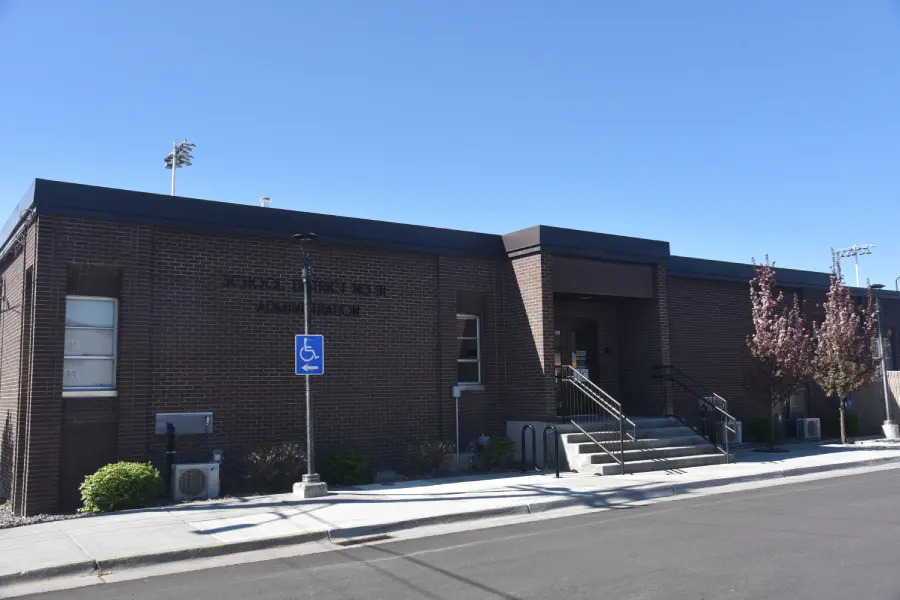
Idaho Falls District 91 Superintendent Karla LaOrange, who is also the vice-chair of the IDLA Board of Directors, says each student has a different reason for taking an IDLA class. She said this type of option is vital, especially with the new graduation requirements.
For a school like Emerson Alternative School, IDLA allows students to take the required digital literacy course despite the school’s limited teaching staff, LaOrange explained. She said the program also has course materials available so that any teacher in Idaho can teach the course in person.
She said it’s important to note that while her school district, in Idaho Falls, has the resources to adapt and find other solutions to meet graduation requirements, that’s just not an option for more rural districts.
Another example is IDLA’s Elementary Launchpad program, which helps K-5 students improve their reading level. LaOrange said she had a conversation with a superintendent from a rural district who uses this program to provide intervention throughout the school year. With funding cuts, it may be challenging to maintain.
Students may also see the impact of potential budget cuts as a reduction in advanced placement courses offered to middle and high school students seeking to graduate early or acquire college credits, she said.
LaOrange stated in an email that, through IDLA, a District 91 middle school student can take a high school geometry course or health and speech courses, providing flexibility in their schedule.
“We don’t have an online school, and we don’t have the ability to offer online classes at this time. What IDLA does is fill in some gaps so it gives flexibility to students who maybe want to take an AP class, but there’s a conflict with another class,” LaOrange said.
While there are still many unanswered questions, LaOrange said the online program is intended to help Idaho’s schools meet Idaho’s requirements. In contrast, a private third-party program may not share that goal. And aside from the investment required to pay for new instructional materials, she said, using a third-party program would mean sending that money to an out-of-state vendor that may offer a course not aligned with Idaho’s values.
“IDLA is seen as a leader, nationally, in online education, (and) to lose so much of that so significantly, all at once, is a tremendous loss to the whole state,” LaOrange said.
On Jan. 6, IdahoEDNews.org published an opinion by the Butte County and Challis School Districts’ Board of Trustees that speaks to why IDLA is a vital resource for their school districts.
“IDLA doesn’t walk away from small districts because class sizes are too small to turn a profit. A student in Challis or Arco deserves the same access as a student in Meridian, even if there are only three kids enrolling in a Dual Credit course. IDLA offers those courses anyway, because access for our students — not profit — is the mission,” the opinion states.