



Things are a bit out of the ordinary at Henrys Fork in February
Published at | Updated at
ST. ANTHONY — With temperatures pushing 50 degrees Fahrenheit on Wednesday, I decided to visit the Henrys Fork of the Snake River to see how different the wildlife may be acting from what we normally see in February.
Starting at the now-destroyed Fun Farm Bridge, replaced by a fancy new one that the farmers can cross over with heavy equipment, I didn’t find any trumpeter swans. There were only a few common goldeneye ducks diving in the iceless water, as there were no icebergs floating down the river.
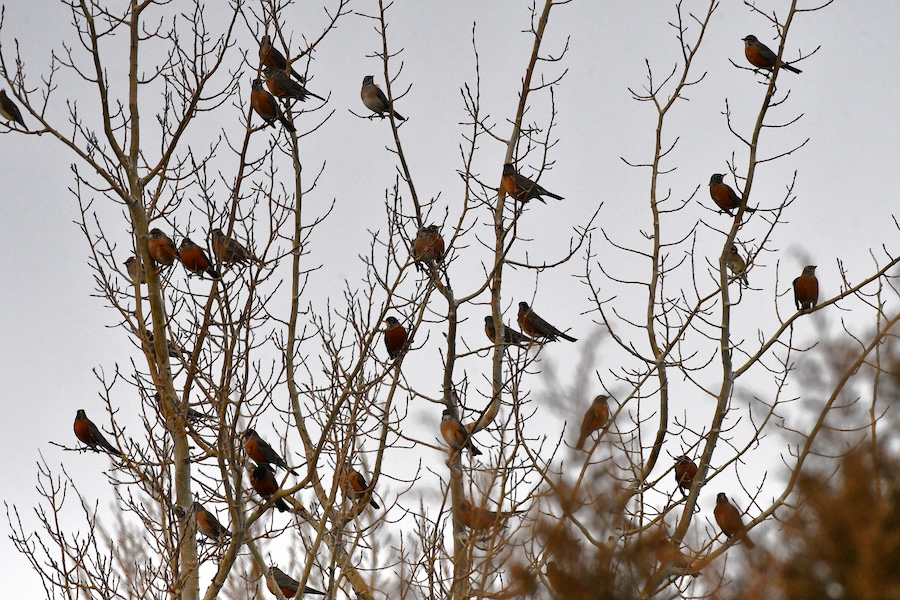
I did not see any Bohemian or cedar waxwings feeding on the hawthorn berries, but several trees were loaded with hundreds of American robins feeding on the juniper berries along the river.
As I was driving along the canal leading to the Chester Dam, I saw a beautiful dark-morph red-tailed hawk soaring in circles, showing off its dark red tail.
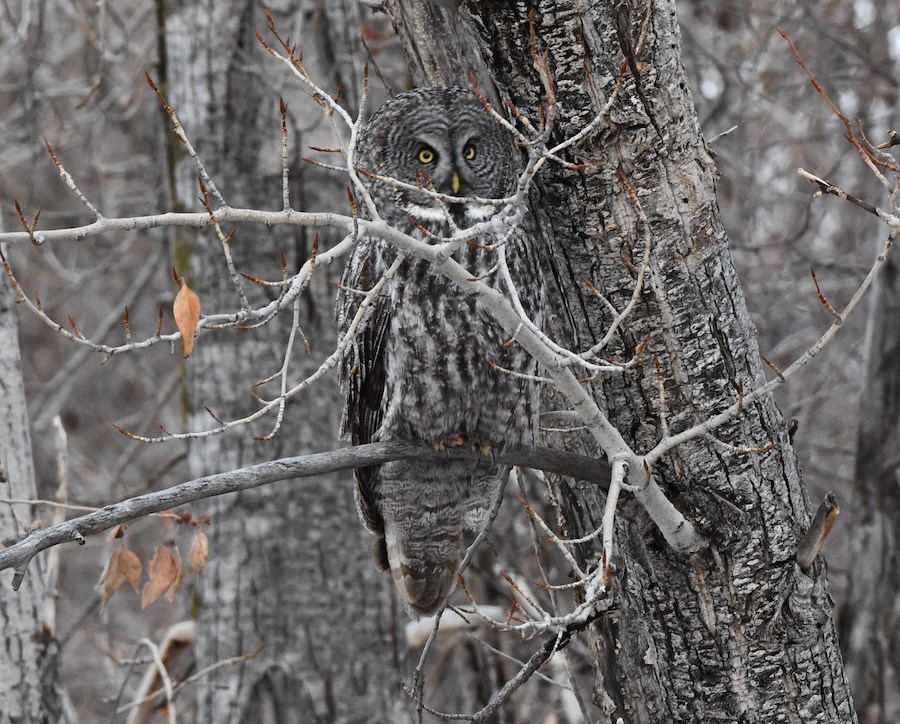
As I got near the dam, I studied the thick cottonwood for any signs of songbirds. What I found were two yellow eyes peering at me — a great gray owl was perched near the river. Its beautifully camouflaged feathers were a very welcome sight for me. It was a rare sighting for this winter, as these owls have not moved out of the mountains due to the lack of snow.
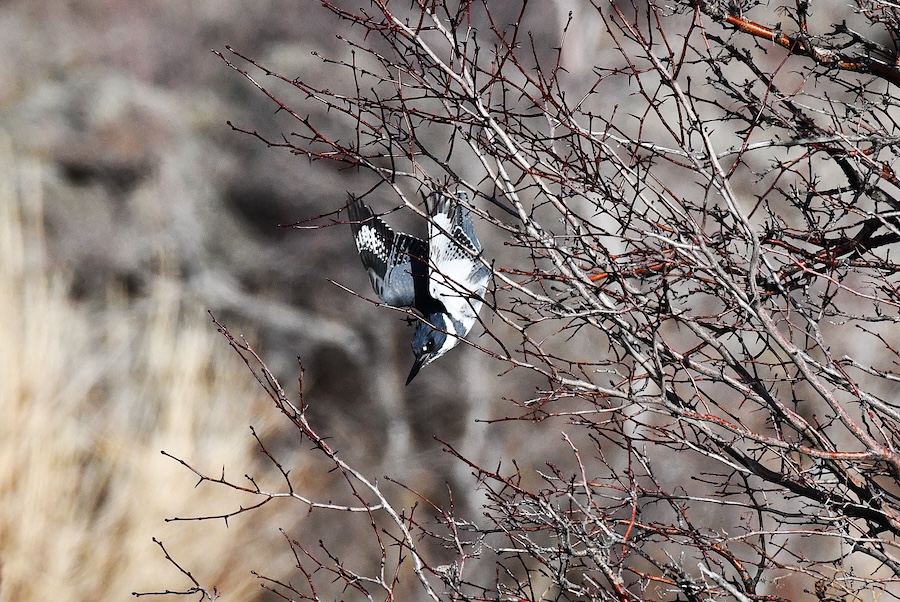
At the Vernon Bridge, I ran into a flock of six belted kingfishers — no turkeys or trumpeters, which are usually seen there during February, just the kingfishers and a few Mallards.
For the first time in years, I was able to drive up the dirt road east of the bridge where the kingfishers were roosting in the hawthorns. They were using the perches to watch the water for small fish to come to the shallows to feed on the hatching insects.
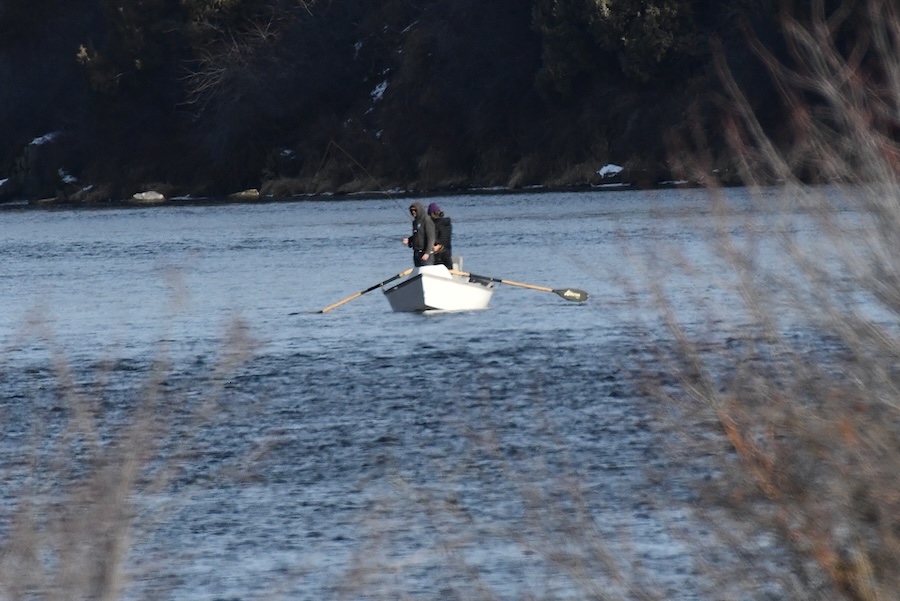
While I was watching the kingfishers, three drift boats floated down the river, interrupting the birds, only to have the birds leapfrog past them. The birds would come back as soon as they felt safe. I did not see any of the fishermen catch a fish, but the kingfishers harvested at least three while I was there.
After enjoying the kingfishers, it was time to head home. First, I swung back to get another look at the great gray owl but found it had moved on.
I ran up there again on Thursday afternoon, but I still could not find it. I did, however, see two trumpeters feeding in the river, with some common mergansers following them.
Ice on Rire Reservoir
This warm winter has been totally unpredictable for finding wildlife, and another thing I have noticed is that the wind has not blown much in the last three weeks. The ice on Ririe Reservoir continues to get thicker along the shoreline, but the middle of the reservoir still has open water.
Bob Johnstone, manager at Juniper Campground, called me and asked me to report that the road into Blacktail Park is closed to cars and trucks, but open for four-wheelers and side-by-sides. Bonneville County officers are writing tickets for those who drive cars and trucks to the reservoir, so please read the sign at the gate and follow the rules.
Bob reports that fishermen are catching perch and trout through the ice at Blacktail. He describes the ice at Juniper as “scary.” There have been several fishermen fishing within 20 yards of the shore, but that is as far as they are going out.
It looks like the meteorologists are forecasting cooler weather for next week, but please be careful if you go out fishing. It is almost time for the ice to start rotting.
I guess we will have to wait until the ice melts to get to the kokanee this year.

Living the Wildlife is brought to you by Yellowstone Teton Territory. Experience 7,500 square miles of untamed wilderness in Eastern Idaho's Yellowstone Teton Territory. Where majestic peaks meet endless adventure, your perfect outdoor escape is waiting. Start planning at YellowstoneTeton.com.