



LIVE UPDATES | Day 2 of Kouri Richins murder trial
Published at | Updated at
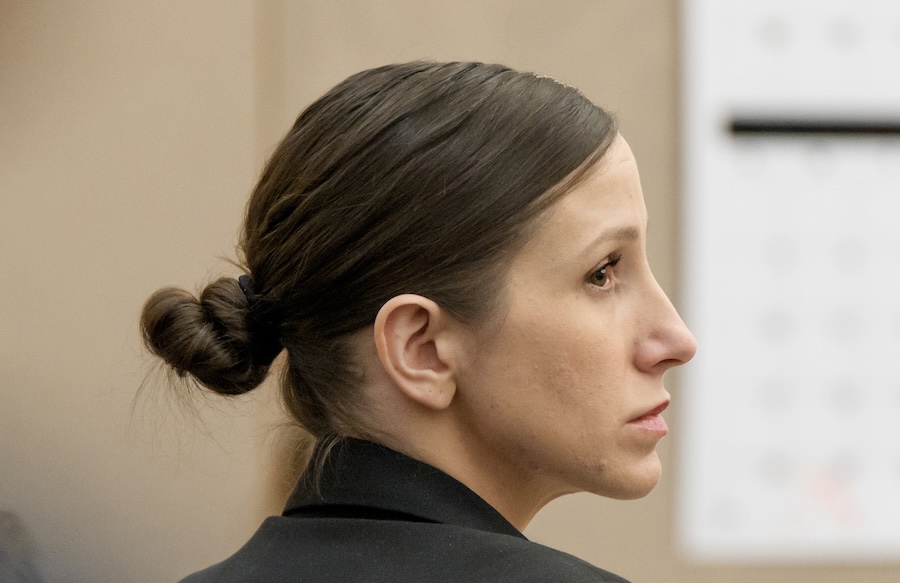
Kouri Richins, a Utah mother of three boys, is accused of fatally poisoning her husband, Eric Richins, in 2022. She is on trial in Summit County, Utah, on charges of aggravated murder, attempted aggravated murder, insurance fraud and forgery.
Today is the second day of the trial. It is scheduled to begin each day at 8:30 a.m. East Idaho News will be posting live written updates all day. Please excuse typos. You can watch the livestream here. The most recent updates are at the top of this page.
4:39 p.m. Court is adjourned until tomorrow morning. Join me for “Courtroom Insider” tonight at 7 p.m. MST on the East Idaho News YouTube channel.
4:35 p.m. Judge says we will wrap up for the day and cross-examination will begin in the morning. Judge reminds jurors not to research the case. Jury exits the courtroom.
4:32 p.m. Prosecutor continues to ask questions about cell phone downloads and the Cellebrite program. Gipson helped in the process of downloading Kouri Richins’ blue iPhone. She did. Prosecutor has nothing further.
4:27 p.m. A Motorola cell phone taken from Carmen Lauber, the house cleaner, was also seized for evidence. Prosecutor asks Gipson what happens after phones are booked into evidence. In 2022, the sheriff’s office did not have the ability to download a cell phone. If they wanted a download, it needed to go to the forensic institution. In early 2023, the sheriff’s office got Cellebrite, a program to download cell phone data.
4:19 p.m. During the November search, a timeline was found inside a kitchen cabinet. Prosecutor goes through other items that were found in the home and seized for evidence.
4:17 p.m. A phone was seized from Kouri Richins on May 8, 2023. The phone was downloaded and admitted into evidence. Another search of the home was done on Nov. 7, 2024. A 3D scan was also done that day and tags were placed on the scan to show where items of interest were in the home.
4:14 p.m. We see a photo taken inside the master bedroom. Gipson shows where the phone was in relation to the bedroom. The detached office was also searched that day. Prosecutor moves to admit a 3D rendering of the office. A document was collected from a cabinet in the office.
4:12 p.m. The search was done on May 8, 2023. Gipson shows an orange notebook that was discovered in the nightstand. Prosecutor says they will come back to it. A blue iPhone was also collected from the nightstand.
4:08 p.m. Prosecutor shows the scan again and now we see tags for a different date when the house was searched. They were looking for electronics and documents.
4:05 p.m. Gipson talks about finding documents in a backpack with Eric’s and Kouri’s names on them. A phone belonging to Kouri was also seized. The witness pulls the phone out. Gipson reminds the jurors that all the items were collected on April 13, 2022. Eric died on March 4.
4:03 p.m. Gipson collected a pair of tweezers that were inside a woman’s jacket. It was taken to the sheriff’s office and sent to the state crime lab. The prosecutor continues to play the scan of the house. We see markings where items of significance were collected.
4 p.m. More gummies are admitted into evidence. They had been photographed, collected and brought to the sheriff’s office for evidence.
3:56 p.m. We see an image of the master closet. This is where a bag of gummies was found. Prosecutor asks Gipson to open the evidence bag containing the gummies. She cuts open the package and we see the gummies.
3:54 p.m. Sidebar is over. Prosecutor asks Gipson to open an exhibit. She asks for a sanitary wipe. She opens the bag. Before she booked them into evidence, they were photographed.
3:51 p.m. We see a photo of a cabinet above the toilet. There are items that were not collected from the cupboard. But two gummies, two chocolate brownies, two clear baggies of gummies and some other items were seized. Prosecution moves to admit the photo, defense objects. Judge asks attorneys to approach the bench.
3:48 p.m. Prosecutor asks to admit more photos. She asks Gipson to open another exhibit.
3:45 p.m. Kathryn Nester asks to see the pills in the bottle. She and prosecutor approach Gipson on the stand. Gipson puts on black gloves and opens the bottle. They inspect the pills.
3:41 p.m. This search was done on April 13, 2022. Gipson is asked to pull out another plastic envelope. It contains pills that were on a basket that were taken from the home. Gipson gets off the witness stand with a mic and points on the TV where the pills were found in the bedroom.
3:37 p.m. Prosecutor plays the video of the 3D scan. We see the camera stop in the master bedroom. Prosecutor asks Gipson to point out the item of significance discovered in the bedroom. It’s a green iPhone. Gipson has the phone with her on the stand. It’s in a packaged plastic sealed envelope. Gipson cuts open the package and holds it up for the jury. It was Eric Richins’ phone.
3:33 p.m. Each of the deputies has a different assignment when they arrive at the crime scene. On April 13, 2022, Christensen’s assignment was photographing and assisting in searching. The entirety of the home and the detached garage was searched.
3:32 p.m. Gipson responded to the Richins’ home eight times. She has been to locations with search warrants and/or crime scenes over 100 times.
3:30 p.m. Gipson and several detectives left the scene around 8:30 a.m. They were the last law enforcement officers to leave. Other searches were later done at the home with search warrants. They were looking for specific items in cabinets, cupboards, doors, etc.
3:29 p.m. Gipson looked through the master bathroom. She did not find any THC gummies. There wasn’t anything like that in the master bedroom either. Gipson did not look through the kitchen. If something of significance had been found in the house, Gipson would have been notified to photograph and document.
3:26 p.m. There was a safe next to the master bed. Inside the safe was firearms, a large amount of cash, ammunition, an empty checkbook and some other items. We see another photo of where Eric was when Gipson arrived. We see a white sheet over his body.
3:24 p.m. Gipson did not see any drug paraphernalia or THC gummies in the house. She took some photos in the master bedroom. Prosecutors asks to admit two photos. We see them on the screen.
3:21 p.m. Prosecution admits a 3D scan taken inside the home. Gipson explains that the camera is passing by two of the kids bedrooms. We see a shared bathroom and now we are in the master bedroom. From there, the camera moved into the master bathroom. Now we see the master closet. Now the camera leaves the master bedroom, goes down the main hallway and we see one of the kid bedrooms. There is a set of stairs that leads to the atteic and to the left is the living room, dining area and kitchen.
3:16 p.m. Gipson went to the Richins’ home on March 4. She arrived around 6:30 a.m. Her primary focus was to document the scene and help Dep. Woody in finding anything that would explain Eric’s death. A 3D camera took an image of the scene.
3:13 p.m. Next witness is Chelsea Gipson. She is the lead crime scene investigation technician with the Summit County Sheriff’s Office. She previously worked as a dispatcher and would help out around the sheriff’s office.
3:11 p.m. Christensen explains what type of tissues were sent for testing. Prosecution has nothing further. Alex Ramos has no questions. Witness is excused.
3:08 p.m. The toxicology lab is next door to the medical examiner. Christensen is trained in histology, which is the microscopic study of tissues and cells. Histology is a different process than regular blood testing.
3:04 p.m. Six samples were being sent out, one was being held back. Christensen took the requisition form and entered it into an online portal for the testing company. A form is then printed out, and the tubes are placed into a plastic vial sleeve. They are placed into a biohazard bag. They’re put in a cardboard box, sealed shut and then an evidence lady is signed and dated. They are shipped via Fed Ex to the testing company.
3:01 p.m. Prosecutor gives forms to Christensen to review. They say Eric Eugene Richins. Prosecutor asks what was requested by the doctor to be sent out. After the samples were collected during autopsy, they were placed into a fridge. There was tubes of blood, eye fluid, urine and other samples.
2:58 p.m. Allyson Christensen is the next witness. She worked as an autopsy assistant and autopsy supervisor in 2022. On March 5, 2022, she was assigned to handle the toxicology samples. Her job was to get them ready and send to labs for testing.
2:37 p.m. Jury is gone, but Kathyn Nester wants to talk about an “altered documents.” Prosecutor explains there was an error in information received. Judge tells defense and prosecutor to talk and see if they can resolve it. Back at 2:50 p.m.
2:33 p.m. Prosecutor finishes questioning. Ramos asks Uhlmer if she had the opportunity to change anything on the death certificate before she retired. She says she was busy closing out hundreds of cases. She says she was not provided with anything from law enforcement that would have caused her to change anything because the investigation was still active. Nothing further. Witness is dismissed. Judge calls an afternoon recess.
2:32 p.m. On June 6, Uhlmer had nothing in her possession to rule it a homicide or suicide with fentanyl, thus she went with not determined.
2:30 p.m. Prosecutor asks Uhlmer if she had any of the text evidence from Kouri’s phone to make her death determination. She did not. She did not have recordings of phone calls from cell phone companies. She didn’t have access to financial documents.
2:27 p.m. Ramos has no further questions. “Enjoy your retirement,” he says. Prosecutor back up and starts by asking about the fungal infection. Kouri told Uhlmer about the infection and she performed testing on it.
2:24 p.m. Ramos asks Uhlmer when she made the manner of death as not determined. It was June 22. Ramos asks Uhlmer if she saw accidental fentanyl overdoses in her line of work. “All the time,” she says. She says the number increased from 2018-2022.
2:20 p.m. Uhlmer asked if she had meetings with the Summit County Sheriff’s Office. She had phone calls with them and may have had some meetings, but she doesn’t remember. Ramos asks Uhlmer if she can ask for follow-up conversations with Kouri to “try to get a little bit more.” She says yes. Ramos says Uhlmer could also ask the detectives if she has some follow-up questions. Uhlmer says she could but “I’m not sure where you’re going with this.”
2:17 p.m. Ramos admits Eric’s preliminary death certificate and it’s shown to the jury. It says the immediate cause of death was drug intoxication: fentanyl. The manner of death was changed from pending to not determined. It has not changed since then.
2:13 p.m. Ramos asks if any THC gummies were located in the gastric liquid. She says she assumed they would have melted by then. She says there was no measurable THC in the other analysis as well.
2:07 p.m. Ramos asks Uhlmer about allergic reactions or any indication that Eric experienced these issues. Not that she could tell. Ramos asks if an opioid drug allergy is possible. She says possibly, but she has never seen it.
2:04 p.m. Ramos asks if she does this with every call. She says they try because sometimes she might be working somewhere else. Kouri Richins called her on March 17 and Uhlmer put the notes in the document. Ramos asks when the fungal testing was done on Eric’s lungs. She says it was likely before the call with Kouri.
2:01 p.m. Ramos refers to a report detailing phone calls with the family. He asks Uhlmer if she put the information into the document. Uhlmer summarized what was discussed in each phone call with a family member and took notes. Her team did the same.
1:59 a.m. Ramos asks about alcohol in Eric’s body and if additional tests were done. Uhlmer says no. Ramos asks if fentanyl was taken along with alcohol. She says that is a question she can’t answer because she doesn’t think they are answerable.
1:53 p.m. Ramos asks how retirement is. She says it’s good and recommends it. He begins by asking what chronic Lyme is. She says with Lyme disease you can get an antibody response that also infects your body as it’s trying to ward off the Lyme infection. You can end up with neuropathy or chronic fatigue syndrome. Ramos asks if it’s painful. She says neuropathy can be painful. It varies from person to person.
1:52 p.m. Prosecution has no further questions. Defense attorney Alex Ramos will now question Dr. Uhlmer.
1:48 p.m. Kouri said Eric was not feeling well before his death. His chest hurt, which could have been part of COVID. Kouri told Uhlmer his mom died of a fungal infection three years prior. They swabbed Eric’s lungs to make sure there was no sign of fungal pneumonia. Uhlmer had another conversation with Kouri and asked if Eric had a history of drug use. Kouri said just THC gummies.
1:45 p.m. Uhlmer asked if she spoke with Kouri Richins. She did and filled out a form after the conversation. Prosecutor asks if she has independent recollection of the conversation. Not specifically, no. Kouri provided a lot of health information and the fact Eric had Lyme disease. He was having problems with neuropathy.
1:42 p.m. Eric’s manner of death could not be determined. There are classifications that manner of death is divided into – natural, accident, suicide, homicide and undetermined. The investigation was still ongoing when Uhlmer retired, so she thought it best for manner of death to be undetermined.
1:39 p.m. Uhlmer relied on information from family members on how Eric had been feeling and acting, information from the death investigator, information from law enforcement and she reviewed medical records. Her opinion of the cause of death was drug intoxication by fentanyl.
1:36 p.m. Uhlmer explains that caffeine and other substances were found in his body. She had questions about some of them because he wasn’t reported as to taking any medications that matched the substances.
1:30 p.m. We now see a report of medications found with Eric’s body. They include testosterone, Doxycycline, Hydrocodone, Disulfiram and Naltrexone.
1:22 p.m. Uhlmer requested a report of any prescriptions Eric was taking. Her team reviewed at least one year of medical history. Prosecution wants to admit a report, defense raising questions about it. Judge calls all the attorneys to the bench.
1:17 p.m. Uhlmer explains how blood and other fluids are taken from the body. There were 15 nanograms per milliliter of fentanyl on Eric’s body, Uhmler says. Fentanyl should not have been present in the body, and the amount in his body was toxic.
1:13 p.m. Additional tests were performed to determine if there were drugs in Eric’s stomach contents that weren’t showing up in the blood tests and to try and figure out where the fentanyl was coming from – orally or injected, according to Dr. Uhlmer.
1:09 p.m. We are back. Dr. Uhlmer, the medical examiner, continues to answer questions from the prosecutor. She is asked about vitreous fluid from the eyes that was sent to a lab for testing. Nothing was detected in the eye fluid.
12:08 p.m. Uhlmer lists several tests that were performed. Eric did test positive for COVID, but had no evidence of pneumonia, like someone who is dying from COVID. We are taking a lunch break until 1 p.m.
12:01 p.m. Nothing abnormal about the muscular, skeletal or endocrine system, Uhlmer says. Samples were sent to the health department. Uhlmer says it would be helpful to look at her report. The prosecutor retrieves it.
11:59 a.m. Eric had 700 ml of pink fluid and food particles in his digestive system. Part of it was detained for testing. Eric’s kidneys, bladder and genitals looked fine.
11:56 a.m. Since Eric had no return of circulation during CPR, the majority of the fluid and foam was from the drug overdose. CPR could still contribute to it, Uhler explains. There were little white nodules on the surface of his lungs. “His work employment history — he was a stone mason, so all that dust that’s created when you’re cutting bricks or blocks if you’re not wearing a respirator or mask,” she says. When asked if this contributed to his death, Uhlmer says she doesn’t believe so. It was significant, and there was no scar tissue in his lungs.
11:54 a.m. There were no external injuries that contributed to Eric’s death, Uhlmer says. Eric’s ribs were broken, likely from the CPR. Eric had the beginning stages of coronary heart disease. This is a common finding in adult men. There was no indication that he had a blood clot form in his heart to cause a heart attack. There was no damage to the heart muscle.
11:49 a.m. Prosecution moves to admit the autopsy report. Uhlmer explains that Eric had defibrillator pads on him. There was blood on his face. She explains when someone is given CPR, it’s not unusual to have blood seeping out of the lungs and having it come out of the mouth. It’s also possible someone could have their mouth injured when a tube is inserted.
11:47 a.m. Blood and other body fluid samples are collected. Eric died during the COVID era, so he was swabbed. Other testing can be performed on a body based on why they think a person may have died.
11:44 a.m. Uhlmer explains what an autopsy is – an external and internal exam of the body. Identifying features are documented. Scars and injuries are noted. Once all the external items are documented, the doctor does a Y shape incision on the chest. The rib cage is removed and all the organs in the chest are examined. They are then removed and weighed to make sure they are within range of normal weight. An incision is made across the top of the head. The brain is examined, then removed and weighed. “Everything is sliced so we can make sure there is no natural disease on the inside” like a heart attack or stroke.
11:41 a.m. Uhlmer performed the autopsy on Eric Richins. It started around 7:30 a.m. She is asked about her medical training.
11:39 a.m. Next witness is Dr. Pamela Uhlmer. She’s a retired medical examiner and forensic pathologist. She was working in 2022. She explains the process of when a body is transferred from a scene to the office. Clerks document the body intake and put the details in a computer.
11:36 a.m. Defense moves to admit an exhibit entitled medications found with body. No further questions. Prosecution has nothing more. Mobley is released.
11:32 a.m. Prosecution has no further questions. Defense attorney Ramos will now ask questions. He asks about the medications in the body bag. He asks if she remembers the medicine names. She says that isn’t her job.
11:29 a.m. Mobley’s job was to break the seal on the body bag. If there are belongings in the bag, they go in the freezer with the body. She breaks the seal with scissors. They will write down the seal number on records, record the clothing the decedent is wearing, any medications with the decedent and any identification. Driver’s licenses are copied and will stay with the paperwork. Medication bottles are put in a locker as evidence.
11:27 a.m. Next witness is Maddy Mobley. She works for the Utah Office of Medical Examiner. She worked as a morgue clerk in 2022. She explains the process when collecting and transporting a body.
11:13 a.m. Taking a 5-minute recess to coordinate witnesses.
11:09 a.m. Judge asks Ramos what the deal was with the prosecution. He says the defense was to be given 24 hours advance notice so their expert could listen in or be present. The next witness is the medical examiner. Prosecution will need around 30 minutes to question the expert. Judge says the defense expert can review the transcript over lunch. Prosecution says if another witness could get here in the next 1-2 minutes, they could re-organize their witness list.
11:07 a.m. Nothing further from defense and prosecution. State has its next witness ready, but the defense wants an expert present. The expert is not responding to the defense’s text message. Judge dismissing the jury to discuss the issue.
11:02 a.m. Nester moves to admit a photo of the nightstand. We see a phone in a charger next to an Apple Watch. There is no wallet on the nightstand. There are some pills on the nightstand. Nester admits another photo showing Eric’s wallet on the nightstand. She asks to zoom in on some white specks on the nightstand. She asks Crnish what those white specks are. He responds, “White specks.” Nester asks Crnich if he had any conversations with Kouri that night. He doesn’t recall.
10:59 a.m. Defense attorney Kathryn Nester asks who was around the body before the compression machine was hooked up. There were two guys with medium builds. Crnich put a tube down Eric’s throat and said there wasn’t any blood on his face at that point. Shortly after, blood showed up in the tube and out of his mouth.
10:55 a.m. Next witness is Sgt. Andrew Crnich. He works with the Summit County Sheriff’s Office but is also a volunteer firefighter. He was working March 4 as an on-call firefighter to assist medical. He responded to the Richins’ home. EMS has already arrived. They asked him to take over airway. He was also asked to look at medications. Prosecutor moves to admit a photo showing Crnich searching in a nightstand drawer to look for any medications. Next image shown is of a pill bottle found in the nightstand. Nothing further from prosecution.
10:52 a.m. Offret asks about the pressure of the compression machine and if there is blood in the lungs, it wouldn’t be unusual to have it come out through the mouth. Offret says that’s correct. Nothing further.
10:50 a.m. Defense done with questions. Prosecution how following up. Offret is asked why she guessed that he may have done an aneurysm. She said because there was a lot of blood coming out of his mouth. Nothing further from prosecution. Defense now asks if it’s unusual to see blood come out of someone’s mouth during CPR. Offret says not normally, but it seemed like more blood than normal.
10:47 a.m. Offret asks about Eric’s blood sugar. It was high. Offret doesn’t know why. Lewis asks Offret if she told Kouri that Eric was deceased. She was. She says it’s “very” difficult to tell someone their loved ones have died. Lewis asks about different reactions people have when they get the news. Offret says she’s seen a variety of reactions.
10:43 a.m. Lewis asks about Narcan. It was administered and helps if someone has overdosed. Narcan was a “last effort, let’s try this,” Offret explains. Offret continued to try and save Eric. They were not able to determine why he was in cardiac arrest at that time. When Offret left the room, she knew Eric was dead. Offret told a deputy she thought it could possibly be an aneurysm.
10:42 a.m. Lewis asks Offret where she got the information that Eric was in cardiac arrest. She says it came from the dispatcher. Offret says Eric’s heart was in a flatline, and there was no electrical activity in his heart. He also was not breathing.
10:38 a.m. No further questions from prosecution. Lewis will now ask questions on behalf of defense. She asks if a prior EMT could have arranged the body. Offret does not know. The call was originally for cardiac arrest. The first thing Offret did was set up the heart monitor and start the machine that does compressions.
10:35 a.m. EMTs performed life-saving measures on Eric. They started a machine that does compressions while EMTs give medications. They gave Eric epinephrine. Offret asked Kouri if Eric was taking any medications. She said he was taking a medicine for Lyme disease. She also said he took CBD gummies. Time of death was called for Eric Richins at 3:58 a.m.
10:32 a.m. Offret responded to the Richins’ home on March 4. Eric was lying flat on the floor. We now see an image of the EMTs working on Eric. Prosecutor asks if anything stood out about Eric’s position. Offret says Eric was at the foot of the bed rather than the side of the bed. He was also very straight – not angled.
10:31 a.m. No further questions from Lewis. Next witness is Park City Advanced EMT Margaret Offret. She has been called out to over 100 death scenes. She has responded to 20-30 drug overdoses over the years.
10:28 a.m. Lewis admits a photo of Eric’s hydrocodone bottle. She asks Pimental searching the bathroom and if he took photos. She asks who came in and out of the bedroom while he was securing it. He says a few deputies and some medical personnel.
10:23 a.m. We see the body camera footage of Pimental in the bathroom looking for medication prescribed for Eric Richins. We see him filling out a medicine log that’s on a counter. Pimental is not doing an entire search of the house because he doesn’t have probable cause or a warrant to search the home. There were no gummies in the bathroom. Prosecution is done.
10:20 a.m. Lewis asks about Pimental’s K9 drug dog. She has no further questions. Prosecutor asks if Pimental was wearing a body camera the morning of March 4. He was. He consulted with his body camera in preparing the report he made in 2023. Prosecutor asks to admit body cam footage.
10:18 a.m. Pimental did not look in the kitchen or bedroom drawers for medications. He asked Kouri where medicine was located in the house, but did not ask her where the THC was. Pimentel stayed by the door where Eric’s body was found to provide scene security.
10:16 a.m. Pimentel left at 5 a.m. He didn’t write a report that night, but wrote a report in January 2023 after being asked to. It was a short report that said he left the medication log on the dresser at the home. He doesn’t recall why he was asked to write a report a year later, but was told by his supervisor to write it.
10:15 a.m. Pimentel says Kouri told him that Eric took THC gummies. Lewis asks why he didn’t ask where the gummies were. He says he collects prescription medications. Lewis asks if he looked in the closet for drugs. Pimentel recalls someone mentioning there was a pill bottle organizer in a bathroom drawer.
10:10 a.m. Defense attorney Wendy Lewis now asking questions. Pimentel is asked where he searched for medicine. He says in the bathroom. She shows him a list of medications taken from the home. Pimentel wrote three medications that were found in the master bathroom.
10:05 a.m. Pimentel went to the Richins’ home on March 4. He was charged with scene security and was asked to start a medical log listing medications found at the scene. He looked for the medicine where Kouri told him they might be. Pimentel was aware that Eric may have taken THC gummies. He did not find THC gummies anywhere.
10:04 a.m. Next witness is Summit County Sheriff’s Office Deputy David Pimentel. He’s a patrol deputy. Prosecutor asks about the chain of command in the sheriff’s office.
9:49 a.m. Morning recess until 10 a.m.
9:44 a.m. Ramos asks a few follow-up questions on Larson’s report and finishes. Prosecutor has some follow-up. Asks if there is an inventory sheet that is included with the body. There is an electronic list that the medical examiner can view. The sheet would include medications. Prosecutor asks about Larson’s meeting with the Summit County Sheriff’s Office and who was there. Nothing further from prosecution.
9:39 a.m. Ramos shows Larson the report she wrote at the scene. He asks her where she got the information. She says it came from other investigators on the scene. Ramos says she doesn’t know how truthful the information is because it came from others. Prosecution raises an objection. Judge calls for a sidebar.
9:36 a.m. Larson met with the Summit County Sheriff’s Office a year ago today. She was employed as an OME investigator but was at a different jurisdiction. The sheriff’s office asked her to come back to discuss what was in the garbage. Ramos asks about Larson about her clarifying her involvement with Kouri. Larson says they spoke in a bedroom that morning, and Kouri was crying with her hands on her face. Larson gave her contact information of who she should contact.
9:32 a.m. Prosecution has no further questions. Defense attorney Alex Ramos will now question Larson. This was the first crime scene she showed up to. Ramos asks what an OME (Office of Medical Examiner) investigator does as far as taking photos, identifying the deceased, gathering prescriptions, etc. Ramos asks about Larson looking in the trash cans. She says she was asked to do it. Ramos asks if it was odd. She says it didn’t seem odd at the time.
9:29 a.m. We see a photo of the tag used on the body bag. Medication with Eric’s name on it and his driver’s license was included with the body bag. We now see a photo of the body bag at the Medical Examiner’s Office and the tag looped between the two zippers on the bag. Larson steps down from the stand to point to a monitor showing how the zippers were attached with the sealed tag.
9:26 a.m. Larson says once the body is placed in a body bag, there is a tag that goes through two zippers so it can’t be tampered with. Each body bag and person has a unique number.
9:22 a.m. Larson is asked if she looked for evidence out in the open around the home. She didn’t. She doesn’t remember taking any medication bottles. Prosecutor asks to admit photos of Eric Richins’ driver’s license. Larson says the photo on the driver’s license matched the deceased.
9:20 a.m. Larson was asked to look for any sign of alcohol in the home. She looked in three garbage cans throughout the home. She did not look in drawers or cupboards. “My job as the medical examiner investigator is to go and check the body.” Larson does not recall seeing anything in the master bedroom or bathroom garbage cans, but in the kitchen, there were coffee grounds, a newspaper, and a ginger beer bottle in the trash can. Larson remembers the Cock N Bull ginger beer bottle because it’s something her dad kept on hand when she was a child.
9:15 a.m. Next witness is Cameron Larson. She’s an evidence technician. She worked with the medical examiner. Larson responded to the scene the morning Eric died. The paramedics had been working on Eric. He had an AED on his chest. Larson worked with Chelsea Gibson and Detective Woody from the Summit County Sheriff’s Office.
9:11 a.m. Ramos has follow up questions. He stresses that Nguyen had never met Kouri and doesn’t know what she was feeling that morning. Nguyen says that’s correct. Questioning is done.
9:09 a.m. Prosecutor asks Nguyen how many death crime scenes he’s been to. He says “a lot.” More than 30. Prosecutor asks if Kouri’s reaction is similar to other death scenes he’s attended. Nguyen says no. “Every time I spoke to Ms. Richins, her face was in her hands and I couldn’t see her face. At one time, I even leaned down to look and see her emotions, but it was just a little abnormal.” No further questions.
9:06 a.m. Ramos say the scene was not secure. Nguyen says it was semi-secured. Ramos asks to read the document and find, “semi-secured.” It’s not on there. Ramos says, “I have an apology and a thank you for there. I apologize for putting you on the spot and thank you.” Ramos is done. Prosecutor will now re-direct.
9:04 a.m. Ramos asks when you should photograph a scene. Nguyen reads from the paper – “after it is secure.” Ramos asks about the first photo you should take. Nguyen says you should place a placard with the case information. “Did you do that here?” Ramos asks. Nguyen did not. Ramos asks him about a point on the paper. It says do not disturb the scene. “That’s very important, you would agree?” Nguyen says yes.
9:01 a.m. Ramos gives Nguyen a paper and says he wants to discuss six things with him. He asks what needs to be done in a death investigation. Nguyen reads from a document that the family needs to vacate the scene to a comfortable location outside or another family member or friend’s house. Ramos responds, “That wasn’t done here, correct?” Nguyen says correct.
8:57 a.m. Ramos asks about Kouri’s voluntary statement. He asks if there are different purposes for voluntary statements. Nguyen says yes. Ramos lists examples of when there might be different reasons to give a voluntary statement. Ramos asks Nguyen why he was the intial officer even though he was the third one to arrive. Nguyen says it’s because it was his zone.
8:52 a.m. Ramos back to questioning Nguyen. He shows him the document again and asks about Kouri saying she got into bed. She didn’t feel Eric breathing. Ramos says that information was not given to Dep. deBotelho. Nguyen says that’s correct. Ramos asks if Kouri was emotional and upset. Nguyen says she was. “That’s common, right? That’s not unexpected for someone who just lost their husband, correct?” Ramos asks. Nguyen says that’s right.
8:47 a.m. Ramos gives Nguyen a document that has information about the call to Kouri’s house. He asks Nguyen what he told another deputy about what Kouri had told him when Nguyen spoke with her the morning Eric died. Prosecution asks to approach the bench.
8:43 a.m. Ramos asks Nguyen how long he was at the home along with Det. Woody. Nguyen says he arrived at 3:40 a.m. and left for the station around 5:49 a.m. based on the dispatch log. But another record says he left at 5:41 a.m. Ramos points out an 8-minute discrepancy. Ramos says Nguyen and Woody were at the crime scene together for approximately 24 minutes. Nguyen explains that it could be 24 minutes or more or less because it all depends on who is recording the times on the crime scene log.
8:42 a.m. Nguyen back on the stand. Ramos says he has six Post-it notes of things he wants to talk to the deputy, and “I want to be fair.” He gives Nguyen some papers and asks if the deputy recognizes them.
8:40 a.m. Jury now in the courtroom. Sidenote: Kathryn Nester has another high-profile client scheduled to be in court this morning at 10:30 a.m. Tyler Robinson, the man accused of killing Charlie Kirk, has a virtual hearing. The judge in that case will decide if prosecutors can remain on the case. Click here for more information.
8:34 a.m. Court experiencing tech issues. Judge apologizes and says it will take five minutes to get things sorted out.
8:31 a.m. Parties agree the chain of custody issue may not actually be an issue. Judge will now invite the jury in. He asks for Summit County Deputy Vincent Nguyen to be brought in. Nguyen will continue to be cross-examined by defense attorney Alex Ramos.
8:27 a.m. We are on the record. Jury is not in the room yet. Members of the media are seated and the public is being escorted in. Judge Richard Mrazik is asking defense attorney Kathryn Nester about the chain of custody issues with a phone. Nester says they need the person who took the phone and the person who did the extraction on the phone.