



Looking Back: Local judge tests out ‘drunkometer,’ and over 100 pronghorns hit and killed by train
Published at | Updated at
IDAHO FALLS — EastIdahoNews.com is looking back at what life was like during the week of Feb. 16 to Feb. 22 in east Idaho history.
1900-1925
AMERICAN FALLS — An American Falls man returned home after being away and found his wife dead, the American Falls Press reported on Feb. 19, 1910.
Dr. L.R. Drake left early in the morning, and when he came home that evening, he found his one-year-old child asleep on the floor and his two-year-old playing “as though nothing was the matter.” He found his wife in bed, and the paper said she “evidently… passed peacefully away.”
There was a bottle of aconite on the kitchen table, which led to the belief that Mrs. Drake, who hadn’t been feeling well for a few days, either took an overdose of the drug or took it by mistake, thinking it was something else. A coroner’s inquest was held, and the mother’s death was ruled accidental.
Mrs. Drake was 22 years old, and the paper said she had a “cheerful disposition.” Both Mrs. Drake and her husband were “highly esteemed” in their community.
“Her married life was happy, and to her friends, she frequently stated that she had all she could wish for,” the article reads.
Mrs. Drake was buried in the Falls View Cemetery in American Falls.
1926-1950
RIRIE — Mail was being stolen from mailboxes in Ririe, and a car used in the mail thefts had been found, The Rigby Star reported on Feb. 19, 1948.
Ririe school bus drivers Harvey Harmon and George Lovell reported to the sheriff’s office that they saw “broken mail” scattered along the highway. The paper said “serious criminal charges” would be filed against the person or people responsible.
Officers later reported they were certain that a car stolen from the Uptown Motor Court in Idaho Falls, which was recovered in a Rigby alley, was used in the mail theft. The car belonged to Harold G. Blumenthal, a Pocatello salesman.
Inside the car were cancelled checks written by Mr. and Mrs. D.H. Killian. Mr. Killian reported that the cancelled checks mailed from his bank had been missing. Also found inside the car were blankets and other items reported stolen from cars parked in front of a Rigby LDS church building.
1951-1975
POCATELLO — A local judge was going to drink one bottle of beer on an empty stomach to find out if the “drunkometer” registered him as intoxicated, the Idaho State Journal reported on Feb. 17, 1952.
The paper said, “in the interest of science,” Judge R. Don Bisilline was going to drink the beer and be a “human guinea pig” to settle an argument.
The judge said that if he drank one bottle of beer right before dinner, he would be too intoxicated to drive a car. He said that one beer would also show on the drunkometer that he was “unfit to drive.”
Lt. Alfred Nogo, a state police officer, believed the drunkometer would not show the judge was “unfit to drive” after consuming only one bottle of beer.
Nogo was invited to check the results once the judge had finished drinking the beer.
1976-2000
AMERICAN FALLS — Over 100 pronghorns were killed after a Union Pacific train struck them, the Idaho State Journal reported on Feb. 19, 1976.
The incident happened 15 miles west of American Falls late in the evening. Don E. Perkins was the engineer of the train that was headed to Nampa when it hit and killed over 117 pronghorns.
“Even if I had taken the extreme emergency action of trying to stop the train, I wouldn’t have been able to slow it down more than five miles per hour, and the end result would have been the same,” Perkins said.
He said the train was traveling at about 70 miles per hour when crewmen spotted the pronghorns on the tracks about 500 to 1,000 feet ahead.
Perkins recalled that the animals were running down the middle of the track and didn’t make an effort to run off to the sides as the train approached.
“There was nothing I could do to avoid hitting them,” he stated. “A person would have had to have been there to experience it. I got ill to my stomach.”
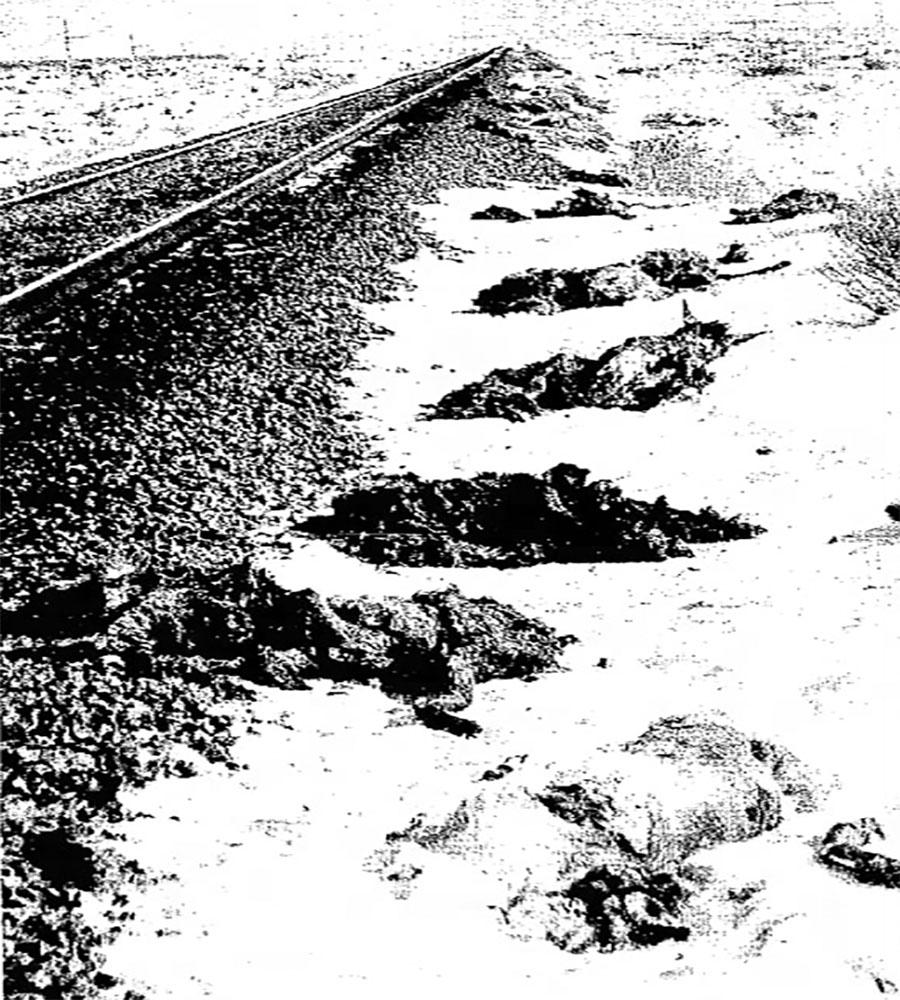
Following the incident, Perkins alerted the railroad dispatcher to contact Idaho Fish and Game so the dead animals could be cleared away from the track.
Perkins believed there was a “gap of communications” between the dispatcher and fish and game because department officials didn’t arrive on the scene until the following morning.
“I don’t know whose fault it was, but action should have been taken sooner to take care of those animals, some of which didn’t die immediately and were left to suffer and die slowly,” Perkins said.
Fish and game said they were notified of the incident minutes after it happened, but couldn’t send men into the area that night due to blizzard conditions and confusion as to the exact location.

This story is brought to you by Newspapers.com, where a simple search of our newspaper archive transports you to the past. Get a front-row seat to famous events and hidden histories in more than 28,000 historical newspapers from small towns and major cities across the U.S. and beyond. The past: read all about it!