



Over a hundred people show up for town hall on ‘catastrophic’ cuts to Medicaid
Published at | Updated at
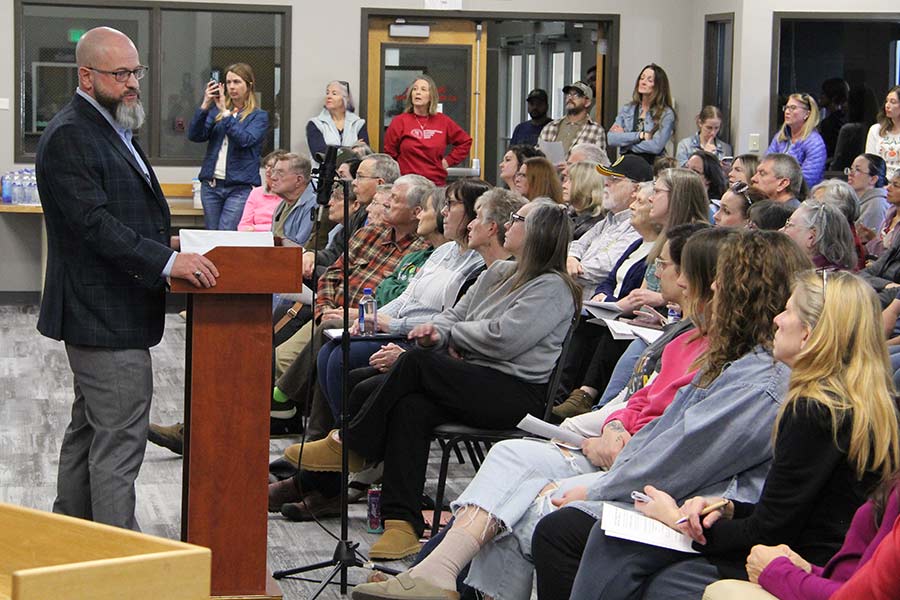
POCATELLO – A large crowd gathered at a local town hall and stood to speak about the harm caused by Medicaid cuts and the harm that will come if programs are cut further.
The town hall took place in the Pocatello City Council Chambers on Saturday evening, and was attended by somewhere between 100 and 150 eastern Idahoans. The people who spoke expressed a mix of anger at the current situation, grief over the pain it’s already caused and fear for what the future could bring.
“Cuts to Medicaid would not be an inconvenience. They would be catastrophic,” said Kimberley Sykes, a local mother of four children.
Sen. James Ruchti, who serves in the state senate as eastern Idaho’s only elected Democrat, organized the town hall. Ruchti has more town halls scheduled over the next two months, with one on Feb. 28 and the other on March 21.
RELATED | After state cut a critical Medicaid mental health service, two eastern Idaho patients died
At the start of this year’s legislative session, Idaho’s projected budget deficit was estimated to be $40 million.
On Feb. 6, the Joint Finance-Appropriations Committee (JFAC) voted to approve a permanent 2% budget cut in the next fiscal year for most state agencies, including the Idaho Department of Health & Welfare, the agency that oversees Medicaid. This is already on top of a 3% budget holdback issued for this fiscal year, which Governor Brad Little made permanent in September.
A political choice
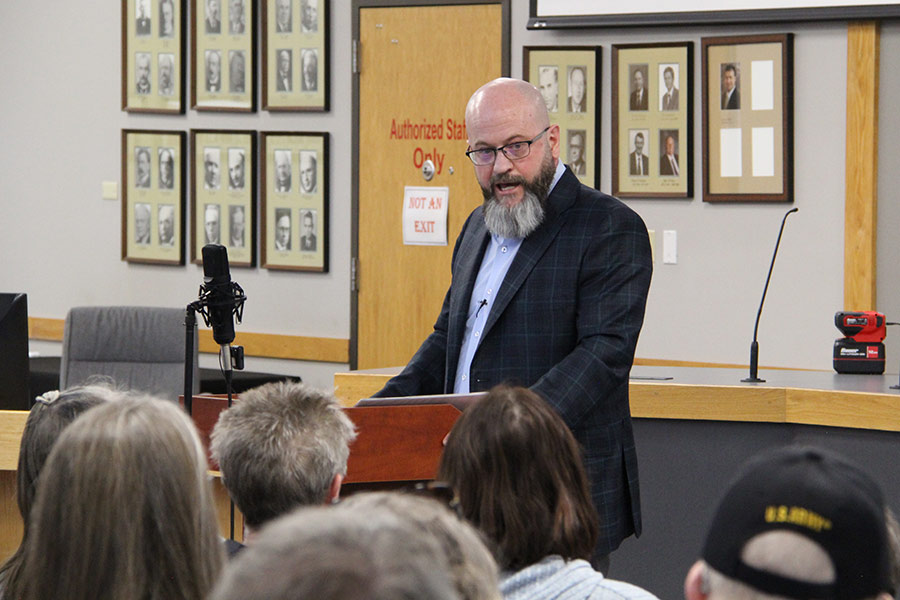
According to Ruchti, the state does not need to cut Medicaid to correct the current budget deficit. Instead, the state can and should draw on its “rainy day” reserve accounts, which total around $1.6 billion, he said.
This reserve funding was built up because the state of Idaho had surplus funds, thanks to federal funds coming in for programs including COVID-19 relief and infrastructure, he said.
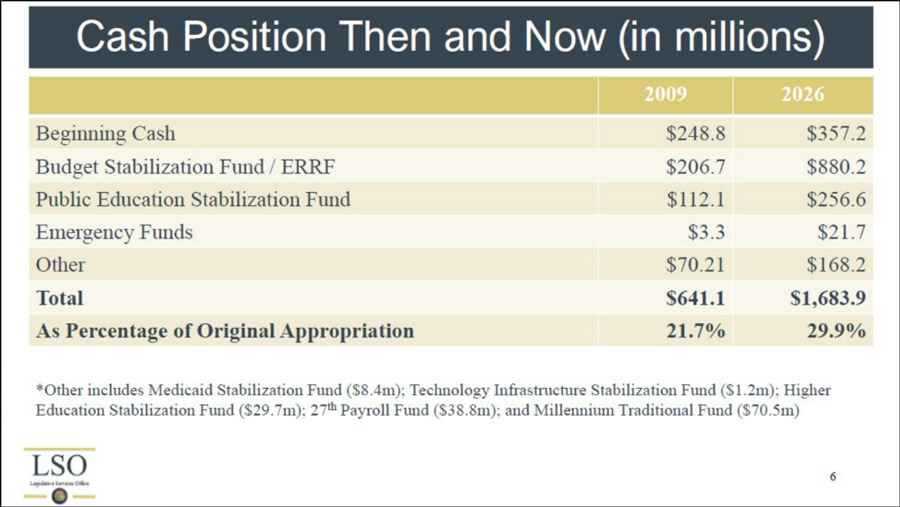
Ruchti contends that Idaho now has a budget deficit not because it has a “spending problem,” but because it has a revenue problem. He pointed to the tax cuts that the Idaho legislature has passed, and called out who he sees as the ‘big winners.’
“The winners of these tax cuts (are) big corporations and people making $500,000 per year or more,” Ruchti said. “My guess is a lot of you don’t even realize you (got a tax cut), because it was a couple $100 bucks, maybe $350 bucks. But the big winners, they know they received it,” Ruchti said.
Michelle Lance, a speech therapist, in her testimony at the meeting, spoke about her time in Boise speaking with representatives, and expressed a feeling that the public is being “kept in the dark.”
“We were talked at. We had little opportunity to have any input. No questions were asked of us,” Lance said. “(We were) fed statements about caring about kids, caring about the elderly, with no elaboration on what they were going to do about it.”
Ruchti wanted people to know there is an alternative to cutting Medicaid.
“They’re going to go on telling you that the only solution is a cut. Now, that’s how we got here, but we have other options,” Ruchti said.
The effects on Idaho’s mental health
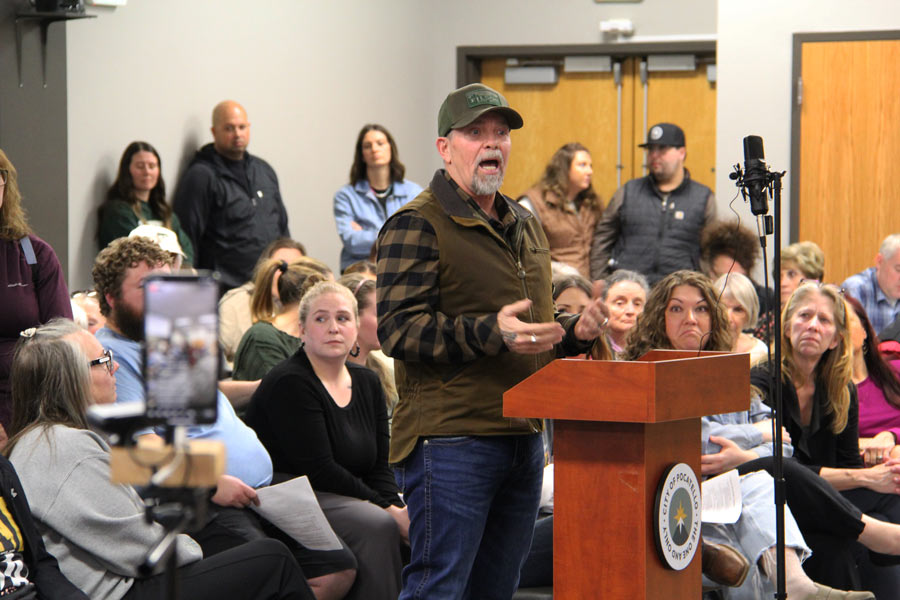
Several clinicians spoke at the town hall, expressing concern for what the future holds for mental health treatment in Idaho.
Ken Taylor, owner of Cognitive Restructuring, a mental health treatment facility in Pocatello, spoke about how budget cuts are already affecting his agency.
“When we look at the cuts, they’ve already started,” Taylor said.
Taylor pointed out that Peer Support Services has already been cut entirely. He worries about the future of other programs, like the Assertive Community Treatment (ACT) team, which supports adults with severe mental illness, if more funding is cut.
“When we have somebody in a mental health crisis in the community, law enforcement can call in the (ACT), and they can address that and maybe get them to the hospital, get them some services they need. Instead, where they’ll bring them (is) the county jail,” Taylor said.
And Taylor shared his thoughts on where this ultimately leads.
“We can look back at years prior, when we had the same kind of stuff going on, and we lacked these services, what happens? The correctional facilities filled up, the homeless shelters filled up,” Taylor said.
Taylor, as well as other clinicians, fear that many clinics in Idaho wouldn’t survive the cuts. And even if the funding were restored, it wouldn’t be an easy recovery.
“It is likely, if things pass as presented, my business will close. I don’t know how it would stay open,” said Lisa Hong, an occupational therapist from Idaho Falls. “My business supports several therapists, occupational speech therapists. … All of those therapy practitioners will need to find work. Many of them will leave the state.”
Medicaid services as a “lifeline”
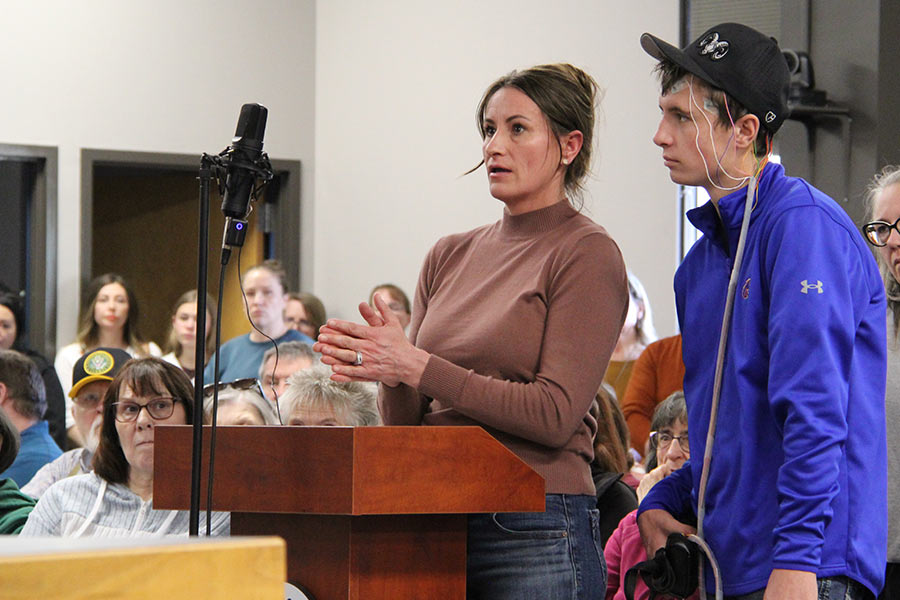
The first speaker at the town hall was Amy Steve, accompanied by her son, Trey, a 16-year-old junior at Highland High School. Amy explained that Trey was born with a brain malformation called periventricular heterotopia.
A month before his tenth birthday, Trey began to have seizures and was diagnosed with epilepsy, leading to him receiving brain surgery. After his surgery, he started speech, occupational, and physical therapy at Bloom Center for Pediatric Therapy, located near Pocatello.
At the town hall, Trey was using an EEG machine because his seizures had started again, and he needed another brain surgery. According to Amy, what makes this possible is the Katie Beckett program, which assists qualifying children who have long-term disabilities or other complex medical needs.
“We have private insurance through my husband’s employer, but the gap between his private insurance and the expense of his medical expenses would be unbearable,” Amy said.
She later continued, “Medicaid doesn’t just help families who are living in poverty. (It’s) able to bridge the gap for middle-class families so that we’re not living in medical poverty. It is such a critical program that can affect people all across the board.”
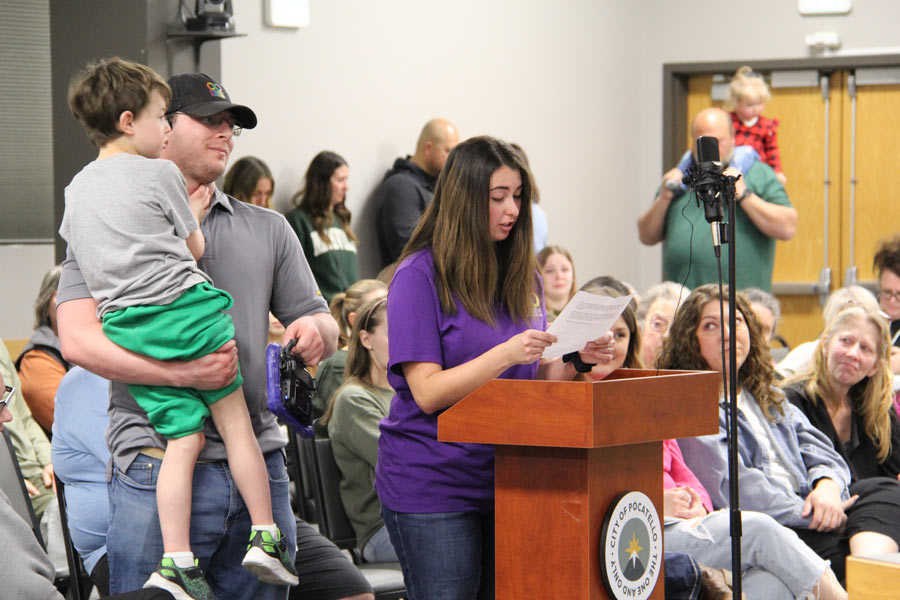
Another mother, Chloe Longoria, spoke at the town hall about the importance of Medicaid-funded therapy. She introduced her son, Parker, who has autism spectrum disorder, and said that he receives occupational, speech and feeding therapy.
Longoria estimates that without Medicaid, this would cost $500 per day, which is “an impossible burden for any family, especially a single mom.”
“These services aren’t luxuries for me. They are the reason I can get out of bed and fight for my son, Parker. They are his lifeline,” Longoria said.
“This is austerity.”
Mary Shea and Nate Roberts, both running to represent District 29 in the Idaho House of Representatives, attended the town hall and introduced Ruchti at the outset.
Both candidates shared their thoughts on what they heard at the town hall with EastIdahoNews.com. Local incumbent Republican representatives Dustin Manwaring and Tanya Burgoyne did not return requests for comment.
Shea said that as a lawyer in child welfare and juvenile court, most of her clients are on “the economic margins” and struggle with mental illness and substance abuse, and need community based treatments that Medicaid provides.
“I understand people wanting to make sure that their taxpayer dollars are used well,” Shea said. “I work in the system, and I can tell you that from my perspective, it’s operating already as lean as it can, and they are doing a very good job to screen out and screen in only the people who really need these services.”
The way she sees it, the representatives pushing for these budget cuts are misleading Idahoens about what can be done to address the budget deficit.
“The people like us who are on the ground and we know what’s really happening, the people here who spoke out tonight, I think it’s up to us to shine a light and not let them gaslight Idaho about what’s really going on here,” Shea said.
Roberts previously served in the Idaho Legislature in 2023 and 2024 on the Health & Welfare committee, and he said he heard a lot of similar stories to the ones he heard at the town hall.
“People are just begging for help that their tax dollars should provide for them. What I’m seeing is tax cuts being made in our state for those at the top of the economy, but they’re not the ones being asked to help out when the budget is short like it is now,” Roberts said.
Roberts said he would be glad to sacrifice his tax breaks if it meant that the people he heard from that night had access to the care they need.
“This is austerity. We’ve been providing tax cuts for the corporations and the very wealthy and selling it as tax cuts for the working class. But honestly, I would give my $300 a year if I knew that these parents and these children were being taken care of. That’s easy for me,” Roberts said.