



Trouble in travel-stop paradise? Proposed Buc-ee’s in Idaho hits early roadblock
Published at
Rose Evans, Idaho Statesman
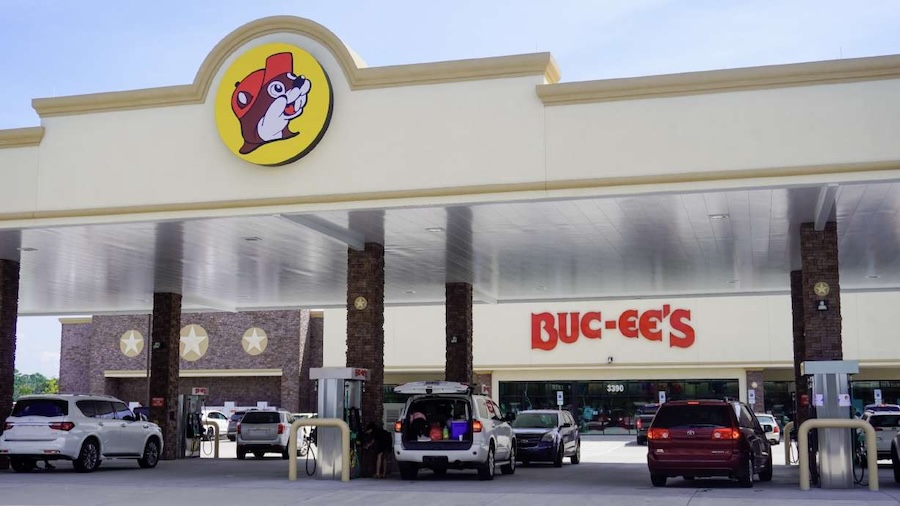
MERIDIAN (Idaho Statesman) — Will Idahoans ever see a friendly bucktoothed beaver smiling down over Interstate 84 like a beacon? Or eat Texas-style barbecued brisket washed down with a Dr. Pepper slushy while they fuel up their car?
Six months ago, it seemed like this travel-stop pipe dream might come true.
At that time, Buc-ee’s, the supersized Texas convenience store chain, was in early talks with the city of Meridian to build a 74,000-square-foot travel center at the Meridian Road interchange off of I-84, according to public records obtained by the Idaho Statesman. The proposed center would’ve been the first in the state — and would mark a new direction for expansion of the largely Southeast chain, which has not yet built west of Colorado.
Now, the proposal appears to have hit a bump in the road — or maybe even reached the end of it.
Officials with the Idaho Transportation Department say they met with Buc-ee’s representatives on Jan. 23 and determined that the proposal, as presented, was “not feasible.” The holdup, according to ITD and a Meridian city official who attended the meeting: traffic.
Namely, how the more than 19,000 vehicle trips the development is expected to generate per day would move through the already congested interchange, and how traffic impacts could ripple out onto nearby roads.
According to ITD spokesperson Jill Youmans, the most notable point that gave the department pause around “feasibility” was a proposed “flyover structure on the interchange.”
Youmans told the Statesman by phone that engineers representing the developer proposed adding a grade-separated, or elevated, ramp off the Meridian Road interchange’s westbound exit. After exiting the interstate, drivers could take the flyover ramp over Meridian Road to get to the travel center, Youmans said.
The spokesperson said that “high level” data provided to ITD by the engineers and reviewed by the Statesman suggested that the flyover, paired with some changes to signal timing around the interchange, could help the level of service on nearby roads, for the most part, hold steady rather than decline.
The engineers, from consulting firm Kimley-Horn, also pitched adding an auxiliary lane that would allow drivers leaving Buc-ee’s to get directly onto the interstate heading westbound, she said.
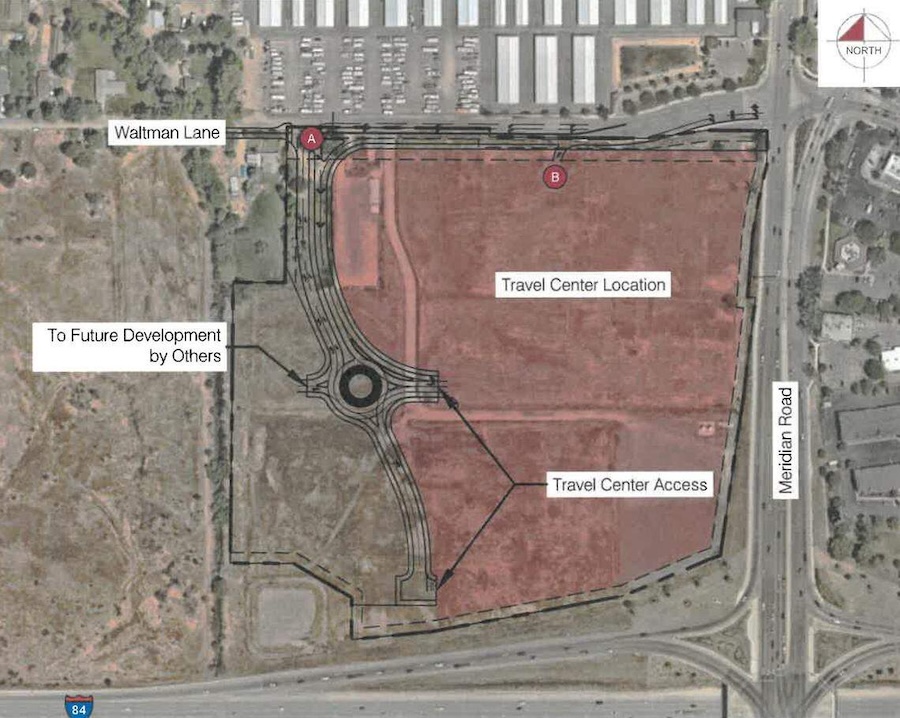
Could cars one day ‘flyover’ Meridian Road to Buc-ee’s?
For the transportation department, the proposal left more questions than answers.
First, would the flyover work to ease traffic? Youmans said knowing the answer to that would require “significant additional study.”
There would need to be a formal traffic-impact study, and a federal environmental and design process would be triggered under the Federal Highway Administration, she said.
“The analysis would need to demonstrate that any modification would improve both the interchange and the surrounding roadway network,” she said in an email — something ITD couldn’t agree to based on the data engineers had so far.
And who would pay for it?
“We looked at some funding options very briefly,” Youmans said by phone. They included a possible sales-tax rebate program, which would allow the developer to front infrastructure-improvement costs and then be reimbursed, or pursuing federal funds. She said the group at the Jan. 23 meeting “did not get into the details of figuring out how much it would cost or exactly how it would be paid for.”
But even if “magic money falls” and the flyover could be built, she said, “Now who maintains it? Who owns it?”
Youmans emphasized the costs of road maintenance and repairs. It’s not just the “neutral” building costs, she said. “After it’s built, then what?”
“Taken together, along with potential cost, long-term maintenance and construction impacts, ITD determined the proposal was not feasible at this time,” she said.
Buc-ee’s spokesperson Crissy Gonzales declined to comment on whether Buc-ee’s is still interested in the Meridian property — or confirm if it ever was. Kimley-Horn did not respond to an email inquiry from the Statesman on Friday.
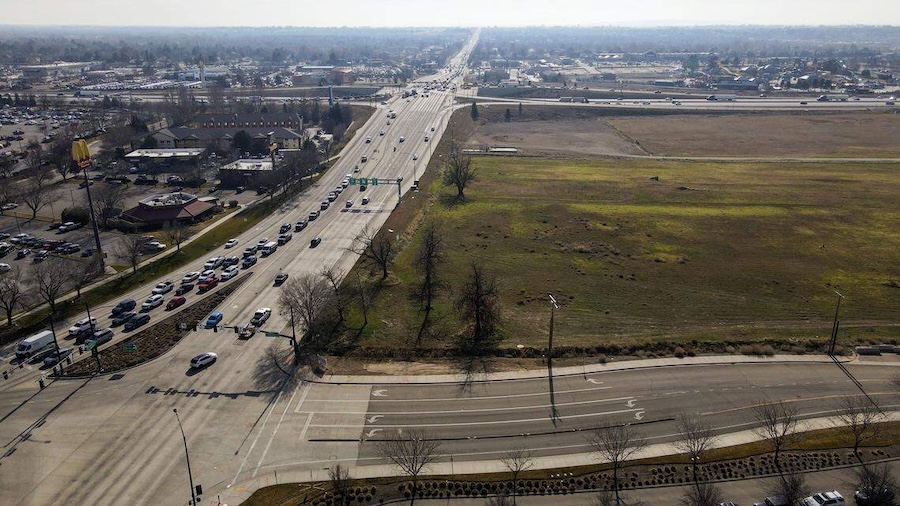
Officials in a ‘holding pattern’ with possible Buc-ee’s
Youmans emphasized that “ITD does not have the ability to prevent a development from moving forward based solely on traffic impacts.”
That authority lies with local jurisdictions that govern land use — in this case, the city of Meridian. ITD makes recommendations around mitigation, but land-use agencies can choose whether to bind developers to them or not, she said.
But ITD does have one extra tool in its arsenal. It owns right-of-way around the state highway system, and if a developer wants direct access to one of those highways, ITD would need to issue a permit, Youmans said.
Youmans said ITD is open to reviewing additional information or proposals from the developer.
Curtis Calder, Meridian’s economic development administrator, told the Statesman in an interview that the city hasn’t heard from representatives for the development in recent weeks. Calder said Buc-ee’s hasn’t submitted an application and that in the meantime, city officials are “in a holding pattern.”
“Until we hear definitively that … this is no longer in play, you know, we’ll just assume they’re still in a due diligence period,” he said.
Calder said Buc-ee’s first contacted his office roughly a year ago with interest in Meridian. This happens a lot in his line of work, he said — “calls out of the universe.” He estimates that one of every 10 of those calls turns into an application.
About traffic concerns, Calder said the meetings with ITD, the Ada County Highway District, and Buc-ee’s engineers highlighted the “challenges” any developer would face on the interchange property.
“I guess if you threw enough money at any problem, you could probably solve it,” he said. “But at some point, someone goes, ‘Gosh, it’s just too much money. … It doesn’t make sense.’”
Another city official, Long-Range Planning Supervisor Brian McClure, had a more acerbic take, according to public records obtained by the Statesman. In an email he wrote to colleagues on Jan. 15, McClure called the development traffic model a “trainwreck” and “one of the worst things I’ve seen.”
About Buc-ee’s
Buc-ee’s opened its first store in Texas in 1982 and has expanded to over 50 stores in nearly a dozen states. Its convenience-stores-on-steroids have amassed a cult following and are known for their Buc-ee-the-Beaver mascot and branded goods, southern food and clean bathrooms.
RELATED | Famous travel stop center Buc-ee’s coming to Utah
The name, pronounced BUCK-eez, is a combination of founder Arch Aplin’s dog, Buck, and Aplin’s childhood nickname, Beaver, according to Southern Living magazine.
The stores are open 24 hours a day, 365 days a year. The travel-stop giant recently announced plans to build a new convenience store in Springville, Utah.