



Idaho House to consider making ethics investigations against lawmakers secret
Published at | Updated at
Kyle Pfannenstiel, Idaho Capital Sun
Editor’s note: Idaho Capital Sun reporter Kyle Pfannenstiel is a board member for the Idaho Press Club, which opposed the proposal.
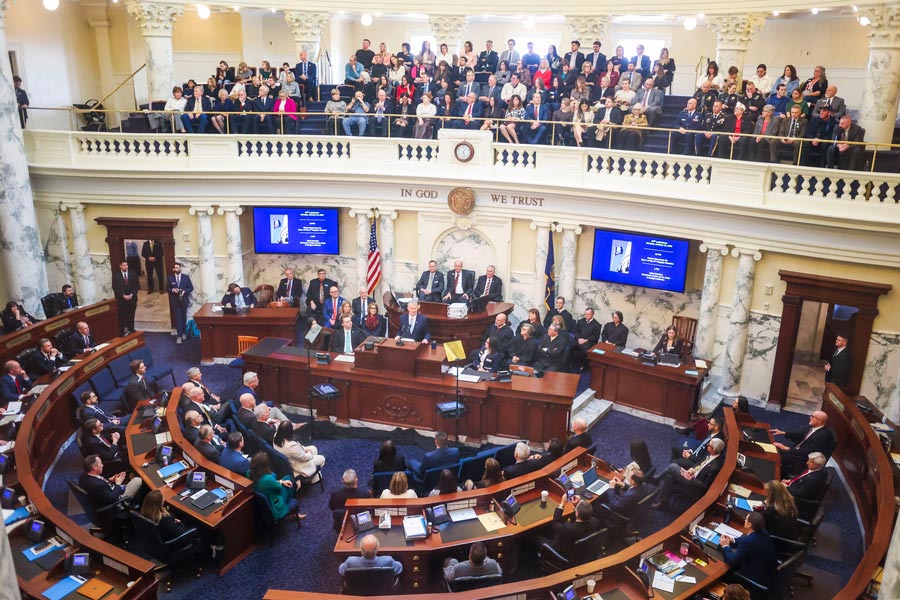
BOISE (Idaho Capital Sun) — The Idaho House is set to consider changing its rules to make ethics hearings against sitting lawmakers secret.
Currently, House Rule 45 says ethics complaints are made public after four-fifths of the House Ethics and House Policy Committee determines there is probable cause that misconduct may have occurred. Public hearings follow.
Nearly five years ago, the House Ethics Committee conducted high-profile hearings against former Rep. Aaron von Ehlinger, who was accused of sexually assaulting a legislative intern. After public ethics hearings, von Ehlinger resigned after the committee recommended he face sanctions. He was later convicted by a jury of rape, and was sentenced to 20 years in prison.
Under House Resolution 27, information related to the ethics committee’s work would be secret unless the committee votes unanimously to release it.
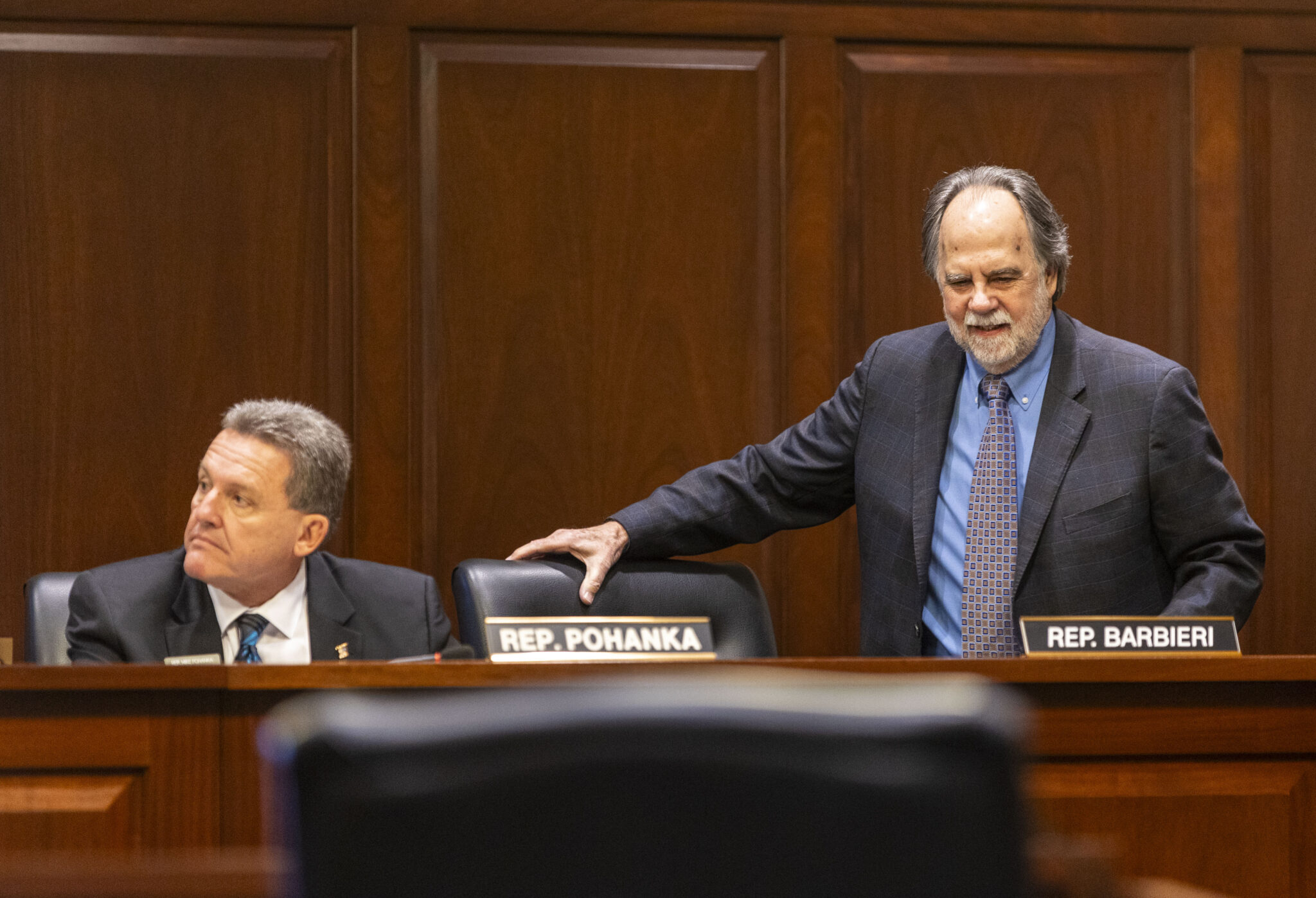
Rep. Vito Barbieri, R-Dalton Gardens, a member of the House Ethics Committee, is sponsoring the resolution to make ethics hearings secret. In a letter to the judge in von Ehlinger’s criminal case, Barbieri described von Ehlinger as “an upstanding person,” Boise State Public Radio reported.
Barbieri told lawmakers in a Tuesday committee hearing that ethics hearings should be secret “until there’s a reason to make it public.”
“The idea here is to look at this and protect the individual that is being accused until the time that the committee makes the determination that there should be some disciplinary action,” Barbieri said.
The House Judiciary, Rules and Administration Committee on an 8-7 vote Tuesday approved advancing the bill to the full House. The committee’s three Democrats and four Republicans opposed the bill.
Rep. Chris Mathias, a Boise Democrat, said the public wants more transparency.
“The Idaho public is going to look at us and say: ‘Why are they trying to protect themselves so much?’” Mathias said.
The proposal would also prevent lawmakers under investigation from being able to be represented in their hearings by attorneys. That part worried some lawmakers, including Rep. John Shirts, a Republican from Weiser and an attorney. He said during von Ehlinger’s hearings, people were sworn in under oath for testimony.
“I cannot, in good conscience, subject our members, you all, my friends, to potential perjury, without representation of counsel,” Shirts told committee members.
Idaho Press Club lobbyist Ken Burgess testified against the bill. He said that journalists relay information from ethics hearings to lawmakers’ constituents.
“The current ethics process allows for witnesses and testimony, so the public has the same facts as the Ethics Committee has. That doesn’t happen in a House floor debate after the fact. Fair and balanced reporting happens when reporters have all the relevant information,” Burgess told lawmakers. “If you put this process behind closed doors, it only furthers the increasing distrust the public has in government institutions.”