



Should Idaho schools read the Bible daily? Legislature committee was torn
Published at
Becca Savransky, Idaho Statesman
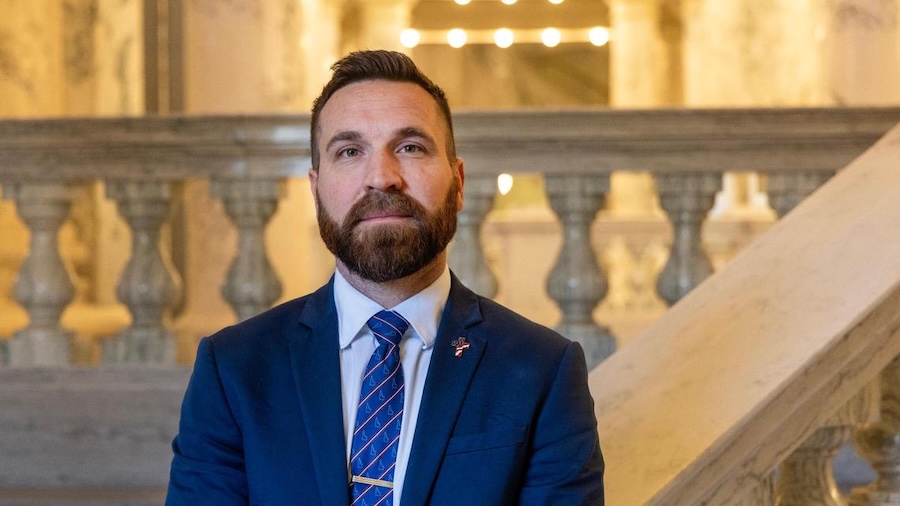
BOISE (Idaho Statesman) — Lawmakers on Friday opted not to introduce a bill that would have required daily Bible readings in Idaho’s public schools — on a tie vote.
The proposal, sponsored by Rep. Jordan Redman, R-Coeur d’Alene, would have created a statewide policy mandating that public school teachers read sequential passages from the Bible in their classrooms without instruction or comment. A similar bill was proposed last year.
RELATED | Idaho lawmaker wants to ‘cultivate’ morality through mandated public school Bible reading
“Idaho’s founding fathers intentionally crafted our state Constitution so that the Bible could be read without sectarian instruction and comment in public schools,” Redman told committee members Friday. “The goal of this legislation is to cultivate the morality of future generations and encourage good citizenship.”
The proposal would have required schools to provide reasonable accommodations to teachers with conscience objections, he said. It would not have allowed other religious texts, such as the Quran, to be read in schools.
Blaine Conzatti, the president of the Idaho Family Policy Center, a Christian lobbying group, argued that Idaho has a “rich history” of school-sponsored Bible readings and that he’d expect the proposal to pass constitutional muster.
Idaho lawmakers passed a bill in 1925 requiring Bible readings in schools, he said. In 1963, the U.S. Supreme Court declared school-sponsored Bible readings unconstitutional, ruling in the Abington School District v. Schempp case that the practice violated the First Amendment’s Establishment Clause.
Conzatti said in recent years, though, there had been a “massive shift in Establishment Clause jurisprudence.” He cited a 2022 Supreme Court ruling where the high court sided with a public school football coach who lost his job after praying on the field following his team’s games.
Still, last year, when Redman introduced a similar proposal, a constitutional law professor told the Idaho Statesman that based on the 1963 ruling, it would have been unconstitutional.
Lawmakers raise concerns about constitutionality
During the hearing to introduce the bill, lawmakers raised several questions about its constitutionality.
“This nation was founded on a separation of church and state. People, if we’re going to dive into history, people did not come to this nation as immigrants to go to government-sponsored religion. They came here to get away from it,” Rep. Jack Nelson, R-Jerome, said.
He worried about the reaction from members of his community if they had to hear readings from texts that didn’t align with their own religions.
“In my community, to have a bunch of Catholic kids sit and have to listen to readings from the Book of Mormon, I think they would get pretty excited about that,” he said, making a motion to send the bill back to the sponsor.
Other lawmakers felt differently.
Rep. Barbara Ehardt, R-Idaho Falls, pushed back against the idea of the separation of church and state.
“I challenge anyone on this committee to show me where it says in our founding documents there’s a separation of church and state,” she said, adding that she looked forward to a future discussion “filled with receipts.”
Rep. Chris Mathias, D-Boise, said lawmakers have repeatedly emphasized that schools should teach kids how to think, not what to think.
“If we require schools to do this reading without instruction or comment, how are we teaching kids how to think and not just telling them what to think?” he asked.
Redman responded that the language in the proposal was meant to pass constitutional muster.
“We could not have the instruction with it,” he said. “And I think that part of that is not trying to lean anyone in a specific area, but help them hear the words of the Bible throughout their education career.”
Mathias later said the proposal was unconstitutional and voted against introducing it.
“I’m uncomfortable using taxpayer dollars to fund constitutional crusades. The Supreme Court has said this is unconstitutional,” he said. “I think we should get back to doing the things that Idahoans have asked us to do when we knock on their doors.”
Other lawmakers argued that the bill deserved a full discussion, where legislators could talk through some of the concerns, but the committee decided not to introduce the bill on a 7-7 vote.