



Amid drought and debate, Gov. Brad Little says Idaho is ready for what’s ahead
Published at | Updated at
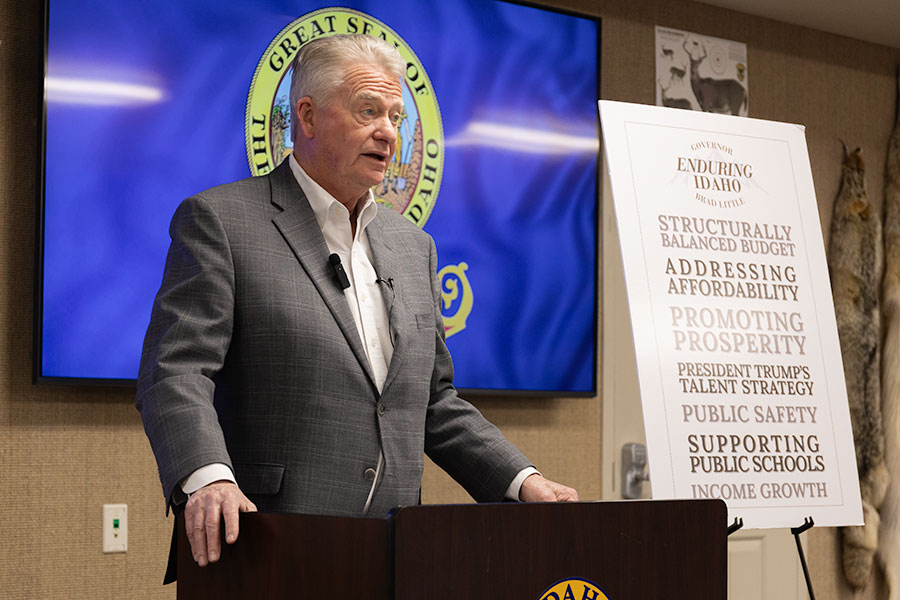
IDAHO FALLS — Passing a balanced budget, protecting Idaho’s natural resource and other notable topics were at the heart of Gov. Brad Little’s recap of the 2026 legislative session.
During remarks at the Idaho Fish and Game Upper Snake Regional Office in Idaho Falls Monday afternoon, the Emmett Republican touted the legislature’s success in passing a balanced budget, as required, despite decisions that will affect many residents.
“Just like Idaho families that sit around their kitchen tables and make decisions about what they can afford, we did the same at the state level,” Little said. “We live within our means. We did not raise taxes. We ensured every dollar spent reflects a priority that benefits the people of Idaho.”
RELATED | ‘Unrelenting’: Statehouse reporters recap 2026 legislative session in Idaho Falls
While the cuts were made, Little said the state complied with the Trump Administration’s tax cuts, which will result in significant tax relief for Idahoans.
Another topic in Little’s recap was Idaho’s response to fire. The legislature wasn’t on board with prepaying fire services as it had in years past, but some money was set aside to help start that process.
Last week, the Idaho Dept. of Water Resources declared a statewide drought emergency, due to the unusually warm winter and shortages in the state’s water supply. With the drought comes an increased risk for wildfires this summer.
Little says firefighters across the state are prepared and equipped with all the resources they need ahead of fire season.
“We will have fires,” Little said. “When the fire season starts, it’ll be seamless about the initial attack and doing all we can to minimize (the fire).”
Investing in Idaho was another key topic for Little, who focused on addressing the physician shortage the state is facing.
RELATED | Idaho Gov. Brad Little vetoes bill that cut graduate medical education funding
Earlier this month, Little vetoed House Bill 978 that would’ve prevented the legislature from reducing funding for Idaho’s Department of Health and Welfare health care policy initiatives program, which aims to fund graduate medical education and other directives.
Little said that during the discussions of this bill in committees, he knew the bill would affect these programs. The state, he says, had made a promise to these students and needed to fulfill it.
“We are in the bottom three for the number of professionals that are available, and that is really important now, and going forward,” Little said.
Lastly, Little discussed that in this legislative session, Idaho took steps to make government more efficient for residents to interact with.
“Good government should be easy to navigate, transparent and focused on serving the people. This year, we merged agencies with similar missions, cleaned up outdated and duplicative statutes and worked to make the state less burdensome for citizens and businesses,” Little said.
One of the bills that drew criticism from advocates was Senate Bill 1300, which made the directors of the Idaho Departments of Parks and Recreation, Transportation and Fish and Game subject to gubernatorial appointment and Senate confirmation, just like all the other state agencies.
RELATED | Disputed Idaho bill signed into law despite strong opposition in eastern Idaho
The bill faced steep opposition on this side of the state. Opponents said it violates a 1963 agreement that resulted in the creation of Harriman State Park. The agreement between the Harriman family and the state of Idaho said that the property would be managed by a professional park staff on the basis of merit alone. The Parks and Recreation department was created two years after this agreement was codified in state law.
Little, who signed SB 1300 into law on April 1, said that in discussions with legislative legal counsel and Attorney General Raul Labrador, he was told the bill would have no impact on Harriman State Park.
“I understand the concern about it, but if you look at the language, it says there would be professional management of parks. We will continue to have professional management of parks,” Little said. “I think there’s zero risk there from everything I’ve been told by all but a few people.”