




Nurse practitioner running against incumbent for Bonneville County coroner
Published at | Updated at
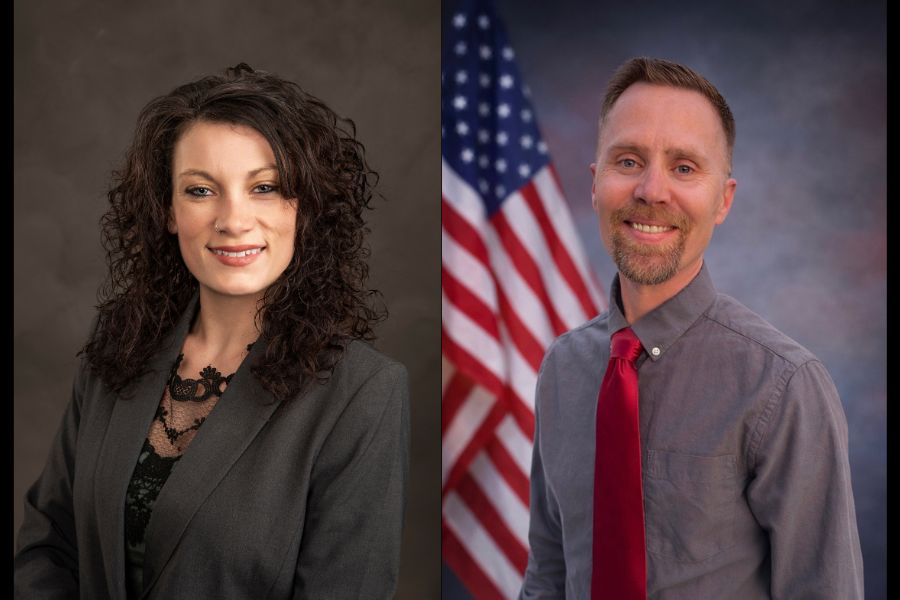
IDAHO FALLS — Incumbent Bonneville County Coroner Shante Sanchez is facing candidate Tim Schuijt, a nurse practitioner, in the upcoming primary.
EastIdahoNews.com reached out to each candidate for a questionnaire. Their responses were required to be 250 words or fewer. Sanchez and Schuijt’s unedited responses are included below.
The candidate who wins the primary will be on the general election ballot on Nov. 3. The primary election will be held on May 19.
For more candidate questionnaires and further information on this year’s primary election, check out East Idaho Elects.
WATCH: EastIdahoNews.com Bonneville County Coroner Debate
Tell us about yourself — include information about your family, career, education, volunteer work, and any prior experience in public office.
Sanchez: Shante Sanchez is a dedicated public servant and medicolegal professional currently serving as the elected Coroner of Bonneville County. With a commitment to modernizing the office, she has focused her tenure on implementing national standards, digital case management systems, and fostering regional collaboration through resource-sharing initiatives.
Shante brings a robust academic foundation to her role, holding a Master of Science in Forensic Psychology from Arizona State University, where she specialized in Investigative Criminology and Severe Mental Illness. She also holds a Bachelor of Science in Psychology from Idaho State University. This intersection of psychological insight and forensic expertise allows her to approach death investigation with both scientific precision and necessary compassion.
In addition to her academic degrees, Shante is a certified Medicolegal Death Investigator (MDI) through the University of North Dakota. Her professional background is further distinguished by her experience as an entrepreneur in the coffee industry, providing her with a unique perspective on administrative leadership and community engagement.
A passionate educator, Shante frequently serves as a keynote speaker, focusing on public safety initiatives such as substance awareness and safe sleeping practices. Whether in the lab or in the community, her goal remains constant: to provide the citizens of Bonneville County with a professional, transparent, and modernized Coroner’s Office.
Schuijt: My name is Tim Schuijt, and I live in Idaho Falls with my wife and three children. Bonneville County has been home to us for the past 11 years. I am actively involved in my community, including coaching youth soccer, which has reinforced my belief in teamwork, accountability, and positive mentorship.
I have dedicated my career to serving our community in high-pressure, real-world environments where accuracy, accountability, and compassion matter most. I have worked as an Emergency Medical Services provider, an emergency room Registered Nurse, and a Family Nurse Practitioner. These roles have given me firsthand experience managing critical situations, coordinating with multiple agencies, and ensuring that patients and families receive both professional care and clear communication during difficult moments.
My background also includes operational responsibility processes, ensuring the appropriate resources, staffing, and equipment are available when and where they are needed to meet patient and community needs. This work requires prioritization of needs, efficiency, and a strong commitment to responsible use of resources, while maintaining accountability and quality care for public resources.
While I have not held prior elected office, my career has been rooted in public service. For almost two decades, I have worked closely with law enforcement, hospitals, and emergency responders, building strong collaborative relationships that are essential for effective public safety operations.
I am running for Bonneville County Coroner to bring this experience, professionalism, and commitment to service into an office that must operate with transparency, dignity, and respect for every family it serves.
Why are you seeking political office within your community? Briefly explain your political platform.
Schuijt: I am seeking the office of Bonneville County Coroner because this role requires real-world experience, structured processes, and the ability to operate effectively under pressure. My background in EMS, trauma nursing, and emergency medicine has prepared me to handle complex situations with accuracy, coordination, and professionalism.
My platform is centered on three priorities: disciplined, process-driven operations; responsible fiscal management; and building public trust through collaboration, transparency, and dignity. The coroner’s office must operate with clear procedures that ensure consistent, accurate outcomes. That includes proper coordination with law enforcement, hospitals, and EMS, as well as maintaining organized systems for documentation and reporting.
I also believe strongly in the responsible use of taxpayer resources. My experience in healthcare has required me to manage supplies, staffing needs, and equipment allocation while staying within allocation constraints. That same discipline applies to this office.
Public trust is essential. Families deserve transparency, dignity, and clear communication. This office must remain objective, evidence-based, and focused on serving the community with integrity.
Sanchez: My goal is to lead an office that pairs forensic expertise and crisis intervention with compassionate, modern public service, ensuring every investigation is handled with scientific integrity and every family is treated with dignity.
- Professional Excellence & National Standards – I am committed to ensuring the Coroner’s Office operates with the highest level of technical proficiency. This includes maintaining mandatory certifications for investigators and transitioning the office toward national accreditation. By implementing electronic case management and digital filing systems, I aim to replace outdated methods with efficient, transparent, and accurate record-keeping.
- Regional Collaboration & Fiscal Responsibility – Recognizing the importance of shared resources, my platform emphasizes inter-agency cooperation. Through the implementation of Memorandums of Understanding (MOUs) with surrounding counties, I have created a framework for resource sharing that improves service across the region while remaining fiscally responsible to the taxpayers of Bonneville County.
- Proactive Public Safety Education – I believe the Coroner’s role extends beyond investigation to include prevention. Your platform prioritizes community-focused education, specifically targeting high-impact issues such as substance awareness, investigation education, and safe sleeping practices. I aim to provide the public with the tools and knowledge necessary to save lives.
What are the greatest challenges facing people in your county? What is your plan to meet and overcome those challenges?
Sanchez: The challenges facing Bonneville County today include the escalating substance abuse crisis and the critical need for modernized public health infrastructure. However, one of the most overlooked hurdles is the perception of the Coroner’s Office. To truly serve the community, we must move past the idea of the office as a cold, bureaucratic entity and establish it as a proactive, compassionate pillar of public safety.
My plan to overcome these challenges involves integrated specialized crisis intervention skills into our scene responses to ensure that we are not just processing a scene, but supporting people. We handle every deceased individual with the highest level of dignity and treat their families with the profound respect they deserve. A lost loved one is never just a case number, they are a member of our community. This includes a robust advocacy program that connects grieving families with the support they need. Whether it is navigating state and community resources or providing grief gifts to offer a small measure of comfort during a dark time, we act as a bridge to healing. I ensure that families are never left to navigate the aftermath of a loss alone.
Finally, I use the data gathered by this office to protect the living. By leading public health initiatives on fentanyl awareness and safe sleeping practices, we transform our findings into life-saving education. I strongly support to transform the Coroner’s Office into an agency that advocates for the deceased while fiercely protecting and supporting the living.
Schuijt: One of the greatest challenges facing Bonneville County is ensuring that public safety systems, including the coroner’s office, are consistently coordinated, responsive, and trusted across all partner agencies. As the community grows, so does the need for strong operational alignment, clear communication, and dependable processes.
From my experience in EMS and the emergency department, I’ve seen how breakdowns in coordination, whether in communication, access, or workflow, can lead to delays, inefficiencies, and strain between agencies. When processes are inconsistent or difficult to navigate, it not only impacts professionals working in the system, but it can also delay timely care and closure for families.
Addressing these challenges requires structured, predictable operations and strong interagency relationships. This means establishing clear protocols, ensuring availability aligns with real-world needs, and fostering a collaborative environment where partners, hospitals, law enforcement, and funeral services can work together effectively and with mutual trust.
I will focus on operational efficiency and accountability. This includes aligning staffing and availability with demand, ensuring resources are tracked and used responsibly, and making budget decisions based on demonstrated operational needs. Just as important is restoring confidence through consistent, transparent processes and professional engagement with our community partners.
Maintaining public trust requires more than words; it requires systems that work reliably and relationships built on respect. By prioritizing coordination, clarity, and accountability, we can strengthen both the effectiveness of the office and the confidence the public places in it.
How will you best represent the views of your constituents – even those with differing political views? How do partisan politics play into your role as an elected leader?
Schuijt: The role of the coroner is not political; it is professional, legal, and service-oriented. My responsibility is to represent all residents of Bonneville County by ensuring that every case is handled with accuracy, consistency, and respect, regardless of personal or political differences.
In my career in EMS and emergency medicine, I have worked with people from all backgrounds and perspectives. In those environments, the focus is always the same: follow established protocols, rely on evidence, and treat every individual with dignity. That same approach applies to this office.
Politics should not influence the duties of this role. The coroner’s office must remain objective and transparent, with decisions based on facts and professional standards.
I will represent constituents by maintaining clear processes, communicating openly, and ensuring that every family receives the same level of professionalism and respect. Trust is built through consistency.
Sanchez: As an elected official in a specialized medicolegal role, my primary responsibility is to the truth, which has no political affiliation. The Coroner’s Office must operate as an unbiased, independent entity where the science of forensic investigation remains insulated from partisan influence. I represent every resident of Bonneville County by ensuring that every death investigation is conducted with the same level of scientific rigor, dignity, and transparency, regardless of the individual’s background or political leanings. To me, representing my constituents means providing every family with the same compassionate crisis intervention and every case with the same pursuit of factual accuracy.
While the position is elected, the work itself is non-partisan by necessity. Partisan politics have no place at a scene or in an autopsy suite. My role is to serve as a protector of community health and a seeker of facts. I advocate for the deceased and support their families by connecting them to vital state and community resources, ensuring they are treated with respect and dignity.
By focusing on professionalizing the office and educating the public on our life-saving prevention programs, I transcend political divides. My plan is to lead with integrity, ensuring the Coroner’s Office remains a trusted, neutral institution that protects the living and honors the departed through unwavering objectivity with openly and objectively collaborating with my fellow officials to make sure that the office is fiscally and ethically responsible.
What parts of the county budget could use more funding? Where are places in the budget where cuts could be made?
Sanchez: As Bonneville County experiences exponential growth, the Coroner’s Office faces a critical surge in case volume and complexity. To maintain public safety and forensic integrity, we must prioritize funding for facility modernization and technological advancement. Our current facility must evolve to keep pace with our growing population. We need targeted funding for advanced forensic equipment. These upgrades are not luxuries; they are essential tools that allow us to process cases more efficiently, ensuring that the deceased are handled with dignity and families receive answers without delay.
Regarding potential cuts, the Coroner’s Office operates on a lean, high-necessity budget. Because our work is mandated by law and driven by the unpredictable nature of mortality rates, there is no room for cuts without directly compromising the quality of investigations or the support we provide to grieving families. My focus remains on advocating for the Coroner’s Office as a vital public safety entity. To protect Bonneville County’s future, we must invest in an infrastructure that reflects the professional, unbiased, and modernized standards our growing community deserves.
Schuijt: Budget decisions will be driven by operational needs and accountability. In the coroner’s office, funding will prioritize essential areas such as staff training, proper equipment, and systems that support accurate and timely investigations.
Based on my experience managing resources in healthcare settings, I understand the importance of ensuring that supplies are available where they are needed without unnecessary waste. This includes tracking usage, forecasting needs, and aligning purchases with actual demand.
Additional funding may be needed in areas that improve efficiency and accuracy. This may include areas such as case management systems or training that ensure compliance with current standards. These investments support both operational effectiveness and public trust.
At the same time, there will be a careful review of inefficiencies. Redundant processes, underutilized resources, or unnecessary expenditures will be identified and adjusted. The goal is not simply to spend less, but to spend smarter.
Fiscal responsibility means ensuring that every dollar supports the mission of the office, accurate investigations, proper documentation, and respectful service to families.
What specific changes can be made in this office to increase public transparency and access to public information? How will you communicate directly with your constituents?
Schuijt: Transparency is essential to maintaining public trust in the coroner’s office, and it depends on both clear processes and consistent communication. When procedures are unclear or applied inconsistently, it can create confusion for families and strain coordination with partner agencies during already difficult circumstances.
Specific improvements will begin with standardized, predictable processes for case handling and communication. This includes clear timelines for updates, defined points of contact, and consistent expectations for how families and agencies receive information throughout the process. When people understand what to expect, it reduces uncertainty and helps ensure families are treated with dignity and clarity.
Strengthening interagency coordination is also critical. Hospitals, law enforcement, and funeral service providers must operate within a consistent framework that supports smooth, respectful transitions and reduces miscommunication during sensitive moments.
Access to public information should remain fully compliant with legal requirements while being organized, timely, and easy to understand. Records must be accurate, consistently maintained, and responsive to legitimate requests, with improved structure to ensure information is both accessible and appropriately protected.
My communication approach is direct, respectful, and consistent. Families deserve clear guidance and compassionate communication during some of the most difficult moments in their lives. I will prioritize structured communication pathways and proactive engagement to ensure families and partners are not left uncertain about next steps or access to information.
Ultimately, transparency is about building a system where communication, coordination, and respect are embedded in every process.
Sanchez: To increase transparency and public access, I have transformed the Coroner’s Office into an open, accessible resource for every member of our community. My mission is to dismantle the wall of secrecy that often surrounds this role, replacing it with a culture of accountability and direct communication. I have implemented the release of detailed annual reports available for public viewing. These reports provide a clear, data-driven look at the trends affecting our county, such as substance abuse and public health risks, while maintaining the privacy of families. Furthermore, I have streamlined our internal processes to ensure that every public record or coroner’s report request is met with a prompt and thorough response.
I believe in an unwavering open-door policy. I personally ensure that every phone call, email, and text is answered, providing a direct line of communication between the public and their elected official. Beyond the office, I utilize social media to provide real-time updates and educational content on public safety. I also engage with schools, civic groups, and local organizations to demystify our work. In addition, I am using my platform to serve as a bridge to state and community resources. In my office, transparency isn’t just a policy—it is a commitment to treat every constituent with respect and every family like a neighbor, not a number.
Can you give a concrete example of a policy or budget decision you would support to improve a county service within your first year in office?
Sanchez: In my first year, I would champion a policy to officially designate the Coroner’s Office as a First Responder agency at the county level. This is not just a title; it is a mechanical shift in how we provide public safety services. To support this, I would advocate for a budget reallocation specifically for comprehensive crisis intervention and mental health support for our investigators.
Currently, my team is on the front lines of the most traumatic events in Bonneville County, yet we are often excluded from the support systems available to police and fire departments. By securing funding for specialized trauma-informed training and peer support programs, we ensure our staff remains resilient and capable of handling every family with the extreme dignity and respect they deserve.
Additionally, I would support a budget decision to implement mobile digital workstation technology for scene investigations. As our county grows, the ability to document findings and coordinate with other emergency services in real-time is vital.
This modernization allows us to function with the speed and precision of our first responder peers, reducing the time it takes to provide answers to grieving families. By acknowledging our role on the front lines, we move away from the “afterthought” perception of the office. This policy ensures we are not just documenting a loss, but actively serving the community with the scientific integrity and compassionate advocacy that a true first responder agency provides.
Schuijt: Within my first year, I will prioritize implementing a structured inventory, resource, and financial accountability system within the coroner’s office. This would ensure that supplies, equipment, staffing resources, and operational needs are tracked, forecasted, and aligned with actual workload demands.
From my experience in EMS and emergency medicine, I have seen how effective resource management directly impacts operational performance. When equipment is not readily available, when staffing is not aligned with demand, or when expenditures are not closely tied to operational needs, it creates inefficiencies that can strain both personnel and partner agencies.
This system would include clear tracking of supplies and equipment, routine review of usage and acquisition patterns, and stronger alignment between budgeting decisions and documented operational requirements. It would also provide clearer oversight of major expense categories such as staffing, vehicles, and equipment to ensure they are justified, sustainable, and directly supporting mission needs.
The goal is to build a more efficient, accountable, and operationally prepared office. Strengthening financial and resource controls ensures that public funds are used responsibly and that the office is equipped to meet real-world demands without waste or gaps in service delivery. While much of this work happens behind the scenes, it has a direct impact on the reliability, professionalism, and trustworthiness of the office.
What experience do you bring that prepares you to manage county finances, and how will you ensure fiscal responsibility?
Schuijt: My experience in EMS and emergency department operations has required constant, real-world resource stewardship under high-pressure conditions. In these environments, success depends on ensuring that staffing, equipment, and supplies are appropriately allocated, immediately available when needed, and managed in a way that supports uninterrupted service delivery.
This work requires detailed processes, disciplined prioritization, anticipating operational demand, and making decisions that balance immediate needs with long-term sustainability. It also requires continuous attention to efficiency, identifying what is being used, what is needed, and where processes can be improved to reduce waste and strengthen readiness.
That operational mindset translates directly to fiscal responsibility. At its core, responsible stewardship of public resources is about ensuring that every decision supports mission effectiveness, is justified by real demand, and contributes to the long-term sustainability of services.
When elected, I will bring a structured, accountability-driven approach to resource planning by working closely with county leadership and fiscal staff to ensure operational realities are clearly reflected in planning and decision-making. I will prioritize transparency, consistent evaluation of resource utilization, and disciplined process improvement to ensure public resources are used effectively and responsibly.
My focus will be on building systems that are predictable, efficient, and accountable. This will ensure that the office is not only well-resourced to meet today’s needs but also positioned to sustain high-quality service for the community well into the future.
Sanchez: I bring a unique combination of executive business experience and specialized forensic leadership that prepares me to manage the county’s finances with precision and creativity. As a professional business owner in the community, I understand the weight of every dollar, from managing payroll and leases to navigating the thin margins of a competitive market. I know what it takes to lead a staff and keep an organization thriving, even when resources are tight.
In my current term as Coroner, I have successfully balanced these administrative responsibilities with the rigorous demands of investigative duties. I ensure fiscal responsibility by practicing direct oversight. I approach the county budget with the same “boots on the ground” mentality I use in the field. By being involved in both the investigations and the accounting, I identify exactly where funds are needed for modernization and where we can eliminate waste.
In addition, I leverage my entrepreneurial background to find innovative ways to meet budgetary needs. I view the budget as a tool for public safety. Every funding request I make is backed by the hard data from our annual reports, ensuring that constituent tax dollars are invested in life-saving prevention and facility advancements. My experience proves that fiscal responsibility isn’t just about cutting—it’s about strategic investment and transparent management.