



Idaho Gov. Brad Little issues 5 vetoes. Here are the bills affected
Published at | Updated at
Becca Savransky and Kevin Fixler, Idaho Statesman
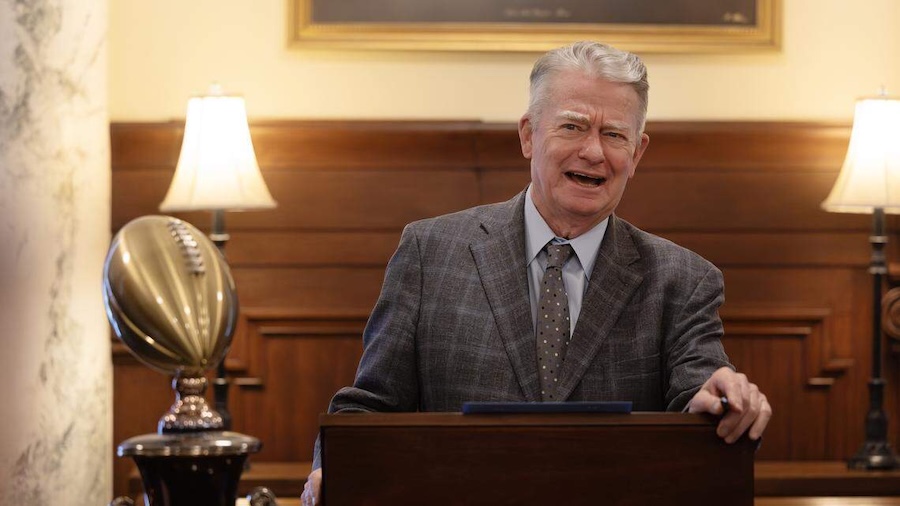
BOISE (Idaho Statesman) — Gov. Brad Little issued five vetoes Wednesday evening dealing with issues ranging from day care to rainy day funds.
One of those included line-item vetoes in a budget bill, which means the governor nixed only a portion of the bill and allowed the rest of it to become law.
The Republican-dominated Legislature adjourned last week sine die, so it would be forced to quickly call a special session to attempt to override a veto from the governor if there’s an appetite for that. Little gets five additional days, for a total of 10 business days, excluding Sundays, to make decisions on bills after sine die.
The five bills the governor vetoed were House Bills 758, 975, 968 and 674, and Senate Bill 1359. Here’s what each of those pieces of legislation covers:
House Bill 758
Citing child safety and fraud risks, Little rejected a bill that would have increased the state’s staff-to-child ratio by excluding an in-home provider’s own children, age 5 and older, from the operator maximum. The bill also sought to allow providers to use live video and audio to monitor a sleeping child, rather than be within sight and normal hearing distance, as is required under current law.
Rep. Barb Ehardt, R-Idaho Falls, who sponsored the bill, labeled the changes technical corrections and “essentially cleanup” to day-care legislation passed and signed into law last year. It passed the House and Senate on its way to Little’s desk with veto-proof totals.
Little said the bill threatens child safety and “puts too much of our good work at risk.”
“This bill could eliminate licensing and fire inspection requirements for providers,” he wrote in his veto letter. “Additionally, rooting out child care fraud and abuse is a top priority of mine. … This bill heightens the risk of fraud and abuse because bad actors will more easily take advantage of the new requirement for the state to verify which children in a home are legitimate relatives.”
House Bill 975
House Bill 975 relates to rainy day funds. The bill says no transfer from the budget stabilization fund should occur if the fund balance exceeds 15% of general fund revenues this fiscal year. Current statute limits the balance in the fund to 15% of the general fund. The bill bars the Office of the State Controller from transferring money back to the general fund from June 1, 2026, through June 30, 2027.
The governor’s veto will mean that at the end of the year, if money in the stabilization fund exceeds 15%, it will go into the general fund.
“The bill conflicts with Idaho’s time-tested and established fiscal framework in Idaho code,” Little wrote in his veto letter.
Idaho already has one of the largest rainy day funds in the nation, the governor’s office said, and the bill would put an additional $50 million to $55 million into the budget stabilization fund.
In his veto letter, the governor said it is “likely” the state won’t have enough money in the Fire Suppression Fund to pay for this wildfire season, which he worried could be difficult given the warm and dry winter.
He said this veto ensures funds are available for “broader and unforeseen state priorities as they arise,” and there will be additional funds available for an “expensive and challenging fire season.”
“With revenue projections uncertain, maintaining flexibility in the General Fund is a responsible management of Idahoans’ tax dollars,” Little said in his veto letter.
The Legislature is still able to transfer additional funds into the budget stabilization fund, he said.
“This approach balances fiscal discipline with flexibility, rather than prematurely restricting available resources,” he wrote.
During an April 1 meeting of the Legislature’s budget-setting committee, some lawmakers raised concerns about flooding the budget stabilization fund when they’re already in a difficult budget year, making deep cuts elsewhere. Lawmakers said they have, in the past, passed similar measures allowing more money to stay in the budget stabilization fund.
House Bill 968
This measure relates to cash transfers, and Little made two line-item vetoes in the bill.
First, the bill says that if general fund revenues for this fiscal year don’t reach the legislative target of $5.5 billion, and the remaining cash balance doesn’t cover revenue shortfalls, “sufficient funds” can be transferred from the Twenty-Seventh Payroll Fund to the general fund to balance the budget. Little vetoed “sufficient funds.”
That fund was established to ensure money was there when the state incurs an additional payroll cycle, Little said in his veto letter.
“Redirecting these funds now undermines their intended purpose and would place the state in a difficult position when those obligations come due,” Little said. “Preserving these funds today avoids more disruptive or costly decisions in the next budget cycle.”
Little also vetoed the amount of money in a section of the bill that would have transferred $5.8 million from the Permanent Building Fund.
“While I support prudent investment in state facilities, the appropriation is inconsistent with the long-term purpose and stability of the Permanent Building Fund,” Little wrote in his veto letter. “Maintaining the integrity of this fund ensures the state can responsibly address future capital needs.”
Little said his submitted budget recommended transfers from the building fund to the general fund — due to canceled projects — to help balance the budget, but he objected to the transfer from this account to “other unrelated accounts.”
“Idaho Code requires funding from the Permanent Building Fund on canceled projects to be re-appropriated to other priority capital projects,” he wrote. “This appropriation does not follow that intent.”
House Bill 674
This bill sought to streamline the process of eliminating local telecommunication services by accepting the federal rulings on such discontinuation decisions, rather than require additional review and concurrence by Idaho’s Public Utilities Commission. Several rural residents advocated against the bill, which generated concerns they may lose their phone service.
The bill was carried by Senate Majority Leader Lori Den Hartog, R-Meridian, and her father, retiring Rep. John Vander Woude, R-Nampa. It faced limited opposition in the House, but received pushback from a mix of Democrats and mostly far-right Republicans in the Senate.
Little touted Idaho’s position as the least regulated state in the U.S. in issuing his veto. He shared concerns that rural Idahoans could lose access to vital telecom services if the legislation became law.
“The state of Idaho — not the federal government — sets and administers its own telecommunications rules, service standards, and oversight processes,” Little wrote. “This could disrupt everything from everyday business communications and staying in touch with family to placing 911 calls in emergency situations.”
Going forward, he encouraged the state’s Public Utilities Commission to work with lawmakers and residents to find efficiencies that won’t impact Idahoans and potentially lead to termination of service in their communities.
Senate Bill 1359
Presented by its sponsors as a consumer protection bill with an eye on vulnerable seniors, this bipartisan bill would require certain disclosures from operators of kiosks for digital financial transactions, such as cryptocurrency.
Among other requirements, operators would have to warn customers not to send money to someone they do not know, and that the transaction could be a scam. It also would have created a 72-hour hold period for a new customer’s digital financial transactions, and limit those distributions to $2,000 in a 24-hour period and no more than $10,000 in the customer’s first 30 days after an initial transaction.
In his veto letter, Little called the bill’s intent “commendable,” but said it contained “critical drafting deficiencies that would undermine its own purpose.”
“Virtual currency kiosks have become a preferred tool for scammers targeting Idaho seniors, and protecting our most vulnerable citizens from financial exploitation remains a priority,” the governor wrote. “Without clearer definitions, consistent and fair enforcement will be difficult to achieve.”