



Immigration bills caused big stir this year, but none advanced in Idaho Legislature
Published at | Updated at
Laura Guido, Idaho Capital Sun
BOISE (Idaho Capital Sun) — On the last day of the 2026 Idaho legislative session, a Fernwood Republican representative expressed exasperation that the GOP supermajority Legislature had not yet advanced any of the several immigration bills proposed this year.
That vote marked the third legislative attempt to require local law enforcement to enter certain agreements with federal immigration authorities, and one of more than two dozen other proposals related to immigration that stalled.
“We are a conservative state, and on this issue, we can’t seem to take a step forward,” Rep. Dale Hawkins said on the House floor. “And I got to be honest with you, folks, I don’t understand that.”
Idaho Republicans are divided on the issue. Some are pushing for more hardline state-level policies to uphold federal laws. Others say it’s a solely federal issue, cite law enforcement opposition, or don’t want to disrupt Idaho industries that rely on undocumented workers.
The pressure, however, may be mounting.
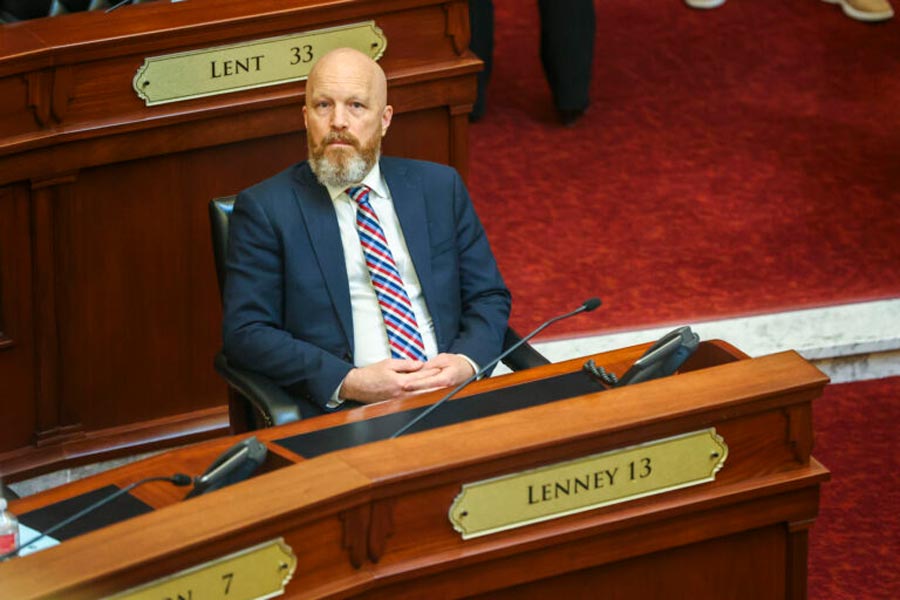
“The White House is paying attention to Idaho,” Nampa Republican Sen. Brian Lenney told the Idaho Capital Sun, referencing a letter from a White House adviser supporting one of the stalled bills. “And they’re not happy with what they’re seeing and what they saw this legislative session.”
In total, there were 14 bills introduced this year — including those that were revised versions of previous legislation — that were related to illegal immigration in some way. The proposals included tracking aggregated data of immigration status of all public school students, verifying nationality and status of every arrested person, creating new crimes for helping undocumented people or a new state-level crime for hiring unauthorized workers.
None of them advanced to the governor’s desk for approval.
Idaho Republicans are on a spectrum in immigration enforcement debate
Jaclyn Kettler, a Boise State University political science professor who researches state politics, said divisions are highlighted among Republicans who align more closely with the agriculture industry. The major presence of the agriculture and dairy industries in Idaho — whose leaders have said they rely on immigrant and undocumented labor — has shaped the conversation in Idaho differently, she said.
Lenney said he sees the division among different “buckets” of Republicans, including the “MAGA, America-first,” which he said he is in, and “mainstream” and “moderate” Republicans. Lenney, who is in his second, two-year term as a state senator, said he’s always been in the MAGA group, referring to Donald Trump’s slogan “Make America Great Again,” and wants to be a leader on the issue. He sees the other buckets being more reluctant to make state-level changes.
Coeur d’Alene Republican Jordan Redman said that, growing up in North Idaho, he wasn’t as exposed as much to industries like dairies. For him, immigration is a “law and order” issue, and he’s pushed for more widespread enforcement on employers who hire undocumented workers. However, he recognized that some of his Republican colleagues don’t have the same perspective.
“We all shape our views politically from life experience,” Redman said. “And it’s probably from the life experience of some of the different parts of the state, where they still utilize the undocumented labor force, see it as a big issue if you verify documentation. I think it’s probably a dividing application of people using different industries.”
The division isn’t unique to Idaho, as Republicans in other red states pushed back against work authorization verification requirements this year as well, Stateline reported.
Some of those in Idaho who opposed various proposals said it was more because of execution of the bills, rather than their intention.
Lenney told the Sun he and others were “shocked” by the strong opposition by Idaho law enforcement against many of the proposals this year.
“I think a lot of people are shocked, honestly, that the people who should be enforcing the law are pushing back on this issue,” he said.
Bryan Lovell, president of the Idaho Fraternal Order of Police, said local law enforcement largely supports immigration enforcement by federal authorities and assists when possible. But law enforcement leaders were frustrated by lawmakers not working with them on bill language.
“From our point of view, a lot of those things were for, we want,” Lovell said. “It’s just, we’ve got to be able to make it workable.”
Upcoming election may determine how future immigration proposals fare
Asked about working on new immigration proposals, Redman and Lenney both cited the results of the upcoming May primary election as factoring into how they move forward.
“This issue is not going away,” Lenney said. “It’s going to come back next year. Now, the way it comes back, who knows? Because it will depend on who’s in what committee and who wins or loses their election.”
Kettler, the political science professor, also noted that just one or two races on divisive issues in the Legislature can change the outcome on policies.
“I talk to my students a lot about how there’s so many places in the legislative process for bills to fail, and so that means there’s a lot of different actors that can act as a veto on the legislation in a way,” Kettler said. “… Even just a handful of people shifting in those seats could make it a whole different session for whether these types of bills are moving forward or not.”
Senate State Affairs Committee Chairman Sen. Jim Guthrie, a McCammon Republican, has drawn the ire of many supporters of these immigration proposals. Committee chairs in the Idaho Legislature have broad authority to control their agendas, meaning it’s up to their discretion whether a bill comes up for a hearing or not.
House bills 700 and 704 would have made it a state-level misdemeanor to hire unauthorized workers, and required all employers in the state to use the federal E-Verify system to verify legal work authorization of their employees, respectively. The Idaho House passed both those bills, but they never came up for a hearing once referred to Guthrie’s committee.
Lenney suspects that even some members who vote for some of these proposals only do so because they know there are quieter ways to stall a bill than opposing it openly.
“A lot of the people, I don’t think they’re doing it because I think they really believe in,” Lenney said. “They’re like, ‘oh we got to do something, people are pissed, let’s give these bills a hearing … Sometimes there will be, ‘Hey let’s push this through the House, it’ll pass, get to the Senate, and Guthrie’s going to put it in his drawer, so then it won’t matter because they know they’re going to die on the Senate side.”
Guthrie could not be reached after multiple calls and a text requesting an interview. The McCammon Republican is in his 14th year in the Senate.
He has brought legislation to provide limited driver’s licenses for undocumented residents in the state in a move he said was to improve safety. In 2023, he met with industry leaders and U.S. Rep. Mike Simpson, an Idaho Republican, to discus reforms needed to provide a legal pathway for workers, the Idaho Press reported.
He said at the time that the issue is “politically toxic.”
“If you mention the border, if you mention immigration and, heaven forbid, you mention undocumented immigrants, you’ll get the door slammed in your face quicker than a vacuum cleaner salesman back in the ‘70s,” Guthrie said. “… But what we found is, an issue like this takes courage, and I’m not talking about my courage. I’m talking about the courage of the businesses, of the industry.”
Guthrie is being challenged in the Republican primary by hardline conservative David Worley, who lists as a top priority on his campaign website to “uphold immigration law,” including “strong consequences for illegal entry and repeat violations.”
Immigration enforcement debate isn’t new, but pressure may be increasing
Most of the bills proposed this year weren’t new ideas. Redman said he’s been trying to pass a bill to mandate the use of E-Verify, which is a federal tool to confirm immigration status of workers, for three years.
This year was the first time he got a hearing, he said. The House of Representatives passed his bill, but it failed to advance after never coming up for a hearing in the Senate.
“That’s what becomes more frustrating than anything, that you don’t actually have the conversation,” Redman said.
Redman said more than 10 years ago he attended his first Idaho GOP convention with his dad, former Rep. Eric Redman. A resolution came up then to require employers to verify the legal status of their workers.
“I was young and naive, and so I’m at the conference, I’m thinking, ‘there’s no way this doesn’t pass,’” Redman said. “This will be unanimous. And it failed.”
The Idaho Republican Party has changed since that time. During the party’s winter meeting this January, party members voted to adopt a resolution in support of enforcing “immigration laws that hold employers of illegal immigrants in the state of Idaho accountable.”
Redman said momentum coming from the current presidential administration, which has focused heavily on increased immigration enforcement, has pushed some to be more willing to hear proposals.
One of the proposals, a White House adviser wrote a letter to Idaho Senate committee members in support of Senate Bill 1441 — a revived effort to mandate what are called 287(g) memorandums of agreement between local law enforcement and U.S. Immigration and Customs Enforcement.
Early this session, a group of 14 lawmakers held a press conference to announce a slate of immigration proposals before they were introduced as bills. Many of the proposals were crafted with Theo Wold, former Idaho solicitor general and a fellow with the conservative think tank that created Project 2025, a model policy program for a second Trump administration, The Heritage Foundation.
They made the public announcement in part to urge people to pressure lawmakers to hear and advance the legislation.
“We have some chairmen that are ready and willing; we have others that are resistant,” Hawkins told the Sun in an interview prior to the event. “And we’re hoping that, when they see the movement of the folks who we’re supposed to be working for, we can get a little bit better movement than we’ve gotten in the past.”
Lenney said he was never contacted by anyone from the White House, but that he didn’t need to be because he already supported these proposals.
“I’m already there,” he said. “So I think the people they were leaning on were the moderates, the conservatives.”