How an Idaho Falls family helped shape aviation and agriculture
Published at | Updated at

EDITOR’S NOTE: This article was originally published on Dec. 2, 2025. After the recent passing of a Hoff family member, we are republishing it with updates.
IDAHO FALLS — J. Mark Hoff and Rudolph Nelson landed their L-2 Grasshopper airplane off the runway at the Idaho Falls Airport.
It was Dec. 7, 1941, and a snowstorm made it difficult to see. Hoff — who would go on to be an aviation and farming pioneer — and Nelson could see runway lights through the storm and used that as their guide. They landed on the wrong side, in a deep layer of snow. The snow dipped the propeller to the ground and flipped the two-seater aircraft upside down.
The duo crawled out uninjured, but they were surprised no one was coming to their aid. They quickly learned why when they walked inside and found everyone huddled around a radio.
The Japanese military had just bombed Pearl Harbor, plunging the U.S. into World War II.
The broken propeller from that plane was made into a clock and was part of an aviation exhibit at the Museum of Idaho in 2024.
RELATED | New museum exhibit highlights Idaho’s aviation history and achievements
Mark died in 1969, but his 85-year-old son, Bob, told EastIdahoNews.com the attack on Pearl Harbor prompted his dad to get involved. Mark wanted to join the U.S. Army Air Corps, but at age 43 the Army thought he was too old.
He eventually joined the Auxiliary Air Corps, which later became the Civil Air Patrol. Mark and his wife, Onita, were early pioneers of the organization and volunteered as civilian pilots to carry out emergency service missions and promote aviation in their community. The couple were posthumously awarded the Congressional Medal of Honor, according to Bob. Although the medals were displayed behind glass at the 2024 museum exhibit (seen below), their names are not listed among the recipients.

Mark and Onita had five children. Their youngest, John, died on May 23 after a long battle with cancer. He was 79. EastIdahoNews.com posted his obituary, which you can read here.
Bob is a pilot today and the president of Aeromark, a commercial aviation service station in Idaho Falls. He and John were partners in the business early on and founded it together. Bob has flown across the country in this capacity through the years, selling airplanes. His sons, Thomas and James, are pilots as well.
Today, the Hoff family has a private hangar and runway on their 2,800-acre farm south of Idaho Falls. The Hoffs host an airplane event here every summer for pilots and aviation enthusiasts. Bob tells EastIdahoNews.com he inherited his love of flying from his dad.
“Some families fish, some hunt and some snowmobile and motorboat. We’re a flying family,” Bob says from the cab of his pickup outside the hangar’s entrance.
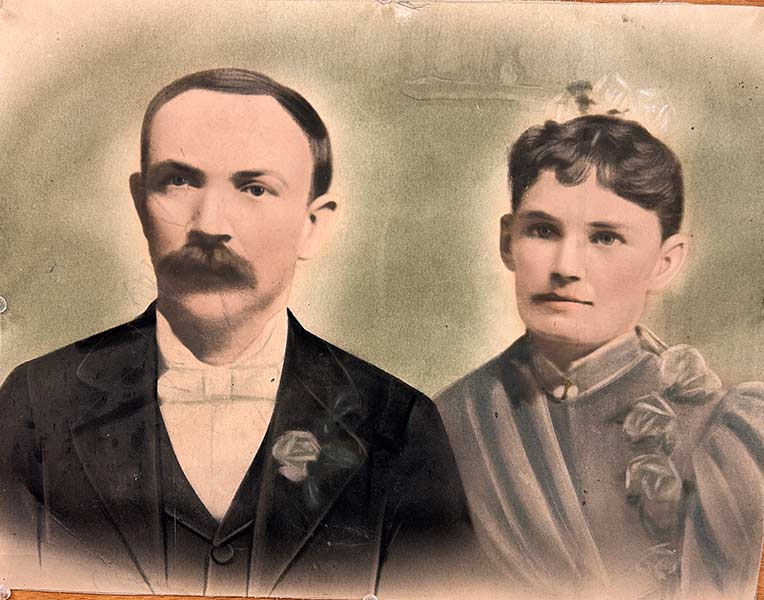
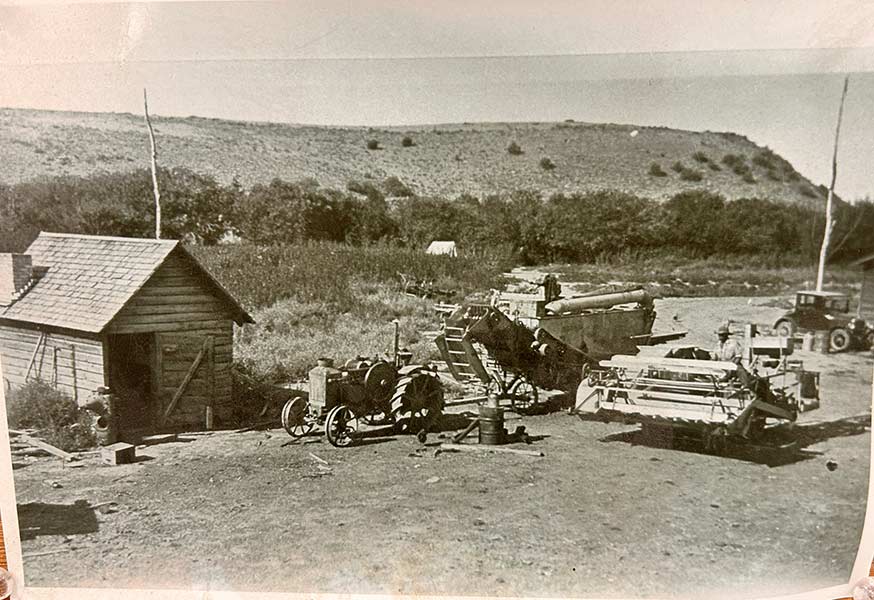
Farming is the family’s other passion. A Hoff family history timeline on display inside the hangar shows an agricultural heritage that coincides with the birth of aviation. Mark’s father, Rasmus Hoff, bought the initial 1,600 acres of farm land in 1903 — the same year Orville and Wilbur Wright made the world’s first successful flight.
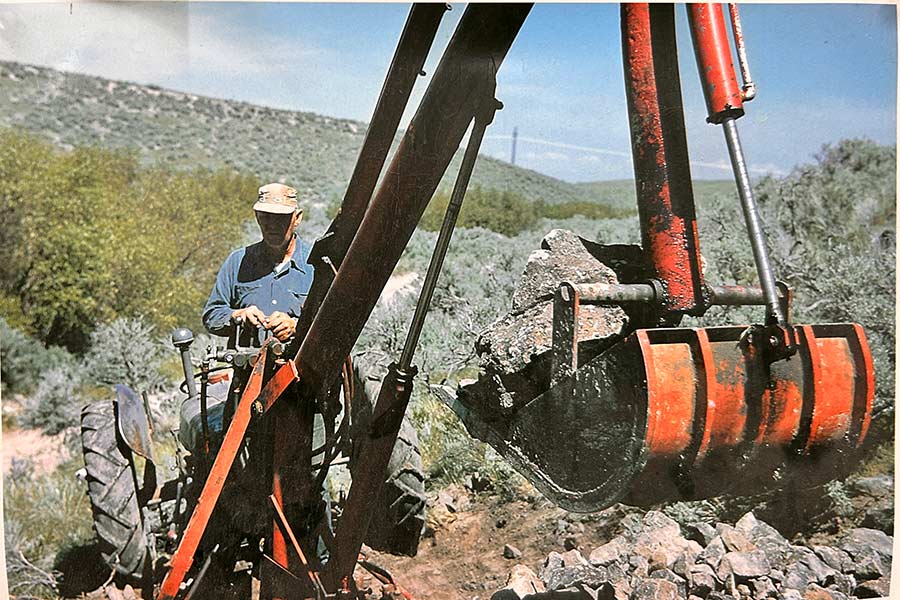
Mark became a pioneer in the farming world, as well. He invented three pieces of machinery: the potato harvester, the hydraulic loader and the backhoe.
Making farm life more efficient
Mark demonstrated a knack for technical innovation early on when he learned Morse code as a ham radio operator.
“He was transmitting and receiving Morse code coast-to-coast in 1919 before anybody had a radio,” says Bob.
Bob says his dad’s motivation in developing new farming technology was born out of a desire to be more efficient.
All three devices were developed around the same time, according to Bob. It’s not clear how long it took him to come up with the ideas.
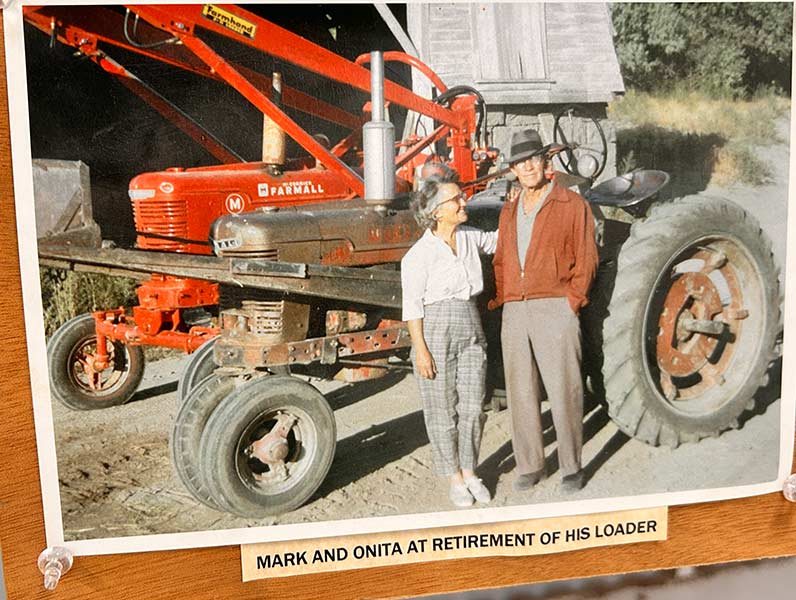
Despite having patents for all three products, Mark isn’t necessarily the one credited with inventing them. Bob says another company invented something similar to Mark’s loader by looking closely at his patent.
“They copied him closely so that they didn’t infringe on the patent, but the loader they came out with was just about the same thing,” Bob explains.
RELATED | Local mechanic sells automotive repair kits through new business venture
Nathan Hansen, Bob’s great-nephew, claims Mark’s device became the FarmHand loader, but Bob says it’s hard to say for sure because records weren’t kept at the time.
When it comes to the potato harvester, Bob says his dad developed the patent, but he worked with a local company to build it.
“He helped them design it, and they built a few of those for farmers around the country,” Bob says.
He says that up until about 20 years ago, that company was still making Mark’s harvesters.
Although Mark made a profit from some of his inventions, Bob says that was never the intent.
“People who are creative tend to work on something until they know that it works, and then they move on to something else,” Bob says. “Dad’s equipment was never painted or finished. As long as it worked, that’s all he wanted to see. He wasn’t necessarily in it for the money.”
Hoff family origins and legacy
Decades before Mark developed his machinery, Bob says Rasmus had a patent for his own piece of equipment. Although the patent is still in his possession, Bob isn’t sure exactly what it was for because it’s written in Norwegian.
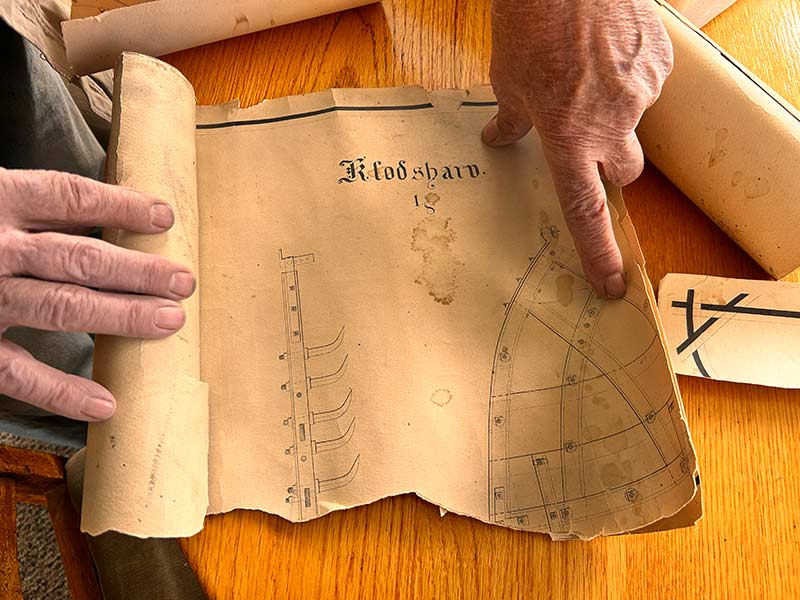
Rasmus immigrated to Idaho from Norway and bought the land from Sam Taylor, sheriff of what was then part of Bingham County.
“Why he (Rasmus) chose this place, I’m not sure,” Bob says. “Rasmus was quite a man. He bought this 110-horsepower steam tractor and plowed this all up and made a farm out of it.”
Rasmus died around 1918 trying to rescue his horses after getting his wagon stuck in a flooded river.
Mark was born two decades earlier, and he was 72 when he died in 1969.
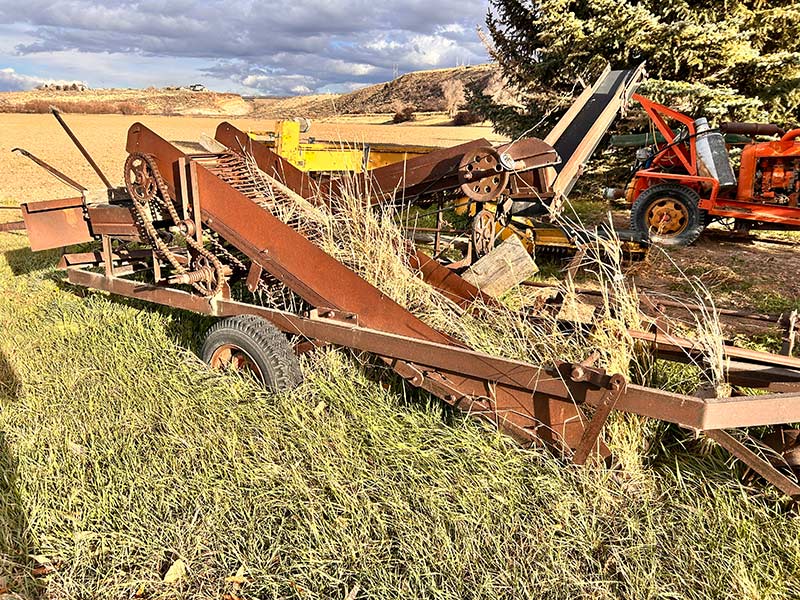
Today, two of Mark’s devices — the harvester and the backhoe — are sitting on a hillside with other old equipment on the family farm.
Nearly 60 years later, Bob is also an inventor. He has six patents related to hangar doors.
Although John was a partner with Bob on the family farm during his young adult years, he and his wife, Christy, started their own wheat and alfalfa operation in Weiser, which they operated until his death. In that capacity, he developed and marketed lubrication systems for irrigation equipment using vegetable oils. This helped mitigate any possible soil contamination.
“His equipment extended chain and gear life exponentially,” John’s obituary says. “John also made custom stainless steel shovels with the owner’s name and the date stamped on. He often gave them away to people he felt were making a real constructive contribution to his country.”
Hoff family members have also gone on to be successful as creative people. Bob’s sister, Marilyn, is a renowned sculptor and painter.
John took piano lessons early on, according to his obituary, but went on to become a skilled organ and trumpet player. His daughters, Cherie and Jennifer, became accomplished musicians and remain active in music.
“We just like to do things,” Bob says of his family’s success. “People who lived through the Depression have learned to be resourceful. My dad lived during that time, and he invented things because he was resourceful. It’s a value that was passed along to us.”
More than 120 years after Rasmus bought the land, the Hoff farm remains in operation. Bob is grateful for his family’s pioneering legacy and hopes to see the Hoff name continue to resonate for years to come.