




Two candidates battle for county coroner in Bingham County
Published at | Updated at
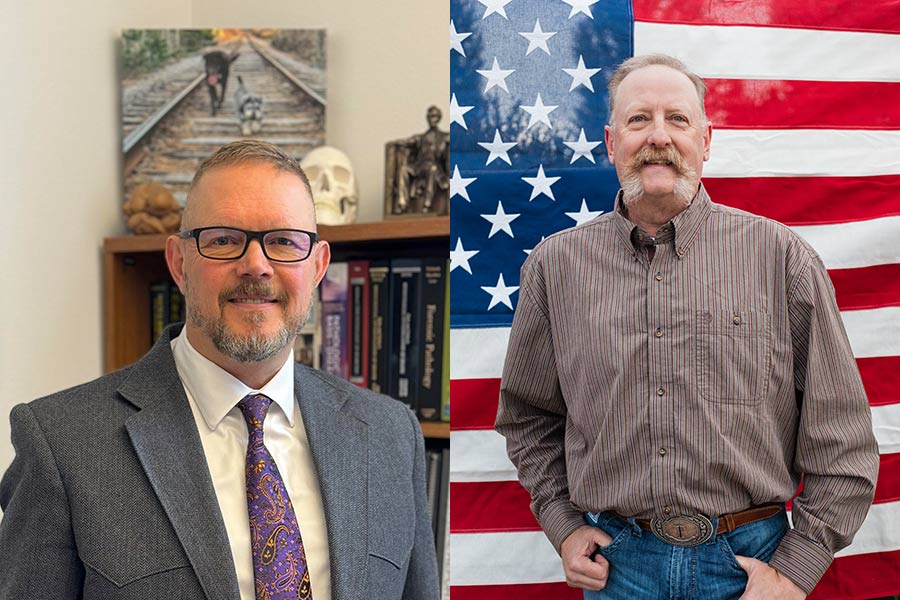
BINGHAM COUNTY – A challenger is running to replace the incumbent Bingham County coroner in the May primary election.
Incumbent county coroner James “Jimmy” Roberts is seeking to get reelected by his constituents, who voted him into office in May 2022, while challenger Scott O. Tweedy is running to replace him. Both men are Republicans.
EastIdahoNews.com sent the same eight questions to Roberts and Tweedy. Their responses, listed below, were required to be 250 words or less, and were not edited.
The primary election is on May 19.
Tell us about yourself — include information about your family, career, education, volunteer work, and any prior experience in public office.
Roberts: I have spent all of my adult life in public service beginning as a firefighter EMT and soon thereafter as a paramedic. I joined the U.S. Navy as a corpsman assigned to the United States Marines. In 2004 my father was the victim of homicide here in Idaho. The untrained coroner who responded to his death initially intended to to rule the death a suicide and only changed that determination because a 1 st responder protested. It was through that experience that discovered how broken the coroner system was in Idaho and I set to work to learn as much as possible about proper medicolegal death investigations. I have an associate in arts degree and have attended The University of Tennessee (The Body farm), The St. Louis School of Medicine well as the University of North Dakota for medicolegal death investigation. I am certified as a Medicolegal Death Investigator by the American Board of Medicolegal Death Investigators.
I attended the Plymouth Police Academy in 2013 in preparation to create a tactical medic program for two SWAT teams in the area where I lived. Throughout my career I have always been driven to learn, improve and instruct in each of my professional endeavors. My beautiful wife Beth and I moved to Blackfoot to be closer to my family with our youngest daughter. Discovering that the coroner system in Bingham County was not meeting basic standards, I became a deputy to help facilitate improvements and was subsequently appointed then elected coroner.
Tweedy: I was born and raised in Bingham County and attended Snake River High School before graduating from Idaho State University. I’ve worked as a firefighter/EMT since 1999 and have served as a lieutenant with the Blackfoot Fire Department since 2018. I’ve also worked as a deputy coroner under two previous coroners, which has given me firsthand experience in death investigations and the responsibilities of this office, including working alongside law enforcement and supporting families during difficult times.
I’ve spent many years volunteering on projects throughout the Blackfoot community. Family, compassion, and common sense are values I try to live by every day, and I believe those are essential qualities for a coroner. I bring nearly 30 years of first responder experience, attention to detail, and a commitment to serving this community with professionalism and care.
Why are you seeking political office within your community? Briefly explain your political platform.
Tweedy: As a lifelong resident of Bingham County, I have strong roots here and care deeply about this community. I’m running because I want to do the right thing and serve the people of this county in a way that builds trust and strengthens relationships.
My focus is on professionalism, accountability, and making sure the coroner’s office conducts thorough, respectful investigations while serving families with compassion during some of the most difficult moments in their lives.
Roberts: I would like to continue the good work that I started when I became coroner to improve the death investigation system in Bingham County and Idaho. While in office I have helped draft and champion vital legislative changes better defining the role of coroners. I currently sit on the Idaho State Association of County Coroners Board of Directors, The Idaho association of Counties Board of Directors, The Idaho Child Fatality Review Team, The Fort Hall Zero Suicide Collective, The Community Suicide Prevention Board of Directors, as well as the Idaho Criminal Justice Committee, Idaho Association of Counties Justice and Public Safety Committee and ISACC Legislative Committee.
In 2024 the Idaho Office of Performance Evaluation published a report revealing that Idaho as a whole was ranked 49th in the nation for quality of death investigations and 51st in the nation in autopsy rates and infant death investigations. Although the budget for the coroner’s office has experienced a moderate increase it reflects the result of many years of neglect and inattention. The office itself was essentially a closet in the basement of the courthouse that was inaccessible to families wishing to discuss the loss of their loved ones. We now have office space for investigators, a meeting place for families and supplies.
What are the greatest challenges facing people in your county? What is your plan to meet and overcome those challenges?
Roberts: As it relates to the coroner’s office, our citizens deserve and should demand that it meets national standards and operates professionally. Currently, the Ada County Coroner’s Office provides forensic pathology services (autopsies), creating a burden on the budget and personnel of the coroner’s office and law enforcement due to the distance and time required to determine identity, cause, and manner of death. Collaborating with other eastern Idaho counties is essential to establish a local pathology office and reduce this burden for our community and our neighbors. Along with my colleagues in Madison and Bonneville Counties, I established the Eastern Idaho Coroner Coalition to support education and training for medicolegal death investigators and coroners, and to provide the public with vital information about the office and how to get involved in improving our system.
Through an agreement with the Bonneville County Coroner, we can now use their secure facility to conduct external examinations and draw toxicology while maintaining a solid chain of custody, something not possible when relying on funeral homes. Using coroner response vehicles to transport decedents saves approximately $20,000 annually previously spent on thirdparty transport. One vehicle was repurposed from the sheriff’s department, and the other was obtained through the PILT program. In 2021, I wrote a grant that secured a mobile morgue unit, purchased by the county for $1, which has since been deployed for massfatality responses in eastern Idaho.
Tweedy: One of the biggest challenges facing our county right now is strained relationships between the coroner’s office and other agencies and working partners. When communication and trust break down, it affects how effectively we can serve the public.
My goal is to repair those relationships by focusing on communication, cooperation, and mutual respect. I believe we can get back to working together as a team, and that will lead to better outcomes for the entire county.
How will you best represent the views of your constituents – even those with differing political views? How do partisan politics play into your role as an elected leader?
Tweedy: The role of coroner is essentially nonpartisan and should be focused on facts, professionalism, and service to the community.
That said, I believe in being accessible and approachable. My door will always be open to anyone with questions or concerns. Every person deserves to be heard, and I will make sure to listen and respond in a respectful and thoughtful way, regardless of differing views.
Roberts: The coroner’s role is fundamentally nonpartisan. It is not about ideology. It is about facts, professionalism, and service to every family, regardless of background or belief. I will represent all constituents by ensuring that every case is handled with consistency, dignity, and objectivity. Every decedent deserves respect, and every family deserves clear, timely communication. That includes explaining the process, setting expectations, and making sure families are not left navigating the system alone.
One of my priorities is to develop a comprehensive family resource booklet specific to our community. This booklet will provide clear guidance on what to expect after a death, including timelines, available services, grief resources, and contact information. It will be written in a practical, accessible way so families can rely on it during a very difficult time. I will also work in partnership with the Shoshone Bannock Tribes to develop a version that reflects their cultural considerations, resources, and community-specific needs. That collaboration is essential to ensuring respectful and appropriate service across all populations we serve.
Partisan politics has no place in this office. Representation, in this role, is measured by fairness, transparency, and the ability to serve every family with professionalism and compassion, regardless of circumstance.
What parts of the county budget could use more funding? Where are places in the budget where cuts could be made?
Roberts: The most important area for increased funding is infrastructure that directly improves investigative quality. This includes transport systems, secure storage, and access to forensic pathology services. Without these core components, investigations are delayed or compromised.
Investment in training is equally critical. Professional certification and continuing education ensure that investigators are operating at a high standard. This directly impacts the accuracy and defensibility of findings.
Regional collaboration is also a priority. Pooling resources across counties reduces duplication and allows for more efficient use of funds. For example, shared facilities and coordinated services can significantly improve outcomes while controlling costs.
As for cuts, the focus should be on eliminating redundancy and inefficiency rather than reducing essential services. Fragmented systems that operate independently often result in higher costs with lower quality outcomes. By consolidating efforts where appropriate, we can reduce waste while improving service.
Ultimately, the goal is not simply to spend more or less. It is to spend smarter. Every dollar should directly contribute to better investigations, faster answers for families, and stronger support for the justice system.
Tweedy: The coroner’s budget has significantly increased over the past few years. With current economic conditions in mind, I believe it’s important to take a close look at where we can reduce costs while still maintaining the quality and integrity of the office.
My goal would be to find ways to make the budget more efficient and cost-effective for the county and its residents, while still ensuring thorough investigations and proper service to families are never compromised.
What specific changes can be made in this office to increase public transparency and access to public information? How will you communicate directly with your constituents?
Tweedy: Because of privacy laws, some information handled by the coroner’s office must remain confidential. However, outside of those limitations, I am committed to being as transparent and responsive as possible.
I will maintain an open-door policy and make myself available to answer questions in a timely and professional manner. I also understand that grieving families may find it difficult to come into the office, and I am more than willing to meet them in their homes or wherever they are most comfortable during those times. I’m always willing to meet with members of the community and help them find answers whenever I can.
Roberts: Transparency begins with consistency and accessibility. The coroner’s office should not feel closed off or unclear to the public. I will continue reporting practices so that case status, timelines, and processes are clearly defined and communicated to families and partner agencies.
One specific improvement is the development of a public-facing information system that outlines what the coroner does, what families can expect, and how cases progress. This includes publishing annual reports with aggregate data such as number of cases, types of deaths, and response times. This kind of reporting strengthens public trust while supporting public health awareness.
Direct communication is critical. I will maintain open lines of communication through scheduled community briefings, a regularly updated website, and clear points of contact within the office. Families should never feel like they are searching for answers. They should know exactly who to call and when they can expect updates.
I will also prioritize the rollout of a family resource booklet that provides step-by-step guidance after a death. This ensures that every family receives the same clear, written information at the start of the process.
Transparency is not just about releasing information. It is about making that information understandable, timely, and consistent for everyone we serve.
Can you give a concrete example of a policy or budget decision you would support to improve a county service within your first year in office?
Roberts: One of the most impactful decisions I would be stronger collaboration with neighbor counties. Currently, many counties operate independently, which leads to delays, inconsistencies, and higher costs.
This policy would include standardized contracts, clear response expectations, and proper equipment to maintain chain of custody and respectful handling. It also reduces the burden on local funeral homes, which are often relied upon in ways that create conflicts or inefficiencies.
From a budget standpoint, this is a strategic investment. While there may be an upfront cost to organize and standardize the system, regionalization reduces duplication and lowers long-term expenses. It also improves the quality and defensibility of investigations.
This is a practical, immediate step that aligns with broader goals of modernization, professionalism, and regional cooperation while delivering measurable improvements to families and partner agencies.
Tweedy: One of my first priorities would be to review and bring the coroner’s budget back to a level that is reasonable and sustainable for the county, while still ensuring the office can do its job effectively. I would also review current procedures and coordination with other agencies to make sure cases are handled efficiently and professionally, which will help strengthen working relationships across the county.
What experience do you bring that prepares you to manage county finances, and how will you ensure fiscal responsibility?
Tweedy: Through my years of service as a firefighter/EMT, lieutenant, and deputy coroner, I’ve worked within structured budgets and understand the importance of using resources wisely. In those roles, you learn quickly how to prioritize needs, make the most of available resources, and stay accountable to the public you serve.
I believe budgets exist for a reason, and we have a responsibility to stay within them. Fiscal responsibility comes down to prioritization, accountability, and sustainability. Spending should be transparent and carefully managed so that we protect the county’s long-term financial health and maintain public trust. A budget should be treated as a firm limit, not a suggestion.
Roberts: My experience managing finances comes from private and public service preparation and current office leadership. While in the office I have increased the budget to address many decades of neglect. While all other departments within the county have continued to grow as our population and expectations for services have grown, the coroner’s office has not a had an advocate for the needs of the office. As any homeowner or business owner knows, if you are taking care of regular maintenance and upgrade, at some point the system will require significant resources to be able to function.
In the coroner’s office, fiscal responsibility means prioritizing spending that directly improves investigative quality and service to families. I will focus on building a budget that supports essential functions such as transport, storage, and access to forensic pathology, while avoiding unnecessary duplication of services.
I will also emphasize regional collaboration as a cost-control strategy. Sharing resources across counties reduces overhead and allows for higher-quality services at a lower per-county cost. This approach reflects a modern, scalable model rather than isolated spending.
Accountability will be maintained through clear budgeting, regular review of expenditures, and transparency with county commissioners and the public. Fiscal responsibility is not just about limiting spending. It is about making intentional investments that improve outcomes, reduce inefficiencies, and ensure long-term sustainability of the office.